
ಹುಣ್ಣಿಮೆಯ ರಾತ್ರಿ ತಾರಸಿಯ ಮೇಲೆ ಕುಳಿತು ಚಂದ್ರನನ್ನು ನೋಡದವರು ಕಡಿಮೆ. ಕಣ್ಣಿಗೆ ತಂಪು ಕೊಡುವ ವಸ್ತುವನ್ನು ಯಾರೂ ದೂರುವುದಿಲ್ಲ ಎಂದು ನಮಗೆ ಅನಿಸುತ್ತದೆ.
ಆದರೆ ಗ್ರಹಣದ ಕಥೆಯಲ್ಲಿ ಆ ಚಂದ್ರನಿಗೂ ಕಚ್ಚುವವನೊಬ್ಬನಿದ್ದಾನೆ. ಈ ಶ್ಲೋಕ ಅದೇ ಕಥೆಯನ್ನು ಎತ್ತಿಕೊಂಡು ಚಾಡಿಕೋರನ ನಾಲಗೆಗೆ ಹೋಲಿಸುತ್ತದೆ.
ಸುಭಾಷಿತ (ಕನ್ನಡ)
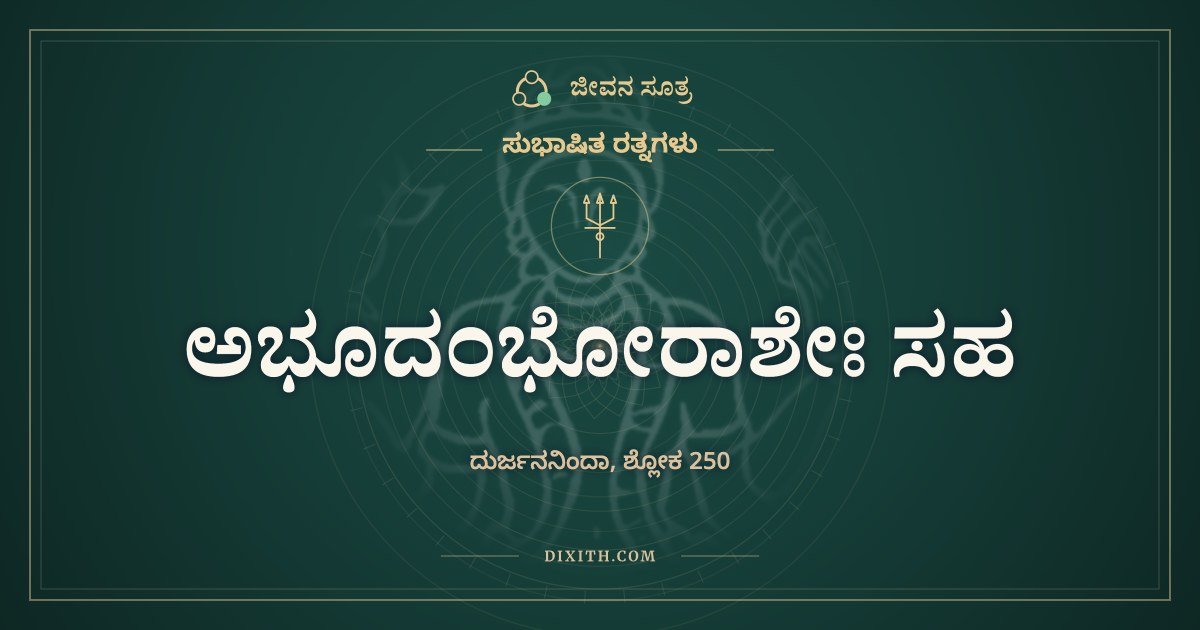
ಅಭೂದಂಭೋರಾಶೇಃ ಸಹ ವಸತಿರಾಸೀತ್ಕಮಲಯಾ ಗುಣಾನಾಮಾಧಾರೋ ನಯನಫಲಮಿಂದುಃ ಪ್ರಥಯತಿ
ಕಥಂ ಸಿಂಹೀಸೂನುಸ್ತಮಪಿ ತುದತಿ ಪ್ರೌಢದಶನೈರ್ಗುಣಾನಾಮಾಸ್ವಾದಂ ಪಿಶುನರಸನಾ ಕಿಂ ರಸಯತಿ
ಸುಭಾಷಿತ (ದೇವನಾಗರಿ)
अभूदम्भोराशेः सह वसतिरासीत्कमलया गुणानामाधारो नयनफलमिन्दुः प्रथयति
कथं सिंहीसूनुस्तमपि तुदति प्रौढदशनैर्गुणानामास्वादं पिशुनरसना किं रसयति
ಸುಭಾಷಿತ (IAST)
abhūdambhorāśeḥ saha vasatirāsītkamalayā guṇānāmādhāro nayanaphalaminduḥ prathayati
kathaṃ siṃhīsūnustamapi tudati prauḍhadaśanairguṇānāmāsvādaṃ piśunarasanā kiṃ rasayati
ಪದಶಃ ಅರ್ಥ
- ಅಭೂದಂಭೋರಾಶೇಃ (अभूदम्भोराशेः, abhūdambhorāśeḥ) = ಸಾಗರದಿಂದ ಹುಟ್ಟಿದ (he arose from the ocean)
- ಸಹ (सह, saha) = ಜೊತೆಗೆ (together with)
- ವಸತಿರಾಸೀತ್ಕಮಲಯಾ (वसतिरासीत्कमलया, vasatirāsītkamalayā) = ವಾಸವಿತ್ತು ಲಕ್ಷ್ಮಿಯೊಂದಿಗೆ (dwelling was with Lakshmi)
- ಗುಣಾನಾಮಾಧಾರೋ (गुणानामाधारो, guṇānāmādhāro) = ಗುಣಗಳ ಆಧಾರ (the support of merits)
- ನಯನಫಲಮಿಂದುಃ (नयनफलमिन्दुः, nayanaphalaminduḥ) = ಕಣ್ಣುಗಳ ಫಲವಾದ ಚಂದ್ರ (the moon, the reward of the eyes)
- ಪ್ರಥಯತಿ (प्रथयति, prathayati) = ಹರಡುತ್ತಾನೆ (spreads his fame)
- ಕಥಂ (कथं, kathaṃ) = ಹೇಗೆ (how)
- ಸಿಂಹೀಸೂನುಸ್ತಮಪಿ (सिंहीसूनुस्तमपि, siṃhīsūnustamapi) = ಸಿಂಹಿಕೆಯ ಮಗನು ಅವನನ್ನೂ (Simhika’s son, even him)
- ತುದತಿ (तुदति, tudati) = ನೋಯಿಸುತ್ತಾನೆ (torments)
- ಪ್ರೌಢದಶನೈರ್ಗುಣಾನಾಮಾಸ್ವಾದಂ (प्रौढदशनैर्गुणानामास्वादं, prauḍhadaśanairguṇānāmāsvādaṃ) = ಗಟ್ಟಿ ಹಲ್ಲುಗಳಿಂದ, ಗುಣಗಳ ರುಚಿಯನ್ನು (with strong teeth, the taste of merits)
- ಪಿಶುನರಸನಾ (पिशुनरसना, piśunarasanā) = ಚಾಡಿಕೋರನ ನಾಲಗೆ (the slanderer’s tongue)
- ಕಿಂ (किं, kiṃ) = ಏನು (does)
- ರಸಯತಿ (रसयति, rasayati) = ಸವಿಯುತ್ತದೆಯೇ (it taste)
ಸಂಪೂರ್ಣ ಅರ್ಥ (ಕನ್ನಡ)
ಚಂದ್ರನು ಸಾಗರದಿಂದ ಹುಟ್ಟಿದವನು, ಲಕ್ಷ್ಮಿಯೊಂದಿಗೆ ವಾಸ ಮಾಡಿದವನು, ಗುಣಗಳ ಆಧಾರ, ಕಣ್ಣುಗಳಿಗೆ ಫಲ. ಅಂಥ ಅವನು ಜಗತ್ತಿನಲ್ಲಿ ಹೆಸರು ಹರಡಿಕೊಂಡಿದ್ದಾನೆ. ಹಾಗಿದ್ದರೂ ಸಿಂಹಿಕೆಯ ಮಗ ರಾಹು ಅವನನ್ನೂ ಗಟ್ಟಿ ಹಲ್ಲುಗಳಿಂದ ಕಚ್ಚಿ ನೋಯಿಸುವುದು ಹೇಗೆ. ಹಾಗಾದರೆ ಚಾಡಿಕೋರನ ನಾಲಗೆ ಗುಣಗಳ ರುಚಿಯನ್ನು ಸವಿಯುತ್ತದೆಯೇ.
ಸಂಪೂರ್ಣ ಅರ್ಥ (ಇಂಗ್ಲಿಷ್)
The moon arose from the ocean and dwelt together with Lakshmi. He is the support of merits and the reward of the eyes, and his fame spreads. Yet how is it that Simhika’s son, Rahu, torments even him with strong teeth? Then does the slanderer’s tongue ever taste the flavour of merits?
ಈ ಸುಭಾಷಿತದ ಬಗ್ಗೆAbout this subhashita
ಸಿಂಹೀಸೂನು ಎಂದರೆ ಸಿಂಹಿಕೆಯ ಮಗ. ಪುರಾಣದಲ್ಲಿ ಗ್ರಹಣಕ್ಕೆ ಕಾರಣನಾದ ರಾಹುವನ್ನು ಹೀಗೆ ಕರೆಯುತ್ತಾರೆ ಎಂದು ಪ್ರಸಿದ್ಧವಾಗಿದೆ.
Simhisunu means the son of Simhika. By tradition Rahu, the eclipse demon of the Puranas, is called by this name.
ಚಂದ್ರನಿಗೆ ಮೂರು ಹೊಗಳಿಕೆಗಳನ್ನು ಕೊಟ್ಟ ಮೇಲೆ ಕಚ್ಚುವ ಮಾತು ಬರುತ್ತದೆ. ಕೊನೆಯ ಪ್ರಶ್ನೆಯಲ್ಲಿ ರುಚಿ ಎಂಬ ಮಾತಿದೆ. ಕಚ್ಚುವುದಕ್ಕೆ ಹಲ್ಲು ಬೇಕು, ಸವಿಯುವುದಕ್ಕೆ ನಾಲಗೆ ಬೇಕು. ಚಾಡಿಕೋರನಿಗೆ ಹಲ್ಲಿದೆ, ಸವಿಯುವ ನಾಲಗೆ ಇಲ್ಲ ಎಂಬ ವ್ಯಂಗ್ಯ ಇಲ್ಲಿದೆ.
After the moon is given his praises, the biting comes. The last question speaks of taste. Biting needs teeth, tasting needs a tongue. The irony is that the slanderer has the teeth but not the tongue that savours.
ಆಧಾರ: ಸುಭಾಷಿತರತ್ನಭಾಂಡಾಗಾರ, ಸಾಮಾನ್ಯ ಪ್ರಕರಣ (ನಿರ್ಣಯಸಾಗರ ಮುದ್ರಣಾಲಯ, ಮುಂಬಯಿ), ಪುಟ 60. ಶ್ಲೋಕದ ಪಾಠವನ್ನು ಮುದ್ರಿತ ಪ್ರತಿಯ ಸ್ಕ್ಯಾನ್ನೊಂದಿಗೆ ಅಕ್ಷರಶಃ ಹೋಲಿಸಿದ್ದೇವೆ. ಅರ್ಥ ಮತ್ತು ವಿವರಣೆ ನಮ್ಮದು.
Source: Subhashitaratnabhandagara, Samanya Prakarana (Nirnaya Sagar Press, Bombay), page 60. The text of the verse was checked letter by letter against a scan of the printed book. The meaning and notes are ours.
ಇಂದಿನ ಬದುಕಿಗೆFor life today
ಒಳ್ಳೆಯವರನ್ನು ಕಂಡರೆ ಕೆಲವರಿಗೆ ಕಚ್ಚಬೇಕೆಂದೇ ಅನಿಸುತ್ತದೆ. ಯಾರಾದರೂ ತುಂಬ ಮೆಚ್ಚುಗೆ ಪಡೆದಾಗ ಮೊದಲ ಟೀಕೆ ಬಂದರೆ, ಅದು ಅವರ ದೋಷದಿಂದ ಎಂದೇ ಭಾವಿಸಬೇಕಿಲ್ಲ.
Some people feel an urge to bite when they see a good person. When someone widely admired draws the first criticism, it need not mean the fault was theirs.
ಚಂದ್ರನಿಗೆ ಗ್ರಹಣವಾದರೂ ಮತ್ತೆ ಬೆಳಗುತ್ತಾನೆ. ತಮ್ಮ ಕೆಲಸದಲ್ಲಿ ನಂಬಿಕೆ ಇರುವವರು ಇಂಥ ಕಚ್ಚುವಿಕೆಯನ್ನು ಸ್ವಲ್ಪ ಕಾಲದ ನೆರಳೆಂದು ತಿಳಿದು ಸಾಗಬಹುದು.
Even after an eclipse the moon shines again. Those who trust their own work may take such a bite as a shadow of a short while and carry on.
ಪಾಠದಲ್ಲಿ ತಪ್ಪೋ ಬೇರೆ ಪಾಠಾಂತರವೋ ಕಂಡಿತೇ? ನಮಗೆ ತಿಳಿಸಿ.
Noticed a mistake or a different reading? Tell us.


ಪ್ರತಿಕ್ರಿಯೆ ಬರೆಯಿರಿ