
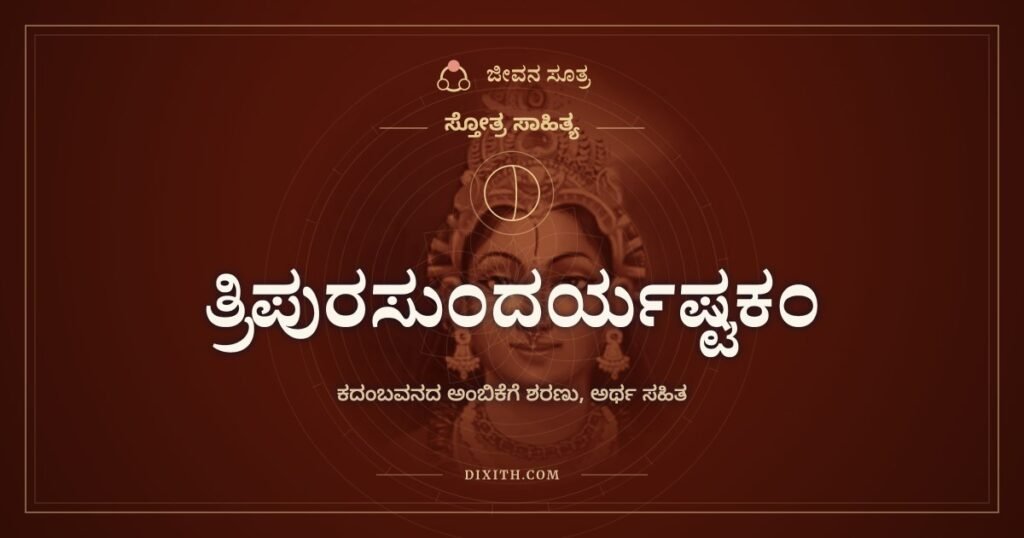
ಇದು ತ್ರಿಪುರಸುಂದರಿಯನ್ನು ಸ್ತುತಿಸುವ ಎಂಟು ಶ್ಲೋಕಗಳ ಅಷ್ಟಕ. ದೇವಿ ಕದಂಬ ವೃಕ್ಷಗಳ ವನದಲ್ಲಿ ನೆಲೆಸಿದ್ದಾಳೆ ಎಂಬ ಚಿತ್ರ ಪ್ರತಿ ಶ್ಲೋಕದ ಆರಂಭದಲ್ಲಿ ಬರುತ್ತದೆ. ಹೊಸ ಮೋಡದಂತೆ ಶ್ಯಾಮಲ ವರ್ಣದ ಅವಳನ್ನು ಇಲ್ಲಿ ವರ್ಣಿಸಲಾಗಿದೆ.
This is an ashtaka of eight verses in praise of Tripurasundari. The picture of the Goddess dwelling in a grove of kadamba trees opens many of the verses. She is described here as dark like a fresh rain cloud.
ಮೊದಲ, ಎರಡನೆಯ, ನಾಲ್ಕನೆಯ ಮತ್ತು ಆರನೆಯ ಶ್ಲೋಕಗಳು ಒಂದೇ ಪಲ್ಲವಿಯಂತೆ ತ್ರಿಲೋಚನನ ಕುಟುಂಬಿನಿಯಾದ ತ್ರಿಪುರಸುಂದರಿಗೆ ಶರಣಾಗತಿಯಿಂದ ಮುಕ್ತಾಯವಾಗುತ್ತವೆ. ಏಳನೆಯದು ಜಪದ ಸಮಯದ ಧ್ಯಾನ, ಎಂಟನೆಯದು ದೇವತೆಗಳ ಸ್ತ್ರೀಯರು ಅವಳ ಸೇವೆ ಮಾಡುವ ಚಿತ್ರ.
The first, second, fourth and sixth verses close with the same refrain of surrender to Tripurasundari, wife of the three-eyed Lord. The seventh is a meditation for the time of japa, and the eighth shows the wives of the gods serving her.
ಪಾಠ (ಕನ್ನಡ)
ಕದಂಬವನಚಾರಿಣೀಂ ಮುನಿಕದಂಬಕಾದಂಬಿನೀಂ
ನಿತಂಬಜಿತಭೂಧರಾಂ ಸುರನಿತಂಬಿನೀಸೇವಿತಾಂ ।
ನವಾಂಬುರುಹಲೋಚನಾಮಭಿನವಾಂಬುದಶ್ಯಾಮಲಾಂ
ತ್ರಿಲೋಚನಕುಟುಂಬಿನೀಂ ತ್ರಿಪುರಸುಂದರೀಮಾಶ್ರಯೇ ॥ 1 ॥
ಕದಂಬವನವಾಸಿನೀಂ ಕನಕವಲ್ಲಕೀಧಾರಿಣೀಂ
ಮಹಾರ್ಹಮಣಿಹಾರಿಣೀಂ ಮುಖಸಮುಲ್ಲಸದ್ವಾರುಣೀಂ ।
ದಯಾವಿಭವಕಾರಿಣೀಂ ವಿಶದರೋಚನಾಚಾರಿಣೀಂ
ತ್ರಿಲೋಚನಕುಟುಂಬಿನೀಂ ತ್ರಿಪುರಸುಂದರೀಮಾಶ್ರಯೇ ॥ 2 ॥
ಕದಂಬವನಶಾಲಯಾ ಕುಚಭರೋಲ್ಲಸನ್ಮಾಲಯಾ
ಕುಶೋಪಮಿತಶೈಲಯಾ ಗುರುಕೃಪಾಲಸದ್ವೇಲಯಾ ।
ಮದಾರುಣಕಪೋಲಯಾ ಮಧುರಗೀತವಾಚಾಲಯಾ
ಕಯಾಽಪಿ ಘನನೀಲಯಾ ಕವಚಿತಾ ವಯಂ ಲೀಲಯಾ ॥ 3 ॥
ಕದಂಬವನಮಧ್ಯಗಾಂ ಕನಕಮಂಡಲೋಪಸ್ಥಿತಾಂ
ಷಡಂಬುರುಹವಾಸಿನೀಂ ಸತತಸಿದ್ಧಸೌದಾಮಿನೀಂ ।
ವಿಡಂಬಿತಜಪಾರುಚಿಂ ವಿಕಚಚಂದ್ರಚೂಡಾಮಣಿಂ
ತ್ರಿಲೋಚನಕುಟುಂಬಿನೀಂ ತ್ರಿಪುರಸುಂದರೀಮಾಶ್ರಯೇ ॥ 4 ॥
ಕುಚಾಂಚಿತವಿಪಂಚಿಕಾಂ ಕುಟಿಲಕುಂತಲಾಲಂಕೃತಾಂ
ಕುಶೇಶಯನಿವಾಸಿನೀಂ ಕುಟಿಲಚಿತ್ತವಿದ್ವೇಷಿಣೀಂ ।
ಮದಾರುಣವಿಲೋಚನಾಂ ಮನಸಿಜಾರಿಸಮ್ಮೋಹಿನೀಂ
ಮತಂಗಮುನಿಕನ್ಯಕಾಂ ಮಧುರಭಾಷಿಣೀಮಾಶ್ರಯೇ ॥ 5 ॥
ಸ್ಮರೇತ್ಪ್ರಥಮಪುಷ್ಪಿಣೀಂ ರುಧಿರಬಿಂದುನೀಲಾಂಬರಾಂ
ಗೃಹೀತಮಧುಪಾತ್ರಿಕಾಂ ಮದವಿಘೂರ್ಣನೇತ್ರಾಂಜಲಾಂ ।
ಘನಸ್ತನಭರೋನ್ನತಾಂ ಗಲಿತಚೂಲಿಕಾಂ ಶ್ಯಾಮಲಾಂ
ತ್ರಿಲೋಚನಕುಟುಂಬಿನೀಂ ತ್ರಿಪುರಸುಂದರೀಮಾಶ್ರಯೇ ॥ 6 ॥
ಸಕುಂಕುಮವಿಲೇಪನಾಮಲಕಚುಂಬಿಕಸ್ತೂರಿಕಾಂ
ಸಮಂದಹಸಿತೇಕ್ಷಣಾಂ ಸಶರಚಾಪಪಾಶಾಂಕುಶಾಂ ।
ಅಶೇಷಜನಮೋಹಿನೀಮರುಣಮಾಲ್ಯಭೂಷಾಂಬರಾಂ
ಜಪಾಕುಸುಮಭಾಸುರಾಂ ಜಪವಿಧೌ ಸ್ಮರಾಮ್ಯಂಬಿಕಾಂ ॥ 7 ॥
ಪುರಂದರಪುರಂಧ್ರಿಕಾಚಿಕುರಬಂಧಸೈರಂಧ್ರಿಕಾಂ
ಪಿತಾಮಹಪತಿವ್ರತಾಪಟುಪಟೀರಚರ್ಚಾರತಾಂ ।
ಮುಕುಂದರಮಣೀಮಣೀಲಸದಲಂಕ್ರಿಯಾಕಾರಿಣೀಂ
ಭಜಾಮಿ ಭುವನಾಂಬಿಕಾಂ ಸುರವಧೂಟಿಕಾಚೇಟಿಕಾಂ ॥ 8 ॥
ದೇವನಾಗರಿ ಲಿಪಿಯಲ್ಲಿ ಪಾಠText in Devanagari
कदंबवनचारिणीं मुनिकदंबकादंबिनीं
नितंबजितभूधरां सुरनितंबिनीसेवितां ।
नवांबुरुहलोचनामभिनवांबुदश्यामलां
त्रिलोचनकुटुंबिनीं त्रिपुरसुंदरीमाश्रये ॥ 1 ॥
कदंबवनवासिनीं कनकवल्लकीधारिणीं
महार्हमणिहारिणीं मुखसमुल्लसद्वारुणीं ।
दयाविभवकारिणीं विशदरोचनाचारिणीं
त्रिलोचनकुटुंबिनीं त्रिपुरसुंदरीमाश्रये ॥ 2 ॥
कदंबवनशालया कुचभरोल्लसन्मालया
कुशोपमितशैलया गुरुकृपालसद्वेलया ।
मदारुणकपोलया मधुरगीतवाचालया
कयाऽपि घननीलया कवचिता वयं लीलया ॥ 3 ॥
कदंबवनमध्यगां कनकमंडलोपस्थितां
षडंबुरुहवासिनीं सततसिद्धसौदामिनीं ।
विडंबितजपारुचिं विकचचंद्रचूडामणिं
त्रिलोचनकुटुंबिनीं त्रिपुरसुंदरीमाश्रये ॥ 4 ॥
कुचांचितविपंचिकां कुटिलकुंतलालंकृतां
कुशेशयनिवासिनीं कुटिलचित्तविद्वेषिणीं ।
मदारुणविलोचनां मनसिजारिसम्मोहिनीं
मतंगमुनिकन्यकां मधुरभाषिणीमाश्रये ॥ 5 ॥
स्मरेत्प्रथमपुष्पिणीं रुधिरबिंदुनीलांबरां
गृहीतमधुपात्रिकां मदविघूर्णनेत्रांजलां ।
घनस्तनभरोन्नतां गलितचूलिकां श्यामलां
त्रिलोचनकुटुंबिनीं त्रिपुरसुंदरीमाश्रये ॥ 6 ॥
सकुंकुमविलेपनामलकचुंबिकस्तूरिकां
समंदहसितेक्षणां सशरचापपाशांकुशां ।
अशेषजनमोहिनीमरुणमाल्यभूषांबरां
जपाकुसुमभासुरां जपविधौ स्मराम्यंबिकां ॥ 7 ॥
पुरंदरपुरंध्रिकाचिकुरबंधसैरंध्रिकां
पितामहपतिव्रतापटुपटीरचर्चारतां ।
मुकुंदरमणीमणीलसदलंक्रियाकारिणीं
भजामि भुवनांबिकां सुरवधूटिकाचेटिकां ॥ 8 ॥
IAST ಲಿಪ್ಯಂತರದಲ್ಲಿ ಪಾಠText in IAST transliteration
kadaṃbavanacāriṇīṃ munikadaṃbakādaṃbinīṃ
nitaṃbajitabhūdharāṃ suranitaṃbinīsevitāṃ |
navāṃburuhalocanāmabhinavāṃbudaśyāmalāṃ
trilocanakuṭuṃbinīṃ tripurasuṃdarīmāśraye || 1 ||
kadaṃbavanavāsinīṃ kanakavallakīdhāriṇīṃ
mahārhamaṇihāriṇīṃ mukhasamullasadvāruṇīṃ |
dayāvibhavakāriṇīṃ viśadarocanācāriṇīṃ
trilocanakuṭuṃbinīṃ tripurasuṃdarīmāśraye || 2 ||
kadaṃbavanaśālayā kucabharollasanmālayā
kuśopamitaśailayā gurukṛpālasadvelayā |
madāruṇakapolayā madhuragītavācālayā
kayā’pi ghananīlayā kavacitā vayaṃ līlayā || 3 ||
kadaṃbavanamadhyagāṃ kanakamaṃḍalopasthitāṃ
ṣaḍaṃburuhavāsinīṃ satatasiddhasaudāminīṃ |
viḍaṃbitajapāruciṃ vikacacaṃdracūḍāmaṇiṃ
trilocanakuṭuṃbinīṃ tripurasuṃdarīmāśraye || 4 ||
kucāṃcitavipaṃcikāṃ kuṭilakuṃtalālaṃkṛtāṃ
kuśeśayanivāsinīṃ kuṭilacittavidveṣiṇīṃ |
madāruṇavilocanāṃ manasijārisammohinīṃ
mataṃgamunikanyakāṃ madhurabhāṣiṇīmāśraye || 5 ||
smaretprathamapuṣpiṇīṃ rudhirabiṃdunīlāṃbarāṃ
gṛhītamadhupātrikāṃ madavighūrṇanetrāṃjalāṃ |
ghanastanabharonnatāṃ galitacūlikāṃ śyāmalāṃ
trilocanakuṭuṃbinīṃ tripurasuṃdarīmāśraye || 6 ||
sakuṃkumavilepanāmalakacuṃbikastūrikāṃ
samaṃdahasitekṣaṇāṃ saśaracāpapāśāṃkuśāṃ |
aśeṣajanamohinīmaruṇamālyabhūṣāṃbarāṃ
japākusumabhāsurāṃ japavidhau smarāmyaṃbikāṃ || 7 ||
puraṃdarapuraṃdhrikācikurabaṃdhasairaṃdhrikāṃ
pitāmahapativratāpaṭupaṭīracarcāratāṃ |
mukuṃdaramaṇīmaṇīlasadalaṃkriyākāriṇīṃ
bhajāmi bhuvanāṃbikāṃ suravadhūṭikāceṭikāṃ || 8 ||
ಶ್ಲೋಕಗಳ ಅರ್ಥ
- 1 ಕದಂಬವನದಲ್ಲಿ ಸಂಚರಿಸುವವಳು, ಮುನಿಗಳ ಸಮೂಹಕ್ಕೆ ಮೇಘದಂತೆ ಆನಂದ ತರುವವಳು, ತನ್ನ ನಿತಂಬದಿಂದ ಪರ್ವತಗಳನ್ನು ಮೀರಿಸಿದವಳು, ದೇವಸ್ತ್ರೀಯರು ಸೇವಿಸುವವಳು. ಹೊಸ ಕಮಲದಂತಹ ಕಣ್ಣುಗಳ, ನವ ಮೋಡದಂತೆ ಶ್ಯಾಮಲವಾದ, ತ್ರಿನೇತ್ರನ ಕುಟುಂಬಿನಿಯಾದ ತ್ರಿಪುರಸುಂದರಿಯನ್ನು ಆಶ್ರಯಿಸುತ್ತೇನೆ.
I take refuge in Tripurasundari, who roams the kadamba grove and delights the host of sages as a cloud delights peacocks. Her hips outdo the mountains, and the women of the gods serve her. Her eyes are like fresh lotuses, her colour dark like a new rain cloud, and she is the wife of the three-eyed Lord. - 2 ಕದಂಬವನದಲ್ಲಿ ವಾಸಿಸುವವಳು, ಚಿನ್ನದ ವೀಣೆಯನ್ನು ಹಿಡಿದವಳು, ಅಮೂಲ್ಯ ಮಣಿಹಾರ ಧರಿಸಿದವಳು, ಮುಖದಲ್ಲಿ ಮಧುವಿನ ಕಳೆ ಬೆಳಗುವವಳು. ಕರುಣೆಯ ವೈಭವವನ್ನು ಕೊಡುವವಳು, ನಿರ್ಮಲ ಕಾಂತಿಯಲ್ಲಿ ಸಂಚರಿಸುವವಳು. ತ್ರಿನೇತ್ರನ ಕುಟುಂಬಿನಿಯಾದ ತ್ರಿಪುರಸುಂದರಿಯನ್ನು ಆಶ್ರಯಿಸುತ್ತೇನೆ.
She dwells in the kadamba grove and holds a golden veena. She wears a necklace of priceless gems, and the glow of wine shines on her face. She grants the wealth of compassion and moves in pure radiance. I take refuge in Tripurasundari, wife of the three-eyed Lord. - 3 ಕದಂಬವನವನ್ನು ಮನೆಯಾಗಿ ಮಾಡಿಕೊಂಡವಳು, ಎದೆಯ ಮೇಲೆ ಮಾಲೆ ಹೊಳೆಯುವವಳು, ತೆಳುವಾದ ನಡುವಿನಿಂದ ಪರ್ವತಕ್ಕೆ ಹೋಲಿಕೆಯಾದವಳು ಎಂಬ ಪದಗಳಿವೆ. ಕರುಣೆಯ ತೀರದಲ್ಲಿ ಬೆಳಗುವವಳು, ಮದದಿಂದ ಕೆಂಪಾದ ಕೆನ್ನೆಯವಳು, ಮಧುರ ಗೀತದಿಂದ ಮಾತನಾಡುವವಳು, ಮೇಘದಂತೆ ನೀಲಿ ವರ್ಣದವಳು. ಅಂತಹ ಯಾವುದೋ ಒಬ್ಬ ದೇವಿಯಿಂದ ನಾವು ಲೀಲೆಯಾಗಿ ಕವಚ ಪಡೆದಿದ್ದೇವೆ.
She makes the kadamba grove her house, a garland shines on her breast, and her slender waist is likened to a mountain, though this phrase is doubtful, see About. She shines on the shore of great compassion, her cheeks are red with the flush of wine, her speech is sweet song, and her colour is deep cloud blue. By some such Goddess, as if in play, we have been clad in armour. - 4 ಕದಂಬವನದ ಮಧ್ಯದಲ್ಲಿರುವವಳು, ಚಿನ್ನದ ಮಂಡಲದಲ್ಲಿ ಕುಳಿತವಳು, ಆರು ಕಮಲಗಳಲ್ಲಿ ವಾಸಿಸುವವಳು, ಸದಾ ಸ್ಥಿರವಾದ ಮಿಂಚಿನಂತಿರುವವಳು. ದಾಸವಾಳದ ಕಾಂತಿಯನ್ನೂ ಮೀರಿಸುವವಳು, ಅರಳಿದ ಚಂದ್ರನನ್ನು ಶಿರೋಮಣಿಯಾಗಿ ಧರಿಸಿದವಳು. ತ್ರಿನೇತ್ರನ ಕುಟುಂಬಿನಿಯಾದ ತ್ರಿಪುರಸುಂದರಿಯನ್ನು ಆಶ್ರಯಿಸುತ್ತೇನೆ.
She is in the middle of the kadamba grove, seated in a golden circle, dwelling in the six lotuses of the body, a lightning flash that is ever steady. She surpasses the hibiscus in redness and wears the shining moon as her crest jewel. I take refuge in Tripurasundari, wife of the three-eyed Lord. - 5 ಎದೆಯ ಮೇಲೆ ವೀಣೆ ಹಿಡಿದವಳು, ಸುರುಳಿ ಕೂದಲಿನಿಂದ ಅಲಂಕೃತಳು, ಕಮಲದಲ್ಲಿ ನೆಲೆಸಿದವಳು, ಕುಟಿಲ ಮನಸ್ಸಿನವರನ್ನು ದ್ವೇಷಿಸುವವಳು. ಮದದಿಂದ ಕೆಂಪಾದ ಕಣ್ಣುಗಳ, ಕಾಮನ ಶತ್ರು ಶಿವನನ್ನೂ ಮೋಹಗೊಳಿಸುವ, ಮತಂಗ ಮುನಿಯ ಕನ್ಯೆಯಾದ, ಮಧುರವಾಗಿ ಮಾತನಾಡುವ ಅವಳನ್ನು ಆಶ್ರಯಿಸುತ್ತೇನೆ.
She holds a veena against her breast, is adorned with curling locks, dwells in the lotus, and hates the crooked in mind. Her eyes are red with wine, she bewilders even Shiva, foe of Kama, she is the daughter of the sage Matanga, and her speech is sweet. I take refuge in her. - 6 ಮೊದಲ ಬಾರಿ ಅರಳಿದ ಹೂವಿನಂತಿರುವ, ರಕ್ತಬಿಂದುಗಳಿರುವ ನೀಲ ವಸ್ತ್ರ ಧರಿಸಿದ, ಮಧುಪಾತ್ರೆ ಹಿಡಿದ ಅವಳನ್ನು ಧ್ಯಾನಿಸಬೇಕು. ಮದದಿಂದ ತಿರುಗುವ ಕಣ್ಣುಗಳ, ಭಾರವಾದ ಸ್ತನಗಳಿಂದ ಎತ್ತರವಾದ, ಜಾರಿದ ಜುಟ್ಟಿನ, ಶ್ಯಾಮಲ ವರ್ಣದ ತ್ರಿನೇತ್ರನ ಕುಟುಂಬಿನಿಯಾದ ತ್ರಿಪುರಸುಂದರಿಯನ್ನು ಆಶ್ರಯಿಸುತ್ತೇನೆ.
One should meditate on her as a flower newly in bloom, wearing a blue garment flecked with drops of red, holding a cup of wine. Her eyes roll with the flush of wine, her heavy breasts lift her form, her hair-knot has come loose, and she is dark in colour. I take refuge in Tripurasundari, wife of the three-eyed Lord. - 7 ಕುಂಕುಮ ಲೇಪನ ಮತ್ತು ಹಣೆಯ ಮೇಲೆ ಕಸ್ತೂರಿ ತಿಲಕ ಧರಿಸಿದ, ಮಂದಹಾಸದ ನೋಟದ, ಬಿಲ್ಲು, ಬಾಣ, ಪಾಶ ಮತ್ತು ಅಂಕುಶ ಹಿಡಿದ, ಎಲ್ಲ ಜನರನ್ನು ಮೋಹಿಸುವ, ಕೆಂಪು ಮಾಲೆ ಮತ್ತು ವಸ್ತ್ರ ಧರಿಸಿದ, ದಾಸವಾಳದಂತೆ ಹೊಳೆಯುವ ಅಂಬಿಕೆಯನ್ನು ಜಪದ ಸಮಯದಲ್ಲಿ ಸ್ಮರಿಸುತ್ತೇನೆ.
I remember Ambika at the time of japa. She is anointed with kumkuma, musk shines on her forehead, her glance carries a gentle smile, and she holds bow, arrow, noose and goad. She charms all people, wears red garlands and garments, and glows like the hibiscus. - 8 ಇಂದ್ರಾಣಿಯ ಕೂದಲು ಕಟ್ಟುವ ಸೈರಂಧ್ರಿಯಂತೆ, ಬ್ರಹ್ಮನ ಪತ್ನಿ ಸರಸ್ವತಿಯು ಶ್ರೀಗಂಧ ಲೇಪಿಸುವುದರಲ್ಲಿ ನಿರತಳಾಗಿರುವವಳು, ವಿಷ್ಣುವಿನ ಪತ್ನಿ ಲಕ್ಷ್ಮಿ ಅಲಂಕಾರ ಮಾಡುವವಳು. ದೇವತೆಗಳ ಸ್ತ್ರೀಯರು ಅವಳ ಸೇವಕಿಯರು. ಅಂತಹ ಭುವನಾಂಬಿಕೆಯನ್ನು ಭಜಿಸುತ್ತೇನೆ.
Indra’s wife is her hairdresser, Brahma’s wife is busy rubbing sandal paste on her, and Mukunda’s wife Lakshmi dresses her in ornaments. The wives of the gods are her maidservants. I worship such a Bhuvanambika.
ಈ ಸ್ತೋತ್ರದ ಬಗ್ಗೆAbout this hymn
ಈ ಅಷ್ಟಕವನ್ನು ಶಂಕರ ಭಗವತ್ಪಾದರದ್ದು ಎಂದು ಪರಂಪರೆ ಹೇಳುತ್ತದೆ. ಕಾಲದ ಬಗ್ಗೆ ನಮ್ಮ ಮೂಲ ಏನನ್ನೂ ಹೇಳುವುದಿಲ್ಲ, ಆದ್ದರಿಂದ ನಾವು ಯಾವ ಕಾಲವನ್ನೂ ಕೊಟ್ಟಿಲ್ಲ.
Tradition ascribes this ashtaka to Shankara Bhagavatpada. Our source says nothing about its date, so we give none.
ಇಲ್ಲಿ ದೇವಿಯ ರೂಪ ಶ್ಯಾಮಲ, ಮದ್ಯದ ಕಳೆಯ ಮುಖ, ವೀಣೆ ಹಿಡಿದ ಮಾತಂಗೀ ಸ್ವರೂಪ ಎಂದು ಚಿತ್ರಿತವಾಗಿದೆ. ಇದು ದೇವೀ ಉಪಾಸನೆಯ ಪರಂಪರೆಯ ಧ್ಯಾನ ವರ್ಣನೆಯ ಶೈಲಿ. ಆರನೆಯ ಶ್ಲೋಕ ಧ್ಯಾನ ವಿಧಿಯನ್ನು ಹೇಳುತ್ತದೆ ಮತ್ತು ಏಳನೆಯದು ಜಪದ ಸಮಯದ ಸ್ಮರಣೆಯನ್ನು ಹೇಳುತ್ತದೆ.
Here the Goddess is pictured as dark in colour, with a face flushed with wine, and in the Matangi aspect holding a veena. This is the style of meditation verse found in the tradition of Devi worship. The sixth verse gives a way of meditating and the seventh a remembrance for the time of japa.
ಮೂರನೆಯ ಶ್ಲೋಕದ ಎರಡನೆಯ ಸಾಲಿನಲ್ಲಿ ಕುಶೋಪಮಿತಶೈಲಯಾ ಎಂಬ ಪದದ ಪಾಠ ಅನಿಶ್ಚಿತ. ನಾವು ಕೃಶ ನಡುವನ್ನು ಪರ್ವತಕ್ಕೆ ಹೋಲಿಸಿದ ಭಾವ ಎಂದು ಸಾಧ್ಯವಾದ ಅರ್ಥ ಕೊಟ್ಟಿದ್ದೇವೆ. ಈ ಶ್ಲೋಕದ ವ್ಯಾಕರಣವೂ ಬೇರೆ ಶ್ಲೋಕಗಳಿಗಿಂತ ಬೇರೆ, ಏಕೆಂದರೆ ಇಲ್ಲಿ ಎಲ್ಲ ಪದಗಳು ತೃತೀಯ ವಿಭಕ್ತಿಯಲ್ಲಿವೆ.
The reading of the word kushopamitashailaya in the second line of the third verse is uncertain. We have given one possible sense, a slender waist likened to a mountain. The grammar of this verse also differs from the rest, for all its descriptive words are in the instrumental case.
ಈ ಪಾಠದ ಕನ್ನಡ ರೂಪ ದೇವನಾಗರಿಯಿಂದ ಯಂತ್ರದ ಮೂಲಕ ಪರಿವರ್ತನೆಯಾಗಿರಬಹುದು. ಆದ್ದರಿಂದ ಕೆಲವು ಕಡೆ ಕಾಗುಣಿತದ ಸಣ್ಣ ದೋಷಗಳಿರಬಹುದು.
The Kannada form of this text may have been converted mechanically from Devanagari, so small spelling slips may remain in places.
ಆಧಾರ: ಶೃಂಗೇರಿ ಶ್ರೀ ಶಾರದಾ ಪೀಠದ ಜಾಲತಾಣದ ಸ್ತೋತ್ರ ವಿಭಾಗ. ಆವೃತ್ತಿಗಳು ಭಿನ್ನವಾಗಿರುವಲ್ಲಿ ಅದನ್ನು ಇಲ್ಲಿ ಸೂಚಿಸಿದ್ದೇವೆ. · Source: the stotra section of the Sringeri Sri Sharada Peetham website (sringeri.net). Where readings differ, the difference is noted here.
ಇಂದಿನ ಬದುಕಿಗೆFor life today
ಸಂಜೆಯಲ್ಲಿ ಒಂದು ದೀಪವನ್ನು ಕೈಯಲ್ಲಿ ಹಿಡಿದು ಕೋಣೆಯಿಂದ ಕೋಣೆಗೆ ಒಯ್ಯುವಾಗ, ಒಂದು ಕೋಣೆಯ ಕತ್ತಲೆ ಅಳಿಯುತ್ತದೆ ಮತ್ತು ಮುಂದಿನದು ಬೆಳಗುತ್ತದೆ. ದೀಪ ಅದೇ, ಜ್ವಾಲೆ ಅದೇ, ಜಾಗ ಮಾತ್ರ ಬದಲಾಗುತ್ತದೆ.
When we carry a lamp from room to room at dusk, the dark of one room fades and the next one lights up. The lamp is the same and the flame is the same. Only the place changes.
ಈ ಅಷ್ಟಕದ ಪಲ್ಲವಿಯಲ್ಲಿ ಪ್ರತಿ ಶ್ಲೋಕದ ವರ್ಣನೆ ಬದಲಾದರೂ ಆಶ್ರಯದ ಭಾವ ಒಂದೇ ಆಗಿರುತ್ತದೆ. ನಮ್ಮ ದಿನವೂ ಕೆಲಸದಿಂದ ಕೆಲಸಕ್ಕೆ ಸಾಗುತ್ತದೆ. ಒಂದು ನೆಲೆಯನ್ನು ನಮ್ಮೊಡನೆ ಒಯ್ಯುವ ಅಭ್ಯಾಸ ಇದ್ದರೆ, ಪ್ರತಿ ಹೊಸ ಕೆಲಸವೂ ಆ ಬೆಳಕಿನಲ್ಲೇ ಆರಂಭವಾಗುತ್ತದೆ.
In the refrain of this ashtaka the description changes from verse to verse, but the feeling of taking refuge stays the same. Our day too moves from task to task. If we have the habit of carrying one steady place with us, each new task begins in that same light.