
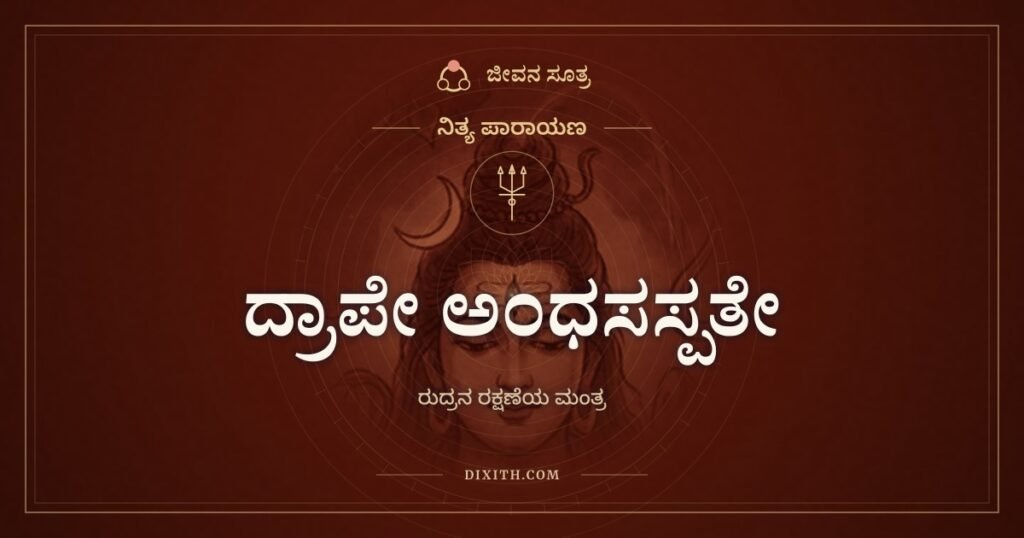
ಇದೊಂದು ಶ್ರೀ ರುದ್ರದ ನಮಕದ ಹತ್ತನೇ ಅನುವಾಕದ ಮೊದಲ ಮಂತ್ರ. ಇದರಲ್ಲಿ ನೀಲಲೋಹಿತನಾದ ರುದ್ರನನ್ನು ಸಂಬೋಧಿಸುತ್ತೇವೆ.
ನಮ್ಮ ಜನರಿಗೂ ಪಶುಗಳಿಗೂ ಭಯ, ಮೃತ್ಯು ಮತ್ತು ಕಾಯಿಲೆ ಬಾರದಿರಲಿ ಎಂದು ಈ ಮಂತ್ರ ಬೇಡುತ್ತದೆ. ರುದ್ರನ ಉಗ್ರ ರೂಪವನ್ನು ಹಿಂದೆ ಸರಿಸಿ ಅವನ ರಕ್ಷಣೆಯನ್ನು ಕೇಳುವ ಪ್ರಾರ್ಥನೆ ಇದು.
ಶ್ಲೋಕ (ಕನ್ನಡ)
ದ್ರಾಪೇ ಅಂಧಸಸ್ಪತೇ ದರಿದ್ರನ್ನೀಲಲೋಹಿತ ।
ಏಷಾಂ ಪುರುಷಾಣಾಮೇಷಾಂ ಪಶೂನಾಂ ಮಾ ಭೇರ್ಮಾರೋ ಮೋ ಏಷಾಂ ಕಿಂಚನಾಮಮತ್ ॥
ಶ್ಲೋಕ (ದೇವನಾಗರಿ)
द्रापे अंधसस्पते दरिद्रन्नीललोहित ।
एषां पुरुषाणामेषां पशूनां मा भेर्मारो मो एषां किंचनाममत् ॥
ಶ್ಲೋಕ (IAST)
drāpe aṃdhasaspate daridrannīlalohita |
eṣāṃ puruṣāṇāmeṣāṃ paśūnāṃ mā bhermāro mo eṣāṃ kiṃcanāmamat ||
ಪದಶಃ ಅರ್ಥ
- ದ್ರಾಪೇ (द्रापे, drāpe) = ಓ ದ್ರಾಪಿಯೇ, ಓ ರುದ್ರನೇ (ವ್ಯಾಖ್ಯಾನಗಳಲ್ಲಿ ಅರ್ಥ ಬೇರೆ ಬೇರೆ, ಉಡುಪು ಹೊದ್ದವನೇ ಅಥವಾ ದುರ್ಗತಿಯನ್ನು ನೀಗುವವನೇ ಎಂದು) (O Drapi, O Rudra (commentators differ: the one who is clad, or the one who removes evil fortune))
- ಅಂಧಸಸ್ಪತೇ (अंधसस्पते, aṃdhasaspate) = ಅನ್ನದ ಒಡೆಯನೇ (O lord of food)
- ದರಿದ್ರನ್ನೀಲಲೋಹಿತ (दरिद्रन्नीललोहित, daridrannīlalohita) = ಸಂಚರಿಸುವವನೇ, ನೀಲ ಮತ್ತು ಕೆಂಪು ಬಣ್ಣದವನೇ (ದರಿದ್ರನ್ + ನೀಲಲೋಹಿತ) (O wanderer, O blue and red one)
- ಏಷಾಂ (एषां, eṣāṃ) = ಇವರ (of these)
- ಪುರುಷಾಣಾಮೇಷಾಂ (पुरुषाणामेषां, puruṣāṇāmeṣāṃ) = ಈ ಜನರ, ಇವರ (ಪುರುಷಾಣಾಂ + ಏಷಾಂ) (of these people, of these)
- ಪಶೂನಾಂ (पशूनां, paśūnāṃ) = ಪಶುಗಳ (of the animals)
- ಮಾ ಭೇರ್ಮಾರೋ (मा भेर्मारो, mā bhermāro) = ಭಯ ಬೇಡ, ಮೃತ್ಯು ಬೇಡ (ಮಾ ಭೇಃ + ಮಾರಃ) (let there be no fear and no death)
- ಮೋ ಏಷಾಂ (मो एषां, mo eṣāṃ) = ಇವರಿಗೆ ಬೇಡ (ಮಾ + ಉ + ಏಷಾಂ) (nor to these)
- ಕಿಂಚನಾಮಮತ್ (किंचनाममत्, kiṃcanāmamat) = ಯಾವುದೂ ರೋಗಪೀಡಿತವಾಗದಿರಲಿ (ಕಿಂಚನ + ಆಮಮತ್) (may nothing fall ill)
ಸಂಪೂರ್ಣ ಅರ್ಥ (ಕನ್ನಡ)
ಅನ್ನದ ಒಡೆಯನೇ, ನೀಲಲೋಹಿತನೇ, ನಿನ್ನನ್ನು ಬೇಡುತ್ತೇವೆ. ಇಲ್ಲಿರುವ ಜನರಿಗೂ ಪಶುಗಳಿಗೂ ಭಯ ಬಾರದಿರಲಿ. ಮೃತ್ಯು ಬಾರದಿರಲಿ. ಇವರಲ್ಲಿ ಯಾರಿಗೂ ಯಾವ ರೋಗವೂ ಅಂಟದಿರಲಿ.
ಸಂಪೂರ್ಣ ಅರ್ಥ (ಇಂಗ್ಲಿಷ್)
O lord of food, O blue and red one, we ask you: let no fear come to these people or to these animals. Let no death come. Let no sickness touch any of them.
ಈ ಮಂತ್ರದ ಬಗ್ಗೆAbout this mantra
ನಾವು ನೋಡಿದ ಆಧಾರಗಳಲ್ಲಿ ಇದು ನಮಕದ ಹತ್ತನೇ ಅನುವಾಕದ ಮೊದಲ ಮಂತ್ರ. ಕೆಲವರು ಇದನ್ನು ಬೇರೆ ಅನುವಾಕದ ಭಾಗವಾಗಿ ಎಣಿಸಬಹುದು. ಆದ್ದರಿಂದ ಪುಸ್ತಕದಲ್ಲಿ ಹೊಂದಿಸಿ ನೋಡುವುದು ಒಳ್ಳೆಯದು.
In the sources we checked this is the first mantra of the tenth anuvaka of the Namakam. Other editions may count it differently, so it is worth checking against your own book.
ದ್ರಾಪೇ ಮತ್ತು ದರಿದ್ರನ್ ಪದಗಳ ಅರ್ಥವನ್ನು ವ್ಯಾಖ್ಯಾನಕಾರರು ಬೇರೆ ಬೇರೆಯಾಗಿ ಹೇಳಿದ್ದಾರೆ. ಇಲ್ಲಿ ಸರಳ ಅರ್ಥವನ್ನು ಕೊಟ್ಟಿದ್ದೇವೆ.
Commentators explain the words drape and daridran in different ways. We have given a plain sense here.
ಮುದ್ರಿತ ಪಾಠಗಳಲ್ಲಿ ಕೊನೆಯ ಪದಗಳನ್ನು ಕಿಂಚನಾಮಮತ್ ಅಥವಾ ಕಿಂಚ ನಾಮಮತ್ ಎಂದು ಬೇರೆ ಬೇರೆಯಾಗಿ ಬಿಡಿಸಿ ಮುದ್ರಿಸಿರುತ್ತಾರೆ. ಉಚ್ಚಾರ ಒಂದೇ.
Printed texts split the last words either as kimchanamamat or kimcha namamat. The sound is the same.
ಆಧಾರ: ಹಲವು ಮೂಲಗಳು. ಆವೃತ್ತಿಗಳು ಭಿನ್ನವಾಗಿರುವಲ್ಲಿ ಅದನ್ನು ಇಲ್ಲಿ ಸೂಚಿಸಿದ್ದೇವೆ.
Sources: several. Where versions differ, we have noted it here.
ಇಂದಿನ ಬದುಕಿಗೆFor life today
ಭಯ ಮತ್ತು ಕಾಯಿಲೆಯ ಹೊತ್ತಿನಲ್ಲಿ ಮನಸ್ಸು ಧೈರ್ಯ ಹುಡುಕುತ್ತದೆ. ಈ ಮಂತ್ರ ನಮಗಾಗಿ ಮಾತ್ರವಲ್ಲ, ನಮ್ಮ ಮನೆಯವರಿಗಾಗಿ ಮತ್ತು ಪ್ರಾಣಿಗಳಿಗಾಗಿಯೂ ಬೇಡುತ್ತದೆ. ಇದು ನಮ್ಮ ಪ್ರಾರ್ಥನೆಯನ್ನು ವಿಶಾಲಗೊಳಿಸುತ್ತದೆ.
In moments of fear or illness the mind looks for courage. This mantra asks not only for us but for our household and our animals too. That widens our prayer.
ಇದು ಒಂದು ನಂಬಿಕೆಯ ಪ್ರಾರ್ಥನೆ. ಕಾಯಿಲೆ ಇದ್ದಾಗ ವೈದ್ಯರ ಚಿಕಿತ್ಸೆಯನ್ನು ಪಡೆಯುವುದು ಅಗತ್ಯ. ಪ್ರಾರ್ಥನೆ ಚಿಕಿತ್ಸೆಗೆ ಬದಲಿಯಲ್ಲ, ಅದರ ಜೊತೆಗೆ ಮನಸ್ಸಿಗೆ ಶಾಂತಿ ಕೊಡಬಲ್ಲದು.
This is a prayer of faith. When someone is ill, medical treatment is needed. Prayer does not replace treatment, but it can bring calm to the mind alongside it.