
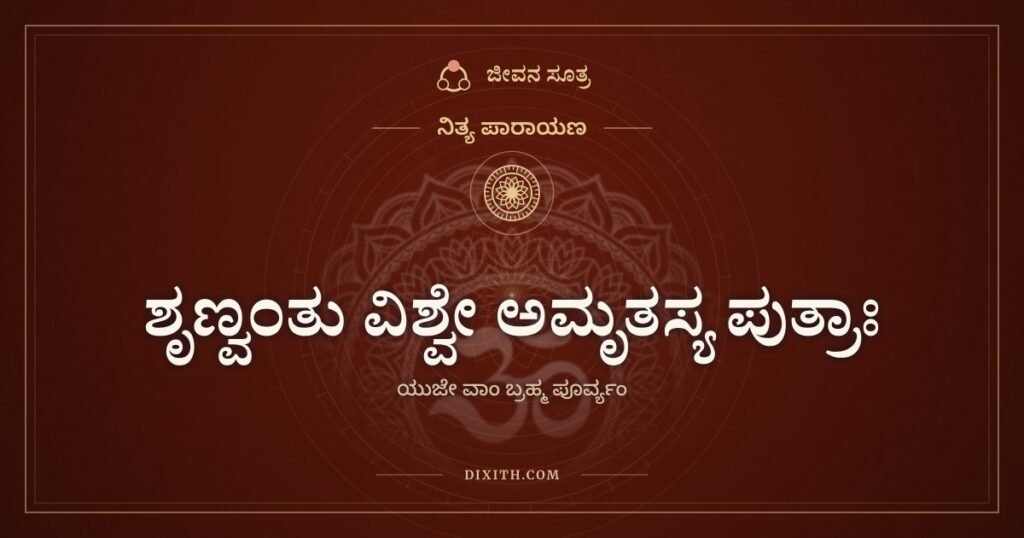
ಶ್ವೇತಾಶ್ವತರ ಉಪನಿಷತ್ತಿನ ಎರಡನೇ ಅಧ್ಯಾಯದ ಐದನೇ ಮಂತ್ರ ಇದು.
ಧ್ಯಾನ ಯೋಗದ ಆರಂಭದಲ್ಲಿ ನಮಸ್ಕಾರದಿಂದ ಹಳೆಯ ಬ್ರಹ್ಮಜ್ಞಾನವನ್ನು ಜೋಡಿಸಿಕೊಳ್ಳುತ್ತೇವೆ ಎಂದು ಹೇಳಿ, ಅಮೃತದ ಮಕ್ಕಳಾದ ಎಲ್ಲರೂ ಇದನ್ನು ಕೇಳಲಿ ಎಂದು ಕರೆ ಕೊಡುತ್ತದೆ.
ಶ್ಲೋಕ (ಕನ್ನಡ)
ಯುಜೇ ವಾಂ ಬ್ರಹ್ಮ ಪೂರ್ವ್ಯಂ ನಮೋಭಿರ್ವಿಶ್ಲೋಕ ಏತು ಪಥ್ಯೇವ ಸೂರೇಃ ।
ಶೃಣ್ವಂತು ವಿಶ್ವೇ ಅಮೃತಸ್ಯ ಪುತ್ರಾ ಆ ಯೇ ಧಾಮಾನಿ ದಿವ್ಯಾನಿ ತಸ್ಥುಃ ॥
ಶ್ಲೋಕ (ದೇವನಾಗರಿ)
युजे वां ब्रह्म पूर्व्यं नमोभिर्विश्लोक एतु पथ्येव सूरेः ।
शृण्वंतु विश्वे अमृतस्य पुत्रा आ ये धामानि दिव्यानि तस्थुः ॥
ಶ್ಲೋಕ (IAST)
yuje vāṃ brahma pūrvyaṃ namobhirviśloka etu pathyeva sūreḥ |
śṛṇvaṃtu viśve amṛtasya putrā ā ye dhāmāni divyāni tasthuḥ ||
ಪದಶಃ ಅರ್ಥ
- ಯುಜೇ (युजे, yuje) = ಜೋಡಿಸುತ್ತೇವೆ, ಕೂಡಿಸುತ್ತೇವೆ (we join)
- ವಾಂ (वां, vāṃ) = ನಿಮ್ಮಿಬ್ಬರನ್ನು (ವ್ಯಾಖ್ಯಾನಕಾರರ ಓದು ಬೇರೆ ಬೇರೆ, ವಿವರಣೆ ನೋಡಿ) (you two (read differently by commentators, see the notes))
- ಬ್ರಹ್ಮ (ब्रह्म, brahma) = ಬ್ರಹ್ಮವನ್ನು, ಬ್ರಹ್ಮಜ್ಞಾನವನ್ನು (Brahman, the knowledge of Brahman)
- ಪೂರ್ವ್ಯಂ (पूर्व्यं, pūrvyaṃ) = ಹಳೆಯದಾದ, ಮೊದಲಿನ (ancient, first)
- ನಮೋಭಿರ್ವಿಶ್ಲೋಕ (नमोभिर्विश्लोक, namobhirviśloka) = ನಮಸ್ಕಾರಗಳಿಂದ, ಕೀರ್ತಿ (ನಮೋಭಿಃ + ವಿಶ್ಲೋಕಃ) (with salutations, fame (or song))
- ಏತು (एतु, etu) = ಹೋಗಲಿ, ಹರಡಲಿ (may it go forth)
- ಪಥ್ಯೇವ (पथ्येव, pathyeva) = ದಾರಿಯಂತೆ (ಪಥ್ಯಾ + ಇವ) (like a path)
- ಸೂರೇಃ (सूरेः, sūreḥ) = ಸೂರ್ಯನ, ಜ್ಞಾನಿಯ (of the sun, of the wise one)
- ಶೃಣ್ವಂತು (शृण्वंतु, śṛṇvaṃtu) = ಕೇಳಲಿ (let them hear)
- ವಿಶ್ವೇ (विश्वे, viśve) = ಎಲ್ಲರೂ (all)
- ಅಮೃತಸ್ಯ (अमृतस्य, amṛtasya) = ಅಮೃತದ (of the immortal)
- ಪುತ್ರಾ (पुत्रा, putrā) = ಮಕ್ಕಳು (ಪುತ್ರಾಃ) (children)
- ಆ (आ, ā) = ವರೆಗೆ, ಇಲ್ಲಿ ಹೇಳುವ ವ್ಯಾಪ್ತಿಯನ್ನು ಸೂಚಿಸುತ್ತದೆ (up to, marking the range)
- ಯೇ (ये, ye) = ಯಾರು (who)
- ಧಾಮಾನಿ (धामानि, dhāmāni) = ಲೋಕಗಳಲ್ಲಿ, ಧಾಮಗಳಲ್ಲಿ (in the abodes)
- ದಿವ್ಯಾನಿ (दिव्यानि, divyāni) = ದಿವ್ಯವಾದ (divine)
- ತಸ್ಥುಃ (तस्थुः, tasthuḥ) = ನೆಲೆಸಿದ್ದಾರೆ (have taken their place)
ಸಂಪೂರ್ಣ ಅರ್ಥ (ಕನ್ನಡ)
ಹಳೆಯದಾದ ಬ್ರಹ್ಮಜ್ಞಾನವನ್ನು ನಾವು ನಮಸ್ಕಾರಗಳಿಂದ ನಮ್ಮೊಂದಿಗೆ ಜೋಡಿಸಿಕೊಳ್ಳುತ್ತೇವೆ. ಜ್ಞಾನಿಯ ಕೀರ್ತಿ ದಾರಿಯಂತೆ ಎಲ್ಲೆಡೆ ಹರಡಲಿ. ಅಮೃತದ ಮಕ್ಕಳಾದ ಎಲ್ಲರೂ ಕೇಳಲಿ. ದಿವ್ಯ ಲೋಕಗಳಲ್ಲಿ ನೆಲೆಸಿದವರೂ ಕೇಳಲಿ.
ಸಂಪೂರ್ಣ ಅರ್ಥ (ಇಂಗ್ಲಿಷ್)
We join the ancient knowledge of Brahman to ourselves with salutations. May the fame of the wise one go forth like a path. Let all the children of the immortal hear. Let those who dwell in the divine abodes hear as well.
ಈ ಮಂತ್ರದ ಬಗ್ಗೆAbout this mantra
ಇದು ಶ್ವೇತಾಶ್ವತರ ಉಪನಿಷತ್ತು 2.5. ಎರಡನೆಯ ಸಾಲು ಅಮೃತದ ಮಕ್ಕಳನ್ನು ಕರೆಯುತ್ತದೆ. ಪಥ್ಯೇವ ಎಂಬುದನ್ನು ಪಥ್ಯಾ ಇವ ಎಂದು ಬಿಡಿಸಿ ಓದುತ್ತಾರೆ. ಕೆಲವು ಮುದ್ರಣಗಳಲ್ಲಿ ವಿ ಶ್ಲೋಕ ಎಂದು ಬೇರೆ ಬೇರೆಯಾಗಿ ಬರೆದಿದೆ.
This is Shvetashvatara Upanishad 2.5. Pathyeva is read as pathya iva. Some printed texts write vi shloka as two words.
ವಾಂ ಎಂಬ ಪದವನ್ನು ವ್ಯಾಖ್ಯಾನಕಾರರು ಬೇರೆ ಬೇರೆ ರೀತಿ ಅರ್ಥೈಸಿದ್ದಾರೆ. ಅದರಿಂದ ನಾವು ಇಲ್ಲಿ ಅರ್ಥವನ್ನು ಸರಳವಾಗಿ ಇಟ್ಟಿದ್ದೇವೆ.
Commentators read the word vam in different ways. We have kept the meaning simple here.
ಕೆಲವು ಭಾಷ್ಯಗಳು ಸೂರಿ ಎಂಬ ಪದಕ್ಕೆ ಸೂರ್ಯ ಎಂದೂ ಜ್ಞಾನಿ ಎಂದೂ ಅರ್ಥ ಹೇಳುತ್ತವೆ.
Some commentaries take suri as the sun, others as the wise one.
ಆಧಾರ: ಹಲವು ಮೂಲಗಳು. ಆವೃತ್ತಿಗಳು ಭಿನ್ನವಾಗಿರುವಲ್ಲಿ ಅದನ್ನು ಇಲ್ಲಿ ಸೂಚಿಸಿದ್ದೇವೆ.
Sources: several. Where versions differ, we have noted it here.
ಇಂದಿನ ಬದುಕಿಗೆFor life today
ಜ್ಞಾನ ಕೆಲವರ ಸ್ವತ್ತಲ್ಲ ಎಂಬ ಭಾವ ಇಲ್ಲಿದೆ. ಎಲ್ಲರೂ ಕೇಳಲಿ ಎಂದು ಕರೆಯುವ ಈ ಮಂತ್ರ ನಾವು ಕಲಿತದ್ದನ್ನು ಇತರರೊಂದಿಗೆ ಹಂಚಿಕೊಳ್ಳಲು ನೆನಪಿಸುತ್ತದೆ.
The thought here is that knowledge does not belong to a few. The call to all to listen reminds us to share what we learn.
ಕಲಿಕೆಯನ್ನು ನಮಸ್ಕಾರದಿಂದ ಆರಂಭಿಸುವುದು ಮನಸ್ಸನ್ನು ತೆರೆದಿಡುತ್ತದೆ. ಕೇಳಲು ಸಿದ್ಧರಾಗುವುದೇ ಕಲಿಕೆಯ ಮೊದಲ ಹೆಜ್ಜೆ.
Beginning to learn with a bow keeps the mind open. Being ready to listen is the first step of learning.