The Ultimate Prayer: A Life of Dignity and a Peaceful Death
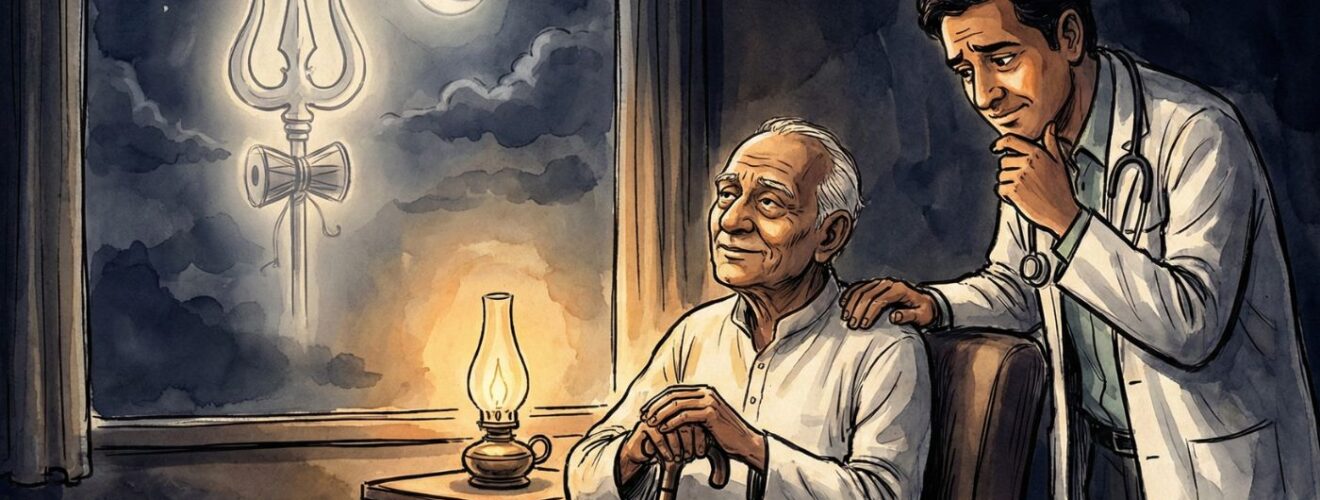
We pray for all sorts of things. Wealth. Success. Long life. A promotion. A bigger house.
But there’s one prayer in Sanskrit literature that goes straight to the core of our life. It strips away every superficial desire and asks for the only two things that actually matter: a dignified life and a peaceful death.
This prayer is addressed to Lord Shiva… Shambhu. It’s called the Anayasena Maranam shloka.
I think it’s the most honest prayer ever written.
The Shloka
In Kannada:
ಅನಾಯಾಸೇನ ಮರಣಂ ವಿನಾ ದೈನ್ಯೇನ ಜೀವನಮ್ |
ದೇಹಿ ಮೇ ಕೃಪಯಾ ಶಂಭೋ ತ್ವಯಿ ಭಕ್ತಿಮಚಂಚಲಾಮ್ ||
In Devanagari:
अनायासेन मरणं विना दैन्येन जीवनम् |
देहि मे कृपया शम्भो त्वयि भक्तिमचञ्चलाम् ||
In IAST Format:
anāyāsena maraṇaṃ vinā dainyena jīvanam |
dehi me kṛpayā śambho tvayi bhaktimacañcalām ||
Breaking Down the Words
ಅನಾಯಾಸೇನ (anāyāsena): without trouble, without effort, without suffering
ಮರಣಂ (maraṇaṃ): death
ವಿನಾ (vinā): without
ದೈನ್ಯೇನ (dainyena): misery, pity, dependency—that state where you need others for everything
ಜೀವನಮ್ (jīvanam): life
ದೇಹಿ ಮೇ (dehi me): give to me
ಕೃಪಯಾ (kṛpayā): out of compassion, by your grace
ಶಂಭೋ (śambho): Oh Shambhu, Oh Shiva
ತ್ವಯಿ (tvayi): in You
ಭಕ್ತಿಂ (bhaktiṃ): devotion
ಅಚಂಚಲಾಮ್ (acañcalām): unwavering, steady, unshakeable
The Full Meaning
In Kannada:
ಹೇ ಶಂಭೋ (ಶಿವನೇ), ನನಗೆ ಆಯಾಸವಿಲ್ಲದ (ನೋವಿಲ್ಲದ) ಮರಣವನ್ನೂ, ದೀನತೆ ಇಲ್ಲದ (ಯಾರ ಮುಂದೆಯೂ ಕೈಚಾಚದ) ಬದುಕನ್ನೂ, ಮತ್ತು ನಿನ್ನಲ್ಲಿ ದೃಢವಾದ ಭಕ್ತಿಯನ್ನೂ ದಯಪಾಲಿಸು.
In English:
Oh Shambhu, please grant me a death without suffering, a life without dependency, and unwavering devotion to You.
That’s the entire prayer. Three requests. Nothing more.
What it Means to a Physician
I’ve been thinking about this prayer for years, and it mirrors everything we actually try to achieve in medicine… even if we don’t always admit it.
Vina Dainyena Jeevanam (A Life of Dignity)
The word dainya doesn’t just mean poverty or misery. It means that pitiable state of complete dependency. You can’t dress yourself. Can’t bathe. Can’t eat without help. You’re alive, sure… but you’ve lost your autonomy.
We don’t just pray to be alive. We pray for functional independence.
In geriatrics, we call this “Activities of Daily Living”… ADLs. Can you feed yourself? Use the toilet by yourself? Walk to the bathroom? These aren’t dramatic things. They’re basic. But they’re what separate a dignified existence from a dependent one.
I see patients who’ve lost this. They’re medically stable, but they can’t do anything on their own. And you can see it in their eyes… they’d rather not be here like this. That’s dainya. The prayer asks to be spared from such a fate.
Anayasena Maranam (A Peaceful Death)
Here’s where modern medicine struggles.
Anayasena means without effort, without struggle, without prolonged agony. In our attempt to save lives… and we should try… we sometimes end up prolonging death instead. Ventilators. Feeding tubes. ICU admissions that stretch for weeks. The person is technically alive, but they’re suffering through every moment of it.
This line asks for a different kind of death. A peaceful one. Quick. Painless. The kind where you go to sleep and don’t wake up, or your heart just stops suddenly without warning.
In Indian culture, this is actually considered a blessing. “He died in his sleep.” “It was instant.” People say these things with relief, and they’re right to. That’s anayasena maranam… the death without suffering that this prayer asks for.
Tvayi Bhaktim Achanchalam (Unwavering Faith)
And then there’s this final line. The anchor.
It acknowledges something we all know but don’t always want to admit: we don’t control any of this. You can eat right, exercise, take your medications, do everything perfectly… and still get sick. Still suffer. Still die in ways that aren’t peaceful.
So the prayer asks for the mental strength to stay devoted and balanced regardless of how things actually unfold. Achanchala… unshakeable. Not dependent on outcomes. Not dependent on getting what you want.
That’s the hardest part, honestly. The faith that holds even when life doesn’t give you dignity. Even when death doesn’t come peacefully. Even when everything falls apart.
The Deeper Wisdom
What strikes me about this prayer is what it doesn’t ask for.
It doesn’t ask for a long life. Or wealth. Or success. Or recognition. It doesn’t even ask to avoid death… just for death to be peaceful when it comes.
It’s remarkably honest about the human condition. We’re going to die. That’s not negotiable. And most of us, if we live long enough, will face periods of dependency… illness, old age, injury. That’s reality.
So instead of praying for the impossible, this shloka asks for the best version of the inevitable. Live with dignity as long as you can. Die peacefully when your time comes. And through all of it… the good, the bad, the terrifying… hold on to something larger than yourself.
That’s not escapism. That’s wisdom.