
ವಾರ್ಡಿನ ರೌಂಡ್ಸ್ ನಡುವೆ ಕೈಯಲ್ಲೊಂದು ತಿಂಡಿ ಹಿಡಿದು ನಡೆಯುವವರನ್ನು ನೋಡಿದ್ದೇವೆ. ಹಿರಿಯರು ಅಂಥವರನ್ನು ಸುಮ್ಮನೆ ಗಮನಿಸುತ್ತಾರೆ, ಏನೂ ಹೇಳುವುದಿಲ್ಲ.
ಈ ಎರಡು ಸಾಲಿನ ಶ್ಲೋಕದಲ್ಲಿ ಮಾತನಾಡುವವನು ತನ್ನ ಅಭ್ಯಾಸಗಳ ಪಟ್ಟಿಯನ್ನು ರಾಜನ ಮುಂದಿಟ್ಟು, ಇಷ್ಟಾದರೂ ತನ್ನನ್ನು ಮೂರ್ಖ ಎನ್ನುವುದು ಯಾವ ಕಾರಣಕ್ಕೆ ಎಂದು ಕೇಳುತ್ತಾನೆ.
ಸುಭಾಷಿತ (ಕನ್ನಡ)
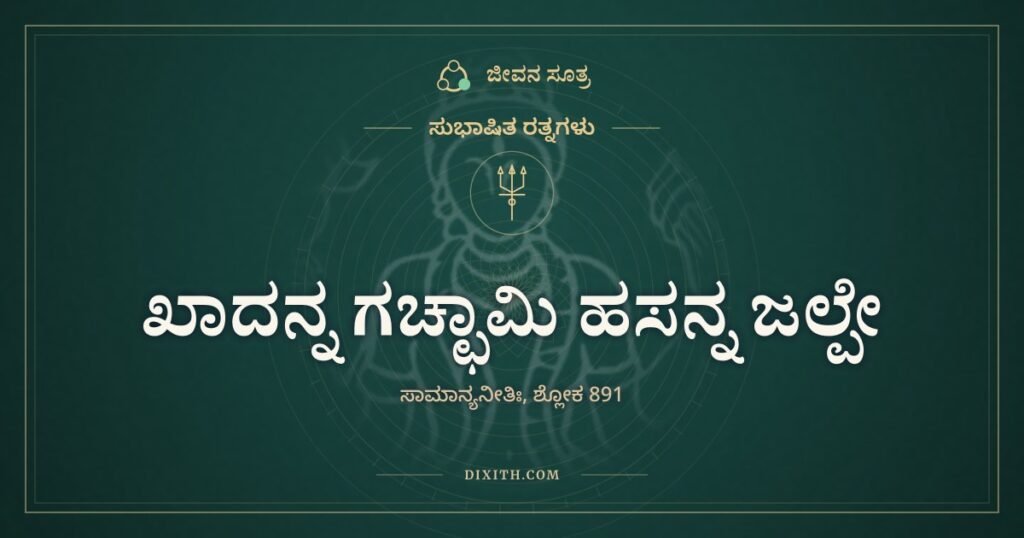
ಖಾದನ್ನ ಗಚ್ಛಾಮಿ ಹಸನ್ನ ಜಲ್ಪೇ ಗತಂ ನ ಶೋಚಾಮಿ ಕೃತಂ ನ ಮನ್ಯೇ
ದ್ವಯೋಸ್ತೃತೀಯೋ ನ ಭವಾಮಿ ರಾಜನ್ಕೇನಾಸ್ಮಿ ಮೂರ್ಖೋ ವದ ಕಾರಣೇನ
ಸುಭಾಷಿತ (ದೇವನಾಗರಿ)
खादन्न गच्छामि हसन्न जल्पे गतं न शोचामि कृतं न मन्ये
द्वयोस्तृतीयो न भवामि राजन्केनास्मि मूर्खो वद कारणेन
ಸುಭಾಷಿತ (IAST)
khādanna gacchāmi hasanna jalpe gataṃ na śocāmi kṛtaṃ na manye
dvayostṛtīyo na bhavāmi rājankenāsmi mūrkho vada kāraṇena
ಪದಶಃ ಅರ್ಥ
- ಖಾದನ್ನ (खादन्न, khādanna) = ತಿನ್ನುತ್ತಾ ಇಲ್ಲ (ಖಾದನ್ + ನ) (not while eating (khadan + na))
- ಗಚ್ಛಾಮಿ (गच्छामि, gacchāmi) = ನಡೆಯುತ್ತೇನೆ (I walk)
- ಹಸನ್ನ (हसन्न, hasanna) = ನಗುತ್ತಾ ಇಲ್ಲ (ಹಸನ್ + ನ) (not while laughing (hasan + na))
- ಜಲ್ಪೇ (जल्पे, jalpe) = ಮಾತನಾಡುತ್ತೇನೆ (I speak)
- ಗತಂ ನ (गतं न, gataṃ na) = ಕಳೆದುಹೋದುದನ್ನು ಅಲ್ಲ (not what is gone)
- ಶೋಚಾಮಿ (शोचामि, śocāmi) = ದುಃಖಿಸುತ್ತೇನೆ (I grieve over)
- ಕೃತಂ ನ (कृतं न, kṛtaṃ na) = ಮಾಡಿದ್ದನ್ನು ಅಲ್ಲ (not what has been done)
- ಮನ್ಯೇ (मन्ये, manye) = ಎಣಿಸುತ್ತೇನೆ, ಲೆಕ್ಕ ಇಡುತ್ತೇನೆ (I count, I reckon)
- ದ್ವಯೋಸ್ತೃತೀಯೋ (द्वयोस्तृतीयो, dvayostṛtīyo) = ಇಬ್ಬರ ನಡುವೆ ಮೂರನೆಯವನು (ದ್ವಯೋಃ + ತೃತೀಯಃ) (the third between two (dvayoh + trtiyah))
- ನ ಭವಾಮಿ (न भवामि, na bhavāmi) = ಆಗುವುದಿಲ್ಲ (I do not become)
- ರಾಜನ್ಕೇನಾಸ್ಮಿ (राजन्केनास्मि, rājankenāsmi) = ರಾಜನೇ, ಯಾವ ಕಾರಣದಿಂದ ಇದ್ದೇನೆ (ರಾಜನ್ + ಕೇನ + ಅಸ್ಮಿ) (O king, by what reason am I (rajan + kena + asmi))
- ಮೂರ್ಖೋ (मूर्खो, mūrkho) = ಮೂರ್ಖ (a fool)
- ವದ (वद, vada) = ಹೇಳು (tell me)
- ಕಾರಣೇನ (कारणेन, kāraṇena) = ಕಾರಣದಿಂದ (by what cause)
ಸಂಪೂರ್ಣ ಅರ್ಥ (ಕನ್ನಡ)
ನಾನು ತಿನ್ನುತ್ತಾ ನಡೆಯುವುದಿಲ್ಲ, ನಗುತ್ತಾ ಮಾತನಾಡುವುದಿಲ್ಲ. ಕಳೆದುಹೋದುದಕ್ಕೆ ದುಃಖಿಸುವುದಿಲ್ಲ, ನಾನು ಮಾಡಿದ್ದನ್ನು ಲೆಕ್ಕ ಇಟ್ಟು ಹೇಳಿಕೊಳ್ಳುವುದಿಲ್ಲ. ಇಬ್ಬರ ನಡುವೆ ಮೂರನೆಯವನಾಗಿ ನುಗ್ಗುವುದಿಲ್ಲ. ರಾಜನೇ, ಹಾಗಿದ್ದರೂ ನಾನು ಮೂರ್ಖನಾಗಿರುವುದು ಯಾವ ಕಾರಣದಿಂದ, ಹೇಳು.
ಸಂಪೂರ್ಣ ಅರ್ಥ (ಇಂಗ್ಲಿಷ್)
I do not walk while eating, and I do not speak while laughing. I do not grieve over what is gone, and I make no tally of what I have done. I do not push in as a third between two people. O king, tell me then, for what reason am I a fool?
ಈ ಸುಭಾಷಿತದ ಬಗ್ಗೆAbout this subhashita
ಶ್ಲೋಕದ ಕೊನೆಯ ಪ್ರಶ್ನೆಗೆ ಉತ್ತರ ಶ್ಲೋಕದಲ್ಲೇ ಇಲ್ಲ. ಕೇಳುವವನ ಧ್ವನಿಯಲ್ಲಿ ಕೊಂಚ ವ್ಯಂಗ್ಯ ಇದೆ ಎಂದು ನಾವು ಓದುತ್ತೇವೆ. ಇವೆಲ್ಲ ಒಳ್ಳೆಯ ನಡತೆಯ ಗುರುತುಗಳು, ಹಾಗಿರುವಾಗ ಮೂರ್ಖತನದ ಆರೋಪ ಏಕೆ ಎಂಬುದು ಅವನ ಸವಾಲು.
The verse gives no answer to its closing question. We read some irony in the speaker’s voice. These are all marks of good conduct, so why the charge of foolishness, he asks.
ಕೃತಂ ನ ಮನ್ಯೇ ಎಂಬ ಮಾತನ್ನು ಬೇರೆ ಬೇರೆ ರೀತಿ ತೆಗೆದುಕೊಳ್ಳಬಹುದು. ತಾನು ಮಾಡಿದ ಉಪಕಾರವನ್ನು ಎಣಿಸುವುದಿಲ್ಲ ಎಂಬುದು ಇಲ್ಲಿ ಹೆಚ್ಚು ಸಹಜವಾದ ಓದು, ಆದರೆ ಇದು ಸ್ವಲ್ಪ ಮುಕ್ತವಾಗಿದೆ.
The phrase krtam na manye can be taken in more than one way. That he does not count the good he has done is the more natural reading here, though it is somewhat open.
ದ್ವಯೋಸ್ತೃತೀಯೋ ನ ಭವಾಮಿ ಎಂದರೆ ಇಬ್ಬರು ಖಾಸಗಿಯಾಗಿ ಮಾತನಾಡುತ್ತಿರುವಾಗ ಮೂರನೆಯವನಾಗಿ ಸೇರದಿರುವುದು.
Dvayos trtiyo na bhavami means not joining as a third when two people are talking privately.
ಆಧಾರ: ಸುಭಾಷಿತರತ್ನಭಾಂಡಾಗಾರ, ರಾಜ ಪ್ರಕರಣ (ನಿರ್ಣಯಸಾಗರ ಮುದ್ರಣಾಲಯ, ಮುಂಬಯಿ), ಪುಟ 174. ಶ್ಲೋಕದ ಪಾಠವನ್ನು ಮುದ್ರಿತ ಪ್ರತಿಯ ಸ್ಕ್ಯಾನ್ನೊಂದಿಗೆ ಅಕ್ಷರಶಃ ಹೋಲಿಸಿದ್ದೇವೆ. ಅರ್ಥ ಮತ್ತು ವಿವರಣೆ ನಮ್ಮದು.
Source: Subhashitaratnabhandagara, Raja Prakarana (Nirnaya Sagar Press, Bombay), page 174. The text of the verse was checked letter by letter against a scan of the printed book. The meaning and notes are ours.
ಇಂದಿನ ಬದುಕಿಗೆFor life today
ಒಳ್ಳೆಯ ನಡತೆಯ ಪಟ್ಟಿ ಇದ್ದ ಮಾತ್ರಕ್ಕೆ ಒಬ್ಬನು ಜ್ಞಾನಿ ಎನಿಸುವುದಿಲ್ಲ ಎಂಬ ಎಚ್ಚರ ಇಲ್ಲಿದೆ. ವಿದ್ಯಾರ್ಥಿಗಳಿಗೆ ಶಿಸ್ತು ಕಲಿಸುವಾಗ ಇದು ನೆನಪಾಗುತ್ತದೆ. ನಡತೆ ಬೇಕು, ಆದರೆ ಅದರ ಹಿಂದೆ ತಿಳಿವಳಿಕೆಯೂ ಇರಬೇಕು.
Good manners alone do not make a person wise, and the verse seems to know it. We remember this when teaching discipline to students. Conduct is needed, but understanding must stand behind it.
ಯಾರಾದರೂ ನಮ್ಮನ್ನು ಮೂರ್ಖ ಎಂದಾಗ ಅವರ ಕಾರಣವನ್ನು ಕೇಳಿ ತಿಳಿಯಬೇಕು. ಅದರಲ್ಲಿ ಸತ್ಯ ಇರಬಹುದು, ಕೇವಲ ಅಸಮಾಧಾನ ಇರಬಹುದು.
When someone calls us a fool, it is worth asking for the reason. There may be truth in it, or only displeasure.