The Mahamrityunjaya Mantra: The Real Meaning
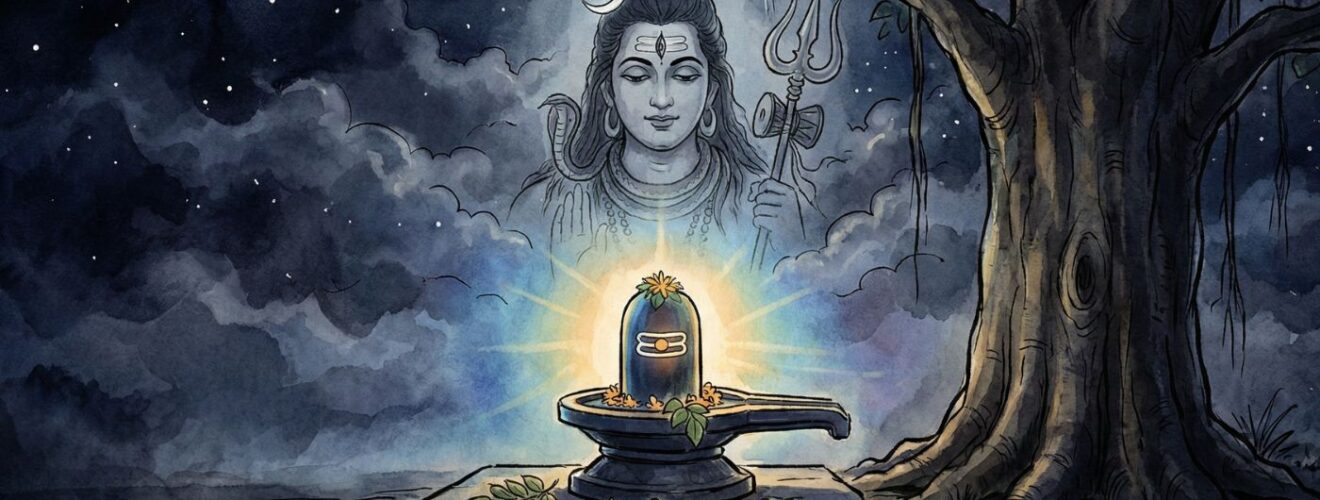
Mahashivaratri. The night of stillness. The night when we turn to Lord Shiva’s infinite consciousness.
And on this night, there’s one invocation that stands above all others: The Mahamrityunjaya Mantra from the Rigveda (7.59.12).
You’ve probably heard it called the Tryambakam Mantra. But here’s what most people miss: it’s not asking for a longer life. Not really. It’s something deeper—a profound statement about existence itself, about attachment, and about what it means to be free.
It doesn’t beg for immortality of flesh and bone. Instead, it seeks liberation from death’s grip on our minds. From the fear that binds us.
Let me walk you through this ancient verse.
The Mantra
1. Shloka in Kannada
ಓಂ ತ್ರ್ಯಂಬಕಂ ಯಜಾಮಹೇ ಸುಗಂಧಿಂ ಪುಷ್ಟಿವರ್ಧನಮ್ ।
ಉರ್ವಾರುಕಮಿವ ಬಂಧನಾನ್ ಮೃತ್ಯೋರ್ಮುಕ್ಷೀಯ ಮಾऽಮೃತಾತ್ ॥
2. Shloka in Devanagari
ॐ त्र्यम्बकं यजामहे सुगन्धिं पुष्टिवर्धनम् ।
उर्वारुकमिव बन्धनान् मृत्योर्मुक्षीय माऽमृतात् ॥
3. Shloka in IAST Format
om tryambakaṃ yajāmahe sugandhiṃ puṭivardhanam ।
urvārukamiva bandhanān mṛtyormukṣīya mā’mṛtāt ॥
Word by Word Meaning
Let me explain what each word actually means.
ಓಂ (Om): The primordial sound. It represents universal consciousness—everything that was, is, and will be.
ತ್ರ್ಯಂಬಕಂ (Tryambakaṃ): The Three-Eyed One. That’s Shiva. Those three eyes? They’re the sun, moon, and fire. Wisdom itself.
ಯಜಾಮಹೇ (Yajāmahe): We worship. We honor. We meditate upon.
ಸುಗಂಧಿಂ (Sugandhiṃ): The Fragrant One. Think about this—the divine permeates existence like a fragrance you can’t quite place but always feel.
ಪುಷ್ಟಿವರ್ಧನಮ್ (Puṣṭivardhanam): The Nourisher. The one who sustains us—physically, mentally, spiritually.
ಉರ್ವಾರುಕಮ್ ಇವ (Urvārukam iva): Like a cucumber. Or a melon. (Cucumber?! Melon?! I will explain this below)
ಬಂಧನಾನ್ (Bandhanān): From bondage. From the binding stem.
ಮೃತ್ಯೋಃ (Mṛtyoḥ): From death. And from the fear that comes with it.
ಮುಕ್ಷೀಯ (Mukṣīya): May I be liberated.
ಮಾ ಅಮೃತಾತ್ (Mā amṛtāt): Not from immortality. Not from Moksha.
The Cucumber Metaphor (This Is Beautiful)
Here’s where this mantra gets really interesting.
“Urvārukamiva Bandhanān” – like a cucumber from its bondage.
Picture an unripe cucumber on the vine. It clings desperately. Try to pull it off, and you’ll damage the fruit or tear the vine. It’s not ready. It struggles.
But a ripe cucumber? It drops effortlessly. The connection just… releases.
Here’s the thing: it doesn’t fall because it’s dead. It falls because it’s complete.
That’s what this mantra is asking for. Not an escape. Not an early exit. Maturity. Pakvata. The prayer is that we live fully, nourished by the divine, and when our time comes—when we’re truly ripe—we leave this physical vessel as naturally as that fruit drops from the vine.
No pain. No clinging. No fear.
Just completion.
What It All Means
In Kannada:
ನಾವು ಸುಗಂಧಯುಕ್ತನಾದ ಮತ್ತು ಎಲ್ಲರನ್ನೂ ಪೋಷಿಸಿ ಬೆಳೆಸುವ ಮುಕ್ಕಣ್ಣನನ್ನು (ಶಿವನನ್ನು) ಪೂಜಿಸುತ್ತೇವೆ. ಬಳ್ಳಿಯಿಂದ ಸೌತೆಕಾಯಿಯು (ಪಕ್ವವಾದಾಗ) ತನ್ನಷ್ಟಕ್ಕೆ ತಾನೇ ಕಳಚಿಕೊಳ್ಳುವಂತೆ, ನಾನು ಮೃತ್ಯುವಿನ (ಸಂಸಾರ) ಬಂಧನದಿಂದ ಮುಕ್ತನಾಗುವಂತಾಗಲಿ, ಆದರೆ ಅಮೃತತ್ವದಿಂದ (ಮೋಕ್ಷದಿಂದ) ಅಲ್ಲ.
In English:
We worship the Three-Eyed One—Lord Shiva—who’s fragrant and nourishes all beings. Just as a ripe cucumber severs effortlessly from its stalk, may I be liberated from death and mortality, but never separated from immortality, from Moksha.
What This Means for You Today
Shivaratri isn’t just about ritual. It’s about mindfulness.
When you chant this mantra, you’re doing something radical. You’re choosing to live fully while releasing the anxiety of the end. You’re acknowledging the inevitable without being paralyzed by it.
This mantra guides us from fear of the temporary to awareness of the eternal. It reminds us that we’re not just bodies counting down to expiration. We’re consciousness itself, temporarily housed in this flesh.
True victory over death? It’s not about living forever. It’s about being free from the fear of death while we’re alive.
That’s the gift of this ancient verse. That’s what Shiva offers us on this sacred night.
Om Namah Shivaya.