
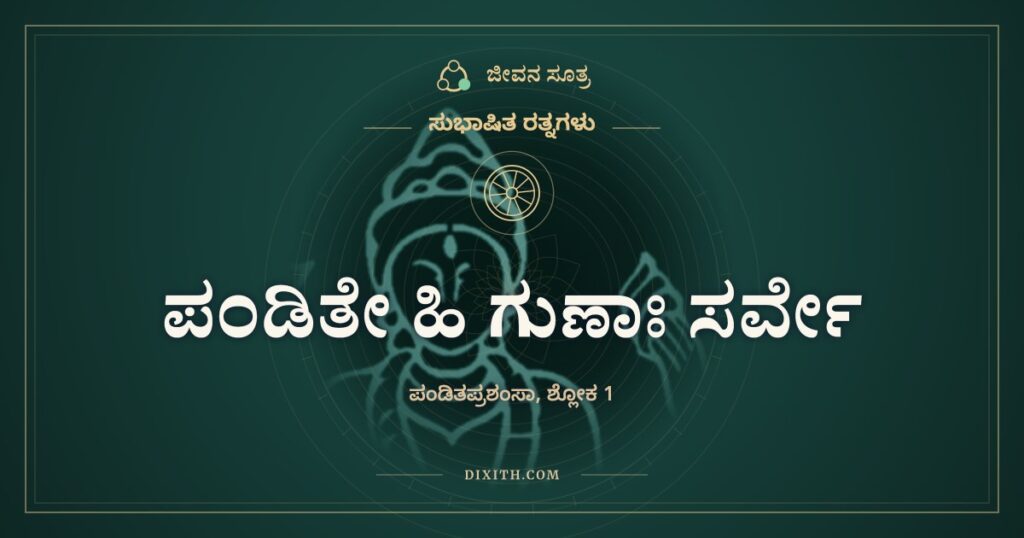
ಸುಭಾಷಿತರತ್ನಭಾಂಡಾಗಾರದ ಪಂಡಿತಪ್ರಶಂಸಾ ಎಂಬ ಭಾಗ ಇಲ್ಲಿಂದ ಆರಂಭವಾಗುತ್ತದೆ. ತಿಳಿದವನ ಹಿರಿಮೆಯ ಬಗ್ಗೆ ಇಪ್ಪತ್ತೆಂಟು ಶ್ಲೋಕಗಳು ಅಲ್ಲಿವೆ.
ಮೊದಲ ಶ್ಲೋಕವೇ ಲೆಕ್ಕವನ್ನು ನೇರವಾಗಿ ಹೇಳಿಬಿಡುತ್ತದೆ. ಸಾವಿರ ಮೂರ್ಖರಿಗಿಂತ ಒಬ್ಬ ತಿಳಿದವನೇ ಹೆಚ್ಚು.
ಸುಭಾಷಿತ (ಕನ್ನಡ)
ಪಣ್ಡಿತೇ ಹಿ ಗುಣಾಃ ಸರ್ವೇ ಮೂರ್ಖೇ ದೋಷಾಶ್ಚ ಕೇವಲಾಃ ।
ತಸ್ಮಾನ್ಮೂರ್ಖಸಹಸ್ರೇಭ್ಯಃ ಪ್ರಾಜ್ಞ ಏಕೋ ವಿಶಿಷ್ಯತೇ ॥
ಸುಭಾಷಿತ (ದೇವನಾಗರಿ)
पण्डिते हि गुणाः सर्वे मूर्खे दोषाश्च केवलाः ।
तस्मान्मूर्खसहस्रेभ्यः प्राज्ञ एको विशिष्यते ॥
ಸುಭಾಷಿತ (IAST)
paṇḍite hi guṇāḥ sarve mūrkhe doṣāśca kevalāḥ |
tasmānmūrkhasahasrebhyaḥ prājña eko viśiṣyate ||
ಪದಶಃ ಅರ್ಥ
- ಪಣ್ಡಿತೇ ಹಿ (पण्डिते हि, paṇḍite hi) = ತಿಳಿದವನಲ್ಲಿ ಖಂಡಿತವಾಗಿ (in the learned man, indeed)
- ಗುಣಾಃ ಸರ್ವೇ (गुणाः सर्वे, guṇāḥ sarve) = ಎಲ್ಲ ಗುಣಗಳೂ (all the virtues)
- ಮೂರ್ಖೇ (मूर्खे, mūrkhe) = ಮೂರ್ಖನಲ್ಲಿ (in the fool)
- ದೋಷಾಃ ಚ ಕೇವಲಾಃ (दोषाः च केवलाः, doṣāḥ ca kevalāḥ) = ದೋಷಗಳು ಮಾತ್ರ (only the faults)
- ತಸ್ಮಾತ್ (तस्मात्, tasmāt) = ಆದ್ದರಿಂದ (therefore)
- ಮೂರ್ಖಸಹಸ್ರೇಭ್ಯಃ (मूर्खसहस्रेभ्यः, mūrkhasahasrebhyaḥ) = ಸಾವಿರ ಮೂರ್ಖರಿಗಿಂತ (than a thousand fools)
- ಪ್ರಾಜ್ಞಃ ಏಕಃ (प्राज्ञः एकः, prājñaḥ ekaḥ) = ಒಬ್ಬ ಪ್ರಾಜ್ಞ (one wise man)
- ವಿಶಿಷ್ಯತೇ (विशिष्यते, viśiṣyate) = ಹೆಚ್ಚು ಎನಿಸುತ್ತಾನೆ (is counted greater)
ಸಂಪೂರ್ಣ ಅರ್ಥ (ಕನ್ನಡ)
ತಿಳಿದವನಲ್ಲಿ ಎಲ್ಲ ಗುಣಗಳೂ ಇರುತ್ತವೆ, ಮೂರ್ಖನಲ್ಲಿ ದೋಷಗಳು ಮಾತ್ರ. ಆದ್ದರಿಂದ ಸಾವಿರ ಮೂರ್ಖರಿಗಿಂತ ಒಬ್ಬ ಪ್ರಾಜ್ಞನೇ ಹೆಚ್ಚು.
ಸಂಪೂರ್ಣ ಅರ್ಥ (ಇಂಗ್ಲಿಷ್)
In a learned man are all the virtues; in a fool, only the faults. A single wise man is therefore reckoned greater than a thousand fools.
ಈ ಸುಭಾಷಿತದ ಬಗ್ಗೆAbout this subhashita
ಪಂಡಿತ ಎಂಬ ಪದ ಸಂಸ್ಕೃತದಲ್ಲಿ ಬರೀ ಓದಿದವನು ಎಂಬ ಅರ್ಥ ಕೊಡುವುದಿಲ್ಲ. ವಿಷಯವನ್ನು ತಿಳಿದು, ತೂಗಿ, ಸರಿಯಾಗಿ ನಡೆಸಬಲ್ಲವನು ಎಂಬುದು ಅದರ ಅರ್ಥ.
In Sanskrit the word pandita does not mean merely one who has read. It means one who understands a matter, weighs it, and can carry it through.
ಈ ಭಾಗದ ಕೊನೆಯ ಶ್ಲೋಕಗಳು ಇದೇ ಮಾತನ್ನು ತಿರುಗಿಸಿ ಹೇಳುತ್ತವೆ. ಓದಿದ ಮಾತ್ರಕ್ಕೆ ಪಂಡಿತನಾಗುವುದಿಲ್ಲ ಎಂಬುದನ್ನೂ ಪುಸ್ತಕವೇ ಮುಂದೆ ಹೇಳುತ್ತದೆ.
Later verses in this section turn the same statement around. The book itself goes on to say that reading alone does not make a man learned.
ಆಧಾರ: ಸುಭಾಷಿತರತ್ನಭಾಂಡಾಗಾರ, ಸಾಮಾನ್ಯ ಪ್ರಕರಣ (ನಿರ್ಣಯಸಾಗರ ಮುದ್ರಣಾಲಯ, ಮುಂಬಯಿ), ಪುಟ 38. ಶ್ಲೋಕದ ಪಾಠವನ್ನು ಮುದ್ರಿತ ಪ್ರತಿಯ ಸ್ಕ್ಯಾನ್ನೊಂದಿಗೆ ಅಕ್ಷರಶಃ ಹೋಲಿಸಿದ್ದೇವೆ. ಅರ್ಥ ಮತ್ತು ವಿವರಣೆ ನಮ್ಮದು.
Source: Subhashitaratnabhandagara, Samanya Prakarana (Nirnaya Sagar Press, Bombay), page 38. The text of the verse was checked letter by letter against a scan of the printed book. The meaning and notes are ours.
ಇಂದಿನ ಬದುಕಿಗೆFor life today
ಸಂಖ್ಯೆಯೇ ಸರಿ ಎಂಬುದಕ್ಕೆ ಆಧಾರವಲ್ಲ ಎಂಬುದು ಈ ಶ್ಲೋಕದ ಒಳದನಿ. ಸಭೆಯಲ್ಲಿ ಹೆಚ್ಚು ಜನ ಹೇಳಿದರೆ ಅದೇ ಸರಿ ಎಂದಾಗುವುದಿಲ್ಲ.
The undertone is that numbers are no proof of rightness. What most people in a room say does not become correct by being said by most.
ಆದರೆ ಇದನ್ನು ಬೇರೆಯವರನ್ನು ಮೂರ್ಖರೆಂದು ಕರೆಯುವ ಪರವಾನಗಿಯಾಗಿ ಬಳಸಬಾರದು. ಶ್ಲೋಕ ಹೊಗಳುತ್ತಿರುವುದು ತಿಳಿವನ್ನೇ ಹೊರತು ತಿಳಿದವನ ಅಹಂಕಾರವನ್ನಲ್ಲ.
But this should not be taken as a licence to call others fools. What the verse praises is knowledge, not the pride of the knowledgeable.