
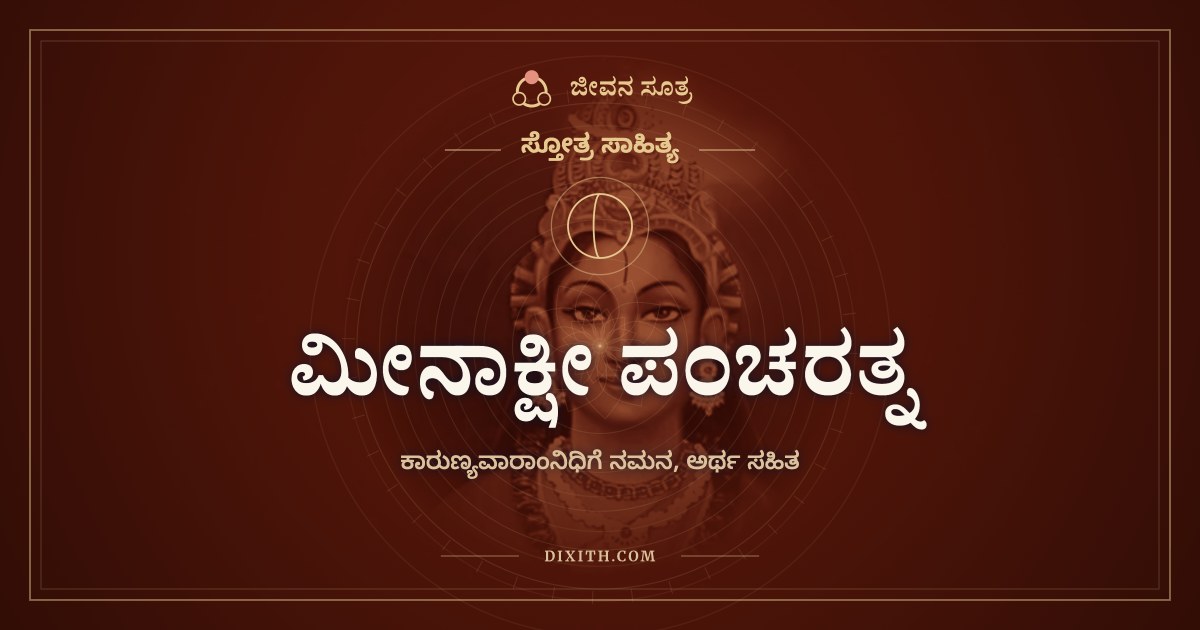
ಮೀನಾಕ್ಷೀ ಪಂಚರತ್ನ ಮಧುರೆಯ ಮೀನಾಕ್ಷಿ ದೇವಿಯನ್ನು ಸ್ತುತಿಸುವ ಐದು ಶ್ಲೋಕಗಳ ಸಣ್ಣ ಸ್ತೋತ್ರ. ಪ್ರತಿ ಶ್ಲೋಕವೂ “ಕರುಣೆಯ ಕಡಲಾದ ಮೀನಾಕ್ಷಿಗೆ ನಾನು ಸದಾ ನಮಿಸುತ್ತೇನೆ” ಎಂಬ ಒಂದೇ ಸಾಲಿನಲ್ಲಿ ಮುಗಿಯುತ್ತದೆ. ಇದನ್ನು ಆದಿ ಶಂಕರಾಚಾರ್ಯರ ಕೃತಿ ಎಂದು ಪರಂಪರೆ ಹೇಳುತ್ತದೆ.
The Meenakshi Pancharatnam is a short hymn of five verses in praise of the goddess Meenakshi of Madurai. Every verse ends in the same line: “I bow always to Meenakshi, the ocean of compassion.” Tradition attributes it to Adi Shankaracharya.
ಮೊದಲ ಎರಡು ಶ್ಲೋಕಗಳು ದೇವಿಯ ರೂಪ ಮತ್ತು ಆಭರಣಗಳನ್ನು ವರ್ಣಿಸುತ್ತವೆ. ಮೂರನೆಯದು ಶ್ರೀವಿದ್ಯಾ ಉಪಾಸನೆಯ ಪರಿಭಾಷೆಯಲ್ಲಿ ಅವಳನ್ನು ಹೊಗಳುತ್ತದೆ. ಕೊನೆಯ ಎರಡು ಅವಳನ್ನು ಸುಂದರೇಶ್ವರನ ಪತ್ನಿ, ನಾರಾಯಣನ ತಂಗಿ ಮತ್ತು ನಾದಬ್ರಹ್ಮದ ರೂಪ ಎಂದು ಕೊಂಡಾಡುತ್ತವೆ.
The first two verses describe the goddess, her form and her ornaments. The third praises her in the language of Srividya worship. The last two hail her as the consort of Sundareshvara, the younger sister of Narayana and the embodiment of Nada Brahman, the Absolute as sound.
ಪಾಠ (ಕನ್ನಡ)
ಉದ್ಯದ್ಭಾನುಸಹಸ್ರಕೋಟಿಸದೃಶಾಂ ಕೇಯೂರಹಾರೋಜ್ಜ್ವಲಾಂ
ಬಿಂಬೋಷ್ಠೀಂ ಸ್ಮಿತದಂತಪಂಕ್ತಿರುಚಿರಾಂ ಪೀತಾಂಬರಾಲಂಕೃತಾಮ್ ।
ವಿಷ್ಣುಬ್ರಹ್ಮಸುರೇಂದ್ರಸೇವಿತಪದಾಂ ತತ್ತ್ವಸ್ವರೂಪಾಂ ಶಿವಾಂ
ಮೀನಾಕ್ಷೀಂ ಪ್ರಣತೋಽಸ್ಮಿ ಸಂತತಮಹಂ ಕಾರುಣ್ಯವಾರಾಂನಿಧಿಮ್ ॥ 1 ॥
ಮುಕ್ತಾಹಾರಲಸತ್ಕಿರೀಟರುಚಿರಾಂ ಪೂರ್ಣೇಂದುವಕ್ತ್ರಪ್ರಭಾಂ
ಶಿಂಜನ್ನೂಪುರಕಿಂಕಿಣೀಮಣಿಧರಾಂ ಪದ್ಮಪ್ರಭಾಭಾಸುರಾಮ್ ।
ಸರ್ವಾಭೀಷ್ಟಫಲಪ್ರದಾಂ ಗಿರಿಸುತಾಂ ವಾಣೀರಮಾಸೇವಿತಾಂ
ಮೀನಾಕ್ಷೀಂ ಪ್ರಣತೋಽಸ್ಮಿ ಸಂತತಮಹಂ ಕಾರುಣ್ಯವಾರಾಂನಿಧಿಮ್ ॥ 2 ॥
ಶ್ರೀವಿದ್ಯಾಂ ಶಿವವಾಮಭಾಗನಿಲಯಾಂ ಹ್ರೀಂಕಾರಮಂತ್ರೋಜ್ಜ್ವಲಾಂ
ಶ್ರೀಚಕ್ರಾಂಕಿತಬಿಂದುಮಧ್ಯವಸತಿಂ ಶ್ರೀಮತ್ಸಭಾನಾಯಕೀಮ್ ।
ಶ್ರೀಮತ್ಷಣ್ಮುಖವಿಘ್ನರಾಜಜನನೀಂ ಶ್ರೀಮಜ್ಜಗನ್ಮೋಹಿನೀಂ
ಮೀನಾಕ್ಷೀಂ ಪ್ರಣತೋಽಸ್ಮಿ ಸಂತತಮಹಂ ಕಾರುಣ್ಯವಾರಾಂನಿಧಿಮ್ ॥ 3 ॥
ಶ್ರೀಮತ್ಸುಂದರನಾಯಕೀಂ ಭಯಹರಾಂ ಜ್ಞಾನಪ್ರದಾಂ ನಿರ್ಮಲಾಂ
ಶ್ಯಾಮಾಭಾಂ ಕಮಲಾಸನಾರ್ಚಿತಪದಾಂ ನಾರಾಯಣಸ್ಯಾನುಜಾಮ್ ।
ವೀಣಾವೇಣುಮೃದಂಗವಾದ್ಯರಸಿಕಾಂ ನಾನಾವಿಧಾಮಂಬಿಕಾಂ
ಮೀನಾಕ್ಷೀಂ ಪ್ರಣತೋಽಸ್ಮಿ ಸಂತತಮಹಂ ಕಾರುಣ್ಯವಾರಾಂನಿಧಿಮ್ ॥ 4 ॥
ನಾನಾಯೋಗಿಮುನೀಂದ್ರಹೃನ್ನಿವಸತೀಂ ನಾನಾರ್ಥಸಿದ್ಧಿಪ್ರದಾಂ
ನಾನಾಪುಷ್ಪವಿರಾಜಿತಾಂಘ್ರಿಯುಗಳಾಂ ನಾರಾಯಣೇನಾರ್ಚಿತಾಮ್ ।
ನಾದಬ್ರಹ್ಮಮಯೀಂ ಪರಾತ್ಪರತರಾಂ ನಾನಾರ್ಥತತ್ತ್ವಾತ್ಮಿಕಾಂ
ಮೀನಾಕ್ಷೀಂ ಪ್ರಣತೋಽಸ್ಮಿ ಸಂತತಮಹಂ ಕಾರುಣ್ಯವಾರಾಂನಿಧಿಮ್ ॥ 5 ॥
ದೇವನಾಗರಿ ಲಿಪಿಯಲ್ಲಿ ಪಾಠText in Devanagari
उद्यद्भानुसहस्रकोटिसदृशां केयूरहारोज्ज्वलां
बिंबोष्ठीं स्मितदंतपंक्तिरुचिरां पीतांबरालंकृताम् ।
विष्णुब्रह्मसुरेंद्रसेवितपदां तत्त्वस्वरूपां शिवां
मीनाक्षीं प्रणतोऽस्मि संततमहं कारुण्यवारांनिधिम् ॥ 1 ॥
मुक्ताहारलसत्किरीटरुचिरां पूर्णेंदुवक्त्रप्रभां
शिंजन्नूपुरकिंकिणीमणिधरां पद्मप्रभाभासुराम् ।
सर्वाभीष्टफलप्रदां गिरिसुतां वाणीरमासेवितां
मीनाक्षीं प्रणतोऽस्मि संततमहं कारुण्यवारांनिधिम् ॥ 2 ॥
श्रीविद्यां शिववामभागनिलयां ह्रींकारमंत्रोज्ज्वलां
श्रीचक्रांकितबिंदुमध्यवसतिं श्रीमत्सभानायकीम् ।
श्रीमत्षण्मुखविघ्नराजजननीं श्रीमज्जगन्मोहिनीं
मीनाक्षीं प्रणतोऽस्मि संततमहं कारुण्यवारांनिधिम् ॥ 3 ॥
श्रीमत्सुंदरनायकीं भयहरां ज्ञानप्रदां निर्मलां
श्यामाभां कमलासनार्चितपदां नारायणस्यानुजाम् ।
वीणावेणुमृदंगवाद्यरसिकां नानाविधामंबिकां
मीनाक्षीं प्रणतोऽस्मि संततमहं कारुण्यवारांनिधिम् ॥ 4 ॥
नानायोगिमुनींद्रहृन्निवसतीं नानार्थसिद्धिप्रदां
नानापुष्पविराजितांघ्रियुगळां नारायणेनार्चिताम् ।
नादब्रह्ममयीं परात्परतरां नानार्थतत्त्वात्मिकां
मीनाक्षीं प्रणतोऽस्मि संततमहं कारुण्यवारांनिधिम् ॥ 5 ॥
IAST ಲಿಪ್ಯಂತರದಲ್ಲಿ ಪಾಠText in IAST transliteration
udyadbhānusahasrakoṭisadṛśāṃ keyūrahārojjvalāṃ
biṃboṣṭhīṃ smitadaṃtapaṃktirucirāṃ pītāṃbarālaṃkṛtām |
viṣṇubrahmasureṃdrasevitapadāṃ tattvasvarūpāṃ śivāṃ
mīnākṣīṃ praṇato’smi saṃtatamahaṃ kāruṇyavārāṃnidhim || 1 ||
muktāhāralasatkirīṭarucirāṃ pūrṇeṃduvaktraprabhāṃ
śiṃjannūpurakiṃkiṇīmaṇidharāṃ padmaprabhābhāsurām |
sarvābhīṣṭaphalapradāṃ girisutāṃ vāṇīramāsevitāṃ
mīnākṣīṃ praṇato’smi saṃtatamahaṃ kāruṇyavārāṃnidhim || 2 ||
śrīvidyāṃ śivavāmabhāganilayāṃ hrīṃkāramaṃtrojjvalāṃ
śrīcakrāṃkitabiṃdumadhyavasatiṃ śrīmatsabhānāyakīm |
śrīmatṣaṇmukhavighnarājajananīṃ śrīmajjaganmohinīṃ
mīnākṣīṃ praṇato’smi saṃtatamahaṃ kāruṇyavārāṃnidhim || 3 ||
śrīmatsuṃdaranāyakīṃ bhayaharāṃ jñānapradāṃ nirmalāṃ
śyāmābhāṃ kamalāsanārcitapadāṃ nārāyaṇasyānujām |
vīṇāveṇumṛdaṃgavādyarasikāṃ nānāvidhāmaṃbikāṃ
mīnākṣīṃ praṇato’smi saṃtatamahaṃ kāruṇyavārāṃnidhim || 4 ||
nānāyogimunīṃdrahṛnnivasatīṃ nānārthasiddhipradāṃ
nānāpuṣpavirājitāṃghriyugaḷāṃ nārāyaṇenārcitām |
nādabrahmamayīṃ parātparatarāṃ nānārthatattvātmikāṃ
mīnākṣīṃ praṇato’smi saṃtatamahaṃ kāruṇyavārāṃnidhim || 5 ||
ಶ್ಲೋಕಗಳ ಅರ್ಥ
- 1 ಉದಯಿಸುವ ಸಾವಿರಾರು ಕೋಟಿ ಸೂರ್ಯರಂತೆ ಬೆಳಗುವವಳು, ತೋಳ್ಬಂದಿ ಮತ್ತು ಹಾರಗಳಿಂದ ಹೊಳೆಯುವವಳು, ತೊಂಡೆಹಣ್ಣಿನಂತೆ ಕೆಂಪು ತುಟಿಯವಳು, ನಗುವಾಗ ಕಾಣುವ ದಂತಪಂಕ್ತಿಯಿಂದ ಚೆಲುವೆ, ಹಳದಿ ರೇಷ್ಮೆಯುಡುಗೆ ತೊಟ್ಟವಳು. ವಿಷ್ಣು, ಬ್ರಹ್ಮ ಮತ್ತು ಇಂದ್ರರು ಅವಳ ಪಾದಗಳನ್ನು ಸೇವಿಸುತ್ತಾರೆ. ತತ್ತ್ವವೇ ಅವಳ ಸ್ವರೂಪ, ಅವಳು ಮಂಗಳೆಯಾದ ಶಿವೆ. ಕರುಣೆಯ ಕಡಲಾದ ಆ ಮೀನಾಕ್ಷಿಗೆ ನಾನು ಸದಾ ನಮಿಸುತ್ತೇನೆ.
She shines like thousands of crores of rising suns, bright with armlets and necklaces, her lips red as the bimba fruit, lovely with the row of teeth seen in her smile, dressed in yellow silk. Vishnu, Brahma and Indra serve her feet. Her very form is Reality, she is Shiva, the auspicious one. To Meenakshi, the ocean of compassion, I bow always. - 2 ಮುತ್ತಿನ ಸರಗಳಿಂದ ಹೊಳೆಯುವ ಕಿರೀಟದಿಂದ ಚೆಲುವೆ, ಪೂರ್ಣಚಂದ್ರನಂತೆ ಕಾಂತಿಯುಳ್ಳ ಮುಖದವಳು, ಝಣಝಣಿಸುವ ಕಾಲ್ಗೆಜ್ಜೆ, ಕಿರುಗಂಟೆಗಳು ಮತ್ತು ರತ್ನಗಳನ್ನು ಧರಿಸಿದವಳು, ಕಮಲದ ಕಾಂತಿಯಿಂದ ಬೆಳಗುವವಳು. ಎಲ್ಲ ಬಯಕೆಗಳ ಫಲವನ್ನು ಕೊಡುವ ಗಿರಿಜೆ ಅವಳು, ವಾಣಿ (ಸರಸ್ವತಿ) ಮತ್ತು ರಮೆ (ಲಕ್ಷ್ಮಿ) ಅವಳನ್ನು ಸೇವಿಸುತ್ತಾರೆ. ಕರುಣೆಯ ಕಡಲಾದ ಮೀನಾಕ್ಷಿಗೆ ಸದಾ ನಮಿಸುತ್ತೇನೆ.
She is lovely with a crown gleaming with strings of pearls, her face radiant as the full moon. She wears tinkling anklets, little bells and jewels, and shines with the glow of the lotus. She is the mountain’s daughter who grants the fruit of every wish, served by Vani (Sarasvati) and Rama (Lakshmi). To Meenakshi, ocean of compassion, I bow always. - 3 ಅವಳು ಶ್ರೀವಿದ್ಯೆ, ಶಿವನ ಎಡಭಾಗದಲ್ಲಿ ನೆಲೆಸಿದವಳು, ಹ್ರೀಂಕಾರ ಮಂತ್ರದಿಂದ ಬೆಳಗುವವಳು, ಶ್ರೀಚಕ್ರದ ನಡುವಿನ ಬಿಂದುವಿನಲ್ಲಿ ವಾಸಿಸುವವಳು, ಶೋಭಾಯಮಾನವಾದ ಸಭೆಯ ಒಡತಿ (ಅಥವಾ ಸಭಾನಾಯಕನಾದ ಶಿವನ ಪತ್ನಿ). ಷಣ್ಮುಖ ಮತ್ತು ವಿಘ್ನರಾಜರ ತಾಯಿ, ಜಗತ್ತನ್ನೇ ಮೋಹಗೊಳಿಸುವವಳು. ಆ ಮೀನಾಕ್ಷಿಗೆ ಸದಾ ನಮಿಸುತ್ತೇನೆ.
She is Srividya, she dwells in the left half of Shiva, she shines through the mantra Hrim, she lives in the bindu at the centre of the Sri Chakra, the glorious mistress of the assembly (or consort of Shiva, lord of the hall). Mother of Shanmukha and of Ganesha, lord of obstacles, she enchants the whole world. To Meenakshi I bow always. - 4 ಅವಳು ಸುಂದರೇಶ್ವರನ ಪತ್ನಿ, ಭಯವನ್ನು ಹೋಗಲಾಡಿಸುವವಳು, ಜ್ಞಾನವನ್ನು ಕೊಡುವವಳು, ನಿರ್ಮಲೆ, ಶ್ಯಾಮಲ ಕಾಂತಿಯವಳು. ಕಮಲಾಸನನಾದ ಬ್ರಹ್ಮ ಅವಳ ಪಾದಗಳನ್ನು ಪೂಜಿಸುತ್ತಾನೆ, ಅವಳು ನಾರಾಯಣನ ತಂಗಿ. ವೀಣೆ, ಕೊಳಲು, ಮೃದಂಗಗಳ ನಾದದಲ್ಲಿ ರಸಿಕಳು, ಹಲವು ರೂಪಗಳ ಅಂಬಿಕೆ. ಆ ಮೀನಾಕ್ಷಿಗೆ ಸದಾ ನಮಿಸುತ್ತೇನೆ.
She is the consort of Sundareshvara, remover of fear, giver of knowledge, stainless, dark and lustrous in hue. Brahma, seated on the lotus, worships her feet, and she is the younger sister of Narayana. She delights in the music of veena, flute and mridanga, the Mother who takes many forms. To Meenakshi I bow always. - 5 ಅನೇಕ ಯೋಗಿಗಳ ಮತ್ತು ಮುನಿಶ್ರೇಷ್ಠರ ಹೃದಯದಲ್ಲಿ ನೆಲೆಸಿದವಳು, ಬಗೆಬಗೆಯ ಉದ್ದೇಶಗಳನ್ನು ಸಿದ್ಧಿಗೊಳಿಸುವವಳು, ನಾನಾ ಹೂಗಳಿಂದ ಶೋಭಿಸುವ ಪಾದಯುಗಳದವಳು, ನಾರಾಯಣನಿಂದ ಪೂಜಿತಳು. ನಾದಬ್ರಹ್ಮವೇ ಅವಳು, ಪರಾತ್ಪರಳು, ಎಲ್ಲ ಅರ್ಥಗಳ ಮತ್ತು ತತ್ತ್ವಗಳ ಸಾರವಾದವಳು. ಆ ಮೀನಾಕ್ಷಿಗೆ ಸದಾ ನಮಿಸುತ್ತೇನೆ.
She dwells in the hearts of many yogis and great sages, she brings many different aims to fulfilment, her two feet are adorned with many kinds of flowers, and Narayana worships her. She is Nada Brahman, the Absolute as sound, higher than the highest, the essence of every meaning and every principle. To Meenakshi I bow always.
ಈ ಸ್ತೋತ್ರದ ಬಗ್ಗೆAbout this hymn
ಈ ಸ್ತೋತ್ರದ ಕೊನೆಯ ಹೇಳಿಕೆ (ಇತಿ ಶ್ರೀಮಚ್ಛಂಕರಾಚಾರ್ಯ ವಿರಚಿತಂ) ಇದನ್ನು ಆದಿ ಶಂಕರಾಚಾರ್ಯರ ಕೃತಿ ಎನ್ನುತ್ತದೆ. ಆದರೆ ಶಂಕರರ ಹೆಸರಿನಲ್ಲಿ ಬರುವ ಅನೇಕ ಸ್ತೋತ್ರಗಳು ನಂತರದ ಕಾಲದ ರಚನೆಗಳಿರಬಹುದು ಎಂದು ಹಲವು ವಿದ್ವಾಂಸರು ಅಭಿಪ್ರಾಯಪಡುತ್ತಾರೆ. ಹೀಗಾಗಿ ಕರ್ತೃತ್ವವನ್ನು ಪರಂಪರೆಯ ನಂಬಿಕೆಯಾಗಿ ಕೊಟ್ಟಿದ್ದೇವೆ.
The colophon (iti shrimacchankaracharya virachitam) names Adi Shankaracharya as the author. Many scholars, however, think that a good number of hymns carrying his name are later works, so we give the authorship as the tradition holds it.
ಮೀನಾಕ್ಷಿ ತಮಿಳುನಾಡಿನ ಮಧುರೆಯ ದೇವಿ, ಸುಂದರೇಶ್ವರನ (ಶಿವನ) ಪತ್ನಿ. “ಮೀನಾಕ್ಷೀ” ಎಂದರೆ ಮೀನಿನಂತಹ ಕಣ್ಣುಗಳುಳ್ಳವಳು. ಮೀನು ಕಣ್ಣು ಮುಚ್ಚುವುದಿಲ್ಲ, ಹಾಗೆಯೇ ದೇವಿ ಭಕ್ತರನ್ನು ಸದಾ ಕಣ್ತೆರೆದು ಕಾಯುತ್ತಾಳೆ ಎಂದು ಪರಂಪರೆ ವಿವರಿಸುತ್ತದೆ. ನಾಲ್ಕನೆಯ ಶ್ಲೋಕ ಅವಳನ್ನು ನಾರಾಯಣನ ತಂಗಿ ಎನ್ನುತ್ತದೆ. ಮಧುರೆಯ ಕಥೆಯಲ್ಲಿ ವಿಷ್ಣುವೇ ಅಣ್ಣನಾಗಿ ಅವಳನ್ನು ಸುಂದರೇಶ್ವರನಿಗೆ ಧಾರೆಯೆರೆದು ಕೊಡುತ್ತಾನೆ. ಇದೇ ಪ್ರತಿ ವರ್ಷ ಆಚರಿಸುವ ಮೀನಾಕ್ಷೀ ಕಲ್ಯಾಣ.
Meenakshi is the goddess of Madurai in Tamil Nadu, consort of Sundareshvara (Shiva). The name means “she whose eyes are like fish”. Tradition explains that a fish never closes its eyes, and so the goddess keeps unsleeping watch over her devotees. Verse 4 calls her the younger sister of Narayana. In the Madurai legend Vishnu, as her brother, gives her away in marriage to Sundareshvara, the event celebrated every year as the Meenakshi Kalyanam.
ಮೂರನೆಯ ಶ್ಲೋಕ ಶ್ರೀವಿದ್ಯಾ ಉಪಾಸನೆಯ ಪದಗಳನ್ನು ಬಳಸುತ್ತದೆ. ಹ್ರೀಂ ದೇವಿಯ ಬೀಜಮಂತ್ರ, ಶ್ರೀಚಕ್ರದ ನಡುವಿನ ಬಿಂದು ಅವಳ ನೆಲೆ ಎಂದು ಈ ಪರಂಪರೆ ಹೇಳುತ್ತದೆ. “ಸಭಾನಾಯಕೀ” ಎಂಬ ಪದವನ್ನು ಕೆಲವರು ಸಭೆಯ ಒಡತಿ ಎಂದೂ, ಇನ್ನು ಕೆಲವರು ಸಭಾನಾಯಕನಾದ ಶಿವನ (ನಟರಾಜನ) ಪತ್ನಿ ಎಂದೂ ಓದುತ್ತಾರೆ. ಎರಡನ್ನೂ ಅರ್ಥದಲ್ಲಿ ಸೂಚಿಸಿದ್ದೇವೆ.
Verse 3 uses the vocabulary of Srividya worship. In that tradition Hrim is the goddess’s seed syllable and the bindu at the centre of the Sri Chakra is her seat. The word sabhanayaki is read by some as “mistress of the assembly” and by others as “consort of the lord of the hall”, Shiva as Nataraja. We give both in the meaning.
ಇದೊಂದು ಪಂಚರತ್ನ, ಅಂದರೆ ಐದು ರತ್ನಗಳಂತಹ ಐದು ಶ್ಲೋಕಗಳ ಗುಚ್ಛ. ಎಲ್ಲವೂ ಶಾರ್ದೂಲವಿಕ್ರೀಡಿತ ಛಂದಸ್ಸಿನಲ್ಲಿವೆ, ಎಲ್ಲವೂ ಒಂದೇ ಕೊನೆಯ ಸಾಲಿನಲ್ಲಿ ಮುಗಿಯುತ್ತವೆ. ನಾಲ್ಕನೆಯ ಶ್ಲೋಕದಲ್ಲಿ ನಮ್ಮ ಮೂಲ “ನಾನಾವಿಧಾಡಂಬಿಕಾಂ” ಎಂದು ಓದುತ್ತದೆ. ನಾವು ಹೆಚ್ಚು ಪ್ರಚಲಿತವಾದ “ನಾನಾವಿಧಾಮಂಬಿಕಾಂ” ಪಾಠವನ್ನು ಕೊಟ್ಟಿದ್ದೇವೆ.
This is a pancharatna, a cluster of five verses likened to five gems. All are in the shardulavikridita metre and all close on the same refrain. In verse 4 our source reads nanavidhadambikam. We print the more common reading nanavidhamambikam, “the Mother of many forms”.
ಆಧಾರ: ಹಲವು ಮೂಲಗಳು. ಆವೃತ್ತಿಗಳು ಭಿನ್ನವಾಗಿರುವಲ್ಲಿ ಅದನ್ನು ಇಲ್ಲಿ ಸೂಚಿಸಿದ್ದೇವೆ. · Sources: several. Where readings differ, the difference is noted here.
ಇಂದಿನ ಬದುಕಿಗೆFor life today
ಮೀನಿನ ಕಣ್ಣು ಮುಚ್ಚುವುದಿಲ್ಲ ಎಂಬ ಕಲ್ಪನೆಯ ಹಿಂದೆ ನಮಗೆಲ್ಲ ಪರಿಚಿತವಾದ ಒಂದು ಅನುಭವವಿದೆ. ತಡರಾತ್ರಿ ಮನೆಗೆ ಬರುವವರಿಗಾಗಿ ಬಾಗಿಲ ದೀಪ ಉರಿಯುತ್ತಲೇ ಇರುತ್ತದೆ, ಒಳಗೆ ಯಾರೋ ಎಚ್ಚರವಾಗಿರುತ್ತಾರೆ. ನಮ್ಮನ್ನು ಯಾರೋ ಕಾಯುತ್ತಿದ್ದಾರೆ ಎಂಬ ಅರಿವೇ ದಾರಿಯನ್ನು ಹಗುರಗೊಳಿಸುತ್ತದೆ. ಅದಲ್ಲದೆ, ಆ ದೀಪವನ್ನು ಬೇರೆಯವರಿಗಾಗಿ ಉರಿಸಿಡುವ ಸರದಿ ಒಂದಲ್ಲ ಒಂದು ದಿನ ನಮಗೂ ಬರುತ್ತದೆ.
Behind the image of the fish that never closes its eyes lies something we all know. For someone coming home late at night, the porch light stays on and someone inside stays awake. Knowing that we are being waited for makes the road lighter. And sooner or later our own turn comes to keep that light burning for someone else.
ಪಾಠದಲ್ಲಿ ತಪ್ಪೋ ಬೇರೆ ಪಾಠಾಂತರವೋ ಕಂಡಿತೇ? ನಮಗೆ ತಿಳಿಸಿ.
Noticed a mistake or a different reading? Tell us.
ಪ್ರತಿಕ್ರಿಯೆ ಬರೆಯಿರಿ