
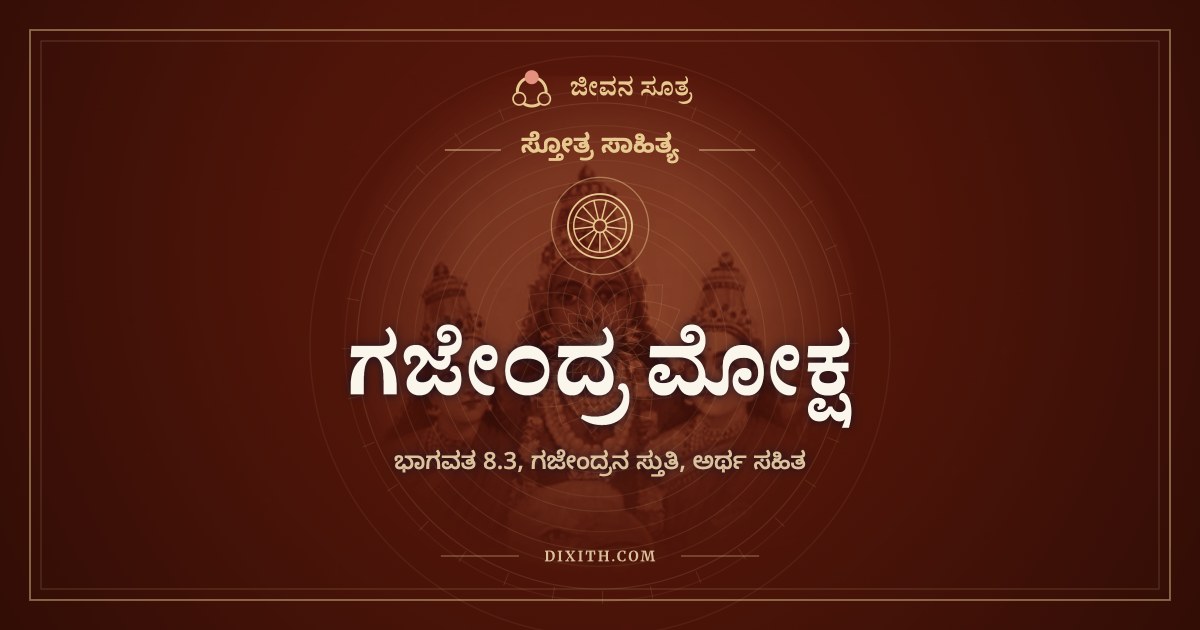
ಶ್ರೀಮದ್ಭಾಗವತದ ಎಂಟನೆಯ ಸ್ಕಂಧದಲ್ಲಿ ಗಜೇಂದ್ರನ ಕಥೆ ಬರುತ್ತದೆ. ತ್ರಿಕೂಟ ಪರ್ವತದ ಸರೋವರದಲ್ಲಿ ಹಿಂಡಿನೊಂದಿಗೆ ನೀರಾಡುತ್ತಿದ್ದ ಆನೆಗಳ ರಾಜನ ಕಾಲನ್ನು ಒಂದು ಬಲಿಷ್ಠ ಮೊಸಳೆ ಹಿಡಿಯಿತು. ಸಾವಿರ ವರ್ಷ ನಡೆದ ಆ ಹೋರಾಟದಲ್ಲಿ ನೆಲದ ಪ್ರಾಣಿಯಾದ ಗಜೇಂದ್ರನ ಬಲ ಕುಂದುತ್ತಾ ಹೋಯಿತು, ನೀರಿನಲ್ಲಿದ್ದ ಮೊಸಳೆಯ ಬಲ ಹೆಚ್ಚುತ್ತಾ ಹೋಯಿತು. ಬಂಧುಗಳೂ ಸಂಗಾತಿಗಳೂ ಬಿಡಿಸಲಾಗದೆ ಸೋತಾಗ, ಹಿಂದಿನ ಜನ್ಮದಲ್ಲಿ ಕಲಿತಿದ್ದ ಒಂದು ಸ್ತೋತ್ರ ಅವನ ನೆನಪಿಗೆ ಬಂದಿತು.
The story of Gajendra is told in the eighth book of the Srimad Bhagavata. The king of the elephants was bathing with his herd in a lake on Mount Trikuta when a powerful crocodile seized his leg. In a struggle that lasted a thousand years the land animal slowly weakened while the crocodile, in its own element, grew stronger. When his kin and companions could not free him, a hymn he had learnt in a former life came back to his mind.
ಆ ಹಿಂದಿನ ಜನ್ಮದಲ್ಲಿ ಅವನು ಪಾಂಡ್ಯದೇಶದ ರಾಜ ಇಂದ್ರದ್ಯುಮ್ನನಾಗಿದ್ದ. ಮೌನವ್ರತದ ಧ್ಯಾನದಲ್ಲಿ ಮುಳುಗಿ, ಬಂದ ಅಗಸ್ತ್ಯ ಮುನಿಗಳನ್ನು ಸತ್ಕರಿಸದ ಕಾರಣ ಆನೆಯಾಗಿ ಹುಟ್ಟುವ ಶಾಪ ಪಡೆದಿದ್ದ. ಮೊಸಳೆಯೂ ದೇವಲ ಋಷಿಯ ಶಾಪಕ್ಕೆ ಒಳಗಾದ ಹೂಹೂ ಎಂಬ ಗಂಧರ್ವ ಎಂದು ಮುಂದಿನ ಅಧ್ಯಾಯ ಹೇಳುತ್ತದೆ. ಈ ಪುಟದಲ್ಲಿ ಮೂರನೆಯ ಅಧ್ಯಾಯದ 33 ಶ್ಲೋಕಗಳನ್ನು, ಅಂದರೆ ಗಜೇಂದ್ರನ ಸ್ತುತಿಯನ್ನೂ ಹರಿ ಬಂದು ಅವನನ್ನು ಬಿಡಿಸಿದ ಪ್ರಸಂಗವನ್ನೂ ಕೊಟ್ಟಿದ್ದೇವೆ.
In that former life he had been Indradyumna, king of the Pandya country. Absorbed in silent meditation, he failed to welcome the sage Agastya and was cursed to be born as an elephant. The next chapter adds that the crocodile was Huhu, a gandharva cursed by the sage Devala. This page gives the 33 verses of the third chapter: Gajendra’s hymn and the passage in which Hari comes and frees him.
ಪಾಠ (ಕನ್ನಡ)
ಶ್ರೀಶುಕ ಉವಾಚ
ಏವಂ ವ್ಯವಸಿತೋ ಬುದ್ಧ್ಯಾ ಸಮಾಧಾಯ ಮನೋ ಹೃದಿ ।
ಜಜಾಪ ಪರಮಂ ಜಾಪ್ಯಂ ಪ್ರಾಗ್ಜನ್ಮನ್ಯನುಶಿಕ್ಷಿತಮ್ ॥ 1 ॥
ಗಜೇಂದ್ರ ಉವಾಚ
ನಮೋ ಭಗವತೇ ತಸ್ಮೈ ಯತ ಏತಚ್ಚಿದಾತ್ಮಕಮ್ ।
ಪುರುಷಾಯಾದಿಬೀಜಾಯ ಪರೇಶಾಯಾಭಿಧೀಮಹಿ ॥ 2 ॥
ಯಸ್ಮಿನ್ನಿದಂ ಯತಶ್ಚೇದಂ ಯೇನೇದಂ ಯ ಇದಂ ಸ್ವಯಮ್ ।
ಯೋಽಸ್ಮಾತ್ಪರಸ್ಮಾಚ್ಚ ಪರಸ್ತಂ ಪ್ರಪದ್ಯೇ ಸ್ವಯಂಭುವಮ್ ॥ 3 ॥
ಯಃ ಸ್ವಾತ್ಮನೀದಂ ನಿಜಮಾಯಯಾರ್ಪಿತಂ
ಕ್ವಚಿದ್ವಿಭಾತಂ ಕ್ವ ಚ ತತ್ತಿರೋಹಿತಮ್ ।
ಅವಿದ್ಧದೃಕ್ ಸಾಕ್ಷ್ಯುಭಯಂ ತದೀಕ್ಷತೇ
ಸ ಆತ್ಮಮೂಲೋಽವತು ಮಾಂ ಪರಾತ್ಪರಃ ॥ 4 ॥
ಕಾಲೇನ ಪಂಚತ್ವಮಿತೇಷು ಕೃತ್ಸ್ನಶೋ
ಲೋಕೇಷು ಪಾಲೇಷು ಚ ಸರ್ವಹೇತುಷು ।
ತಮಸ್ತದಾಽಽಸೀದ್ಗಹನಂ ಗಭೀರಂ
ಯಸ್ತಸ್ಯ ಪಾರೇಽಭಿವಿರಾಜತೇ ವಿಭುಃ ॥ 5 ॥
ನ ಯಸ್ಯ ದೇವಾ ಋಷಯಃ ಪದಂ ವಿದು
ರ್ಜಂತುಃ ಪುನಃ ಕೋಽರ್ಹತಿ ಗಂತುಮೀರಿತುಮ್ ।
ಯಥಾ ನಟಸ್ಯಾಕೃತಿಭಿರ್ವಿಚೇಷ್ಟತೋ
ದುರತ್ಯಯಾನುಕ್ರಮಣಃ ಸ ಮಾವತು ॥ 6 ॥
ದಿದೃಕ್ಷವೋ ಯಸ್ಯ ಪದಂ ಸುಮಂಗಲಂ
ವಿಮುಕ್ತಸಂಗಾ ಮುನಯಃ ಸುಸಾಧವಃ ।
ಚರಂತ್ಯಲೋಕವ್ರತಮವ್ರಣಂ ವನೇ
ಭೂತಾತ್ಮಭೂತಾಃ ಸುಹೃದಃ ಸ ಮೇ ಗತಿಃ ॥ 7 ॥
ನ ವಿದ್ಯತೇ ಯಸ್ಯ ಚ ಜನ್ಮ ಕರ್ಮ ವಾ
ನ ನಾಮರೂಪೇ ಗುಣದೋಷ ಏವ ವಾ ।
ತಥಾಪಿ ಲೋಕಾಪ್ಯಯಸಂಭವಾಯ ಯಃ
ಸ್ವಮಾಯಯಾ ತಾನ್ಯನುಕಾಲಮೃಚ್ಛತಿ ॥ 8 ॥
ತಸ್ಮೈ ನಮಃ ಪರೇಶಾಯ ಬ್ರಹ್ಮಣೇಽನಂತಶಕ್ತಯೇ ।
ಅರೂಪಾಯೋರುರೂಪಾಯ ನಮ ಆಶ್ಚರ್ಯಕರ್ಮಣೇ ॥ 9 ॥
ನಮ ಆತ್ಮಪ್ರದೀಪಾಯ ಸಾಕ್ಷಿಣೇ ಪರಮಾತ್ಮನೇ ।
ನಮೋ ಗಿರಾಂ ವಿದೂರಾಯ ಮನಸಶ್ಚೇತಸಾಮಪಿ ॥ 10 ॥
ಸತ್ತ್ವೇನ ಪ್ರತಿಲಭ್ಯಾಯ ನೈಷ್ಕರ್ಮ್ಯೇಣ ವಿಪಶ್ಚಿತಾ ।
ನಮಃ ಕೈವಲ್ಯನಾಥಾಯ ನಿರ್ವಾಣಸುಖಸಂವಿದೇ ॥ 11 ॥
ನಮಃ ಶಾಂತಾಯ ಘೋರಾಯ ಮೂಢಾಯ ಗುಣಧರ್ಮಿಣೇ ।
ನಿರ್ವಿಶೇಷಾಯ ಸಾಮ್ಯಾಯ ನಮೋ ಜ್ಞಾನಘನಾಯ ಚ ॥ 12 ॥
ಕ್ಷೇತ್ರಜ್ಞಾಯ ನಮಸ್ತುಭ್ಯಂ ಸರ್ವಾಧ್ಯಕ್ಷಾಯ ಸಾಕ್ಷಿಣೇ ।
ಪುರುಷಾಯಾತ್ಮಮೂಲಾಯ ಮೂಲಪ್ರಕೃತಯೇ ನಮಃ ॥ 13 ॥
ಸರ್ವೇಂದ್ರಿಯಗುಣದ್ರಷ್ಟ್ರೇ ಸರ್ವಪ್ರತ್ಯಯಹೇತವೇ ।
ಅಸತಾಚ್ಛಾಯಯೋಕ್ತಾಯ ಸದಾಭಾಸಾಯ ತೇ ನಮಃ ॥ 14 ॥
ನಮೋ ನಮಸ್ತೇಽಖಿಲಕಾರಣಾಯ
ನಿಷ್ಕಾರಣಾಯಾದ್ಭುತಕಾರಣಾಯ ।
ಸರ್ವಾಗಮಾಮ್ನಾಯಮಹಾರ್ಣವಾಯ
ನಮೋಽಪವರ್ಗಾಯ ಪರಾಯಣಾಯ ॥ 15 ॥
ಗುಣಾರಣಿಚ್ಛನ್ನಚಿದೂಷ್ಮಪಾಯ
ತತ್ಕ್ಷೋಭವಿಸ್ಫೂರ್ಜಿತಮಾನಸಾಯ ।
ನೈಷ್ಕರ್ಮ್ಯಭಾವೇನ ವಿವರ್ಜಿತಾಗಮ
ಸ್ವಯಂಪ್ರಕಾಶಾಯ ನಮಸ್ಕರೋಮಿ ॥ 16 ॥
ಮಾದೃಕ್ಪ್ರಪನ್ನಪಶುಪಾಶವಿಮೋಕ್ಷಣಾಯ
ಮುಕ್ತಾಯ ಭೂರಿಕರುಣಾಯ ನಮೋಽಲಯಾಯ ।
ಸ್ವಾಂಶೇನ ಸರ್ವತನುಭೃನ್ಮನಸಿ ಪ್ರತೀತ
ಪ್ರತ್ಯಗ್ದೃಶೇ ಭಗವತೇ ಬೃಹತೇ ನಮಸ್ತೇ ॥ 17 ॥
ಆತ್ಮಾತ್ಮಜಾಪ್ತಗೃಹವಿತ್ತಜನೇಷು ಸಕ್ತೈ
ರ್ದುಷ್ಪ್ರಾಪಣಾಯ ಗುಣಸಂಗವಿವರ್ಜಿತಾಯ ।
ಮುಕ್ತಾತ್ಮಭಿಃ ಸ್ವಹೃದಯೇ ಪರಿಭಾವಿತಾಯ
ಜ್ಞಾನಾತ್ಮನೇ ಭಗವತೇ ನಮ ಈಶ್ವರಾಯ ॥ 18 ॥
ಯಂ ಧರ್ಮಕಾಮಾರ್ಥವಿಮುಕ್ತಿಕಾಮಾ
ಭಜಂತ ಇಷ್ಟಾಂ ಗತಿಮಾಪ್ನುವಂತಿ ।
ಕಿಂ ತ್ವಾಶಿಷೋ ರಾತ್ಯಪಿ ದೇಹಮವ್ಯಯಂ
ಕರೋತು ಮೇಽದಭ್ರದಯೋ ವಿಮೋಕ್ಷಣಮ್ ॥ 19 ॥
ಏಕಾಂತಿನೋ ಯಸ್ಯ ನ ಕಂಚನಾರ್ಥಂ
ವಾಂಛಂತಿ ಯೇ ವೈ ಭಗವತ್ಪ್ರಪನ್ನಾಃ ।
ಅತ್ಯದ್ಭುತಂ ತಚ್ಚರಿತಂ ಸುಮಂಗಲಂ
ಗಾಯಂತ ಆನಂದಸಮುದ್ರಮಗ್ನಾಃ ॥ 20 ॥
ತಮಕ್ಷರಂ ಬ್ರಹ್ಮ ಪರಂ ಪರೇಶ
ಮವ್ಯಕ್ತಮಾಧ್ಯಾತ್ಮಿಕಯೋಗಗಮ್ಯಮ್ ।
ಅತೀಂದ್ರಿಯಂ ಸೂಕ್ಷ್ಮಮಿವಾತಿದೂರ
ಮನಂತಮಾದ್ಯಂ ಪರಿಪೂರ್ಣಮೀಡೇ ॥ 21 ॥
ಯಸ್ಯ ಬ್ರಹ್ಮಾದಯೋ ದೇವಾ ವೇದಾ ಲೋಕಾಶ್ಚರಾಚರಾಃ ।
ನಾಮರೂಪವಿಭೇದೇನ ಫಲ್ಗ್ವ್ಯಾ ಚ ಕಲಯಾ ಕೃತಾಃ ॥ 22 ॥
ಯಥಾರ್ಚಿಷೋಽಗ್ನೇಃ ಸವಿತುರ್ಗಭಸ್ತಯೋ
ನಿರ್ಯಾಂತಿ ಸಂಯಾಂತ್ಯಸಕೃತ್ಸ್ವರೋಚಿಷಃ ।
ತಥಾ ಯತೋಽಯಂ ಗುಣಸಂಪ್ರವಾಹೋ
ಬುದ್ಧಿರ್ಮನಃ ಖಾನಿ ಶರೀರಸರ್ಗಾಃ ॥ 23 ॥
ಸ ವೈ ನ ದೇವಾಸುರಮರ್ತ್ಯತಿರ್ಯಙ್
ನ ಸ್ತ್ರೀ ನ ಷಂಢೋ ನ ಪುಮಾನ್ನ ಜಂತುಃ ।
ನಾಯಂ ಗುಣಃ ಕರ್ಮ ನ ಸನ್ನ ಚಾಸನ್
ನಿಷೇಧಶೇಷೋ ಜಯತಾದಶೇಷಃ ॥ 24 ॥
ಜಿಜೀವಿಷೇ ನಾಹಮಿಹಾಮುಯಾ ಕಿ
ಮಂತರ್ಬಹಿಶ್ಚಾವೃತಯೇಭಯೋನ್ಯಾ ।
ಇಚ್ಛಾಮಿ ಕಾಲೇನ ನ ಯಸ್ಯ ವಿಪ್ಲವ
ಸ್ತಸ್ಯಾತ್ಮಲೋಕಾವರಣಸ್ಯ ಮೋಕ್ಷಮ್ ॥ 25 ॥
ಸೋಽಹಂ ವಿಶ್ವಸೃಜಂ ವಿಶ್ವಮವಿಶ್ವಂ ವಿಶ್ವವೇದಸಮ್ ।
ವಿಶ್ವಾತ್ಮಾನಮಜಂ ಬ್ರಹ್ಮ ಪ್ರಣತೋಽಸ್ಮಿ ಪರಂ ಪದಮ್ ॥ 26 ॥
ಯೋಗರಂಧಿತಕರ್ಮಾಣೋ ಹೃದಿ ಯೋಗವಿಭಾವಿತೇ ।
ಯೋಗಿನೋ ಯಂ ಪ್ರಪಶ್ಯಂತಿ ಯೋಗೇಶಂ ತಂ ನತೋಽಸ್ಮ್ಯಹಮ್ ॥ 27 ॥
ನಮೋ ನಮಸ್ತುಭ್ಯಮಸಹ್ಯವೇಗ
ಶಕ್ತಿತ್ರಯಾಯಾಖಿಲಧೀಗುಣಾಯ ।
ಪ್ರಪನ್ನಪಾಲಾಯ ದುರಂತಶಕ್ತಯೇ
ಕದಿಂದ್ರಿಯಾಣಾಮನವಾಪ್ಯವರ್ತ್ಮನೇ ॥ 28 ॥
ನಾಯಂ ವೇದ ಸ್ವಮಾತ್ಮಾನಂ ಯಚ್ಛಕ್ತ್ಯಾಹಂಧಿಯಾ ಹತಮ್ ।
ತಂ ದುರತ್ಯಯಮಾಹಾತ್ಮ್ಯಂ ಭಗವಂತಮಿತೋಽಸ್ಮ್ಯಹಮ್ ॥ 29 ॥
ಶ್ರೀಶುಕ ಉವಾಚ
ಏವಂ ಗಜೇಂದ್ರಮುಪವರ್ಣಿತನಿರ್ವಿಶೇಷಂ
ಬ್ರಹ್ಮಾದಯೋ ವಿವಿಧಲಿಂಗಭಿದಾಭಿಮಾನಾಃ ।
ನೈತೇ ಯದೋಪಸಸೃಪುರ್ನಿಖಿಲಾತ್ಮಕತ್ವಾತ್
ತತ್ರಾಖಿಲಾಮರಮಯೋ ಹರಿರಾವಿರಾಸೀತ್ ॥ 30 ॥
ತಂ ತದ್ವದಾರ್ತಮುಪಲಭ್ಯ ಜಗನ್ನಿವಾಸಃ
ಸ್ತೋತ್ರಂ ನಿಶಮ್ಯ ದಿವಿಜೈಃ ಸಹ ಸಂಸ್ತುವದ್ಭಿಃ ।
ಛಂದೋಮಯೇನ ಗರುಡೇನ ಸಮುಹ್ಯಮಾನ
ಶ್ಚಕ್ರಾಯುಧೋಽಭ್ಯಗಮದಾಶು ಯತೋ ಗಜೇಂದ್ರಃ ॥ 31 ॥
ಸೋಽಂತಸ್ಸರಸ್ಯುರುಬಲೇನ ಗೃಹೀತ ಆರ್ತೋ
ದೃಷ್ಟ್ವಾ ಗರುತ್ಮತಿ ಹರಿಂ ಖ ಉಪಾತ್ತಚಕ್ರಮ್ ।
ಉತ್ಕ್ಷಿಪ್ಯ ಸಾಂಬುಜಕರಂ ಗಿರಮಾಹ ಕೃಚ್ಛ್ರಾ
ನ್ನಾರಾಯಣಾಖಿಲಗುರೋ ಭಗವನ್ ನಮಸ್ತೇ ॥ 32 ॥
ತಂ ವೀಕ್ಷ್ಯ ಪೀಡಿತಮಜಃ ಸಹಸಾವತೀರ್ಯ
ಸಗ್ರಾಹಮಾಶು ಸರಸಃ ಕೃಪಯೋಜ್ಜಹಾರ ।
ಗ್ರಾಹಾದ್ವಿಪಾಟಿತಮುಖಾದರಿಣಾ ಗಜೇಂದ್ರಂ
ಸಂಪಶ್ಯತಾಂ ಹರಿರಮೂಮುಚದುಸ್ರಿಯಾಣಾಮ್ ॥ 33 ॥
ದೇವನಾಗರಿ ಲಿಪಿಯಲ್ಲಿ ಪಾಠText in Devanagari
ಶ್ರೀಶುಕ ಉವಾಚ
एवं व्यवसितो बुद्ध्या समाधाय मनो हृदि ।
जजाप परमं जाप्यं प्राग्जन्मन्यनुशिक्षितम् ॥ 1 ॥
ಗಜೇಂದ್ರ ಉವಾಚ
नमो भगवते तस्मै यत एतच्चिदात्मकम् ।
पुरुषायादिबीजाय परेशायाभिधीमहि ॥ 2 ॥
यस्मिन्निदं यतश्चेदं येनेदं य इदं स्वयम् ।
योऽस्मात्परस्माच्च परस्तं प्रपद्ये स्वयंभुवम् ॥ 3 ॥
यः स्वात्मनीदं निजमाययार्पितं
क्वचिद्विभातं क्व च तत्तिरोहितम् ।
अविद्धदृक् साक्ष्युभयं तदीक्षते
स आत्ममूलोऽवतु मां परात्परः ॥ 4 ॥
कालेन पंचत्वमितेषु कृत्स्नशो
लोकेषु पालेषु च सर्वहेतुषु ।
तमस्तदाऽऽसीद्गहनं गभीरं
यस्तस्य पारेऽभिविराजते विभुः ॥ 5 ॥
न यस्य देवा ऋषयः पदं विदु
र्जंतुः पुनः कोऽर्हति गंतुमीरितुम् ।
यथा नटस्याकृतिभिर्विचेष्टतो
दुरत्ययानुक्रमणः स मावतु ॥ 6 ॥
दिदृक्षवो यस्य पदं सुमंगलं
विमुक्तसंगा मुनयः सुसाधवः ।
चरंत्यलोकव्रतमव्रणं वने
भूतात्मभूताः सुहृदः स मे गतिः ॥ 7 ॥
न विद्यते यस्य च जन्म कर्म वा
न नामरूपे गुणदोष एव वा ।
तथापि लोकाप्ययसंभवाय यः
स्वमायया तान्यनुकालमृच्छति ॥ 8 ॥
तस्मै नमः परेशाय ब्रह्मणेऽनंतशक्तये ।
अरूपायोरुरूपाय नम आश्चर्यकर्मणे ॥ 9 ॥
नम आत्मप्रदीपाय साक्षिणे परमात्मने ।
नमो गिरां विदूराय मनसश्चेतसामपि ॥ 10 ॥
सत्त्वेन प्रतिलभ्याय नैष्कर्म्येण विपश्चिता ।
नमः कैवल्यनाथाय निर्वाणसुखसंविदे ॥ 11 ॥
नमः शांताय घोराय मूढाय गुणधर्मिणे ।
निर्विशेषाय साम्याय नमो ज्ञानघनाय च ॥ 12 ॥
क्षेत्रज्ञाय नमस्तुभ्यं सर्वाध्यक्षाय साक्षिणे ।
पुरुषायात्ममूलाय मूलप्रकृतये नमः ॥ 13 ॥
सर्वेंद्रियगुणद्रष्ट्रे सर्वप्रत्ययहेतवे ।
असताच्छाययोक्ताय सदाभासाय ते नमः ॥ 14 ॥
नमो नमस्तेऽखिलकारणाय
निष्कारणायाद्भुतकारणाय ।
सर्वागमाम्नायमहार्णवाय
नमोऽपवर्गाय परायणाय ॥ 15 ॥
गुणारणिच्छन्नचिदूष्मपाय
तत्क्षोभविस्फूर्जितमानसाय ।
नैष्कर्म्यभावेन विवर्जितागम
स्वयंप्रकाशाय नमस्करोमि ॥ 16 ॥
मादृक्प्रपन्नपशुपाशविमोक्षणाय
मुक्ताय भूरिकरुणाय नमोऽलयाय ।
स्वांशेन सर्वतनुभृन्मनसि प्रतीत
प्रत्यग्दृशे भगवते बृहते नमस्ते ॥ 17 ॥
आत्मात्मजाप्तगृहवित्तजनेषु सक्तै
र्दुष्प्रापणाय गुणसंगविवर्जिताय ।
मुक्तात्मभिः स्वहृदये परिभाविताय
ज्ञानात्मने भगवते नम ईश्वराय ॥ 18 ॥
यं धर्मकामार्थविमुक्तिकामा
भजंत इष्टां गतिमाप्नुवंति ।
किं त्वाशिषो रात्यपि देहमव्ययं
करोतु मेऽदभ्रदयो विमोक्षणम् ॥ 19 ॥
एकांतिनो यस्य न कंचनार्थं
वांछंति ये वै भगवत्प्रपन्नाः ।
अत्यद्भुतं तच्चरितं सुमंगलं
गायंत आनंदसमुद्रमग्नाः ॥ 20 ॥
तमक्षरं ब्रह्म परं परेश
मव्यक्तमाध्यात्मिकयोगगम्यम् ।
अतींद्रियं सूक्ष्ममिवातिदूर
मनंतमाद्यं परिपूर्णमीडे ॥ 21 ॥
यस्य ब्रह्मादयो देवा वेदा लोकाश्चराचराः ।
नामरूपविभेदेन फल्ग्व्या च कलया कृताः ॥ 22 ॥
यथार्चिषोऽग्नेः सवितुर्गभस्तयो
निर्यांति संयांत्यसकृत्स्वरोचिषः ।
तथा यतोऽयं गुणसंप्रवाहो
बुद्धिर्मनः खानि शरीरसर्गाः ॥ 23 ॥
स वै न देवासुरमर्त्यतिर्यङ्
न स्त्री न षंढो न पुमान्न जंतुः ।
नायं गुणः कर्म न सन्न चासन्
निषेधशेषो जयतादशेषः ॥ 24 ॥
जिजीविषे नाहमिहामुया कि
मंतर्बहिश्चावृतयेभयोन्या ।
इच्छामि कालेन न यस्य विप्लव
स्तस्यात्मलोकावरणस्य मोक्षम् ॥ 25 ॥
सोऽहं विश्वसृजं विश्वमविश्वं विश्ववेदसम् ।
विश्वात्मानमजं ब्रह्म प्रणतोऽस्मि परं पदम् ॥ 26 ॥
योगरंधितकर्माणो हृदि योगविभाविते ।
योगिनो यं प्रपश्यंति योगेशं तं नतोऽस्म्यहम् ॥ 27 ॥
नमो नमस्तुभ्यमसह्यवेग
शक्तित्रयायाखिलधीगुणाय ।
प्रपन्नपालाय दुरंतशक्तये
कदिंद्रियाणामनवाप्यवर्त्मने ॥ 28 ॥
नायं वेद स्वमात्मानं यच्छक्त्याहंधिया हतम् ।
तं दुरत्ययमाहात्म्यं भगवंतमितोऽस्म्यहम् ॥ 29 ॥
ಶ್ರೀಶುಕ ಉವಾಚ
एवं गजेंद्रमुपवर्णितनिर्विशेषं
ब्रह्मादयो विविधलिंगभिदाभिमानाः ।
नैते यदोपससृपुर्निखिलात्मकत्वात्
तत्राखिलामरमयो हरिराविरासीत् ॥ 30 ॥
तं तद्वदार्तमुपलभ्य जगन्निवासः
स्तोत्रं निशम्य दिविजैः सह संस्तुवद्भिः ।
छंदोमयेन गरुडेन समुह्यमान
श्चक्रायुधोऽभ्यगमदाशु यतो गजेंद्रः ॥ 31 ॥
सोऽंतस्सरस्युरुबलेन गृहीत आर्तो
दृष्ट्वा गरुत्मति हरिं ख उपात्तचक्रम् ।
उत्क्षिप्य सांबुजकरं गिरमाह कृच्छ्रा
न्नारायणाखिलगुरो भगवन् नमस्ते ॥ 32 ॥
तं वीक्ष्य पीडितमजः सहसावतीर्य
सग्राहमाशु सरसः कृपयोज्जहार ।
ग्राहाद्विपाटितमुखादरिणा गजेंद्रं
संपश्यतां हरिरमूमुचदुस्रियाणाम् ॥ 33 ॥
IAST ಲಿಪ್ಯಂತರದಲ್ಲಿ ಪಾಠText in IAST transliteration
ಶ್ರೀಶುಕ ಉವಾಚ
evaṃ vyavasito buddhyā samādhāya mano hṛdi |
jajāpa paramaṃ jāpyaṃ prāgjanmanyanuśikṣitam || 1 ||
ಗಜೇಂದ್ರ ಉವಾಚ
namo bhagavate tasmai yata etaccidātmakam |
puruṣāyādibījāya pareśāyābhidhīmahi || 2 ||
yasminnidaṃ yataścedaṃ yenedaṃ ya idaṃ svayam |
yo’smātparasmācca parastaṃ prapadye svayaṃbhuvam || 3 ||
yaḥ svātmanīdaṃ nijamāyayārpitaṃ
kvacidvibhātaṃ kva ca tattirohitam |
aviddhadṛk sākṣyubhayaṃ tadīkṣate
sa ātmamūlo’vatu māṃ parātparaḥ || 4 ||
kālena paṃcatvamiteṣu kṛtsnaśo
lokeṣu pāleṣu ca sarvahetuṣu |
tamastadā”sīdgahanaṃ gabhīraṃ
yastasya pāre’bhivirājate vibhuḥ || 5 ||
na yasya devā ṛṣayaḥ padaṃ vidu
rjaṃtuḥ punaḥ ko’rhati gaṃtumīritum |
yathā naṭasyākṛtibhirviceṣṭato
duratyayānukramaṇaḥ sa māvatu || 6 ||
didṛkṣavo yasya padaṃ sumaṃgalaṃ
vimuktasaṃgā munayaḥ susādhavaḥ |
caraṃtyalokavratamavraṇaṃ vane
bhūtātmabhūtāḥ suhṛdaḥ sa me gatiḥ || 7 ||
na vidyate yasya ca janma karma vā
na nāmarūpe guṇadoṣa eva vā |
tathāpi lokāpyayasaṃbhavāya yaḥ
svamāyayā tānyanukālamṛcchati || 8 ||
tasmai namaḥ pareśāya brahmaṇe’naṃtaśaktaye |
arūpāyorurūpāya nama āścaryakarmaṇe || 9 ||
nama ātmapradīpāya sākṣiṇe paramātmane |
namo girāṃ vidūrāya manasaścetasāmapi || 10 ||
sattvena pratilabhyāya naiṣkarmyeṇa vipaścitā |
namaḥ kaivalyanāthāya nirvāṇasukhasaṃvide || 11 ||
namaḥ śāṃtāya ghorāya mūḍhāya guṇadharmiṇe |
nirviśeṣāya sāmyāya namo jñānaghanāya ca || 12 ||
kṣetrajñāya namastubhyaṃ sarvādhyakṣāya sākṣiṇe |
puruṣāyātmamūlāya mūlaprakṛtaye namaḥ || 13 ||
sarveṃdriyaguṇadraṣṭre sarvapratyayahetave |
asatācchāyayoktāya sadābhāsāya te namaḥ || 14 ||
namo namaste’khilakāraṇāya
niṣkāraṇāyādbhutakāraṇāya |
sarvāgamāmnāyamahārṇavāya
namo’pavargāya parāyaṇāya || 15 ||
guṇāraṇicchannacidūṣmapāya
tatkṣobhavisphūrjitamānasāya |
naiṣkarmyabhāvena vivarjitāgama
svayaṃprakāśāya namaskaromi || 16 ||
mādṛkprapannapaśupāśavimokṣaṇāya
muktāya bhūrikaruṇāya namo’layāya |
svāṃśena sarvatanubhṛnmanasi pratīta
pratyagdṛśe bhagavate bṛhate namaste || 17 ||
ātmātmajāptagṛhavittajaneṣu saktai
rduṣprāpaṇāya guṇasaṃgavivarjitāya |
muktātmabhiḥ svahṛdaye paribhāvitāya
jñānātmane bhagavate nama īśvarāya || 18 ||
yaṃ dharmakāmārthavimuktikāmā
bhajaṃta iṣṭāṃ gatimāpnuvaṃti |
kiṃ tvāśiṣo rātyapi dehamavyayaṃ
karotu me’dabhradayo vimokṣaṇam || 19 ||
ekāṃtino yasya na kaṃcanārthaṃ
vāṃchaṃti ye vai bhagavatprapannāḥ |
atyadbhutaṃ taccaritaṃ sumaṃgalaṃ
gāyaṃta ānaṃdasamudramagnāḥ || 20 ||
tamakṣaraṃ brahma paraṃ pareśa
mavyaktamādhyātmikayogagamyam |
atīṃdriyaṃ sūkṣmamivātidūra
manaṃtamādyaṃ paripūrṇamīḍe || 21 ||
yasya brahmādayo devā vedā lokāścarācarāḥ |
nāmarūpavibhedena phalgvyā ca kalayā kṛtāḥ || 22 ||
yathārciṣo’gneḥ saviturgabhastayo
niryāṃti saṃyāṃtyasakṛtsvarociṣaḥ |
tathā yato’yaṃ guṇasaṃpravāho
buddhirmanaḥ khāni śarīrasargāḥ || 23 ||
sa vai na devāsuramartyatiryaṅ
na strī na ṣaṃḍho na pumānna jaṃtuḥ |
nāyaṃ guṇaḥ karma na sanna cāsan
niṣedhaśeṣo jayatādaśeṣaḥ || 24 ||
jijīviṣe nāhamihāmuyā ki
maṃtarbahiścāvṛtayebhayonyā |
icchāmi kālena na yasya viplava
stasyātmalokāvaraṇasya mokṣam || 25 ||
so’haṃ viśvasṛjaṃ viśvamaviśvaṃ viśvavedasam |
viśvātmānamajaṃ brahma praṇato’smi paraṃ padam || 26 ||
yogaraṃdhitakarmāṇo hṛdi yogavibhāvite |
yogino yaṃ prapaśyaṃti yogeśaṃ taṃ nato’smyaham || 27 ||
namo namastubhyamasahyavega
śaktitrayāyākhiladhīguṇāya |
prapannapālāya duraṃtaśaktaye
kadiṃdriyāṇāmanavāpyavartmane || 28 ||
nāyaṃ veda svamātmānaṃ yacchaktyāhaṃdhiyā hatam |
taṃ duratyayamāhātmyaṃ bhagavaṃtamito’smyaham || 29 ||
ಶ್ರೀಶುಕ ಉವಾಚ
evaṃ gajeṃdramupavarṇitanirviśeṣaṃ
brahmādayo vividhaliṃgabhidābhimānāḥ |
naite yadopasasṛpurnikhilātmakatvāt
tatrākhilāmaramayo harirāvirāsīt || 30 ||
taṃ tadvadārtamupalabhya jagannivāsaḥ
stotraṃ niśamya divijaiḥ saha saṃstuvadbhiḥ |
chaṃdomayena garuḍena samuhyamāna
ścakrāyudho’bhyagamadāśu yato gajeṃdraḥ || 31 ||
so’ṃtassarasyurubalena gṛhīta ārto
dṛṣṭvā garutmati hariṃ kha upāttacakram |
utkṣipya sāṃbujakaraṃ giramāha kṛcchrā
nnārāyaṇākhilaguro bhagavan namaste || 32 ||
taṃ vīkṣya pīḍitamajaḥ sahasāvatīrya
sagrāhamāśu sarasaḥ kṛpayojjahāra |
grāhādvipāṭitamukhādariṇā gajeṃdraṃ
saṃpaśyatāṃ hariramūmucadusriyāṇām || 33 ||
ಶ್ಲೋಕಗಳ ಅರ್ಥ
- 1 ಶ್ರೀಶುಕರು ಹೇಳುತ್ತಾರೆ: ಹೀಗೆ ಬುದ್ಧಿಯಿಂದ ನಿಶ್ಚಯ ಮಾಡಿ, ಮನಸ್ಸನ್ನು ಹೃದಯದಲ್ಲಿ ನೆಲೆಗೊಳಿಸಿ, ಗಜೇಂದ್ರನು ಹಿಂದಿನ ಜನ್ಮದಲ್ಲಿ ಕಲಿತಿದ್ದ ಶ್ರೇಷ್ಠವಾದ ಜಪವನ್ನು ಜಪಿಸತೊಡಗಿದನು.
Shri Shuka said: Having resolved thus with his understanding and settled his mind in his heart, Gajendra began to recite the supreme prayer he had learnt in a former birth. - 2 ಯಾರಿಂದ ಈ ಜಗತ್ತು ಹೊರಹೊಮ್ಮಿ ಚೈತನ್ಯವನ್ನು ಪಡೆಯುತ್ತದೆಯೋ ಆ ಭಗವಂತನಿಗೆ ನಮಸ್ಕಾರ. ಪರಮಪುರುಷನೂ ಎಲ್ಲದರ ಮೊದಲ ಬೀಜವೂ ಪರಮೇಶ್ವರನೂ ಆದ ಅವನನ್ನು ಧ್ಯಾನಿಸುತ್ತೇವೆ.
Salutation to that Lord from whom this world comes forth and by whom it is made conscious. We meditate on him, the supreme Person, the first seed of all, the highest Lord. - 3 ಯಾರಲ್ಲಿ ಈ ಜಗತ್ತು ನೆಲೆಸಿದೆಯೋ, ಯಾರಿಂದ ಹುಟ್ಟಿದೆಯೋ, ಯಾರಿಂದ ನಡೆಯುತ್ತಿದೆಯೋ, ಯಾರು ಸ್ವತಃ ಇದೇ ಆಗಿದ್ದಾನೋ, ಅವನು ಈ ಕಾರ್ಯಕ್ಕೂ ಅದರ ಕಾರಣಕ್ಕೂ ಆಚೆ ನಿಂತಿದ್ದಾನೆ. ತನ್ನಿಂದ ತಾನೇ ಇರುವ ಆ ಸ್ವಯಂಭುವಿಗೆ ನಾನು ಶರಣು ಹೋಗುತ್ತೇನೆ.
In whom this world rests, from whom it arises, by whom it is sustained, who is himself this world, and who yet stands beyond both this effect and its cause: to that self-existent one I go for refuge. - 4 ತನ್ನದೇ ಮಾಯೆಯಿಂದ ತನ್ನೊಳಗೆ ಇರಿಸಿಕೊಂಡ ಈ ಜಗತ್ತು ಕೆಲವೊಮ್ಮೆ ಸೃಷ್ಟಿಯಲ್ಲಿ ಪ್ರಕಟವಾಗುತ್ತದೆ, ಕೆಲವೊಮ್ಮೆ ಪ್ರಳಯದಲ್ಲಿ ಮರೆಯಾಗುತ್ತದೆ. ಯಾರ ದೃಷ್ಟಿ ಎಂದೂ ಮಸುಕಾಗದೆ ಸಾಕ್ಷಿಯಾಗಿ ಈ ಎರಡನ್ನೂ ನೋಡುತ್ತದೆಯೋ, ತಾನೇ ತನಗೆ ಮೂಲವಾದ, ಶ್ರೇಷ್ಠರಿಗೂ ಶ್ರೇಷ್ಠನಾದ ಆ ಪ್ರಭು ನನ್ನನ್ನು ಕಾಪಾಡಲಿ.
This world, placed within himself by his own power, at times shines forth in creation and at times is withdrawn in dissolution. May he protect me, whose sight is never dimmed, who watches both as witness, who is his own source and higher than the highest. - 5 ಕಾಲಕ್ರಮದಲ್ಲಿ ಎಲ್ಲ ಲೋಕಗಳೂ ಲೋಕಪಾಲಕರೂ ಎಲ್ಲದಕ್ಕೂ ಕಾರಣವಾದ ತತ್ತ್ವಗಳೂ ಸಂಪೂರ್ಣವಾಗಿ ಲಯವಾದಾಗ, ದಟ್ಟವಾದ, ಆಳ ಕಾಣದ ಕತ್ತಲೆ ಮಾತ್ರ ಉಳಿಯುತ್ತದೆ. ಆ ಕತ್ತಲೆಯ ಆಚೆಗೂ ಬೆಳಗುತ್ತಿರುವ ಸರ್ವವ್ಯಾಪಿ ಅವನು.
When in the course of time all the worlds, their guardians and all the causes of things have wholly dissolved, only a dense and fathomless darkness remains. He is the all-pervading one who shines beyond that darkness. - 6 ದೇವತೆಗಳೂ ಋಷಿಗಳೂ ಯಾರ ನಿಜಸ್ವರೂಪವನ್ನು ಅರಿಯರೋ, ಅದನ್ನು ತಲುಪಲು ಅಥವಾ ವರ್ಣಿಸಲು ಸಾಮಾನ್ಯ ಜೀವಿ ಹೇಗೆ ಸಮರ್ಥನಾದಾನು? ಬೇರೆ ಬೇರೆ ವೇಷಗಳಲ್ಲಿ ಅಭಿನಯಿಸುವ ನಟನ ನಿಜರೂಪ ಪ್ರೇಕ್ಷಕರಿಗೆ ತಿಳಿಯದಂತೆ, ಯಾರ ಲೀಲೆಗಳ ಜಾಡನ್ನು ಹಿಡಿಯುವುದು ಕಷ್ಟವೋ, ಅವನು ನನ್ನನ್ನು ಕಾಪಾಡಲಿ.
Even the gods and sages do not know his true nature, so how could an ordinary creature reach it or describe it? Like an actor moving through many roles whose real self the audience does not see, his ways are hard to follow. May he protect me. - 7 ಸಂಗವನ್ನು ತೊರೆದ ಸಾಧುಗಳಾದ ಮುನಿಗಳು ಯಾರ ಮಂಗಳಕರ ಸ್ವರೂಪವನ್ನು ಕಾಣಬಯಸಿ ಕಾಡಿನಲ್ಲಿ ಲೋಕಾತೀತವಾದ, ಕಳಂಕವಿಲ್ಲದ ವ್ರತವನ್ನು ಆಚರಿಸುತ್ತಾರೋ, ಅವನೇ ನನ್ನ ಗತಿ. ಆ ಮುನಿಗಳು ಎಲ್ಲ ಜೀವಿಗಳನ್ನು ತಮ್ಮಂತೆಯೇ ಕಾಣುವವರು, ಎಲ್ಲರ ಹಿತೈಷಿಗಳು.
He is my refuge, whose most auspicious feet the sages long to see: free of attachment and truly good, they keep an unworldly and flawless vow in the forest. They see all beings as their own self and are friends to all. - 8 ಅವನಿಗೆ ಹುಟ್ಟಾಗಲಿ ಕರ್ಮವಾಗಲಿ ಇಲ್ಲ, ಹೆಸರು ರೂಪಗಳಾಗಲಿ ಗುಣದೋಷಗಳಾಗಲಿ ಇಲ್ಲ. ಆದರೂ ಲೋಕದ ಸೃಷ್ಟಿ ಮತ್ತು ಲಯಕ್ಕಾಗಿ ಅವನು ತನ್ನದೇ ಶಕ್ತಿಯಿಂದ ಕಾಲಕಾಲಕ್ಕೆ ಅವುಗಳನ್ನು ಸ್ವೀಕರಿಸುತ್ತಾನೆ.
He has no birth and no action, no name or form, no qualities or faults. Yet for the creation and dissolution of the world he takes these on from time to time, by his own power. - 9 ಅಂತಹ ಪರಮೇಶ್ವರನಿಗೆ, ಅನಂತ ಶಕ್ತಿಯುಳ್ಳ ಬ್ರಹ್ಮಕ್ಕೆ ನಮಸ್ಕಾರ. ರೂಪವಿಲ್ಲದವನೂ ಅಸಂಖ್ಯ ರೂಪಗಳುಳ್ಳವನೂ ಆದ, ಅದ್ಭುತ ಕಾರ್ಯಗಳನ್ನು ಮಾಡುವವನಿಗೆ ನಮಸ್ಕಾರ.
Salutation to that supreme Lord, the Brahman of infinite power. Salutation to him who is formless and yet of countless forms, whose deeds are wondrous. - 10 ತಾನೇ ಬೆಳಗುವ ದೀಪದಂತಿರುವ, ಸಾಕ್ಷಿಯಾದ ಪರಮಾತ್ಮನಿಗೆ ನಮಸ್ಕಾರ. ಮಾತಿಗೂ ಮನಸ್ಸಿಗೂ ಚಿತ್ತಕ್ಕೂ ಬಹುದೂರದಲ್ಲಿರುವವನಿಗೆ ನಮಸ್ಕಾರ.
Salutation to the supreme Self, the witness, who is his own light. Salutation to him who is far beyond words, beyond the mind and beyond thought. - 11 ಶುದ್ಧವಾದ ಸತ್ತ್ವದಿಂದ, ಕರ್ಮಬಂಧವನ್ನು ಮೀರಿದ ಸ್ಥಿತಿಯಿಂದ ಜ್ಞಾನಿಗಳು ಯಾರನ್ನು ಪಡೆಯುತ್ತಾರೋ, ಆ ಕೈವಲ್ಯದ ಒಡೆಯನಿಗೆ ನಮಸ್ಕಾರ. ನಿರ್ವಾಣದ ಆನಂದದ ಅನುಭವವೇ ಆಗಿರುವವನು ಅವನು.
Salutation to the lord of liberation, whom the wise attain through purity of mind and through freedom from the bondage of action. He is himself the experience of the bliss of release. - 12 ಶಾಂತ, ಉಗ್ರ, ಮೂಢ ಎಂಬ ಸತ್ತ್ವ, ರಜಸ್, ತಮಸ್ ಗುಣಗಳ ರೂಪ ತಾಳುವವನಿಗೆ ನಮಸ್ಕಾರ. ಆದರೂ ಯಾವ ಭೇದವೂ ಇಲ್ಲದ, ಎಲ್ಲರಲ್ಲೂ ಸಮನಾದ, ಜ್ಞಾನದ ಘನರೂಪನಾದವನಿಗೆ ನಮಸ್ಕಾರ.
Salutation to him who takes on the qualities of the gunas, appearing peaceful, fierce or dull. Salutation also to him who is without distinctions, the same in all, a mass of pure knowledge. - 13 ದೇಹವೆಂಬ ಕ್ಷೇತ್ರವನ್ನು ಅರಿಯುವ ಕ್ಷೇತ್ರಜ್ಞನಾದ, ಎಲ್ಲದರ ಅಧ್ಯಕ್ಷನಾದ, ಸಾಕ್ಷಿಯಾದ ನಿನಗೆ ನಮಸ್ಕಾರ. ತಾನೇ ತನಗೆ ಮೂಲವಾದ ಪುರುಷನಿಗೆ, ಮೂಲಪ್ರಕೃತಿಗೂ ಆಧಾರನಾದವನಿಗೆ ನಮಸ್ಕಾರ.
Salutation to you, the knower of the field of the body, the overseer of all, the witness. Salutation to the Person who is his own root, and the ground of primordial nature itself. - 14 ಎಲ್ಲ ಇಂದ್ರಿಯಗಳನ್ನೂ ಅವುಗಳ ವಿಷಯಗಳನ್ನೂ ನೋಡುವವನಿಗೆ, ಎಲ್ಲ ಅರಿವಿಗೂ ಕಾರಣನಾದವನಿಗೆ ನಮಸ್ಕಾರ. ನೆರಳು ವಸ್ತುವನ್ನು ಸೂಚಿಸುವಂತೆ ನಶ್ವರವಾದ ಈ ಜಗತ್ತಿನ ಮೂಲಕ ಸೂಚಿತನಾಗುವ, ಎಲ್ಲದರಲ್ಲೂ ಇರುವಿಕೆಯಾಗಿ ಹೊಳೆಯುವ ನಿನಗೆ ನಮಸ್ಕಾರ.
Salutation to the seer of all the senses and their objects, the cause of all awareness. Salutation to you, who are pointed to by this passing world as an object is by its shadow, and who shine in all things as their very being. - 15 ಎಲ್ಲಕ್ಕೂ ಕಾರಣನಾದ, ತನಗೆ ಯಾವ ಕಾರಣವೂ ಇಲ್ಲದ, ಕಾರ್ಯವನ್ನು ಹುಟ್ಟಿಸಿಯೂ ತಾನು ಬದಲಾಗದ ಅದ್ಭುತ ಕಾರಣನಿಗೆ ಮತ್ತೆ ಮತ್ತೆ ನಮಸ್ಕಾರ. ಎಲ್ಲ ಆಗಮಗಳೂ ವೇದಗಳೂ ಹರಿದು ಸೇರುವ ಮಹಾಸಾಗರನಾದ, ಮೋಕ್ಷಸ್ವರೂಪನಾದ, ಸಂತರ ಪರಮ ಆಶ್ರಯನಿಗೆ ನಮಸ್ಕಾರ.
Salutation again and again to the cause of all, who has no cause himself, the wondrous cause that produces without changing. Salutation to the great ocean into which all scriptures and Vedas flow, to him who is liberation and the final refuge of the good. - 16 ಅರಣಿಯ ಕಟ್ಟಿಗೆಯಲ್ಲಿ ಬೆಂಕಿ ಅಡಗಿರುವಂತೆ ಗುಣಗಳಲ್ಲಿ ಮುಚ್ಚಿಹೋದ ಚೈತನ್ಯದ ಕಿಡಿಯಂತಿರುವವನಿಗೆ, ಆ ಗುಣಗಳು ಕದಡಿದಾಗ ಸೃಷ್ಟಿಯ ಸಂಕಲ್ಪವಾಗಿ ಹೊಮ್ಮುವ ಮನಸ್ಸುಳ್ಳವನಿಗೆ ನಮಸ್ಕರಿಸುತ್ತೇನೆ. ಕರ್ಮದಿಂದ ಬಿಡುಗಡೆಗೊಂಡು ಶಾಸ್ತ್ರವಿಧಿಗಳನ್ನು ಮೀರಿದವರಲ್ಲಿ ಅವನು ತಾನಾಗಿಯೇ ಪ್ರಕಾಶಿಸುತ್ತಾನೆ.
I bow to him whose fire of consciousness lies hidden in the gunas as fire lies in the kindling wood, and whose mind flashes forth as the will to create when the gunas are stirred. In those who, freed from action, have passed beyond scriptural injunctions, he shines of himself. - 17 ನನ್ನಂತೆ ಶರಣು ಬಂದ ಪಶುವಿನ ಪಾಶವನ್ನು ಬಿಡಿಸುವವನಿಗೆ, ಸ್ವತಃ ಮುಕ್ತನಾದ, ಅಪಾರ ಕರುಣೆಯುಳ್ಳ, ಎಂದೂ ದಣಿಯದವನಿಗೆ ನಮಸ್ಕಾರ. ಇಲ್ಲಿ ಪಶು ಎಂದರೆ ಆನೆಯೂ ಹೌದು, ಬಂಧನದಲ್ಲಿರುವ ಜೀವವೂ ಹೌದು. ತನ್ನ ಅಂಶದಿಂದ ಎಲ್ಲ ದೇಹಧಾರಿಗಳ ಮನಸ್ಸಿನಲ್ಲಿ ಒಳಗಿನ ಸಾಕ್ಷಿಯಾಗಿ ತೋರುವ ಅಪರಿಮಿತ ಭಗವಂತನೇ, ನಿನಗೆ ನಮಸ್ಕಾರ.
Salutation to him who unties the noose of a beast that has come to him for refuge, as I have, to the free one, boundless in compassion, never weary. The word pashu here means both the elephant and the bound soul. Salutation to you, infinite Lord, who by a portion of yourself are felt in the mind of every embodied being as the inner witness. - 18 ದೇಹ, ಮಕ್ಕಳು, ಆಪ್ತರು, ಮನೆ, ಹಣ, ಜನ ಇವುಗಳಿಗೆ ಅಂಟಿಕೊಂಡವರಿಗೆ ಸುಲಭವಾಗಿ ದೊರಕದ, ಗುಣಗಳ ಸಂಗವಿಲ್ಲದ ಭಗವಂತನಿಗೆ ನಮಸ್ಕಾರ. ಮುಕ್ತರಾದ ಮಹಾತ್ಮರು ತಮ್ಮ ಹೃದಯದಲ್ಲಿ ಸದಾ ಧ್ಯಾನಿಸುವ, ಜ್ಞಾನಸ್ವರೂಪನಾದ ಈಶ್ವರನಿಗೆ ನಮಸ್ಕಾರ.
Salutation to the Lord who is hard to reach for those attached to body, children, friends, home, wealth and people, and who is untouched by the gunas. Salutation to the Lord who is knowledge itself, on whom the liberated meditate in their hearts. - 19 ಧರ್ಮ, ಅರ್ಥ, ಕಾಮ, ಮೋಕ್ಷಗಳನ್ನು ಬಯಸುವವರು ಯಾರನ್ನು ಭಜಿಸಿ ತಾವು ಬಯಸಿದ ಗುರಿಯನ್ನು ಪಡೆಯುತ್ತಾರೋ, ಅವನು ಕೇಳದ ಇತರ ವರಗಳನ್ನೂ ಕೊಡುತ್ತಾನೆ, ಅಳಿಯದ ದಿವ್ಯ ದೇಹವನ್ನೂ ಕೊಡುತ್ತಾನೆ. ಅಪಾರ ದಯೆಯುಳ್ಳ ಆ ಪ್ರಭು ನನ್ನನ್ನು ಬಿಡುಗಡೆಗೊಳಿಸಲಿ.
Those who seek righteousness, wealth, pleasure or liberation worship him and reach the goal they desire. He gives other blessings besides, and even an imperishable body. May that Lord of boundless mercy set me free. - 20 ಭಗವಂತನಿಗೆ ಶರಣಾದ ಏಕಾಂತ ಭಕ್ತರು ಅವನಿಂದ ಏನನ್ನೂ ಬಯಸುವುದಿಲ್ಲ. ಅವನ ಅತ್ಯದ್ಭುತವೂ ಮಂಗಳಕರವೂ ಆದ ಚರಿತ್ರೆಯನ್ನು ಹಾಡುತ್ತಾ ಅವರು ಆನಂದಸಾಗರದಲ್ಲಿ ಮುಳುಗಿರುತ್ತಾರೆ.
His single-minded devotees, surrendered to the Lord, ask nothing of him at all. Singing his most wonderful and auspicious deeds, they remain immersed in an ocean of bliss. - 21 ಅಳಿವಿಲ್ಲದ ಪರಬ್ರಹ್ಮನೂ ಪರಮೇಶ್ವರನೂ ಆದ, ಕಣ್ಣಿಗೆ ಕಾಣದ, ಆಧ್ಯಾತ್ಮಿಕ ಯೋಗದಿಂದ ಮಾತ್ರ ತಲುಪಬಹುದಾದ ಅವನನ್ನು ನಾನು ಸ್ತುತಿಸುತ್ತೇನೆ. ಇಂದ್ರಿಯಗಳಿಗೆ ಮೀರಿದ, ಸೂಕ್ಷ್ಮನಾದ ಕಾರಣ ಬಹುದೂರದಲ್ಲಿರುವಂತೆ ತೋರುವ, ಅನಂತನೂ ಆದಿಯೂ ಪರಿಪೂರ್ಣನೂ ಆದವನು ಅವನು.
I praise him, the imperishable supreme Brahman and highest Lord, unmanifest, reached only through inner yoga. He is beyond the senses, so subtle that he seems far away, endless, the first, and wholly complete. - 22 ಬ್ರಹ್ಮನೇ ಮೊದಲಾದ ದೇವತೆಗಳು, ವೇದಗಳು, ಚರಾಚರ ಲೋಕಗಳು ಎಲ್ಲವೂ ಹೆಸರು ರೂಪಗಳ ಭೇದದೊಂದಿಗೆ ಅವನ ಒಂದು ಸಣ್ಣ ಅಂಶದಿಂದಲೇ ರೂಪುಗೊಂಡಿವೆ.
Brahma and the other gods, the Vedas, and the worlds of moving and unmoving beings, with all their differences of name and form, are made from a tiny fraction of him. - 23 ಬೆಂಕಿಯಿಂದ ಜ್ವಾಲೆಗಳೂ ಸೂರ್ಯನಿಂದ ಕಿರಣಗಳೂ ಮತ್ತೆ ಮತ್ತೆ ಹೊರಬಂದು ಅದರಲ್ಲೇ ಲೀನವಾಗುವಂತೆ, ಗುಣಗಳ ಈ ಪ್ರವಾಹ, ಬುದ್ಧಿ, ಮನಸ್ಸು, ಇಂದ್ರಿಯಗಳು ಮತ್ತು ದೇಹಗಳ ಸೃಷ್ಟಿ ಎಲ್ಲವೂ ಅವನಿಂದ ಹೊರಬಂದು ಅವನಲ್ಲೇ ಮರಳಿ ಸೇರುತ್ತವೆ.
As flames leap from a fire and rays from the sun and return into them again and again, so from him flows out this stream of the gunas, intellect, mind, senses and the making of bodies, and into him it returns. - 24 ಅವನು ದೇವನಲ್ಲ, ಅಸುರನಲ್ಲ, ಮನುಷ್ಯನಲ್ಲ, ಪಶುಪಕ್ಷಿಯೂ ಅಲ್ಲ. ಸ್ತ್ರೀಯಲ್ಲ, ನಪುಂಸಕನಲ್ಲ, ಪುರುಷನಲ್ಲ, ಯಾವುದೇ ಜೀವಿಯಲ್ಲ, ಗುಣವೂ ಅಲ್ಲ, ಕರ್ಮವೂ ಅಲ್ಲ, ಕಾರ್ಯವೂ ಅಲ್ಲ, ಕಾರಣವೂ ಅಲ್ಲ. ಎಲ್ಲವನ್ನೂ ಇದಲ್ಲ ಎಂದು ನಿರಾಕರಿಸಿದ ಮೇಲೆ ಉಳಿಯುವ, ಆದರೂ ಎಲ್ಲವೂ ಆಗಿರುವ ಅವನಿಗೆ ಜಯವಾಗಲಿ. ಅವನು ಇವುಗಳಲ್ಲಿ ಯಾವುದರ ಮಿತಿಗೂ ಒಳಪಡುವುದಿಲ್ಲ ಎಂದೂ ವ್ಯಾಖ್ಯಾನಕಾರರು ವಿವರಿಸುತ್ತಾರೆ.
He is neither god nor demon, neither human nor beast, neither woman nor man nor neuter, nor any creature. He is not a quality or an action, neither effect nor cause. Victory to him who remains when everything has been denied, and who is yet the whole. The commentators also explain that he is bound by the limits of none of these. - 25 ಈ ಆನೆಯ ದೇಹದಲ್ಲಿ ಇಲ್ಲಿ ಇನ್ನು ಬದುಕಿರಲು ನಾನು ಬಯಸುವುದಿಲ್ಲ. ಒಳಗೂ ಹೊರಗೂ ಅಜ್ಞಾನದಿಂದ ಮುಚ್ಚಿಹೋದ ಈ ಜನ್ಮದಿಂದ ಏನು ಪ್ರಯೋಜನ? ಕಾಲದಿಂದ ನಾಶವಾಗದ, ಆತ್ಮದ ಬೆಳಕನ್ನು ಮುಚ್ಚಿರುವ ಆ ಅಜ್ಞಾನದ ಆವರಣದಿಂದ ಬಿಡುಗಡೆಯನ್ನು ನಾನು ಬಯಸುತ್ತೇನೆ.
I do not wish to live on here in this elephant body. What use is this birth, covered by ignorance within and without? I seek release from that covering over the light of the self, which time alone does not destroy. - 26 ಹೀಗೆ ಬಿಡುಗಡೆಯನ್ನು ಬಯಸುವ ನಾನು, ವಿಶ್ವವನ್ನು ಸೃಷ್ಟಿಸಿದವನೂ, ವಿಶ್ವವೇ ಆದವನೂ, ವಿಶ್ವವನ್ನು ಮೀರಿದವನೂ, ವಿಶ್ವವನ್ನು ಅರಿತವನೂ ಆದ ಪ್ರಭುವಿಗೆ ತಲೆಬಾಗಿದ್ದೇನೆ. ವಿಶ್ವದ ಆತ್ಮನೂ ಹುಟ್ಟಿಲ್ಲದವನೂ ಆದ ಆ ಪರಬ್ರಹ್ಮನೇ ಪರಮಪದ.
So, longing for release, I bow to the maker of the universe, who is the universe and beyond it, who knows it all. He is the soul of the universe, the unborn Brahman, the highest abode. - 27 ಯೋಗದಿಂದ ಕರ್ಮಗಳನ್ನು ಸುಟ್ಟುಹಾಕಿದ ಯೋಗಿಗಳು, ಯೋಗದಿಂದ ಶುದ್ಧವಾದ ಹೃದಯದಲ್ಲಿ ಯಾರನ್ನು ಕಾಣುತ್ತಾರೋ, ಆ ಯೋಗೇಶ್ವರನಿಗೆ ನಾನು ನಮಿಸುತ್ತೇನೆ.
I bow to the lord of yoga, whom the yogis see in a heart made pure by yoga, their past actions burnt away by yoga. - 28 ತಡೆಯಲಾಗದ ವೇಗವುಳ್ಳ ಸತ್ತ್ವ, ರಜಸ್, ತಮಸ್ ಎಂಬ ಮೂರು ಶಕ್ತಿಗಳುಳ್ಳ, ಬುದ್ಧಿಗೆ ಗೋಚರವಾಗುವ ಎಲ್ಲ ವಿಷಯಗಳಾಗಿ ತೋರುವ ನಿನಗೆ ನಮೋ ನಮಃ. ಶರಣಾದವರನ್ನು ಕಾಪಾಡುವ, ಕೊನೆಯಿಲ್ಲದ ಶಕ್ತಿಯುಳ್ಳ ನಿನ್ನ ದಾರಿ ಕೆಟ್ಟ ದಾರಿಗೆಳೆಯುವ ಇಂದ್ರಿಯಗಳ ವಶರಾದವರಿಗೆ ದೊರಕುವುದಿಲ್ಲ.
Salutation again and again to you, whose three powers of sattva, rajas and tamas move with irresistible force, who appear as every object the mind can know. You protect those who take refuge in you, your power is endless, and your path is closed to those ruled by errant senses. - 29 ಯಾರ ಶಕ್ತಿಯಿಂದ ಉಂಟಾದ ನಾನು ಎಂಬ ಅಹಂಕಾರದಿಂದ ಮುಚ್ಚಿಹೋಗಿ ಈ ಜೀವನು ತನ್ನ ನಿಜಸ್ವರೂಪವನ್ನು ಅರಿಯುವುದಿಲ್ಲವೋ, ಮೀರಲಾಗದ ಮಹಿಮೆಯುಳ್ಳ ಆ ಭಗವಂತನಿಗೆ ನಾನು ಶರಣು ಬಂದಿದ್ದೇನೆ.
Overpowered by the sense of I that arises from his power, the soul does not know its own true self. To that Lord of unsurpassable greatness I have come for refuge. - 30 ಶ್ರೀಶುಕರು ಹೇಳುತ್ತಾರೆ: ಗಜೇಂದ್ರನು ಹೀಗೆ ಯಾವುದೇ ನಿರ್ದಿಷ್ಟ ರೂಪವನ್ನು ಹೇಳದೆ ನಿರ್ವಿಶೇಷನಾದ ಪರಮಾತ್ಮನನ್ನು ಸ್ತುತಿಸಿದನು. ಆದ್ದರಿಂದ ತಮ್ಮ ತಮ್ಮ ಬೇರೆ ರೂಪ ಮತ್ತು ಗುರುತಿನ ಅಭಿಮಾನವುಳ್ಳ ಬ್ರಹ್ಮನೇ ಮೊದಲಾದ ದೇವತೆಗಳು ಅವನ ಬಳಿ ಬರಲಿಲ್ಲ. ಆಗ ಎಲ್ಲರ ಆತ್ಮವೇ ಆಗಿರುವ, ಎಲ್ಲ ದೇವತೆಗಳೂ ತನ್ನಲ್ಲೇ ಇರುವ ಹರಿಯೇ ಅಲ್ಲಿ ಪ್ರತ್ಯಕ್ಷನಾದನು.
Shri Shuka said: Gajendra had praised the Supreme without naming any particular form. So Brahma and the other gods, each identified with a separate form and name, did not come to him. Then Hari, who is the self of all and contains all the gods, appeared there himself. - 31 ಗಜೇಂದ್ರನು ಹೀಗೆ ಸಂಕಟದಲ್ಲಿರುವುದನ್ನು ಅರಿತು, ಅವನ ಸ್ತೋತ್ರವನ್ನು ಕೇಳಿ, ಜಗತ್ತಿಗೆ ನೆಲೆಯಾದ ಹರಿ ಚಕ್ರವನ್ನು ಹಿಡಿದು ವೇದಮಯನಾದ ಗರುಡನ ಮೇಲೆ ಕುಳಿತು ಗಜೇಂದ್ರನಿದ್ದಲ್ಲಿಗೆ ಬೇಗನೆ ಬಂದನು. ಅವನನ್ನು ಸ್ತುತಿಸುತ್ತಾ ದೇವತೆಗಳೂ ಜೊತೆಗೆ ಬಂದರು.
Seeing Gajendra in such distress and hearing his hymn, Hari, the dwelling place of the world, discus in hand, came swiftly to where Gajendra was, borne by Garuda whose body is the Vedas. The gods came with him, singing his praise. - 32 ಸರೋವರದೊಳಗೆ ಬಲಿಷ್ಠ ಮೊಸಳೆಯ ಹಿಡಿತದಲ್ಲಿ ನರಳುತ್ತಿದ್ದ ಗಜೇಂದ್ರನು ಆಕಾಶದಲ್ಲಿ ಗರುಡನ ಮೇಲೆ ಚಕ್ರಧಾರಿಯಾದ ಹರಿಯನ್ನು ಕಂಡನು. ಕಮಲವನ್ನು ಹಿಡಿದ ಸೊಂಡಿಲನ್ನು ಮೇಲೆತ್ತಿ, ಬಹು ಕಷ್ಟದಿಂದ ಹೀಗೆ ನುಡಿದನು: ನಾರಾಯಣ, ಅಖಿಲಗುರೋ, ಭಗವನ್ ನಮಸ್ತೇ, ಅಂದರೆ ನಾರಾಯಣನೇ, ಜಗತ್ತಿಗೆಲ್ಲ ಗುರುವೇ, ಭಗವಂತನೇ, ನಿನಗೆ ನಮಸ್ಕಾರ.
Held in the lake by the mighty crocodile and in great pain, Gajendra saw Hari in the sky on Garuda, the discus raised. Lifting his trunk with a lotus in it, he spoke with great effort: Narayana, teacher of all the world, Lord, salutation to you. - 33 ಅವನ ಯಾತನೆಯನ್ನು ಕಂಡು ಹುಟ್ಟಿಲ್ಲದ ಹರಿ ತಕ್ಷಣ ಗರುಡನಿಂದ ಕೆಳಗಿಳಿದು, ಕರುಣೆಯಿಂದ ಮೊಸಳೆಯ ಸಮೇತ ಗಜೇಂದ್ರನನ್ನು ಸರೋವರದಿಂದ ಹೊರಗೆಳೆದನು. ನಂತರ ದೇವತೆಗಳು ನೋಡುತ್ತಿರುವಂತೆಯೇ ಚಕ್ರದಿಂದ ಮೊಸಳೆಯ ಬಾಯನ್ನು ಸೀಳಿ ಗಜೇಂದ್ರನನ್ನು ಬಿಡಿಸಿದನು.
Seeing his suffering, the unborn Lord at once came down from Garuda and in compassion drew Gajendra out of the lake together with the crocodile. Then, as the gods looked on, Hari split open the crocodile’s mouth with his discus and set Gajendra free.
ಈ ಸ್ತೋತ್ರದ ಬಗ್ಗೆAbout this hymn
ಗಜೇಂದ್ರ ಸ್ತುತಿ ಶ್ರೀಮದ್ಭಾಗವತದ ಎಂಟನೆಯ ಸ್ಕಂಧದ ಮೂರನೆಯ ಅಧ್ಯಾಯ. ಭಾಗವತವನ್ನು ವೇದವ್ಯಾಸರು ರಚಿಸಿದರೆಂದೂ, ಅವರ ಮಗ ಶುಕಮುನಿಗಳು ಅದನ್ನು ಗಂಗಾತೀರದಲ್ಲಿ ಮರಣವನ್ನು ಎದುರುನೋಡುತ್ತಿದ್ದ ರಾಜ ಪರೀಕ್ಷಿತನಿಗೆ ಹೇಳಿದರೆಂದೂ ಪರಂಪರೆ ಹೇಳುತ್ತದೆ. ಗ್ರಂಥದ ಈಗಿನ ರೂಪದ ಕಾಲದ ಬಗ್ಗೆ ವಿದ್ವಾಂಸರಲ್ಲಿ ಒಮ್ಮತವಿಲ್ಲ, ಹಲವರು ಅದನ್ನು ಸುಮಾರು ಕ್ರಿ.ಶ. ಆರರಿಂದ ಹತ್ತನೆಯ ಶತಮಾನದ ನಡುವೆ ಇಡುತ್ತಾರೆ.
The Gajendra Stuti is the third chapter of the eighth book of the Srimad Bhagavata. Tradition holds that Vedavyasa composed the Bhagavata and that his son Shuka recited it to King Parikshit, who sat by the Ganga awaiting death. Scholars do not agree on the date of the text in its present form, and many place it somewhere between the sixth and tenth centuries CE.
ಇದೊಂದು ಕಥೆಯೊಳಗಿನ ಸ್ತೋತ್ರ. ಮೊದಲ ಶ್ಲೋಕದಲ್ಲಿ ಶುಕರು ಸನ್ನಿವೇಶವನ್ನು ಹೇಳುತ್ತಾರೆ, 2 ರಿಂದ 29 ರವರೆಗೆ ಗಜೇಂದ್ರನ ಸ್ತುತಿ ಇದೆ, 30 ರಿಂದ 33 ರವರೆಗೆ ಹರಿಯ ಆಗಮನ ಮತ್ತು ಬಿಡುಗಡೆಯ ವರ್ಣನೆ ಇದೆ. ಸ್ತುತಿ ಯಾವ ದೇವತೆಯ ಹೆಸರನ್ನೂ ರೂಪವನ್ನೂ ಹೇಳದೆ ಉಪನಿಷತ್ತುಗಳ ಭಾಷೆಯಲ್ಲಿ ಪರಮಾತ್ಮನನ್ನು ವರ್ಣಿಸುತ್ತದೆ, ಆದ್ದರಿಂದಲೇ 30 ನೆಯ ಶ್ಲೋಕದಲ್ಲಿ ಬೇರೆ ದೇವತೆಗಳು ಬರದೆ ಹರಿಯೇ ಬರುತ್ತಾನೆ. ಅರ್ಥವನ್ನು ಶ್ರೀಧರಸ್ವಾಮಿಗಳ ವ್ಯಾಖ್ಯಾನದ ಆಧಾರದಲ್ಲಿ ಕೊಟ್ಟಿದ್ದೇವೆ. ಮಾಧ್ವ ವ್ಯಾಖ್ಯಾನಕಾರರ ವಿವರಣೆ ಕೆಲವೆಡೆ ಬೇರೆ ಅಂಶಕ್ಕೆ ಒತ್ತು ಕೊಡುತ್ತದೆ, ಅಂಥಲ್ಲಿ ಎರಡಕ್ಕೂ ಹೊಂದುವ ಅರ್ಥವನ್ನು ಆರಿಸಿದ್ದೇವೆ.
This is a hymn set inside a story. In the first verse Shuka sets the scene, verses 2 to 29 are Gajendra’s prayer, and verses 30 to 33 describe Hari’s arrival and the rescue. The prayer names no deity and describes no form, speaking of the Supreme in the language of the Upanishads, which is why in verse 30 the other gods do not come and Hari himself appears. Our meanings follow the commentary of Sridhara Svami. Where the Madhva commentators place the emphasis differently, we have chosen a sense that fits both.
ಛಂದಸ್ಸು ಮಿಶ್ರವಾಗಿದೆ. ಚಿಕ್ಕ ನಮಸ್ಕಾರ ಶ್ಲೋಕಗಳು ಅನುಷ್ಟುಭ್ ಛಂದಸ್ಸಿನಲ್ಲಿ, ದೀರ್ಘ ಶ್ಲೋಕಗಳು ಉಪಜಾತಿ ಮತ್ತು ವಂಶಸ್ಥ ಛಂದಸ್ಸುಗಳಲ್ಲಿ ಇವೆ. 17, 18 ಮತ್ತು 30 ರಿಂದ 33 ರವರೆಗಿನ ಶ್ಲೋಕಗಳು ವಸಂತತಿಲಕದಲ್ಲಿವೆ.
The metres are mixed. The short verses of salutation are in anushtubh, the longer ones in upajati and vamshastha. Verses 17, 18 and 30 to 33 are in vasantatilaka.
ಮುಂದಿನ ನಾಲ್ಕನೆಯ ಅಧ್ಯಾಯದಲ್ಲಿ ಭಗವಂತನು, ಮುಂಜಾನೆ ಎದ್ದು ಈ ಸ್ತೋತ್ರವನ್ನು ಪಠಿಸುವವರು ಕೆಟ್ಟ ಕನಸುಗಳಿಂದಲೂ ಸಂಕಟಗಳಿಂದಲೂ ಬಿಡುಗಡೆ ಹೊಂದುತ್ತಾರೆ ಎಂದು ಹೇಳುತ್ತಾನೆ, ಆ ಫಲಶ್ರುತಿಯ ಶ್ಲೋಕಗಳನ್ನು ಇಲ್ಲಿ ಕೊಟ್ಟಿಲ್ಲ.
In the following chapter the Lord declares that whoever rises at dawn and recites this hymn is freed from bad dreams and from troubles, though those verses of benefit are not printed here.
ಪಾಠವನ್ನು ಒಂದು ಅಂತರ್ಜಾಲ ಪ್ರತಿಯಿಂದ ತೆಗೆದುಕೊಂಡು ಭಾಗವತದ ಪ್ರಚಲಿತ ಆವೃತ್ತಿಯೊಂದಿಗೆ ಹೋಲಿಸಿ ತಿದ್ದಿದ್ದೇವೆ. 14 ನೆಯ ಶ್ಲೋಕದಲ್ಲಿ ಗುಣದ್ರಷ್ಟ್ರೇ, 24 ರಲ್ಲಿ ಷಂಢೋ, 31 ರಲ್ಲಿ ಸಂಸ್ತುವದ್ಭಿಃ, 33 ರಲ್ಲಿ ಉಸ್ರಿಯಾಣಾಮ್ ಎಂಬ ಪಾಠಗಳನ್ನು ಆರಿಸಿದ್ದೇವೆ, ಬೇರೆ ಪ್ರತಿಗಳಲ್ಲಿ ಭಿನ್ನ ಪಾಠಗಳೂ ಇವೆ. ಅದಲ್ಲದೆ ಆ ಪ್ರತಿಯಲ್ಲಿ ಎರಡು ಭಾಗವಾಗಿ ಒಡೆದಿದ್ದ 17 ನೆಯ ಶ್ಲೋಕವನ್ನು ಒಂದಾಗಿ ಸೇರಿಸಿದ್ದೇವೆ.
We took the text from an online copy and corrected it against the standard Bhagavata. We read gunadrashtre in verse 14, shandho in verse 24, samstuvadbhih in verse 31 and usriyanam in verse 33, and other copies have different readings. We have also joined verse 17, which that copy had split into two halves.
ಆಧಾರ: ಹಲವು ಮೂಲಗಳು. ಆವೃತ್ತಿಗಳು ಭಿನ್ನವಾಗಿರುವಲ್ಲಿ ಅದನ್ನು ಇಲ್ಲಿ ಸೂಚಿಸಿದ್ದೇವೆ. · Sources: several. Where readings differ, the difference is noted here.
ಇಂದಿನ ಬದುಕಿಗೆFor life today
ನಮ್ಮಲ್ಲಿ ಬಹುತೇಕರು ಸಹಾಯ ಕೇಳುವುದನ್ನು ಕೊನೆಯ ದಾರಿಯಾಗಿ ಇಟ್ಟುಕೊಳ್ಳುತ್ತೇವೆ. ಗಜೇಂದ್ರನೂ ತನ್ನ ಬಲವನ್ನೇ ನಂಬಿ ದೀರ್ಘಕಾಲ ಹೋರಾಡಿದ, ಬಲ ಮುಗಿದಾಗಲೇ ಪ್ರಾರ್ಥನೆ ನೆನಪಾಯಿತು. ಮನೆಯ ಹಿರಿಯರನ್ನು ವರ್ಷಗಟ್ಟಲೆ ಒಬ್ಬರೇ ನೋಡಿಕೊಳ್ಳುವವರಲ್ಲಿ, ಸಾಲ ತೀರಿಸಲು ಎರಡು ಕೆಲಸ ಮಾಡುವವರಲ್ಲಿ ಇದೇ ಹಠ ಕಾಣುತ್ತದೆ.
Most of us keep asking for help as a last resort. Gajendra too fought for a long time trusting his own strength, and remembered the prayer only when that strength was gone. The same stubbornness is found in those who care alone for an ageing parent for years, or who work two jobs to clear a debt.
ಕೈಯೆತ್ತಿ ಕೇಳುವುದಕ್ಕೂ ಒಂದು ಧೈರ್ಯ ಬೇಕು. ಗಜೇಂದ್ರನು ಸೊಂಡಿಲಿನಲ್ಲಿ ಒಂದು ಕಮಲವನ್ನು ಎತ್ತಿದಂತೆ, ಕೈಯಲ್ಲಿ ಉಳಿದಿರುವ ಸಣ್ಣದನ್ನೇ ಎತ್ತಿ, ಆಪ್ತರಿಗೋ ದೇವರಿಗೋ ಇನ್ನು ನನ್ನಿಂದಾಗದು ಎಂದು ಹೇಳಿದಾಗ ಹಲವು ಬಾರಿ ದಾರಿ ತೆರೆಯುತ್ತದೆ.
It takes a certain courage to raise a hand and ask. As Gajendra lifted a single lotus in his trunk, we can lift whatever small thing is left to us and say to someone close, or to God, that we cannot go on alone, and often that is when a way opens.
ಪಾಠದಲ್ಲಿ ತಪ್ಪೋ ಬೇರೆ ಪಾಠಾಂತರವೋ ಕಂಡಿತೇ? ನಮಗೆ ತಿಳಿಸಿ.
Noticed a mistake or a different reading? Tell us.
ಪ್ರತಿಕ್ರಿಯೆ ಬರೆಯಿರಿ