
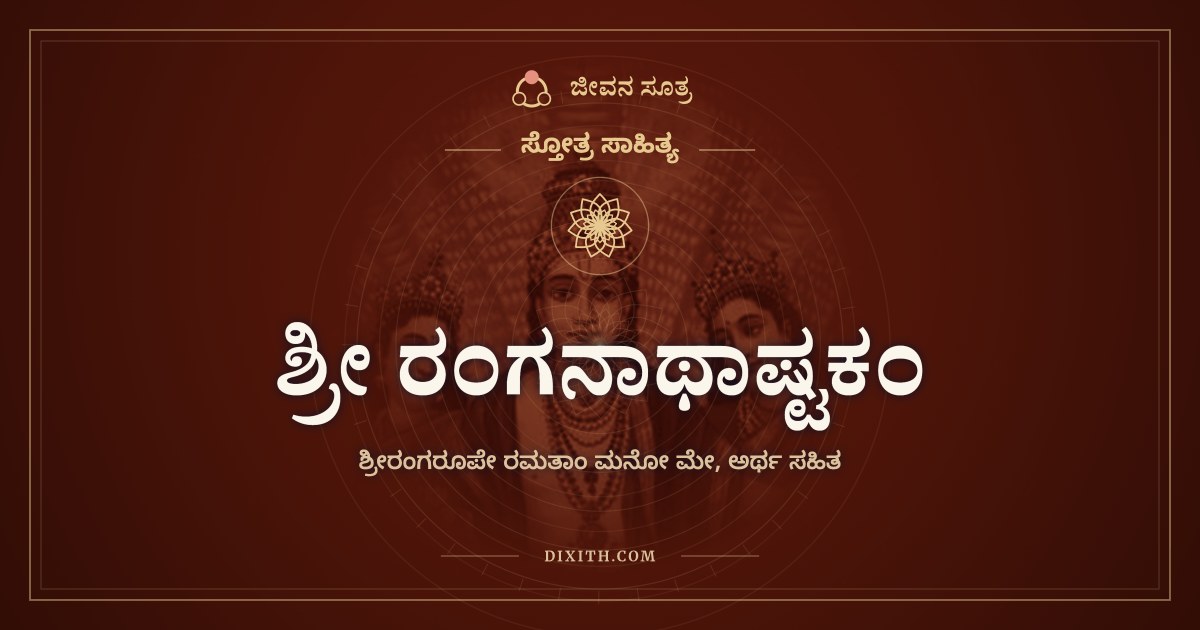
ಕಾವೇರಿಯ ನಡುವಿನ ದ್ವೀಪದಲ್ಲಿರುವ ಶ್ರೀರಂಗದಲ್ಲಿ ವಿಷ್ಣು ಆದಿಶೇಷನ ಮೇಲೆ ಯೋಗನಿದ್ರೆಯಲ್ಲಿ ಪವಡಿಸಿದ್ದಾನೆ. ಆ ರಂಗನಾಥನನ್ನು ಸ್ತುತಿಸುವ ಈ ಅಷ್ಟಕದ ಪ್ರತಿ ಶ್ಲೋಕವೂ “ಶ್ರೀರಂಗ… ರಮತಾಂ ಮನೋ ಮೇ”, ಅಂದರೆ “ನನ್ನ ಮನಸ್ಸು ಅವನಲ್ಲಿ ರಮಿಸಲಿ” ಎಂದು ಮುಗಿಯುತ್ತದೆ.
At Srirangam, on an island in the Kaveri, Vishnu reclines on Adishesha in yogic sleep. Every verse of this ashtaka in praise of Ranganatha ends “Shriranga… ramatam mano me”, “may my mind delight in him”.
ಪ್ರತಿ ಶ್ಲೋಕ ಒಂದೇ ಪದದ ಸುತ್ತ ಹೆಣೆದಿದೆ: ರೂಪ, ಲೀಲೆ, ವಾಸ, ವಂದ್ಯ, ರಾಜ, ನಿದ್ರೆ, ಶಾಯಿ. ಎಂಟನೆಯ ಶ್ಲೋಕ “ಅಂಗ” ಎಂಬ ಅಕ್ಷರಗುಚ್ಛದ ಶಬ್ದಚಮತ್ಕಾರ.
Each verse is woven round a single word: form, play, dwelling, worshipped, king, sleep, reclining. The eighth verse is a play on the sound “anga”.
ಪಾಠ (ಕನ್ನಡ)
ಆನಂದರೂಪೇ ನಿಜಬೋಧರೂಪೇ
ಬ್ರಹ್ಮಸ್ವರೂಪೇ ಶ್ರುತಿಮೂರ್ತಿರೂಪೇ ।
ಶಶಾಂಕರೂಪೇ ರಮಣೀಯರೂಪೇ
ಶ್ರೀರಂಗರೂಪೇ ರಮತಾಂ ಮನೋ ಮೇ ॥ 1 ॥
ಕಾವೇರಿತೀರೇ ಕರುಣಾವಿಲೋಲೇ
ಮಂದಾರಮೂಲೇ ಧೃತಚಾರುಕೇಲೇ ।
ದೈತ್ಯಾಂತಕಾಲೇಽಖಿಲಲೋಕಲೀಲೇ
ಶ್ರೀರಂಗಲೀಲೇ ರಮತಾಂ ಮನೋ ಮೇ ॥ 2 ॥
ಲಕ್ಷ್ಮೀನಿವಾಸೇ ಜಗತಾಂ ನಿವಾಸೇ
ಹೃತ್ಪದ್ಮವಾಸೇ ರವಿಬಿಂಬವಾಸೇ ।
ಕೃಪಾನಿವಾಸೇ ಗುಣಬೃಂದವಾಸೇ
ಶ್ರೀರಂಗವಾಸೇ ರಮತಾಂ ಮನೋ ಮೇ ॥ 3 ॥
ಬ್ರಹ್ಮಾದಿವಂದ್ಯೇ ಜಗದೇಕವಂದ್ಯೇ
ಮುಕುಂದವಂದ್ಯೇ ಸುರನಾಥವಂದ್ಯೇ ।
ವ್ಯಾಸಾದಿವಂದ್ಯೇ ಸನಕಾದಿವಂದ್ಯೇ
ಶ್ರೀರಂಗವಂದ್ಯೇ ರಮತಾಂ ಮನೋ ಮೇ ॥ 4 ॥
ಬ್ರಹ್ಮಾದಿರಾಜೇ ಗರುಡಾದಿರಾಜೇ
ವೈಕುಂಠರಾಜೇ ಸುರರಾಜರಾಜೇ ।
ತ್ರೈಲೋಕ್ಯರಾಜೇಽಖಿಲಲೋಕರಾಜೇ
ಶ್ರೀರಂಗರಾಜೇ ರಮತಾಂ ಮನೋ ಮೇ ॥ 5 ॥
ಅಮೋಘಮುದ್ರೇ ಪರಿಪೂರ್ಣನಿದ್ರೇ
ಶ್ರೀಯೋಗನಿದ್ರೇ ಸಸಮುದ್ರನಿದ್ರೇ ।
ಶ್ರಿತೈಕಭದ್ರೇ ಜಗದೇಕನಿದ್ರೇ
ಶ್ರೀರಂಗಭದ್ರೇ ರಮತಾಂ ಮನೋ ಮೇ ॥ 6 ॥
ಸಚಿತ್ರಶಾಯೀ ಭುಜಗೇಂದ್ರಶಾಯೀ
ನಂದಾಂಕಶಾಯೀ ಕಮಲಾಂಕಶಾಯೀ ।
ಕ್ಷೀರಾಬ್ಧಿಶಾಯೀ ವಟಪತ್ರಶಾಯೀ
ಶ್ರೀರಂಗಶಾಯೀ ರಮತಾಂ ಮನೋ ಮೇ ॥ 7 ॥
ಇದಂ ಹಿ ರಂಗಂ ತ್ಯಜತಾಮಿಹಾಂಗಂ
ಪುನರ್ನ ಚಾಂಗಂ ಯದಿ ಚಾಂಗಮೇತಿ ।
ಪಾಣೌ ರಥಾಂಗಂ ಚರಣೇಽಂಬು ಗಾಂಗಂ
ಯಾನೇ ವಿಹಂಗಂ ಶಯನೇ ಭುಜಂಗಮ್ ॥ 8 ॥
ಫಲಶ್ರುತಿ
ರಂಗನಾಥಾಷ್ಟಕಂ ಪುಣ್ಯಂ ಪ್ರಾತರುತ್ಥಾಯ ಯಃ ಪಠೇತ್ ।
ಸರ್ವಾನ್ ಕಾಮಾನವಾಪ್ನೋತಿ ರಂಗಿಸಾಯುಜ್ಯಮಾಪ್ನುಯಾತ್ ॥ 9 ॥
ದೇವನಾಗರಿ ಲಿಪಿಯಲ್ಲಿ ಪಾಠText in Devanagari
आनंदरूपे निजबोधरूपे
ब्रह्मस्वरूपे श्रुतिमूर्तिरूपे ।
शशांकरूपे रमणीयरूपे
श्रीरंगरूपे रमतां मनो मे ॥ 1 ॥
कावेरितीरे करुणाविलोले
मंदारमूले धृतचारुकेले ।
दैत्यांतकालेऽखिललोकलीले
श्रीरंगलीले रमतां मनो मे ॥ 2 ॥
लक्ष्मीनिवासे जगतां निवासे
हृत्पद्मवासे रविबिंबवासे ।
कृपानिवासे गुणबृंदवासे
श्रीरंगवासे रमतां मनो मे ॥ 3 ॥
ब्रह्मादिवंद्ये जगदेकवंद्ये
मुकुंदवंद्ये सुरनाथवंद्ये ।
व्यासादिवंद्ये सनकादिवंद्ये
श्रीरंगवंद्ये रमतां मनो मे ॥ 4 ॥
ब्रह्मादिराजे गरुडादिराजे
वैकुंठराजे सुरराजराजे ।
त्रैलोक्यराजेऽखिललोकराजे
श्रीरंगराजे रमतां मनो मे ॥ 5 ॥
अमोघमुद्रे परिपूर्णनिद्रे
श्रीयोगनिद्रे ससमुद्रनिद्रे ।
श्रितैकभद्रे जगदेकनिद्रे
श्रीरंगभद्रे रमतां मनो मे ॥ 6 ॥
सचित्रशायी भुजगेंद्रशायी
नंदांकशायी कमलांकशायी ।
क्षीराब्धिशायी वटपत्रशायी
श्रीरंगशायी रमतां मनो मे ॥ 7 ॥
इदं हि रंगं त्यजतामिहांगं
पुनर्न चांगं यदि चांगमेति ।
पाणौ रथांगं चरणेऽंबु गांगं
याने विहंगं शयने भुजंगम् ॥ 8 ॥
ಫಲಶ್ರುತಿ
रंगनाथाष्टकं पुण्यं प्रातरुत्थाय यः पठेत् ।
सर्वान् कामानवाप्नोति रंगिसायुज्यमाप्नुयात् ॥ 9 ॥
IAST ಲಿಪ್ಯಂತರದಲ್ಲಿ ಪಾಠText in IAST transliteration
ānaṃdarūpe nijabodharūpe
brahmasvarūpe śrutimūrtirūpe |
śaśāṃkarūpe ramaṇīyarūpe
śrīraṃgarūpe ramatāṃ mano me || 1 ||
kāveritīre karuṇāvilole
maṃdāramūle dhṛtacārukele |
daityāṃtakāle’khilalokalīle
śrīraṃgalīle ramatāṃ mano me || 2 ||
lakṣmīnivāse jagatāṃ nivāse
hṛtpadmavāse ravibiṃbavāse |
kṛpānivāse guṇabṛṃdavāse
śrīraṃgavāse ramatāṃ mano me || 3 ||
brahmādivaṃdye jagadekavaṃdye
mukuṃdavaṃdye suranāthavaṃdye |
vyāsādivaṃdye sanakādivaṃdye
śrīraṃgavaṃdye ramatāṃ mano me || 4 ||
brahmādirāje garuḍādirāje
vaikuṃṭharāje surarājarāje |
trailokyarāje’khilalokarāje
śrīraṃgarāje ramatāṃ mano me || 5 ||
amoghamudre paripūrṇanidre
śrīyoganidre sasamudranidre |
śritaikabhadre jagadekanidre
śrīraṃgabhadre ramatāṃ mano me || 6 ||
sacitraśāyī bhujageṃdraśāyī
naṃdāṃkaśāyī kamalāṃkaśāyī |
kṣīrābdhiśāyī vaṭapatraśāyī
śrīraṃgaśāyī ramatāṃ mano me || 7 ||
idaṃ hi raṃgaṃ tyajatāmihāṃgaṃ
punarna cāṃgaṃ yadi cāṃgameti |
pāṇau rathāṃgaṃ caraṇe’ṃbu gāṃgaṃ
yāne vihaṃgaṃ śayane bhujaṃgam || 8 ||
ಫಲಶ್ರುತಿ
raṃganāthāṣṭakaṃ puṇyaṃ prātarutthāya yaḥ paṭhet |
sarvān kāmānavāpnoti raṃgisāyujyamāpnuyāt || 9 ||
ಶ್ಲೋಕಗಳ ಅರ್ಥ
- 1 ಆನಂದವೇ ರೂಪವಾದ, ತನ್ನದೇ ಅರಿವೇ ರೂಪವಾದ, ಬ್ರಹ್ಮಸ್ವರೂಪನಾದ, ವೇದಗಳೇ ಮೂರ್ತಿವೆತ್ತ, ಚಂದ್ರನಂತೆ ತಂಪಾದ, ಮನೋಹರ ರೂಪದವನಲ್ಲಿ, ಶ್ರೀರಂಗದ ಆ ರೂಪದಲ್ಲಿ ನನ್ನ ಮನಸ್ಸು ರಮಿಸಲಿ, ಆನಂದಿಸಲಿ.
In him whose form is bliss, whose form is his own pure awareness, who is Brahman itself, the Vedas in bodily form, cool as the moon, lovely to behold, in that form of Sri Ranga may my mind delight. - 2 ಕಾವೇರಿಯ ತೀರದಲ್ಲಿ ಕರುಣೆಯಿಂದ ತುಳುಕುವ, ಮಂದಾರ ವೃಕ್ಷದ ಬುಡದಲ್ಲಿ ಸುಂದರ ಲೀಲೆಗಳನ್ನಾಡುವ, ರಾಕ್ಷಸರಿಗೆ ಅಂತ್ಯಕಾಲನಾದ, ಸಮಸ್ತ ಲೋಕಗಳನ್ನೇ ಲೀಲೆಯಾಗಿ ನಡೆಸುವ ಶ್ರೀರಂಗನ ಲೀಲೆಯಲ್ಲಿ ನನ್ನ ಮನಸ್ಸು ರಮಿಸಲಿ.
On the bank of the Kaveri, brimming with compassion, at play beneath the mandara tree, the hour of doom for demons, whose sport is all the worlds: in that play of Sri Ranga may my mind delight. - 3 ಲಕ್ಷ್ಮಿಯ ನೆಲೆಯಾದ, ಜಗತ್ತುಗಳಿಗೆ ನೆಲೆಯಾದ, ಹೃದಯಕಮಲದಲ್ಲಿ ವಾಸಿಸುವ, ಸೂರ್ಯಮಂಡಲದಲ್ಲಿ ನೆಲೆಸಿರುವ, ಕರುಣೆಯ ಮನೆಯಾದ, ಸದ್ಗುಣಗಳ ರಾಶಿಗೆ ಆಶ್ರಯನಾದ, ಶ್ರೀರಂಗದಲ್ಲಿ ವಾಸಿಸುವವನಲ್ಲಿ ನನ್ನ ಮನಸ್ಸು ರಮಿಸಲಿ.
Abode of Lakshmi, abode of the worlds, dweller in the lotus of the heart and in the orb of the sun, home of compassion, seat of all good qualities, who dwells at Sri Ranga: in him may my mind delight. - 4 ಬ್ರಹ್ಮಾದಿಗಳು ವಂದಿಸುವ, ಇಡೀ ಜಗತ್ತು ವಂದಿಸುವ ಏಕೈಕನಾದ, ಮುಕುಂದನೂ ವಂದಿಸುವ, ದೇವೇಂದ್ರ ವಂದಿಸುವ, ವ್ಯಾಸಾದಿಗಳೂ ಸನಕಾದಿ ಮುನಿಗಳೂ ವಂದಿಸುವ, ಶ್ರೀರಂಗದಲ್ಲಿ ಎಲ್ಲರೂ ವಂದಿಸುವವನಲ್ಲಿ ನನ್ನ ಮನಸ್ಸು ರಮಿಸಲಿ. ರಾಮನಾಗಿ ಬಂದ ವಿಷ್ಣುವೇ ರಂಗನಾಥನನ್ನು ಕುಲದೇವತೆಯಾಗಿ ಪೂಜಿಸಿದ ಎಂಬ ಕಥೆಯನ್ನು “ಮುಕುಂದವಂದ್ಯ” ನೆನಪಿಸುತ್ತದೆ ಎಂದು ಹಲವರು ಓದುತ್ತಾರೆ.
Worshipped by Brahma and the gods, the one whom the whole world worships, worshipped even by Mukunda, by Indra, by Vyasa and the sages, by Sanaka and his brothers, worshipped by all at Sri Ranga: in him may my mind delight. Many read “worshipped by Mukunda” as recalling the story that Vishnu, as Rama, worshipped Ranganatha as his family deity. - 5 ಬ್ರಹ್ಮಾದಿಗಳಿಗೆ ರಾಜನಾದ, ಗರುಡ ಮೊದಲಾದವರ ಒಡೆಯನಾದ, ವೈಕುಂಠದ ರಾಜನಾದ, ದೇವೇಂದ್ರನಿಗೂ ರಾಜನಾದ, ಮೂರು ಲೋಕಗಳ ರಾಜನಾದ, ಸಮಸ್ತ ಲೋಕಗಳ ರಾಜನಾದ ಶ್ರೀರಂಗರಾಜನಲ್ಲಿ ನನ್ನ ಮನಸ್ಸು ರಮಿಸಲಿ.
King over Brahma and the rest, lord of Garuda and his kind, king of Vaikuntha, king even of Indra, king of the three worlds, king of all the worlds, Sri Ranga’s king: in him may my mind delight. - 6 ಎಂದೂ ವ್ಯರ್ಥವಾಗದ ಮುದ್ರೆಯುಳ್ಳ, ಪರಿಪೂರ್ಣ ನಿದ್ರೆಯಲ್ಲಿರುವ, ಶ್ರೀಯುತವಾದ ಯೋಗನಿದ್ರೆಯಲ್ಲಿರುವ, ಸಮುದ್ರದ ಮೇಲೆ ನಿದ್ರಿಸುವ, ಆಶ್ರಯಿಸಿದವರಿಗೆ ಏಕೈಕ ಮಂಗಳನಾದ, ಇಡೀ ಜಗತ್ತು ತನ್ನಲ್ಲಿ ಲಯವಾಗಿ ಮಲಗುವ ನಿದ್ರೆಯವನಾದ, ಶ್ರೀರಂಗದ ಮಂಗಳಮೂರ್ತಿಯಲ್ಲಿ ನನ್ನ ಮನಸ್ಸು ರಮಿಸಲಿ.
He whose sign of grace never fails, whose sleep is perfect, the blessed yogic sleep, who sleeps upon the ocean, the one good of all who take refuge in him, in whose sleep the whole world comes to rest, the auspicious one of Sri Ranga: in him may my mind delight. - 7 ಸುಂದರವಾಗಿ ಅಲಂಕೃತನಾಗಿ ಮಲಗಿರುವವನು, ಸರ್ಪರಾಜ ಆದಿಶೇಷನ ಮೇಲೆ ಮಲಗುವವನು, ನಂದಗೋಪನ ತೊಡೆಯ ಮೇಲೆ ಮಲಗುವ ಬಾಲಕೃಷ್ಣ, ಲಕ್ಷ್ಮಿಯ ಮಡಿಲಲ್ಲಿ ಮಲಗುವವನು, ಕ್ಷೀರಸಾಗರದಲ್ಲಿ ಮಲಗುವವನು, ಪ್ರಳಯದಲ್ಲಿ ಆಲದೆಲೆಯ ಮೇಲೆ ಮಲಗುವ ಶಿಶು, ಶ್ರೀರಂಗದಲ್ಲಿ ಪವಡಿಸಿರುವವನು: ಅವನಲ್ಲಿ ನನ್ನ ಮನಸ್ಸು ರಮಿಸಲಿ.
He who lies in wondrous beauty, who lies on the king of serpents, who as a child lies on Nanda’s lap, who lies on Lakshmi’s lap, who lies on the Ocean of Milk, who as an infant lies on a banyan leaf at the dissolution, who lies at Sri Ranga: in him may my mind delight. - 8 ಇದೇ ಆ ರಂಗ. ಇಲ್ಲಿ ದೇಹ ತ್ಯಜಿಸಿದವರು ಮತ್ತೆ ದೇಹ ಪಡೆಯುವುದಿಲ್ಲ. ಒಂದು ವೇಳೆ ದೇಹ ಪಡೆದರೆ ಅದು ಭಗವಂತನಂತಹದೇ ರೂಪ: ಕೈಯಲ್ಲಿ ಚಕ್ರ, ಪಾದದಲ್ಲಿ ಗಂಗೆಯ ನೀರು, ವಾಹನವಾಗಿ ಗರುಡ, ಹಾಸಿಗೆಯಾಗಿ ಶೇಷ ಎಂದು ಹಲವರು ಓದುತ್ತಾರೆ. ಅಥವಾ ಕೊನೆಯ ಸಾಲು ರಂಗನಾಥನದೇ ವರ್ಣನೆ.
This indeed is Ranga. Those who leave the body here do not take a body again. And if they do take a form, many read, it is one like the Lord’s own: the discus in the hand, Ganga’s water at the feet, the bird Garuda for a vehicle, the serpent Shesha for a bed. Or the last line simply describes Ranganatha himself. - 9 ಪುಣ್ಯಕರವಾದ ಈ ರಂಗನಾಥಾಷ್ಟಕವನ್ನು ಬೆಳಿಗ್ಗೆ ಎದ್ದು ಓದುವವನು ಎಲ್ಲ ಬಯಕೆಗಳನ್ನೂ ಪಡೆಯುತ್ತಾನೆ, ರಂಗನಾಥನೊಂದಿಗೆ ಸಾಯುಜ್ಯವನ್ನು, ಅಂದರೆ ಐಕ್ಯವನ್ನು ಪಡೆಯುತ್ತಾನೆ.
Whoever rises in the morning and recites this holy Ranganathashtaka gains all that he desires and attains sayujya, union with the Lord of Ranga.
ಈ ಸ್ತೋತ್ರದ ಬಗ್ಗೆAbout this hymn
ಕೊನೆಯ ಸೂಚನೆ ಈ ಅಷ್ಟಕವನ್ನು ಶಂಕರಾಚಾರ್ಯರದ್ದೆಂದು ಹೇಳುತ್ತದೆ. ಆದರೆ ಶಂಕರರ ಹೆಸರಿನಲ್ಲಿರುವ ಅನೇಕ ಸ್ತೋತ್ರಗಳಂತೆ ಇದರ ಕರ್ತೃತ್ವವನ್ನೂ ಖಚಿತವಾಗಿ ಹೇಳಲು ಆಗುವುದಿಲ್ಲ. ಇದೊಂದು ಉಪಜಾತಿ ಛಂದಸ್ಸಿನ (ಇಂದ್ರವಜ್ರಾ ಮತ್ತು ಉಪೇಂದ್ರವಜ್ರಾ ಸಾಲುಗಳು ಬೆರೆತ) ಎಂಟು ಶ್ಲೋಕಗಳ ಸ್ತೋತ್ರ, ಕೊನೆಗೆ ಅನುಷ್ಟುಪ್ ಛಂದಸ್ಸಿನ ಫಲಶ್ರುತಿ.
The colophon ascribes this ashtaka to Shankaracharya. As with many hymns under his name, however, the authorship cannot be settled with certainty. It is a hymn of eight verses in upajati (a mix of indravajra and upendravajra lines), followed by a phalashruti in anushtubh.
ಶ್ರೀರಂಗಂ ತಮಿಳುನಾಡಿನ ತಿರುಚಿರಾಪಳ್ಳಿಯ ಬಳಿ ಕಾವೇರಿ ಮತ್ತು ಕೊಳ್ಳಿಡಂ ನದಿಗಳ ನಡುವಿನ ದ್ವೀಪದಲ್ಲಿದೆ. ವೈಷ್ಣವರ 108 ದಿವ್ಯದೇಶಗಳಲ್ಲಿ ಇದು ಮೊದಲನೆಯದು. ರಾಮನು ಪೂಜಿಸುತ್ತಿದ್ದ ರಂಗನಾಥನ ಮೂರ್ತಿಯನ್ನು ವಿಭೀಷಣನಿಗೆ ಕೊಟ್ಟನೆಂದೂ, ಲಂಕೆಗೆ ಹೋಗುವ ದಾರಿಯಲ್ಲಿ ಅದು ಕಾವೇರಿಯ ತೀರದಲ್ಲೇ ನೆಲೆನಿಂತಿತೆಂದೂ ಸ್ಥಳಪುರಾಣ ಹೇಳುತ್ತದೆ.
Srirangam lies near Tiruchirappalli in Tamil Nadu, on an island between the Kaveri and the Kollidam. It is the first of the 108 Divya Deshas of the Vaishnavas. The temple legend says that Rama gave the image of Ranganatha he worshipped to Vibhishana, and that on the way to Lanka it came to rest on the bank of the Kaveri.
ಮೂಲದಲ್ಲಿ 8ನೇ ಶ್ಲೋಕದ ಎರಡನೆಯ ಸಾಲು “ಪುನರ್ನಶಾಂಗಂ ಯದಿ ಶಾಂಗಮೇತಿ” ಎಂದು ಕೆಟ್ಟಿದೆ. ನಾವು ಪ್ರಚಲಿತ ಪಾಠ “ಪುನರ್ನ ಚಾಂಗಂ ಯದಿ ಚಾಂಗಮೇತಿ” ಕೊಟ್ಟಿದ್ದೇವೆ. ಈ ಶ್ಲೋಕ “ಅಂಗ” ಎಂಬ ಧ್ವನಿಯ ಶಬ್ದಚಮತ್ಕಾರ: ರಂಗ, ಅಂಗ (ದೇಹ), ರಥಾಂಗ (ಚಕ್ರ), ಗಾಂಗ (ಗಂಗೆಯ ನೀರು), ವಿಹಂಗ (ಪಕ್ಷಿ, ಗರುಡ), ಭುಜಂಗ (ಸರ್ಪ, ಶೇಷ). ಕೆಲವು ಆವೃತ್ತಿಗಳಲ್ಲಿ ಈ ಶ್ಲೋಕ 8ನೆಯದಾಗಿ ಇದೆ, ಕೆಲವು ಇದನ್ನು ಬಿಡುತ್ತವೆ.
In our source the second line of verse 8 is garbled as “punarnashangam yadi shangameti”. We print the common reading “punarna changam yadi changameti”. The verse is a play on the sound “anga”: Ranga, anga (body), rathanga (discus), ganga (Ganga’s water), vihanga (bird, Garuda), bhujanga (serpent, Shesha). Some editions carry this verse as the eighth, others omit it.
ಫಲಶ್ರುತಿಯ “ರಂಗಿಸಾಯುಜ್ಯ” ಎಂದರೆ ರಂಗದ ಒಡೆಯನೊಂದಿಗೆ ಐಕ್ಯ. “ಪದ್ಮಾದಿರಾಜೇ ಗರುಡಾದಿರಾಜೇ” ಎಂದು ಆರಂಭವಾಗಿ “ನಮತಾ ನಮಾಮಿ” ಎಂದು ಮುಗಿಯುವ ಬೇರೆಯೇ ಒಂದು ರಂಗನಾಥಾಷ್ಟಕವೂ ಇದೆ, ಅದು ಈ ಸ್ತೋತ್ರವಲ್ಲ.
“Rangisayujya” in the phalashruti means union with the Lord of Ranga. There is also a different Ranganathashtakam, beginning “Padmadiraje Garudadiraje” with the refrain “namata namami”; it is not this hymn.
ಆಧಾರ: ಹಲವು ಮೂಲಗಳು. ಆವೃತ್ತಿಗಳು ಭಿನ್ನವಾಗಿರುವಲ್ಲಿ ಅದನ್ನು ಇಲ್ಲಿ ಸೂಚಿಸಿದ್ದೇವೆ. · Sources: several. Where readings differ, the difference is noted here.
ಇಂದಿನ ಬದುಕಿಗೆFor life today
ಈ ಸ್ತೋತ್ರದ ಪಲ್ಲವಿ ಮನಸ್ಸಿನ ಮೇಲೆ ಬಲವಂತ ಮಾಡದೆ “ರಮಿಸಲಿ” ಎಂದು ಮೃದುವಾಗಿ ಬೇಡುತ್ತದೆ. ಟ್ರಾಫಿಕ್ ಸಿಗ್ನಲ್ನ ಕೆಂಪುದೀಪದ ಮುಂದೆ ನಿಂತ ಕೆಲವು ಕ್ಷಣಗಳಲ್ಲಿ ನಮ್ಮ ಮನಸ್ಸು ತಾನಾಗಿಯೇ ಎಲ್ಲೋ ಹೋಗಿ ಕುಳಿತುಬಿಡುತ್ತದೆ. ಅಂತಹ ಬಿಡುವಿನ ಕ್ಷಣಗಳಲ್ಲಿ ಮನಸ್ಸು ಯಾವುದರ ಕಡೆಗೆ ಹೊರಳುತ್ತದೆ ಎಂಬುದನ್ನು ಗಮನಿಸುವುದೇ ಒಂದು ಸಣ್ಣ ಸಾಧನೆ.
The refrain puts no force on the mind: it gently asks that the mind may delight. In the few seconds we wait at a red traffic light, the mind wanders off on its own and settles somewhere. Simply noticing where it turns in such idle moments is a small practice in itself.
ಪಾಠದಲ್ಲಿ ತಪ್ಪೋ ಬೇರೆ ಪಾಠಾಂತರವೋ ಕಂಡಿತೇ? ನಮಗೆ ತಿಳಿಸಿ.
Noticed a mistake or a different reading? Tell us.
ಪ್ರತಿಕ್ರಿಯೆ ಬರೆಯಿರಿ