
ಮನೆಯಲ್ಲಿ ಹಬ್ಬದ ಖರ್ಚನ್ನು ಹೊಂದಿಸುವಾಗ ಪ್ರತಿಯೊಬ್ಬರೂ ತಮ್ಮ ಸಣ್ಣಪುಟ್ಟ ಬಯಕೆಗಳನ್ನು ಬದಿಗಿಡುತ್ತಾರೆ. ಹಾಗೆ ಬದಿಗಿಡುವುದರಲ್ಲೂ ಒಂದು ಕ್ರಮ ಇರುತ್ತದೆ.
ಆ ಕ್ರಮವನ್ನು ಈ ಶ್ಲೋಕ ನಾಲ್ಕು ಹಂತಗಳಲ್ಲಿ ಹೇಳಿದೆ. ಇದೊಂದು ಅನುಷ್ಟುಪ್ ಛಂದಸ್ಸಿನ ಎರಡು ಸಾಲಿನ ಶ್ಲೋಕ.
ಸುಭಾಷಿತ (ಕನ್ನಡ)
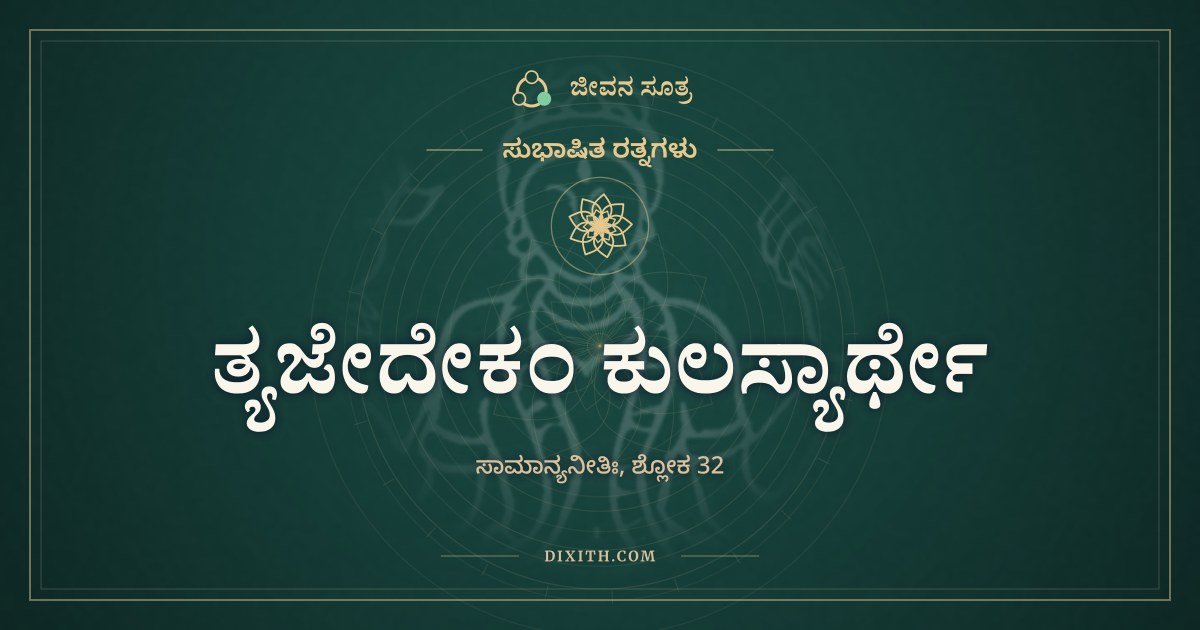
ತ್ಯಜೇದೇಕಂ ಕುಲಸ್ಯಾರ್ಥೇ ಗ್ರಾಮಸ್ಯಾರ್ಥೇ ಕುಲಂ ತ್ಯಜೇತ್
ಗ್ರಾಮಂ ಜನಪದಸ್ಯಾರ್ಥೇ ಹ್ಯಾತ್ಮಾರ್ಥೇ ಪೃಥಿವೀಂ ತ್ಯಜೇತ್
ಸುಭಾಷಿತ (ದೇವನಾಗರಿ)
त्यजेदेकं कुलस्यार्थे ग्रामस्यार्थे कुलं त्यजेत्
ग्रामं जनपदस्यार्थे ह्यात्मार्थे पृथिवीं त्यजेत्
ಸುಭಾಷಿತ (IAST)
tyajedekaṃ kulasyārthe grāmasyārthe kulaṃ tyajet
grāmaṃ janapadasyārthe hyātmārthe pṛthivīṃ tyajet
ಪದಶಃ ಅರ್ಥ
- ತ್ಯಜೇದೇಕಂ (त्यजेदेकं, tyajedekaṃ) = ಒಬ್ಬನನ್ನು ಬಿಡಬಹುದು (ತ್ಯಜೇತ್ ಏಕಂ) (one may give up one)
- ಕುಲಸ್ಯಾರ್ಥೇ (कुलस्यार्थे, kulasyārthe) = ಕುಲದ ಹಿತಕ್ಕಾಗಿ (for the sake of the family)
- ಗ್ರಾಮಸ್ಯಾರ್ಥೇ (ग्रामस्यार्थे, grāmasyārthe) = ಗ್ರಾಮದ ಹಿತಕ್ಕಾಗಿ (for the sake of the village)
- ಕುಲಂ (कुलं, kulaṃ) = ಕುಲವನ್ನು (the family)
- ತ್ಯಜೇತ್ (त्यजेत्, tyajet) = ಬಿಡಬಹುದು (one may give up)
- ಗ್ರಾಮಂ (ग्रामं, grāmaṃ) = ಗ್ರಾಮವನ್ನು (the village)
- ಜನಪದಸ್ಯಾರ್ಥೇ (जनपदस्यार्थे, janapadasyārthe) = ಜನಪದದ ಹಿತಕ್ಕಾಗಿ (for the sake of the region)
- ಹ್ಯಾತ್ಮಾರ್ಥೇ (ह्यात्मार्थे, hyātmārthe) = ಆತ್ಮದ ಹಿತಕ್ಕಾಗಿ (ಹಿ ಆತ್ಮಾರ್ಥೇ, ಹಿ ಎಂದರೆ ಅಲ್ಲವೇ) (for the sake of the self (hi, “for”, plus atmarthe))
- ಪೃಥಿವೀಂ (पृथिवीं, pṛthivīṃ) = ಪೃಥ್ವಿಯನ್ನು (the earth)
- ತ್ಯಜೇತ್ (त्यजेत्, tyajet) = ಬಿಡಬಹುದು (one may give up)
ಸಂಪೂರ್ಣ ಅರ್ಥ (ಕನ್ನಡ)
ಕುಲದ ಹಿತಕ್ಕಾಗಿ ಒಬ್ಬನನ್ನು ಬಿಡಬಹುದು. ಗ್ರಾಮದ ಹಿತಕ್ಕಾಗಿ ಕುಲವನ್ನು ಬಿಡಬಹುದು. ಜನಪದದ ಹಿತಕ್ಕಾಗಿ ಗ್ರಾಮವನ್ನು ಬಿಡಬಹುದು. ಆತ್ಮದ ಹಿತಕ್ಕಾಗಿ ಪೃಥ್ವಿಯನ್ನೇ ಬಿಡಬಹುದು.
ಸಂಪೂರ್ಣ ಅರ್ಥ (ಇಂಗ್ಲಿಷ್)
One may give up one person for the sake of the family, and the family for the sake of the village. The village may be given up for the sake of the region, and for the sake of the self one may give up the whole earth.
ಈ ಸುಭಾಷಿತದ ಬಗ್ಗೆAbout this subhashita
ಜನಪದ ಎಂದರೆ ಹಲವು ಗ್ರಾಮಗಳನ್ನು ಒಳಗೊಂಡ ನಾಡು. ಮೊದಲ ಮೂರು ಹಂತಗಳಲ್ಲಿ ಸಣ್ಣದನ್ನು ದೊಡ್ಡದಕ್ಕಾಗಿ ಬಿಡುತ್ತೇವೆ. ನಾಲ್ಕನೆಯ ಹಂತದಲ್ಲಿ ಇಡೀ ಭೂಮಿಯನ್ನು ಬಿಟ್ಟು ಆತ್ಮವನ್ನು ಹಿಡಿಯುವ ತಿರುವು ಬರುತ್ತದೆ. ಆತ್ಮ ಎಂದರೆ ತನ್ನ ಒಳಗಿನ ಹಿತ ಎಂದು ಹಲವರು, ಮೋಕ್ಷ ಎಂದು ಇನ್ನು ಕೆಲವರು ಅರ್ಥ ಮಾಡುತ್ತಾರೆ.
Janapada means a region made of many villages. In the first three steps the smaller thing is given up for the larger. The fourth step turns: the whole earth is let go and the self is held. Some take the self to mean one’s inner good, others take it to mean liberation.
ಇದೇ ಭಾವದ ಶ್ಲೋಕ ಮಹಾಭಾರತದಲ್ಲಿಯೂ ಇದೆ ಎಂದು ಪ್ರಸಿದ್ಧವಾಗಿದೆ. ಆದರೆ ಈ ಪುಸ್ತಕ ಕರ್ತೃವನ್ನು ಹೇಳಿಲ್ಲ, ನಾವೂ ಯಾರ ಹೆಸರನ್ನೂ ಹೇಳುವುದಿಲ್ಲ.
A verse of the same sense is widely said to occur in the Mahabharata too. The book names no author, and neither do we.
ಈ ಪುಟದ ಮುದ್ರಣದಲ್ಲಿ ಕೆಲವು ಅನುಸ್ವಾರ ಮತ್ತು ವಿಸರ್ಗ ಚುಕ್ಕೆಗಳು ಮಸುಕಾಗಿವೆ. ಅಲ್ಲೆಲ್ಲ ವ್ಯಾಕರಣಕ್ಕೆ ಹೊಂದುವ ರೂಪವನ್ನು ಇಲ್ಲಿ ಕೊಟ್ಟಿದ್ದೇವೆ. ಈ ಓದು ಸ್ವಲ್ಪ ಅನಿಶ್ಚಿತವಾಗಿರಬಹುದು.
In this printed page some of the anusvara and visarga dots are faint. Where they are, we give the form the grammar needs. This reading may be slightly uncertain.
ಆಧಾರ: ಸುಭಾಷಿತರತ್ನಭಾಂಡಾಗಾರ, ರಾಜ ಪ್ರಕರಣ (ನಿರ್ಣಯಸಾಗರ ಮುದ್ರಣಾಲಯ, ಮುಂಬಯಿ), ಪುಟ 153. ಶ್ಲೋಕದ ಪಾಠವನ್ನು ಮುದ್ರಿತ ಪ್ರತಿಯ ಸ್ಕ್ಯಾನ್ನೊಂದಿಗೆ ಅಕ್ಷರಶಃ ಹೋಲಿಸಿದ್ದೇವೆ. ಅರ್ಥ ಮತ್ತು ವಿವರಣೆ ನಮ್ಮದು.
Source: Subhashitaratnabhandagara, Raja Prakarana (Nirnaya Sagar Press, Bombay), page 153. The text of the verse was checked letter by letter against a scan of the printed book. The meaning and notes are ours.
ಇಂದಿನ ಬದುಕಿಗೆFor life today
ದೊಡ್ಡ ಹಿತಕ್ಕಾಗಿ ತನ್ನ ಸುಖವನ್ನು ಬಿಡುವ ಮನಸ್ಸು ಸಂಸಾರದಲ್ಲಿ ಪ್ರತಿದಿನ ಬೇಕಾಗುತ್ತದೆ. ರಾತ್ರಿ ಕರ್ತವ್ಯದ ವೈದ್ಯನೊಬ್ಬ ತನ್ನ ನಿದ್ದೆಯನ್ನು ರೋಗಿಯ ಹಿತಕ್ಕಾಗಿ ಬಿಡುವುದು ಇದರ ಒಂದು ಸಣ್ಣ ರೂಪ.
A willingness to give up one’s own comfort for a larger good is needed every day in a household. A doctor on night duty giving up sleep for a patient is a small form of it.
ಆದರೆ ಇದನ್ನು ಇನ್ನೊಬ್ಬರನ್ನು ಬಲಿಕೊಡುವ ಅನುಮತಿಯಾಗಿ ಓದಬೇಕಾಗಿಲ್ಲ. ನಮ್ಮ ಮಟ್ಟಿಗೆ ಇದು ಮೊದಲು ತನ್ನ ಸ್ವಂತ ಬಯಕೆಯನ್ನು ಬಿಡುವ ಮಾತು.
But it need not be read as leave to sacrifice someone else. For us it is first of all a word about giving up one’s own wish.
ಪಾಠದಲ್ಲಿ ತಪ್ಪೋ ಬೇರೆ ಪಾಠಾಂತರವೋ ಕಂಡಿತೇ? ನಮಗೆ ತಿಳಿಸಿ.
Noticed a mistake or a different reading? Tell us.
ಪ್ರತಿಕ್ರಿಯೆ ಬರೆಯಿರಿ