
ಏಳೂ ಚಕ್ರಗಳು · ಹಿಂದಿನದು: ಮೂಲಾಧಾರ
ಬಿಳಿಯ ತಾವರೆಯ ನಡುವೆ ಬೆಳ್ಳನೆಯ ಅರ್ಧಚಂದ್ರ.
ಅದರಲ್ಲಿ ಜಲತತ್ತ್ವದ ಬೀಜಾಕ್ಷರ ಹೊಳೆಯುತ್ತಿದೆ; ಶರತ್ಕಾಲದ ಚಂದ್ರನಂತೆ ಬಿಳುಪು ಎನ್ನುತ್ತದೆ ಗ್ರಂಥ. ಅದರ ಪಕ್ಕದಲ್ಲೇ ನೀರಿನಲ್ಲಿ ಬಾಳುವ ಮಕರ ಮಲಗಿದೆ; ಆ ಅಕ್ಷರವನ್ನು ಹೊತ್ತಿರುವುದು ಅದೇ. ಇವುಗಳ ಮೇಲೆ ಹರಿ ಕುಳಿತಿದ್ದಾನೆ: ಹರೆಯದವನು, ನೀಲಿ ಬಣ್ಣದವನು, ಪೀತಾಂಬರ ಉಟ್ಟವನು. ಇವೆಲ್ಲವನ್ನೂ ಸುತ್ತುವರಿದು, ಸಿಂಧೂರದ ಕೆಂಪು ಬಣ್ಣದ ಆರು ದಳಗಳು ಅರಳಿ ನಿಂತಿವೆ.
ಇದೇ ಸ್ವಾಧಿಷ್ಠಾನ. ಮೂಲಕ್ಕಿಂತ ತುಸು ಮೇಲಿರುವ ಎರಡನೆಯ ಕಮಲ. ಇದರ ಮೇಲೆ ಧ್ಯಾನ ಮಾಡುವವನು ತನ್ನ ಎಲ್ಲ ಶತ್ರುಗಳಿಂದ ಮುಕ್ತನಾಗುತ್ತಾನೆ ಎನ್ನುತ್ತದೆ ಗ್ರಂಥ. ಅದರ ವ್ಯಾಖ್ಯಾನ ಆರನ್ನು ಹೆಸರಿಸುತ್ತದೆ: ಕಾಮ, ಕ್ರೋಧ, ಲೋಭ, ಮೋಹ, ಮದ, ಮಾತ್ಸರ್ಯ.
ಈ ಪುಟದಲ್ಲಿಹೆಸರು · ಇದು ಎಲ್ಲಿದೆ? · ಗ್ರಂಥಗಳು ವರ್ಣಿಸುವ ಕಮಲದ ರೂಪ · ಷಟ್ಚಕ್ರ ನಿರೂಪಣ ಏನು ಹೇಳುತ್ತದೆ? · ಸೌಂದರ್ಯ ಲಹರೀ ಏನು ಹೇಳುತ್ತದೆ? · ಲಲಿತಾ ಸಹಸ್ರನಾಮ ಏನು ಹೇಳುತ್ತದೆ? · ಮೂರು ಗ್ರಂಥಗಳು, ಒಂದೇ ಕಮಲ · ಅಂತರಂಗದ ಬದುಕಿಗೆ ಇದರ ಅರ್ಥವೇನು? · ದೇಹದ ಈ ಜಾಗದಲ್ಲಿ ಏನಿದೆ? · ಆಕರಗಳು
ಹೆಸರು
‘ಸ್ವ’ ಎಂದರೆ ತನ್ನದು. ‘ಅಧಿಷ್ಠಾನ’ ಎಂದರೆ ನೆಲೆ ಅಥವಾ ಇರುವ ಜಾಗ. ನೇರವಾದ ಅರ್ಥದಲ್ಲಿ ಹೇಳುವುದಾದರೆ ‘ತನ್ನದೇ ನೆಲೆ’.
ಷಟ್ಚಕ್ರ ನಿರೂಪಣದ ವ್ಯಾಖ್ಯಾನ ಇದನ್ನು ಇನ್ನಷ್ಟು ಆಳವಾಗಿ ನೋಡುತ್ತದೆ. ರುದ್ರಯಾಮಳದ ಮಾತನ್ನು ಎತ್ತಿಕೊಂಡು ಅದು ಹೇಳುತ್ತದೆ: ಇಲ್ಲಿ ‘ಸ್ವ’ ಎಂದರೆ ಪರಮಲಿಂಗ; ಅದಕ್ಕೇ ಈ ಕಮಲಕ್ಕೆ ಈ ಹೆಸರು. ವುಡ್ರಫ್ ಇನ್ನೊಂದು ಅರ್ಥವನ್ನೂ ನೆನಪಿಸುತ್ತಾರೆ: ಇದು ಶಕ್ತಿಯ ‘ಸ್ವಂತ ನೆಲೆ’.
ಇದು ಎಲ್ಲಿದೆ?
ಷಟ್ಚಕ್ರ ನಿರೂಪಣವು ಇದನ್ನು ಸುಷುಮ್ನಾ ನಾಡಿಯ ಒಳಗೆ, ‘ಜನನೇಂದ್ರಿಯಗಳ ಮೂಲದಲ್ಲಿ’ ಗುರುತಿಸುತ್ತದೆ (ಶ್ಲೋಕ 14). ಶ್ಲೋಕ ಇದನ್ನು ‘ಇನ್ನೊಂದು ಕಮಲ’ ಎನ್ನುತ್ತದೆ; ಇದು ಕೆಳಗಿನ ಮೂಲಾಧಾರವಲ್ಲ, ಬೇರೆಯೇ ಕಮಲ ಎಂದು ವ್ಯಾಖ್ಯಾನ ಸೇರಿಸುತ್ತದೆ.
ವುಡ್ರಫ್ ಇಲ್ಲಿ ಸಾಮಾನ್ಯವಾಗಿ ಜನ ಮಾಡುವ ತಪ್ಪೊಂದನ್ನು ತಿದ್ದುತ್ತಾರೆ. ಸ್ವಾಧಿಷ್ಠಾನ ಇರುವುದು ಹೊಕ್ಕುಳಿನಲ್ಲಲ್ಲ. ಈ ಗ್ರಂಥದ ಉಳಿದ ಕಮಲಗಳಂತೆಯೇ ಇದೂ ಬೆನ್ನುಹುರಿಯ ಒಳಗಿನ ಒಂದು ಕೇಂದ್ರ; ದೇಹದ ಈ ಭಾಗದ ಮಟ್ಟದಲ್ಲಿದೆ. ಇದು ಚರ್ಮದ ಮೇಲಿನ ಒಂದು ಬಿಂದುವಲ್ಲ.
ಗ್ರಂಥಗಳು ವರ್ಣಿಸುವ ಕಮಲದ ರೂಪ
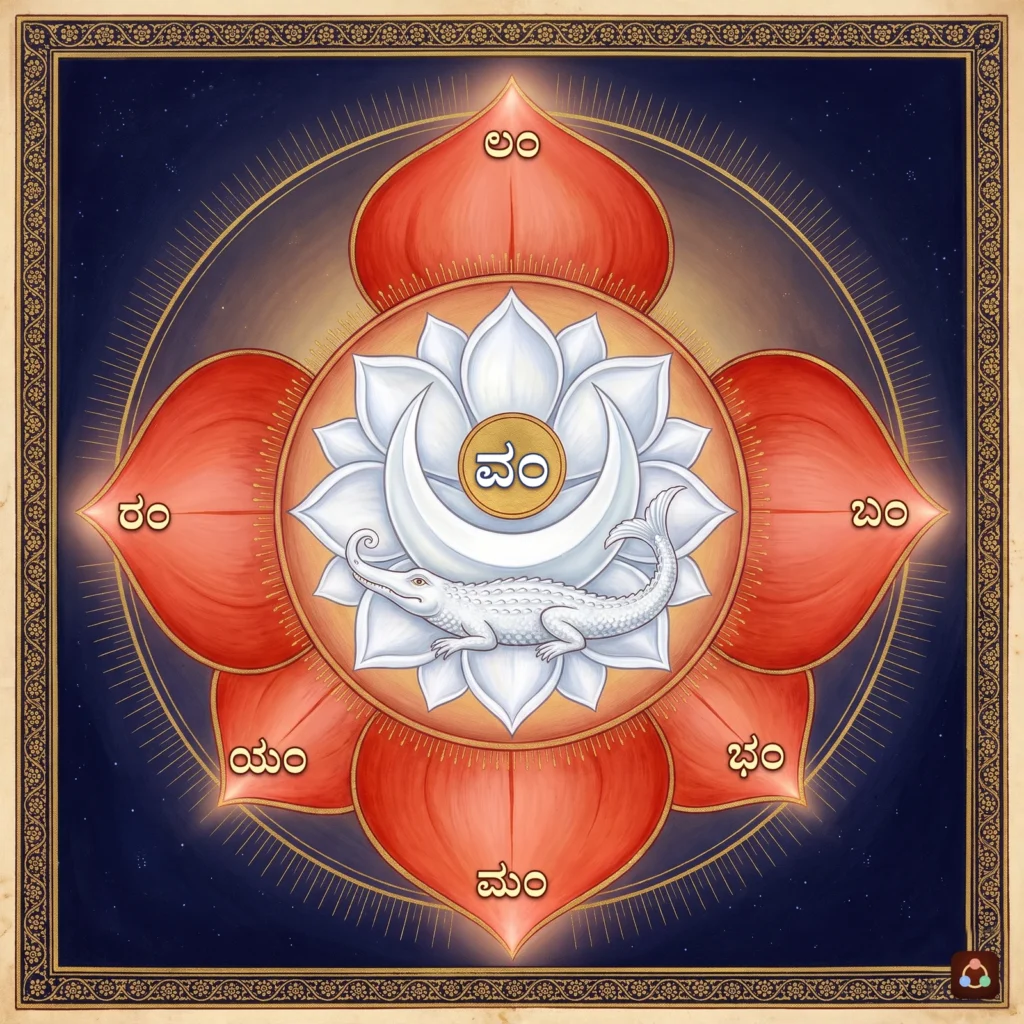
| ದಳಗಳು | ಆರು, ಸಿಂಧೂರದ ಕೆಂಪು |
| ದಳಗಳ ಮೇಲಿನ ಅಕ್ಷರಗಳು | ಬಂ ಭಂ ಮಂ ಯಂ ರಂ ಲಂ, ಪ್ರತಿಯೊಂದರ ಮೇಲೆ ಬಿಂದು, ಮಿಂಚಿನಂತೆ ಹೊಳೆಯುವ ಬಣ್ಣ, ಬಲದಿಂದ ಸುತ್ತಿ ಓದಬೇಕು |
| ತತ್ತ್ವ | ಷಟ್ಚಕ್ರ ನಿರೂಪಣದಲ್ಲಿ ಜಲ; ಸೌಂದರ್ಯ ಲಹರಿಯಲ್ಲಿ ಅಗ್ನಿ |
| ಸಂಬಂಧ | ರಸ ತತ್ತ್ವ, ರುಚಿಯನ್ನು ಅರಿಯುವ ಇಂದ್ರಿಯ, ಮತ್ತು ಕೈ (ವುಡ್ರಫ್ ಅವರ ಪಟ್ಟಿಯಂತೆ) |
| ಆಕಾರ | ಎಂಟು ದಳಗಳ ಬಿಳಿಯ ಕಮಲದಲ್ಲಿ ಬಿಳಿಯ ಅರ್ಧಚಂದ್ರ |
| ಬೀಜ | ವಂ, ಶರತ್ಕಾಲದ ಚಂದ್ರನಂತೆ ಬಿಳುಪು, ಮಕರದ ಮೇಲೆ ಕುಳಿತಿದೆ, ಕೈಯಲ್ಲಿ ಪಾಶ. 1937ರ ಸೌಂದರ್ಯ ಲಹರೀ ವ್ಯಾಖ್ಯಾನದಲ್ಲಿ, ಅಗ್ನಿಯೊಂದಿಗೆ, ರಂ |
| ದೇವತೆ | ಹರಿ (ವಿಷ್ಣು): ಯೌವನದ ರೂಪ, ಹೊಳೆಯುವ ನೀಲಿ ಬಣ್ಣ, ಹಳದಿ ಉಡುಗೆ, ನಾಲ್ಕು ಕೈಗಳು |
| ಅಧಿದೇವತೆ | ರಾಕಿಣೀ (ಷಟ್ಚಕ್ರ ನಿರೂಪಣ); ಕಾಕಿನೀ (ಲಲಿತಾ ಸಹಸ್ರನಾಮ) |
| ಕಿರಣಗಳು | ಅರವತ್ತೆರಡು (ಸೌಂದರ್ಯ ಲಹರೀ 14) |
| ಸೌಂದರ್ಯ ಲಹರೀ | ಶ್ಲೋಕ 9, 14, 39, 40 ಮತ್ತು 41 |
ಷಟ್ಚಕ್ರ ನಿರೂಪಣ ಏನು ಹೇಳುತ್ತದೆ?
ಷಟ್ಚಕ್ರ ನಿರೂಪಣವು ಸ್ವಾಧಿಷ್ಠಾನಕ್ಕೆ 14ರಿಂದ 18ರವರೆಗಿನ ಐದು ಶ್ಲೋಕಗಳನ್ನು ಮೀಸಲಿಟ್ಟಿದೆ. ಅವು ತೋರಿಸುವುದನ್ನು ಹೊರಗಿನಿಂದ ಒಳಕ್ಕೆ ನೋಡೋಣ.
ದಳಗಳು. ಆರು ದಳಗಳು, ‘ಸುಂದರವಾದ ಸಿಂಧೂರದ ಬಣ್ಣ’. ಅವುಗಳ ಮೇಲೆ ‘ಬ’ದಿಂದ ‘ಲ’ವರೆಗಿನ ಆರು ಅಕ್ಷರಗಳಿವೆ: ಬ, ಭ, ಮ, ಯ, ರ ಮತ್ತು ಲ. ಪ್ರತಿಯೊಂದು ಅಕ್ಷರದ ಮೇಲೂ ಬಿಂದುವಿದೆ. ಈ ಅಕ್ಷರಗಳು ‘ಮಿಂಚಿನ ಹೊಳಪಿನಂತೆ’ ಬೆಳಗುತ್ತವೆ (ಶ್ಲೋಕ 14).
ಜಲಮಂಡಲ. ಕಮಲದ ಒಳಗೆ ನೀರಿನ ಒಡೆಯನಾದ ವರುಣನ ಮಂಡಲವಿದೆ. ಅದು ‘ಬಿಳುಪಾಗಿ ಹೊಳೆಯುತ್ತದೆ’; ಅದರ ಆಕಾರ ‘ಅರ್ಧಚಂದ್ರನಂತೆ’ (ಶ್ಲೋಕ 15). ವುಡ್ರಫ್ ಅವರ ಆವೃತ್ತಿಯಲ್ಲಿರುವ ಈ ಶ್ಲೋಕಗಳ ಸಾರಾಂಶ ಇದನ್ನು ಎಂಟು ದಳಗಳ ಬಿಳಿ ಕಮಲವಾಗಿ, ಅದರ ನಡುವೆ ಅರ್ಧಚಂದ್ರನಿರುವಂತೆ ಚಿತ್ರಿಸುತ್ತದೆ. ವ್ಯಾಖ್ಯಾನಕಾರರು ಎತ್ತಿಕೊಡುವ ಹಳೆಯ ಗ್ರಂಥಗಳೂ ಆಚಾರ್ಯರ ಮಾತುಗಳೂ ಹೆಚ್ಚುಕಡಿಮೆ ಇದನ್ನೇ ಹೇಳುತ್ತವೆ: ಜಲಮಂಡಲವು ಕಮಲದ ಆಕಾರದಲ್ಲಿದ್ದು, ಕಮಲವನ್ನು ಕೂಡಿಕೊಂಡಿರುವ ಅರ್ಧಚಂದ್ರನಂತೆ ಬೆಳಗುತ್ತದೆ.
ಬೀಜಾಕ್ಷರ ಮತ್ತು ಮಕರ. ಆ ಅರ್ಧಚಂದ್ರನ ಒಳಗೆ ನೀರಿನ ಬೀಜಾಕ್ಷರವಾದ ‘ವಂ’ ಇದೆ. ಅದು ‘ಶರತ್ಕಾಲದ ಚಂದ್ರನಂತೆ ಕಲೆಯಿಲ್ಲದ ಬಿಳುಪು’; ಅದು ಮಕರದ ಮೇಲೆ ಕುಳಿತಿದೆ (ಶ್ಲೋಕ 15). ಮಕರ ವರುಣನ ವಾಹನ. ವುಡ್ರಫ್ ಅದನ್ನು ‘ಸುಮಾರು ಮೊಸಳೆಯಂತಿರುವ’ ಪುರಾಣದ ಜಲಚರ ಎನ್ನುತ್ತಾರೆ. ಬೀಜಾಕ್ಷರವನ್ನು ಮೂರ್ತಿರೂಪದಲ್ಲಿ ಧ್ಯಾನಿಸುವಾಗ, ವರುಣನಂತೆಯೇ ಅದು ಕೈಯಲ್ಲಿ ಪಾಶವನ್ನು ಹಿಡಿದಿರುತ್ತದೆ.
ಹರಿ. ಬೀಜಾಕ್ಷರದ ಮಡಿಲಲ್ಲಿ ಹರಿ, ಅಂದರೆ ವಿಷ್ಣು, ಕುಳಿತಿದ್ದಾನೆ. ಅವನು ‘ಹರೆಯದ ಸೊಗಸಿನಲ್ಲಿ’ ಇದ್ದಾನೆ (ಶ್ಲೋಕ 16). ಅವನ ಮೈ ಹೊಳೆಯುವ ನೀಲಿ; ಉಟ್ಟಿರುವುದು ಹಳದಿ ಬಟ್ಟೆ. ಅವನಿಗೆ ನಾಲ್ಕು ಕೈಗಳು. ಎದೆಯ ಮೇಲೆ ಶುಭದ ಸುರುಳಿ ಗುರುತಾದ ಶ್ರೀವತ್ಸ, ಮತ್ತು ಕೌಸ್ತುಭ ಎಂಬ ದೊಡ್ಡ ಮಣಿ. ಅವನ ಕೈಗಳಲ್ಲಿ ಶಂಖ, ಚಕ್ರ, ಗದೆ ಮತ್ತು ಪದ್ಮ ಇವೆ ಎಂದೂ, ಎಲ್ಲ ಋತುಗಳ ಹೂವುಗಳ ವನಮಾಲೆ ಮೊಣಕಾಲಿನವರೆಗೂ ಇಳಿದಿದೆ ಎಂದೂ ವ್ಯಾಖ್ಯಾನಕಾರರು ಎತ್ತಿಕೊಡುವ ಗ್ರಂಥಗಳು ಹೇಳುತ್ತವೆ. ವ್ಯಾಖ್ಯಾನಕಾರರು ಇಲ್ಲಿ ತಮ್ಮದೊಂದು ಮಾತನ್ನೂ ಹೇಳುತ್ತಾರೆ: ಮೂಲಾಧಾರದಲ್ಲಿ ಬ್ರಹ್ಮನು ಹಂಸದ ಮೇಲೆ ಕುಳಿತಿರುವಂತೆ, ಇಲ್ಲಿ ವಿಷ್ಣುವನ್ನು ಗರುಡನ ಮೇಲೆ ಕುಳಿತಿರುವಂತೆ ಕಲ್ಪಿಸಿಕೊಳ್ಳಬೇಕು ಎನ್ನುತ್ತಾರೆ.
ರಾಕಿಣೀ. ‘ರಾಕಿಣಿ ಸದಾ ಇಲ್ಲಿ ನೆಲೆಸಿರುತ್ತಾಳೆ’ (ಶ್ಲೋಕ 17). ಆಕೆ ‘ನೀಲಿ ಕಮಲದ ಬಣ್ಣದವಳು’. ದಿವ್ಯವಾದ ಉಡುಗೆ ತೊಡುಗೆ ತೊಟ್ಟಿದ್ದಾಳೆ; ಮೇಲೆತ್ತಿದ ಕೈಗಳಲ್ಲಿ ಆಯುಧಗಳಿವೆ. ಅಮೃತವನ್ನು ಕುಡಿದು ಆಕೆಯ ಮನಸ್ಸು ಉಲ್ಲಾಸದಿಂದ ಮೇಲೇರಿದೆ ಎನ್ನುತ್ತದೆ ಶ್ಲೋಕ; ಆ ಅಮೃತ ಮೇಲಿನ ಸಹಸ್ರಾರ ಕಮಲದಿಂದ ಜಿನುಗುವುದು ಎಂದು ವುಡ್ರಫ್ ಟಿಪ್ಪಣಿ ಬರೆಯುತ್ತಾರೆ. ವ್ಯಾಖ್ಯಾನಕಾರರು ಎತ್ತಿಕೊಡುವ ಧ್ಯಾನಶ್ಲೋಕವೊಂದು ಆಕೆಯ ಕೈಯಲ್ಲಿರುವ ಆಯುಧಗಳನ್ನು ಹೆಸರಿಸುತ್ತದೆ: ಶೂಲ, ಕಮಲ, ಡಮರು ಮತ್ತು ಹರಿತವಾದ ಕೊಡಲಿ. ಅದೇ ಶ್ಲೋಕವು ಆಕೆಗೆ ಮೂರು ಕೆಂಪು ಕಣ್ಣುಗಳು ಮತ್ತು ಉಗ್ರವಾದ ಮುಖವಿದೆ ಎಂದೂ, ಆಕೆಗೆ ಬಿಳಿ ಅನ್ನವೆಂದರೆ ಇಷ್ಟ ಎಂದೂ ಹೇಳುತ್ತದೆ. ಆಕೆ ಉಗ್ರ ಶಕ್ತಿಯ ರೂಪ; ಗ್ರಂಥ ಆಕೆಯನ್ನು ಮೆದುಗೊಳಿಸಿ ಹೇಳುವುದಿಲ್ಲ. ನಮ್ಮ ಚಿತ್ರದಲ್ಲಿ ಆಕೆಯನ್ನು ತೋರಿಸಿಲ್ಲ.
ಫಲಶ್ರುತಿ. ಈ ‘ನಿರ್ಮಲವಾದ ಕಮಲ’ದ ಮೇಲೆ ಧ್ಯಾನ ಮಾಡುವವನು ತಕ್ಷಣವೇ ತನ್ನ ಎಲ್ಲ ಶತ್ರುಗಳಿಂದ ಮುಕ್ತನಾಗುತ್ತಾನೆ ಎಂದು 18ನೆಯ ಶ್ಲೋಕ ಹೇಳುತ್ತದೆ. ವ್ಯಾಖ್ಯಾನವು ಆ ಶತ್ರುಗಳನ್ನು ಹೆಸರಿಸುತ್ತದೆ: ಕಾಮ, ಕ್ರೋಧ, ಲೋಭ, ಮೋಹ, ಮದ ಮತ್ತು ಮಾತ್ಸರ್ಯಗಳೆಂಬ ಅರಿಷಡ್ವರ್ಗಗಳು. ಸರಳವಾಗಿ ಹೇಳಿದರೆ: ಬಯಕೆ, ಸಿಟ್ಟು, ದುರಾಸೆ, ಭ್ರಮೆ, ಗರ್ವ ಮತ್ತು ಹೊಟ್ಟೆಕಿಚ್ಚು. ಈ ಆರೂ ‘ನನ್ನದು’ ಎಂಬ ಭಾವದಿಂದ, ಅಂದರೆ ಅಹಂಕಾರದಿಂದ, ಹುಟ್ಟುತ್ತವೆ ಎನ್ನುತ್ತದೆ ವ್ಯಾಖ್ಯಾನ; ಶ್ಲೋಕವೂ ಮೊದಲು ಹೆಸರಿಸುವುದು ಅಹಂಕಾರವನ್ನೇ. ಅಂತಹ ವ್ಯಕ್ತಿಯು ‘ಅಜ್ಞಾನದ ದಟ್ಟ ಕತ್ತಲೆಯನ್ನು ಬೆಳಗುವ ಸೂರ್ಯನಂತಾಗುತ್ತಾನೆ’, ಮತ್ತು ಆತನ ಮಾತುಗಳು ಗದ್ಯದಲ್ಲೂ ಪದ್ಯದಲ್ಲೂ ಧಾರಾಳವಾಗಿ ಹರಿಯುತ್ತವೆ. ಇವು ಧ್ಯಾನದ ಬಗ್ಗೆ ಪರಂಪರೆ ಕೊಡುವ ಭರವಸೆಗಳು. ವೈದ್ಯಕೀಯ ಭರವಸೆಗಳಲ್ಲ.
ಸೌಂದರ್ಯ ಲಹರೀ ಏನು ಹೇಳುತ್ತದೆ?
ಸೌಂದರ್ಯ ಲಹರಿಯ ಐದು ಶ್ಲೋಕಗಳಲ್ಲಿ ಈ ಕೇಂದ್ರದ ಮಾತು ಬರುತ್ತದೆ. ಎರಡು ಶ್ಲೋಕಗಳು ಇದನ್ನು ಹೆಸರಿಸುತ್ತವೆ; ಇನ್ನೂ ಮೂರರಲ್ಲಿ ವ್ಯಾಖ್ಯಾನ ಇದನ್ನು ತರುತ್ತದೆ. ಅಷ್ಟೇ ಅಲ್ಲ, ಸೌಂದರ್ಯ ಲಹರಿ ಇದಕ್ಕೆ ಬೇರೆಯೇ ತತ್ತ್ವವನ್ನು ಕೊಡುತ್ತದೆ.
9ನೆಯ ಶ್ಲೋಕವು ಇಲ್ಲಿ ಜಲತತ್ವದ ಬದಲು ಅಗ್ನಿತತ್ವವನ್ನು ಇರಿಸುತ್ತದೆ: ಸ್ವಾಧಿಷ್ಠಾನದಲ್ಲಿ ಅಗ್ನಿ, ಅದರ ಮೇಲಿನ ಮಣಿಪೂರದಲ್ಲಿ ಜಲ. ಕಮಲ ಅದೇ ಕಮಲ. ಬದಲಾಗುವುದು ಅದರೊಳಗೆ ಧ್ಯಾನಿಸುವ ತತ್ತ್ವ; ಈ ವ್ಯಾಖ್ಯಾನದ ಕ್ರಮದಲ್ಲಿ ತತ್ತ್ವದ ಜೊತೆ ಬೀಜಾಕ್ಷರವೂ ಬದಲಾಗುತ್ತದೆ: ಇಲ್ಲಿ ‘ರಂ’, ಮಣಿಪೂರದಲ್ಲಿ ‘ವಂ’. 1937ರ ಅಡ್ಯಾರ್ ವ್ಯಾಖ್ಯಾನ ಈ ವ್ಯತ್ಯಾಸವನ್ನು ಸ್ಪಷ್ಟವಾಗಿ ತೋರಿಸುತ್ತದೆ. ಷಟ್ಚಕ್ರ ನಿರೂಪಣವನ್ನು ಬರೆದ ಪೂರ್ಣಾನಂದರು ಈ ಕೇಂದ್ರಕ್ಕೆ ಜಲತತ್ವವನ್ನು ಕೊಟ್ಟರೆ, ಶಂಕರಾಚಾರ್ಯರು ಅಗ್ನಿತತ್ವವನ್ನು ನೀಡುತ್ತಾರೆ; ಅವರ ಮಾತಿಗೆ ವಾಮಕೇಶ್ವರ ತಂತ್ರದ ಬೆಂಬಲವೂ ಇದೆ. ಈ ವ್ಯಾಖ್ಯಾನವು ಈ ಕೇಂದ್ರವನ್ನು ಶ್ರೀಚಕ್ರದ ಅಷ್ಟಕೋನಕ್ಕೂ ಜೋಡಿಸುತ್ತದೆ. ಶ್ಲೋಕ 9 ಓದಿ
14ನೆಯ ಶ್ಲೋಕವು ಪ್ರತಿಯೊಂದು ಕೇಂದ್ರದಲ್ಲಿರುವ ಕಿರಣಗಳನ್ನು ಲೆಕ್ಕ ಹಾಕುತ್ತದೆ. ಅಗ್ನಿಯ ಕೇಂದ್ರವಾದ ಸ್ವಾಧಿಷ್ಠಾನದಲ್ಲಿ ಅರವತ್ತೆರಡು ಕಿರಣಗಳಿವೆ. ನಮ್ಮ ಚಿತ್ರದ ಸೂಕ್ಷ್ಮ ಕಿರಣಗಳ ವಲಯ ಇದನ್ನು ನೆನಪಿಸುತ್ತದೆ. ಶ್ಲೋಕ 14 ಓದಿ
39ನೇ ಶ್ಲೋಕ ಈ ಕೇಂದ್ರದ್ದೇ ಆದ ಶ್ಲೋಕ.
ತವ ಸ್ವಾಧಿಷ್ಠಾನೇ ಹುತವಹಮಧಿಷ್ಠಾಯ ನಿರತಂತಮೀಡೇ ಸಂವರ್ತಂ ಜನನಿ ಮಹತೀಂ ತಾಂ ಚ ಸಮಯಾಮ್ ।ಯದಾಲೋಕೇ ಲೋಕಾನ್ ದಹತಿ ಮಹತಿ ಕ್ರೋಧಕಲಿತೇದಯಾರ್ದ್ರಾ ಯಾ ದೃಷ್ಟಿಃ ಶಿಶಿರಮುಪಚಾರಂ ರಚಯತಿ
ಅರ್ಥತಾಯಿ, ಅಗ್ನಿತತ್ವವಿರುವ ನಿನ್ನ ಸ್ವಾಧಿಷ್ಠಾನ ಚಕ್ರದಲ್ಲಿ, ಆ ಜ್ವಾಲೆಯಲ್ಲಿ ಸದಾ ನೆಲೆಸಿರುವ ಪ್ರಳಯಾಗ್ನಿಯಾದ ಸಂವರ್ತನನ್ನೂ (ರುದ್ರ), ಅವನ ಪಕ್ಕದಲ್ಲಿರುವ ಮಹಾನ್ ಸಮಯಳಾದ ನಿನ್ನನ್ನೂ ನಾನು ಸ್ತುತಿಸುತ್ತೇನೆ. ಅವನ ಕೋಪ ನೆತ್ತಿಗೇರಿ ಅವನ ದೃಷ್ಟಿ ಲೋಕಗಳನ್ನೇ ಸುಡುತ್ತಿರುವಾಗ, ಕರುಣೆಯಿಂದ ಒದ್ದೆಯಾದ ನಿನ್ನ ನೋಟವು ಅವುಗಳ ಮೇಲೆ ತಂಪಾದ ಲೇಪನವನ್ನು ಹಚ್ಚುತ್ತದೆ. ಅವನ ನಾಶಮಾಡುವ ಶಕ್ತಿಯನ್ನು ನಿನ್ನ ಕರುಣೆ ಸದಾ ತಣಿಸುತ್ತದೆ. ಶ್ಲೋಕ 39 ಓದಿ
ಸಂವರ್ತ ಎಂದರೆ ಪ್ರಳಯ ಕಾಲದಲ್ಲಿ ಲೋಕಗಳನ್ನು ಸುಟ್ಟು ಭಸ್ಮ ಮಾಡುವ ಬೆಂಕಿ. ಆತನ ಪಕ್ಕದಲ್ಲೇ ತಾಯಿಯು ಸಮಯಾ ರೂಪದಲ್ಲಿ ನಿಂತಿದ್ದಾಳೆ. ಆತನ ಕೋಪದ ನೋಟವು ಜಗತ್ತನ್ನು ಸುಡುತ್ತಿರುವಾಗ, ಕರುಣೆಯಿಂದ ತೋಯ್ದ ಆಕೆಯ ನೋಟ ಅವುಗಳನ್ನು ತಣಿಸುತ್ತದೆ. ಇಲ್ಲಿ ಧ್ಯಾನಿಸಬೇಕಾದ ಈ ದಂಪತಿಯನ್ನು 1937ರ ವ್ಯಾಖ್ಯಾನ ಸಂವರ್ತೇಶ್ವರ ಮತ್ತು ಸಮಯಾಂಬಾ ಎಂದು ಕರೆಯುತ್ತದೆ. ಅವರ ಸುತ್ತ ಅರವತ್ತೆರಡು ಅಗ್ನಿ ಕಿರಣಗಳಿವೆ ಎನ್ನುತ್ತದೆ.
ಶ್ಲೋಕಗಳ ಕ್ರಮದ ಬಗ್ಗೆಯೂ ವ್ಯಾಖ್ಯಾನವು ಒಂದು ಸ್ವಾರಸ್ಯಕರ ಸಂಗತಿಯನ್ನು ಗುರುತಿಸುತ್ತದೆ. ಶ್ಲೋಕಗಳು ಆಜ್ಞಾ ಚಕ್ರದಿಂದ ಕೆಳಗೆ ಇಳಿಯುತ್ತವೆ; ಹೃದಯದ ನಂತರ ಮಣಿಪೂರ ಬರಬೇಕಿತ್ತು. ಆದರೆ ಕವಿ ಸ್ವಾಧಿಷ್ಠಾನವನ್ನು ತರುತ್ತಾರೆ. ಅವರು ದೇಹದಲ್ಲಿ ಕಮಲಗಳಿರುವ ಕ್ರಮವನ್ನಲ್ಲ, ಪಂಚಭೂತಗಳ ಕ್ರಮವನ್ನು ಅನುಸರಿಸುವಂತಿದೆ ಎನ್ನುತ್ತದೆ ವ್ಯಾಖ್ಯಾನ. ಶ್ಲೋಕ 39 ಓದಿ
ಮಣಿಪೂರದ ಬಗೆಗಿನ 40ನೆಯ ಶ್ಲೋಕವು ಈ ಚಿತ್ರವನ್ನು ಪೂರ್ಣಗೊಳಿಸುತ್ತದೆ. ವ್ಯಾಖ್ಯಾನ ಪರಂಪರೆಯ ಒಂದು ಮಾತನ್ನು ಹೇಳುತ್ತದೆ: ಹೃದಯದಿಂದ ಬರುವ ಸೂರ್ಯನ ಕಿರಣಗಳು ಮತ್ತು ಸ್ವಾಧಿಷ್ಠಾನದ ಅಗ್ನಿಯ ಶಾಖವು ಮಣಿಪೂರದಲ್ಲಿರುವ ನೀರನ್ನು ಮೋಡಗಳನ್ನಾಗಿ ಮಾಡುತ್ತವೆ. ಮಹಾಪ್ರಳಯದ ಸಮಯದಲ್ಲಿ ಆ ಮೋಡಗಳು ಧಾರಾಕಾರವಾಗಿ ಸುರಿದು ಜಗತ್ತನ್ನು ಆವರಿಸಿದ ಬೆಂಕಿಯನ್ನು ನಂದಿಸುತ್ತವೆ. ಶ್ಲೋಕ 40 ಓದಿ
41ನೇ ಶ್ಲೋಕ ಇನ್ನೊಂದು ಮಾತನ್ನು ಸೇರಿಸುತ್ತದೆ. ಮೂಲಾಧಾರ ಮತ್ತು ಸ್ವಾಧಿಷ್ಠಾನಗಳು ‘ಕತ್ತಲೆಯ ಪ್ರದೇಶ’ಕ್ಕೆ ಸೇರಿದವು ಎನ್ನುತ್ತದೆ ವ್ಯಾಖ್ಯಾನ. ಕೆಳಗಿನ ಈ ಎರಡು ಕೇಂದ್ರಗಳಲ್ಲಿ ಹೊರಗಿನ ಪೂಜೆ ಕೌಲ ಮಾರ್ಗಕ್ಕೆ ಸೇರಿದ್ದು. ಸಮಯ ಮಾರ್ಗದವರು ಆಕೆಯನ್ನು ಸಹಸ್ರಾರ ಕಮಲದ ತಾಯಿಯಾಗಿ ಅಂತರಂಗದಲ್ಲೇ ಉಪಾಸಿಸುತ್ತಾರೆ. ಅದಕ್ಕಾಗಿಯೇ 39 ಮತ್ತು 41ನೆಯ ಶ್ಲೋಕಗಳಲ್ಲಿ ಕವಿಯು ಆಕೆಯನ್ನು ಸಮಯಾ ಎಂದು ಕರೆದಿದ್ದಾರೆ ಎಂದು ಅದು ವಿವರಿಸುತ್ತದೆ. ಶ್ಲೋಕ 41 ಓದಿ
ಲಲಿತಾ ಸಹಸ್ರನಾಮ ಏನು ಹೇಳುತ್ತದೆ?
ಸ್ವಾಧಿಷ್ಠಾನದ ಯೋಗಿನಿ (ನಾಮ 504ರಿಂದ 513). ಲಲಿತಾ ಸಹಸ್ರನಾಮದ ಯೋಗಿನಿ ಭಾಗದಲ್ಲಿ ಪ್ರತಿಯೊಂದು ಕೇಂದ್ರಕ್ಕೂ ಒಬ್ಬೊಬ್ಬ ದೇವಿ ಇದ್ದಾಳೆ. ಅವಳ ಮುಖಗಳು, ಬಣ್ಣ, ಆಯುಧಗಳು, ದೇಹದ ಧಾತು, ಇಷ್ಟವಾದ ಆಹಾರ ಎಲ್ಲವನ್ನೂ ಹೇಳುತ್ತದೆ. ಸ್ವಾಧಿಷ್ಠಾನದ ಯೋಗಿನಿ ಕಾಕಿನೀ.
| ಸಂಖ್ಯೆ | ನಾಮ | ಅರ್ಥ |
|---|---|---|
| 504 | ಸ್ವಾಧಿಷ್ಠಾನಾಂಬುಜಗತಾ | ಸ್ವಾಧಿಷ್ಠಾನ ಕಮಲದಲ್ಲಿ ನೆಲೆಸಿರುವವಳು |
| 505 | ಚತುರ್ವಕ್ತ್ರಮನೋಹರಾ | ನಾಲ್ಕು ಮುಖಗಳಿಂದ ಮನೋಹರಳಾದವಳು |
| 506 | ಶೂಲಾದ್ಯಾಯುಧಸಂಪನ್ನಾ | ಶೂಲ ಮೊದಲಾದ ಆಯುಧಗಳನ್ನು ಹಿಡಿದವಳು |
| 507 | ಪೀತವರ್ಣಾ | ಹಳದಿ ಬಣ್ಣದವಳು |
| 508 | ಅತಿಗರ್ವಿತಾ | ಬಹಳ ಹೆಮ್ಮೆಯುಳ್ಳವಳು |
| 509 | ಮೇದೋನಿಷ್ಠಾ | ದೇಹದ ಕೊಬ್ಬಿನಲ್ಲಿ (ಮೇದಸ್ಸಿನಲ್ಲಿ) ನೆಲೆಸಿರುವವಳು |
| 510 | ಮಧುಪ್ರೀತಾ | ಜೇನಿನಲ್ಲಿ ಪ್ರೀತಿಯುಳ್ಳವಳು |
| 511 | ಬಂಧಿನ್ಯಾದಿಸಮನ್ವಿತಾ | ಬಂಧಿನೀ ಮೊದಲಾದ ಶಕ್ತಿಗಳೊಡನೆ ಇರುವವಳು |
| 512 | ದಧ್ಯನ್ನಾಸಕ್ತಹೃದಯಾ | ಮೊಸರನ್ನದಲ್ಲಿ ಪ್ರೀತಿಯುಳ್ಳವಳು |
| 513 | ಕಾಕಿನೀರೂಪಧಾರಿಣೀ | ಕಾಕಿನಿಯ ರೂಪ ತಾಳಿದವಳು |
ಈಕೆ ಷಟ್ಚಕ್ರ ನಿರೂಪಣದಲ್ಲಿ ಬರುವ ದೇವಿಯಲ್ಲ. ಅಲ್ಲಿ ರಾಕಿಣಿಯು ಈ ಕೇಂದ್ರವನ್ನು ಆಳುತ್ತಾಳೆ. ಆದರೆ ಲಲಿತಾ ಸಹಸ್ರನಾಮದಲ್ಲಿ ರಾಕಿಣಿಯು ಅನಾಹತ, ಅಂದರೆ ಹೃದಯ ಚಕ್ರಕ್ಕೆ ಸೇರಿದವಳು (ನಾಮ 494). ಚಕ್ರಗಳ ಮುಖ್ಯ ಪುಟದಲ್ಲಿರುವ ಕೋಷ್ಟಕ ಇದರ ಪೂರ್ತಿ ಚಿತ್ರವನ್ನು ತೋರಿಸುತ್ತದೆ. ಆದರೆ ದೇಹದ ಧಾತುವಿನ ವಿಷಯದಲ್ಲಿ ಲಲಿತಾ ಸಹಸ್ರನಾಮ ಒಂಟಿಯಲ್ಲ: ವುಡ್ರಫ್ ಬೇರೊಂದು ಗ್ರಂಥದಿಂದ ಕೊಡುವ ಪಟ್ಟಿಯೂ, 1937ರ ಸೌಂದರ್ಯ ಲಹರೀ ವ್ಯಾಖ್ಯಾನವೂ ಈ ಕೇಂದ್ರಕ್ಕೆ ಮೇದಸ್ಸನ್ನೇ ಕೊಡುತ್ತವೆ.
ಮಾತಿನ ಎರಡನೆಯ ಹಂತ. ಲಲಿತಾ ಸಹಸ್ರನಾಮ ತಾಯಿಯನ್ನು ಪಶ್ಯಂತೀ ಎಂದೂ ಕರೆಯುತ್ತದೆ (ನಾಮ 368). ಮಾತು ಹೇಗೆ ಹುಟ್ಟುತ್ತದೆ ಎಂಬುದರ ಬಗ್ಗೆ ಷಟ್ಚಕ್ರ ನಿರೂಪಣದ ವ್ಯಾಖ್ಯಾನ ಹಳೆಯ ಗ್ರಂಥವೊಂದರ ಮಾತನ್ನು ಎತ್ತಿಕೊಡುತ್ತದೆ. ಮಾತು ಮೂಲಾಧಾರದಲ್ಲಿ ಸೂಕ್ಷ್ಮವಾದ ನಾದವಾಗಿ ಏಳುತ್ತದೆ; ಅದರ ಹೆಸರು ಪರಾ. ಸ್ವಾಧಿಷ್ಠಾನದಲ್ಲಿ ಅರಳಿದಾಗ ಅದು ಪಶ್ಯಂತೀ ಎನಿಸುತ್ತದೆ. ಹೃದಯದಲ್ಲಿ ಅದು ಮಧ್ಯಮಾ; ಗಂಟಲಿನಲ್ಲಿ ಉಚ್ಚರಿಸುವ ಮಾತಾದ ವೈಖರೀ. ಕೆಲವರು ಪಶ್ಯಂತಿಯನ್ನು ಮಣಿಪೂರದಲ್ಲಿ ಇಡುತ್ತಾರೆ ಎಂದೂ ವುಡ್ರಫ್ ಹೇಳುತ್ತಾರೆ.
ಮೂರು ಗ್ರಂಥಗಳು, ಒಂದೇ ಕಮಲ
ಸ್ಥಳ ಮತ್ತು ಕಮಲದ ವಿಚಾರದಲ್ಲಿ ಎಲ್ಲ ಗ್ರಂಥಗಳೂ ಒಪ್ಪುತ್ತವೆ. ಆದರೆ ತತ್ತ್ವ, ಇಲ್ಲಿ ನೆಲೆಸಿರುವ ದೇವತೆಗಳು ಮತ್ತು ಇದರ ದೇವಿಯ ವಿಷಯದಲ್ಲಿ ಅವು ಬೇರೆಯಾಗುತ್ತವೆ.
| ಷಟ್ಚಕ್ರ ನಿರೂಪಣ | ಲಲಿತಾ ಸಹಸ್ರನಾಮ | ಸೌಂದರ್ಯ ಲಹರೀ | |
|---|---|---|---|
| ತತ್ತ್ವ | ಜಲ (ಶ್ಲೋಕ 15) | ಅಗ್ನಿ (ಶ್ಲೋಕ 9 ಮತ್ತು 39) | |
| ಬೀಜ | ವಂ, ಮಕರದ ಮೇಲೆ | ರಂ, 1937ರ ವ್ಯಾಖ್ಯಾನದ ಕ್ರಮದಂತೆ | |
| ಇಲ್ಲಿ ನೆಲೆಸಿರುವವರು | ಬೀಜದ ಮಡಿಲಲ್ಲಿ ಹರಿ (ವಿಷ್ಣು) | ಪ್ರಳಯಾಗ್ನಿಯಾದ ಸಂವರ್ತ, ಸಮಯಾ ರೂಪದ ತಾಯಿಯೊಂದಿಗೆ (ಶ್ಲೋಕ 39); 1937ರ ವ್ಯಾಖ್ಯಾನದ ಪಟ್ಟಿಯಲ್ಲಿ ರುದ್ರ | |
| ಅಧಿದೇವತೆ | ರಾಕಿಣೀ | ಕಾಕಿನೀ | |
| ರೂಪ | ನೀಲಿ ಕಮಲದಂತೆ ನೀಲಿ; ಮೂರು ಕಣ್ಣುಗಳು (ವ್ಯಾಖ್ಯಾನಕಾರರು ಉಲ್ಲೇಖಿಸುವ ಧ್ಯಾನ ಶ್ಲೋಕದಂತೆ) | ಹಳದಿ ಬಣ್ಣ, ನಾಲ್ಕು ಮುಖಗಳು | |
| ಕೈಗಳಲ್ಲಿ | ಶೂಲ, ಕಮಲ, ಡಮರು ಮತ್ತು ಕೊಡಲಿ | ಶೂಲ ಮೊದಲಾದ ಆಯುಧಗಳು | |
| ದೇಹದ ಧಾತು | ರಕ್ತ (ವುಡ್ರಫ್ ಗುರುತಿಸುವ ಒಂದು ಗ್ರಂಥದ ಪಾಠದಂತೆ) | ಮೇದಸ್ಸು (ಕೊಬ್ಬು); ವುಡ್ರಫ್ ಕೊಡುವ ಒಂದು ಪಟ್ಟಿಯಲ್ಲೂ, 1937ರ ವ್ಯಾಖ್ಯಾನದಲ್ಲೂ ಹೀಗೆಯೇ | |
| ಪ್ರಿಯವಾದ ಆಹಾರ | ಬಿಳಿಯ ಅನ್ನ | ಜೇನು; ಮೊಸರನ್ನ | |
| ಕಿರಣಗಳು | ಅರವತ್ತೆರಡು (ಶ್ಲೋಕ 14) |
ಅಂತರಂಗದ ಬದುಕಿಗೆ ಇದರ ಅರ್ಥವೇನು?
ಗ್ರಂಥಗಳು ಸ್ವಾಧಿಷ್ಠಾನವನ್ನು ಕೆಲವು ಸರಳ ರೀತಿಗಳಲ್ಲಿ ಅರ್ಥಮಾಡಿಸುತ್ತವೆ.
ಇದು ಆರು ಶತ್ರುಗಳನ್ನು ಎದುರಿಸುವ ಜಾಗ. ಕಾಮ, ಕ್ರೋಧ, ಲೋಭ, ಮೋಹ, ಮದ, ಮಾತ್ಸರ್ಯಗಳಿಂದ ಮುಕ್ತಿ ಸಿಗುತ್ತದೆ ಎಂದು ಷಟ್ಚಕ್ರ ನಿರೂಪಣ ಭರವಸೆ ನೀಡುತ್ತದೆ. 1937ರ ಸೌಂದರ್ಯ ಲಹರೀ ವ್ಯಾಖ್ಯಾನವು 101ನೆಯ ಶ್ಲೋಕವನ್ನು ವಿವರಿಸುವಾಗ, ಇದೇ ಆರನ್ನು ಈ ಕೇಂದ್ರದ ಆರು ದಳಗಳ ಮೇಲೆ ಇರಿಸುತ್ತದೆ. ಎರಡು ಬೇರೆ ಬೇರೆ ಗ್ರಂಥಗಳು ಇಲ್ಲಿ ಆಗಬೇಕಾದ ಒಂದೇ ಕೆಲಸಕ್ಕೆ ಬೆಟ್ಟು ಮಾಡುತ್ತವೆ.
ಇದು ರುಚಿಯ ಮತ್ತು ಕೈಯ ಕೇಂದ್ರ. ವುಡ್ರಫ್ ಅವರ ಪಟ್ಟಿ ಈ ಕೇಂದ್ರದ ತತ್ತ್ವವನ್ನು ರಸಕ್ಕೆ, ರುಚಿಯನ್ನು ಅರಿಯುವ ಇಂದ್ರಿಯಕ್ಕೆ ಮತ್ತು ಕೆಲಸ ಮಾಡುವ ಕೈಗೆ ಜೋಡಿಸುತ್ತದೆ. ಮನಸ್ಸು ಒಳಮುಖವಾದಾಗ ಇವೆಲ್ಲ ಇಲ್ಲೇ ತಮ್ಮ ಮೂಲದಲ್ಲಿ ಲೀನವಾಗುತ್ತವೆ ಎನ್ನುತ್ತಾರೆ.
ಕರುಣೆಯ ಮಡಿಲಲ್ಲಿ ಅಗ್ನಿ. ಸೌಂದರ್ಯ ಲಹರಿ ಇಲ್ಲಿ ಪ್ರಳಯದ ಬೆಂಕಿಯನ್ನು ಚಿತ್ರಿಸುತ್ತದೆ. ಆದರೆ ಆ ಬೆಂಕಿಯನ್ನು ಅದು ಎಂದಿಗೂ ಒಂಟಿಯಾಗಿ ಬಿಡುವುದಿಲ್ಲ. ಅದರ ಪಕ್ಕದಲ್ಲೇ ತಾಯಿ ನಿಂತಿದ್ದಾಳೆ; ಆಕೆಯ ಕಟಾಕ್ಷವು ಆ ಬೆಂಕಿಯನ್ನು ತಣಿಸುತ್ತದೆ. ಶಕ್ತಿ ಮತ್ತು ಕರುಣೆ ಜೊತೆಜೊತೆಯಾಗಿ ಇರಬೇಕಾದವು.
ಸಿದ್ಧಿಗಳೇ ಗುರಿಯಲ್ಲ. ಈ ಕೇಂದ್ರವನ್ನು ಗೆದ್ದವನಿಗೆ ಬೆಂಕಿಯ ಮೇಲೆ ನಡೆಯುವಂಥ ಶಕ್ತಿ ಬರುತ್ತದೆ ಎಂಬ ಮಾತನ್ನು 1937ರ ವ್ಯಾಖ್ಯಾನ 9ನೇ ಶ್ಲೋಕದಲ್ಲಿ ಹೇಳುತ್ತದೆ. ಆದರೆ ಅದೇ ವ್ಯಾಖ್ಯಾನ ಇಂಥ ಶಕ್ತಿಗಳನ್ನು ‘ಹೊಂಡಗಳು’ ಎಂದು ಕರೆಯುತ್ತದೆ. ಗುರಿ ಇರುವುದು ಮೇಲೆ, ಸಹಸ್ರಾರದಲ್ಲಿ.
ದೇಹದ ಈ ಜಾಗದಲ್ಲಿ ಏನಿದೆ?
ನಾನು ವೈದ್ಯ. ಹಾಗಾಗಿ ದೇಹದ ಈ ಮಟ್ಟದಲ್ಲಿ ಏನಿದೆ ಎಂದು ನೇರವಾಗಿ ಹೇಳುತ್ತೇನೆ.
ಇಲ್ಲಿ, ಸೊಂಟದ ಒಳಗೆ, ಮೂತ್ರಕೋಶ, ಕರುಳಿನ ಕೊನೆಯ ಭಾಗ ಮತ್ತು ಸಂತಾನೋತ್ಪತ್ತಿಯ ಅಂಗಗಳಿವೆ. ಮಹಿಳೆಯರಲ್ಲಿ ಇವು ಗರ್ಭಕೋಶ ಮತ್ತು ಅಂಡಾಶಯಗಳು; ಪುರುಷರಲ್ಲಿ ಪ್ರಾಸ್ಟೇಟ್ ಮತ್ತು ವೀರ್ಯಕೋಶಗಳು (ಸೆಮಿನಲ್ ವೆಸಿಕಲ್). ಇವುಗಳನ್ನು ನರಗಳ ಒಂದು ಸೂಕ್ಷ್ಮ ಜಾಲ ನೋಡಿಕೊಳ್ಳುತ್ತದೆ. ಹೊಟ್ಟೆಯ ಮುಖ್ಯ ಅಪಧಮನಿ ಎರಡಾಗಿ ಕವಲೊಡೆಯುವ ಜಾಗಕ್ಕಿಂತ ಕೆಳಗೆ, ಸೊಂಟದ ಬೆನ್ನುಮೂಳೆ ಸೇಕ್ರಮ್ ಮೂಳೆಯನ್ನು ಸೇರುವಲ್ಲಿ, ಅದರ ಮುಂದೆ, ಅದು ಸುಪೀರಿಯರ್ ಹೈಪೋಗ್ಯಾಸ್ಟ್ರಿಕ್ ಪ್ಲೆಕ್ಸಸ್ ಆಗಿ ಶುರುವಾಗುತ್ತದೆ. ಅಲ್ಲಿಂದ ಎರಡು ನರಗಳು, ಎರಡೂ ಬದಿಗೆ ಒಂದೊಂದು, ಕೆಳಗಿಳಿದು ಇನ್ಫೀರಿಯರ್ ಹೈಪೋಗ್ಯಾಸ್ಟ್ರಿಕ್ ಪ್ಲೆಕ್ಸಸ್ ಸೇರುತ್ತವೆ. ಸೇಕ್ರಮ್ ಮೂಳೆಯಿಂದ ಬರುವ ನರಗಳೂ ಅಲ್ಲಿ ಅದನ್ನು ಸೇರುತ್ತವೆ. ನಾವು ಯೋಚಿಸದೆಯೇ ಮೂತ್ರಕೋಶ, ಮಲಕರುಳು ಮತ್ತು ಲೈಂಗಿಕ ಅಂಗಗಳನ್ನು ನಡೆಸುವ ನರಗಳು ಇವುಗಳಲ್ಲೇ ಸಾಗುತ್ತವೆ. ಶಸ್ತ್ರಚಿಕಿತ್ಸಕರು ಈ ನರಗಳಿಗೆ ಪೆಟ್ಟಾಗದಂತೆ ಬಹಳ ಎಚ್ಚರ ವಹಿಸುತ್ತಾರೆ; ಯಾಕೆಂದರೆ ಇವುಗಳಿಗೆ ಗಾಯವಾದರೆ ಈ ಮೂರೂ ಕ್ರಿಯೆಗಳು ಏರುಪೇರಾಗಬಹುದು.
ಒಂದು ಶತಮಾನದ ಹಿಂದೆ ಕೆಲವು ಲೇಖಕರು ಚಕ್ರಗಳನ್ನು ಇಂಥ ನರಕೇಂದ್ರಗಳಿಗೆ ಹೊಂದಿಸಲು ಪ್ರಯತ್ನಿಸಿದರು. ವಿದ್ವಾಂಸ ಬ್ರಜೇಂದ್ರನಾಥ್ ಸೀಲ್ ಸ್ವಾಧಿಷ್ಠಾನವನ್ನು ಸೇಕ್ರಲ್ ಪ್ಲೆಕ್ಸಸ್ ಎಂದು ತಿಳಿದರು. ಇನ್ನೊಬ್ಬ ಲೇಖಕರ ಪಟ್ಟಿ ಇಲ್ಲಿ ಪ್ರಾಸ್ಟೇಟ್ ಪ್ಲೆಕ್ಸಸ್ ಅನ್ನು ಇಡುತ್ತದೆ. ಚಕ್ರಗಳು ಸುಷುಮ್ನೆಯ ಒಳಗೆ ಇವೆ ಎಂಬುದನ್ನು ಗ್ರಂಥವೇ ‘ಸ್ಪಷ್ಟಪಡಿಸುತ್ತದೆ’ ಎಂದು ವುಡ್ರಫ್ ಉತ್ತರ ಕೊಟ್ಟರು. ವುಡ್ರಫ್ ಚರ್ಚಿಸುವ ಥಿಯಾಸಫಿ ಪಂಥದ ಲೇಖಕರೊಬ್ಬರು ಇನ್ನಷ್ಟು ಮುಂದೆ ಹೋಗಿ, ಇದರ ಬದಲಾಗಿ ಗುಲ್ಮದ ಬಳಿ ಒಂದು ಕಮಲವನ್ನು ತಂದಿಟ್ಟರು. ಮೂಲಾಧಾರದಂತೆಯೇ, ಇವೆಲ್ಲ ಜಾಗದ ಹೊಂದಾಣಿಕೆಗಳು ಮಾತ್ರ. ಇವುಗಳಲ್ಲಿ ಯಾವುದೂ ಆ ಚಕ್ರವೇ ಈ ನರಕೇಂದ್ರ ಎಂದು ಸಾಬೀತುಪಡಿಸುವುದಿಲ್ಲ.
ದೇಹದ ಈ ಮಟ್ಟದಲ್ಲಿ ಯೋಗದ ಪರಿಣಾಮದ ಬಗ್ಗೆ ಏನಾದರೂ ಅಧ್ಯಯನ ನಡೆದಿದೆಯೇ? ಒಂದಂತೂ ಒಳ್ಳೆಯ ಅಧ್ಯಯನವಿದೆ. 2024ರಲ್ಲಿ ಅಮೆರಿಕದಲ್ಲಿ ನಡೆದ ಒಂದು ಅಧ್ಯಯನದಲ್ಲಿ ಪ್ರತಿದಿನ ಮೂತ್ರ ಸೋರುವ ತೊಂದರೆಯಿದ್ದ, 45 ವರ್ಷ ಮೀರಿದ 240 ಮಹಿಳೆಯರನ್ನು ಎರಡು ಗುಂಪು ಮಾಡಿದರು. ಒಂದು ಗುಂಪಿಗೆ ಹನ್ನೆರಡು ವಾರ ಸೊಂಟದ ಯೋಗ, ಇನ್ನೊಂದಕ್ಕೆ ಹನ್ನೆರಡು ವಾರ ಸಾಮಾನ್ಯ ಸ್ಟ್ರೆಚಿಂಗ್ ಮತ್ತು ಸ್ನಾಯು ಬಲದ ವ್ಯಾಯಾಮ. ಎರಡೂ ಗುಂಪುಗಳಲ್ಲಿ ಸೋರಿಕೆ ಕಡಿಮೆಯಾಯಿತು: ಯೋಗ ಮಾಡಿದವರಲ್ಲಿ ದಿನಕ್ಕೆ ಸುಮಾರು 2.3 ಸಲ, ಬೇರೆ ವ್ಯಾಯಾಮ ಮಾಡಿದವರಲ್ಲಿ 1.9 ಸಲ. ಸೊಂಟದ ಯೋಗ ಇನ್ನೊಂದಕ್ಕಿಂತ ಹೆಚ್ಚು ಫಲ ಕೊಡಲಿಲ್ಲ. ವ್ಯಾಯಾಮವೇ ಇಲ್ಲದ ಗುಂಪು ಅಧ್ಯಯನದಲ್ಲಿ ಇರಲಿಲ್ಲ; ಹಾಗಾಗಿ ಕಡಿಮೆಯಾದದ್ದರಲ್ಲಿ ವ್ಯಾಯಾಮದ ಪಾಲು ಎಷ್ಟು ಎಂದು ಅದು ಹೇಳಲಾರದು. ಇದಕ್ಕೂ ಮೊದಲಿನ ಒಂದು ಕೊಕ್ರೇನ್ ವಿಮರ್ಶೆಗೆ ಸಿಕ್ಕ ಅಧ್ಯಯನಗಳು ಕೆಲವೇ, ಅವೂ ಸಣ್ಣವು. ಹಾಗಾಗಿ ಯೋಗದಿಂದ ಏನಾದರೂ ಪ್ರಯೋಜನವಿದೆಯೇ ಎಂದು ಅದು ಹೇಳಲಾಗಲಿಲ್ಲ. ಸ್ವಾಧಿಷ್ಠಾನವನ್ನಾಗಲಿ, ಅದರ ಬಗ್ಗೆ ಹೇಳುವ ಯಾವುದೇ ಮಾತನ್ನಾಗಲಿ ಪರೀಕ್ಷಿಸಿದ ಒಂದು ಅಧ್ಯಯನವೂ ನನಗೆ ಸಿಗಲಿಲ್ಲ.
ಆಕರಗಳು
- ಆರ್ಥರ್ ಅವಲಾನ್ (ಸರ್ ಜಾನ್ ವುಡ್ರಫ್), ದಿ ಸರ್ಪೆಂಟ್ ಪವರ್, ಗಣೇಶ್ ಅಂಡ್ ಕೋ, ಮದ್ರಾಸ್. ಷಟ್ಚಕ್ರ ನಿರೂಪಣ, ಶ್ಲೋಕ 14ರಿಂದ 18, ಕಾಳೀಚರಣರ ವ್ಯಾಖ್ಯಾನದೊಂದಿಗೆ, ಪುಟ 357ರಿಂದ 365; 4ನೆಯ ಶ್ಲೋಕದ ವ್ಯಾಖ್ಯಾನ, ಪುಟ 332, ಮತ್ತು 11ನೆಯ ಶ್ಲೋಕದ ವ್ಯಾಖ್ಯಾನ, ಪುಟ 349ರಿಂದ 350; ಪೀಠಿಕೆ, ಪುಟ 5, 7 ಮತ್ತು 11; ಪುಟ 93; ಐದನೆಯ ಅಧ್ಯಾಯ, ಪುಟ 118ರಿಂದ 119, 141ರಿಂದ 142, 153ರಿಂದ 154 ಮತ್ತು 158ರಿಂದ 159.
- ಜಗದ್ಗುರು ಶ್ರೀ ಆದಿ ಶಂಕರಾಚಾರ್ಯ ಭಗವತ್ಪಾದ ಅವರ ಸೌಂದರ್ಯ ಲಹರೀ; ಎಸ್. ಸುಬ್ರಹ್ಮಣ್ಯ ಶಾಸ್ತ್ರಿ ಮತ್ತು ಟಿ. ಆರ್. ಶ್ರೀನಿವಾಸ ಅಯ್ಯಂಗಾರ್ ಅವರ ಲಿಪ್ಯಂತರ, ಇಂಗ್ಲಿಷ್ ಅನುವಾದ ಮತ್ತು ವ್ಯಾಖ್ಯಾನ (ಲಕ್ಷ್ಮೀಧರರೂ ಸೇರಿದಂತೆ ಹಲವು ವ್ಯಾಖ್ಯಾನಕಾರರನ್ನು ಆಧರಿಸಿದ್ದು). ಥಿಯಾಸಫಿಕಲ್ ಪಬ್ಲಿಷಿಂಗ್ ಹೌಸ್, ಅಡಯಾರ್, 1937. ಶ್ಲೋಕ 9, ಪುಟ 56ರಿಂದ 59; ಶ್ಲೋಕ 14, ಪುಟ 75ರಿಂದ 78; ಶ್ಲೋಕ 35, ಪುಟ 143; ಶ್ಲೋಕ 39, ಪುಟ 152ರಿಂದ 153; ಶ್ಲೋಕ 40, ಪುಟ 155; ಶ್ಲೋಕ 41, ಪುಟ 158; ಶ್ಲೋಕ 101, ಪುಟ 255ರಿಂದ 256.
- 9, 14, 39, 40 ಮತ್ತು 41ನೆಯ ಶ್ಲೋಕಗಳ ಅರ್ಥ, ಜೀವನ ಸೂತ್ರ ತಾಣದಲ್ಲಿ ಮತ್ತು ಸೌಂದರ್ಯ ಲಹರೀ ಆ್ಯಪ್ನಲ್ಲಿ.
- ಲಲಿತಾ ಸಹಸ್ರನಾಮ, ನಾಮ 368, 494 ಮತ್ತು 504ರಿಂದ 513. ಸಂಖ್ಯೆಗಳು ಸಂಸ್ಕೃತ ಡಾಕ್ಯುಮೆಂಟ್ಸ್, lalita1000 ಪ್ರಕಾರ.
- ಈದ್ ಮತ್ತು ಸಹಲೇಖಕರು, ವರ್ಲ್ಡ್ ನ್ಯೂರೋಸರ್ಜರಿ, 2018: ಸುಪೀರಿಯರ್ ಹೈಪೋಗ್ಯಾಸ್ಟ್ರಿಕ್ ಪ್ಲೆಕ್ಸಸ್ ಕುರಿತು. doi:10.1016/j.wneu.2018.08.170
- ರಿಬೇರೊ-ಜೂಲಿಯೊ ಮತ್ತು ಸಹಲೇಖಕರು, ಇಂಟರ್ನ್ಯಾಷನಲ್ ಬ್ರೆಜಿಲಿಯನ್ ಜರ್ನಲ್ ಆಫ್ ಯೂರಾಲಜಿ, 2023: ಇನ್ಫೀರಿಯರ್ ಹೈಪೋಗ್ಯಾಸ್ಟ್ರಿಕ್ ಪ್ಲೆಕ್ಸಸ್ನ ರಚನೆ. doi:10.1590/S1677-5538.IBJU.2022.9980
- ಕೊಸ್ಟೊವ್ ಮತ್ತು ಸಹಲೇಖಕರು, ಡಯಗ್ನಾಸ್ಟಿಕ್ಸ್, 2024: ನರಗಳನ್ನು ಉಳಿಸುವ ಶಸ್ತ್ರಚಿಕಿತ್ಸೆಯಲ್ಲಿ ಹೈಪೋಗ್ಯಾಸ್ಟ್ರಿಕ್ ಪ್ಲೆಕ್ಸಸ್. doi:10.3390/diagnostics14010083
- ಹ್ವಾಂಗ್ ಮತ್ತು ಸಹಲೇಖಕರು, ಆನಲ್ಸ್ ಆಫ್ ಇಂಟರ್ನಲ್ ಮೆಡಿಸಿನ್, 2024: ಮಹಿಳೆಯರಲ್ಲಿ ಮೂತ್ರ ಸೋರಿಕೆಗೆ ಸೊಂಟದ ಯೋಗ ಮತ್ತು ಸಾಮಾನ್ಯ ವ್ಯಾಯಾಮದ ಹೋಲಿಕೆ. doi:10.7326/M23-3051
- ವೀಲ್ಯಾಂಡ್ ಮತ್ತು ಸಹಲೇಖಕರು, ಕೊಕ್ರೇನ್ ಡೇಟಾಬೇಸ್ ಆಫ್ ಸಿಸ್ಟಮ್ಯಾಟಿಕ್ ರಿವ್ಯೂಸ್, 2019: ಮಹಿಳೆಯರಲ್ಲಿ ಮೂತ್ರ ಸೋರಿಕೆಗೆ ಯೋಗ. doi:10.1002/14651858.CD012668.pub2
All seven chakras · Before: Muladhara
A white crescent moon lies in a white lotus.
In it shines the seed-syllable of water, white, says the text, as the moon of autumn. Beside it rests the makara, a creature of the waters, which carries that syllable. Above them sits Hari, young and blue, dressed in yellow. Around them all open six petals, the red of sindoor.
This is the Svadhishthana, the second lotus, a little above the root. The text promises that whoever meditates on it is freed from all his enemies, and its commentary names six: desire, anger, greed, delusion, pride and envy.
On this pageThe name · Where it is · The lotus, as the texts describe it · What the Shat-chakra-nirupana says · What the Soundarya Lahari says · What the Lalita Sahasranama says · Three texts, one lotus · What it means for the inner life · What lies here in the body · Sources
The name
Sva means one’s own. Adhishthana means a seat or a dwelling. The plain meaning is “one’s own seat”.
The commentary on the Shat-chakra-nirupana reads it more deeply. Quoting the Rudra-yamala, it says that sva here means the supreme linga, and that is why the lotus has this name. Woodroffe mentions another meaning too: the “own abode” of Shakti.
Where it is
The Shat-chakra-nirupana places it inside the sushumna, “at the root of the genitals” (verse 14). The verse calls it “another Lotus”, and the commentary adds that it is distinct from the Muladhara just below.
Woodroffe corrects a common mistake. The Svadhishthana is not at the navel. Like every lotus in this text, it is a centre within the spine, at the level of this part of the body, not a spot on the skin.
The lotus, as the texts describe it
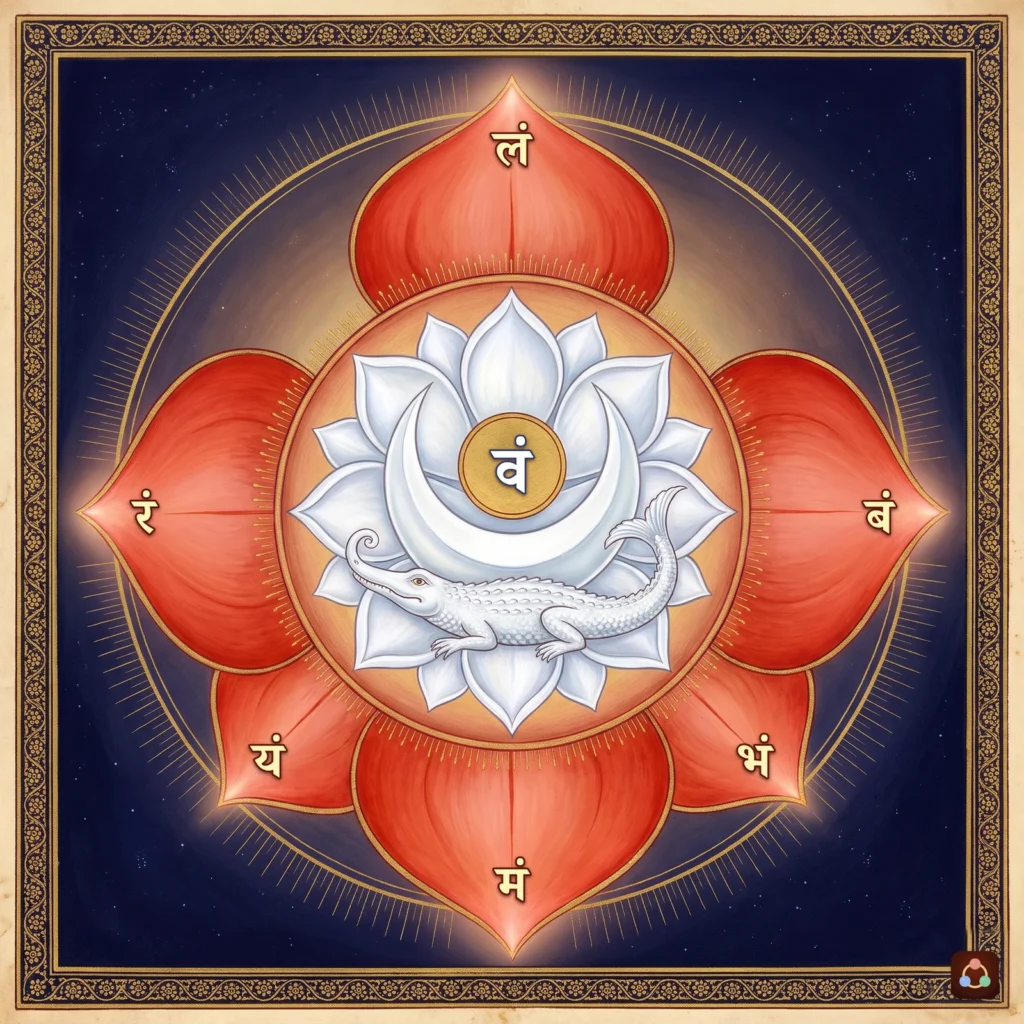
| Petals | Six, vermilion |
| Letters on the petals | बं भं मं यं रं लं (ba, bha, ma, ya, ra, la), each with the bindu, in the shining colour of lightning, read round from the right |
| Element | Water (ap) in the Shat-chakra-nirupana; fire in the Soundarya Lahari |
| Linked with | Taste: the element of taste, the sense of taste, and the hand (Woodroffe’s table) |
| Its shape | A white half-moon, in a white lotus of eight petals |
| Bija | वं (vam), white as the autumn moon, seated on a makara, holding a noose. In the 1937 Soundarya Lahari commentary, with fire, रं (ram) |
| Deity | Hari (Vishnu): youthful, luminous blue, in yellow, four arms |
| Ruling goddess | Rakini (Shat-chakra-nirupana); Kakini (Lalita Sahasranama) |
| Rays | Sixty-two (Soundarya Lahari 14) |
| Soundarya Lahari | Verses 9, 14, 39, 40 and 41 |
What the Shat-chakra-nirupana says
The Shat-chakra-nirupana gives the Svadhishthana five verses, 14 to 18. Here is what they show, from the outside in.
The petals. Six petals, “of a beautiful vermilion colour”. On them are six letters, from ba to la: ba, bha, ma, ya, ra and la. Each letter carries a dot, the bindu, above it. The letters shine with “the shining colour of lightning” (verse 14).
The region of water. Inside the lotus is the region of Varuna, the lord of the waters. It is “white, shining”, and it has “the shape of a half-moon” (verse 15). The summary of these verses in Woodroffe’s edition pictures it as a white lotus of eight petals, with a half-moon in its centre. Older texts and teachers that the commentator quotes say much the same: the region of water is shaped like a lotus, and shines like a half-moon joined to a lotus.
The bija and the makara. Within the half-moon is the seed-syllable of water, vam. It is “stainless and white as the autumnal moon”, and it is seated on a makara (verse 15). The makara is Varuna’s carrier, a creature of legend that Woodroffe calls “somewhat like an alligator”. Pictured as a being, the bija holds a noose in its hand, as Varuna does.
Hari. In the lap of the bija sits Hari, that is Vishnu, “in the pride of early youth” (verse 16). His body is a luminous blue, and he is dressed in yellow. He has four arms, and on his chest are the Shrivatsa, an auspicious curl, and the great gem Kaustubha. Texts that the commentator quotes add that his hands hold the conch, the discus, the mace and the lotus, and that a garland of flowers from every season hangs down to his knees. The commentator then gives a thought of his own. In the Muladhara, Brahma sits on his swan, so here we should picture Vishnu seated on Garuda.
Rakini. “It is here that Rakini always dwells” (verse 17). She is “of the colour of a blue lotus”. She wears heavenly clothes and ornaments, and her raised arms hold weapons. Her mind, the verse says, is lifted by drinking nectar; Woodroffe’s note explains that the nectar drops from the thousand-petalled lotus above. A meditation verse that the commentator quotes names what she holds: a spear or trident (shula), a lotus, a drum and a sharp battle-axe. The same verse gives her three red eyes and a fierce face, and says she is fond of white rice. She is a form of fierce power, and the text does not soften her. Our painting does not show her.
The fruit. Verse 18 promises that whoever meditates on this “stainless Lotus” is freed at once from all his enemies. The commentary names them: the six passions of kama, krodha, lobha, moha, mada and matsarya. In plain words, these are desire, anger, greed, delusion, pride and envy. All six, it says, grow from a sense of “mine-ness” (ahamkara), which the verse itself names first. Such a person becomes “like the Sun illumining the dense darkness of ignorance”, and his words flow freely, in prose and in verse. These are a tradition’s promises about meditation. They are not medical claims.
What the Soundarya Lahari says
The Soundarya Lahari comes to this centre in five verses. Two of them name it; the commentary brings it into three more. It also gives the centre a different element.
Verse 9 places fire here, not water: fire in the Svadhishthana, and water in the Manipura above it. The lotus is the same lotus. What changes is the element meditated on inside it, and with the element, in this commentary’s scheme, its seed-syllable: ram here, and vam at the Manipura. The 1937 Adyar commentary sets out the difference plainly. Purnananda, who wrote the Shat-chakra-nirupana, gives water to this centre. Shankaracharya gives it fire, and has the support of the Vamakeshvara Tantra. The commentary also links this centre to the eight-cornered figure of the Sri Chakra. Read verse 9
Verse 14 counts the rays of light in each centre. In the Svadhishthana, the centre of fire, there are sixty-two. Our painting recalls them with its ring of fine rays. Read verse 14
Verse 39 is this centre’s own verse.
ತವ ಸ್ವಾಧಿಷ್ಠಾನೇ ಹುತವಹಮಧಿಷ್ಠಾಯ ನಿರತಂತಮೀಡೇ ಸಂವರ್ತಂ ಜನನಿ ಮಹತೀಂ ತಾಂ ಚ ಸಮಯಾಮ್ ।ಯದಾಲೋಕೇ ಲೋಕಾನ್ ದಹತಿ ಮಹತಿ ಕ್ರೋಧಕಲಿತೇದಯಾರ್ದ್ರಾ ಯಾ ದೃಷ್ಟಿಃ ಶಿಶಿರಮುಪಚಾರಂ ರಚಯತಿ
MeaningMother, in your svadhishthana chakra, where the element of fire abides, I praise Samvarta, the fire of dissolution (Rudra), who dwells for ever in the flame, and beside him that great Samaya, yourself. When his anger rises and his gaze burns the worlds, it is your glance, wet with compassion, that lays a cooling remedy on them. His power to destroy is always tempered by your mercy. Read verse 39
Samvarta is the fire that burns up the worlds at the end of an age. Beside him stands the Mother as Samaya. When his angry gaze burns the worlds, her glance, wet with pity, cools them. The 1937 commentary names the pair to be meditated on here Samvarteshvara and Samayamba, ringed by sixty-two fiery rays.
The commentary also notices something about the order of the verses. They come down from the Ajna, and after the heart we would expect the Manipura. The poet gives the Svadhishthana instead. He seems, says the commentary, to follow the order of the elements, not the order of the lotuses in the body. Read verse 39
Verse 40, on the Manipura, finishes the picture. The commentary gives a traditional view. The rays of the sun from the heart, and the heat of the fire in the Svadhishthana, turn the water of the Manipura into clouds. At the great dissolution, those clouds pour down and put out the world-fire. Read verse 40
Verse 41 brings one more note. The commentary says the Muladhara and the Svadhishthana belong to “the region of darkness”. Outer worship at these two lower centres belongs to the Kaula school. The Samaya way worships her inwardly, as the Mother of the thousand-petalled lotus. That, it says, is why the poet calls her Samaya in verses 39 and 41. Read verse 41
What the Lalita Sahasranama says
The yogini of the Svadhishthana (names 504 to 513). In the yogini section of the Lalita Sahasranama, each centre has its own goddess, with her faces, colour, weapons, bodily tissue and favourite food. For the Svadhishthana she is Kakini.
| No. | Name | Meaning |
|---|---|---|
| 504 | svādhiṣṭhānāmbuja-gatā | Who dwells in the lotus of the Svadhishthana |
| 505 | catur-vaktra-manoharā | Lovely with her four faces |
| 506 | śūlādy-āyudha-sampannā | Who holds the trident and other weapons |
| 507 | pīta-varṇā | Yellow in colour |
| 508 | ati-garvitā | Very proud |
| 509 | medo-niṣṭhā | Who dwells in the fat of the body |
| 510 | madhu-prītā | Fond of honey |
| 511 | bandhiny-ādi-samanvitā | Attended by Bandhini and the other Shaktis |
| 512 | dadhy-annāsakta-hṛdayā | Fond of rice with curd |
| 513 | kākinī-rūpa-dhāriṇī | Who takes the form of Kakini |
She is not the goddess of the Shat-chakra-nirupana. There, Rakini rules this centre. In the Lalita Sahasranama, Rakini belongs to the Anahata, the heart (name 494). The table on the main chakra page shows the whole pattern. On the bodily tissue, though, the Lalita Sahasranama is not alone: a list that Woodroffe gives from another text, and the 1937 Soundarya Lahari commentary, also put fat at this centre.
The second stage of speech. The Lalita Sahasranama also calls the Mother pashyanti (name 368). The commentary on the Shat-chakra-nirupana quotes an old text on how speech is born. It rises from the Muladhara as a subtle sound called para. Opening out in the Svadhishthana, it takes the name pashyanti. It becomes madhyama at the heart, and vaikhari, spoken sound, at the throat. Woodroffe notes that some place pashyanti at the Manipura instead.
Three texts, one lotus
On the place and the lotus, the texts agree. They differ on the element, on the gods who dwell here, and on its goddess.
| Shat-chakra-nirupana | Lalita Sahasranama | Soundarya Lahari | |
|---|---|---|---|
| Element | Water (verse 15) | Fire (verses 9 and 39) | |
| Bija | वं (vam), on a makara | रं (ram), in the 1937 commentary’s scheme | |
| Who dwells here | Hari (Vishnu), in the lap of the bija | Samvarta, the fire of dissolution, with the Mother as Samaya (verse 39); Rudra, in the 1937 commentary’s table | |
| Ruling goddess | Rakini | Kakini | |
| Her form | Blue as a blue lotus; three eyes (in a meditation verse the commentator quotes) | Yellow, with four faces | |
| What she holds | Spear or trident (shula), lotus, drum and battle-axe | The trident (shula) and other weapons | |
| Bodily tissue | Blood (in one text’s reading, noted by Woodroffe) | Fat (as also in a list Woodroffe gives, and in the 1937 commentary) | |
| Favourite food | White rice | Honey; rice with curd | |
| Rays | Sixty-two (verse 14) |
What it means for the inner life
The texts read the Svadhishthana in a few simple ways.
It is where the six enemies are faced. The Shat-chakra-nirupana promises freedom from desire, anger, greed, delusion, pride and envy. The 1937 Soundarya Lahari commentary, explaining verse 101, places these very six on the six petals of this centre. Two different texts point to the same work here.
It is the centre of taste and of the hand. In Woodroffe’s table, the element of this centre is linked with taste, the sense of taste, and the hand that acts. When the mind is drawn inward, these are said to dissolve here into their source.
Fire is held in mercy. The Soundarya Lahari pictures fire here, the fire of dissolution. But it never leaves that fire alone. Beside it stands the Mother, whose glance cools what it burns. Power and compassion are meant to go together.
Its powers are not the goal. The 1937 commentary on verse 9 says that one who masters this centre is said to gain power over fire, such as walking on it. The same commentary calls such powers “pitfalls”. The goal lies above, in the Sahasrara.
What lies here in the body
I am a physician, so let me say plainly what sits at this level.
Here, in the pelvis, lie the bladder, the last part of the bowel, and the organs of reproduction. In women these are the womb and the ovaries; in men, the prostate and the seminal vesicles. A fine web of nerves serves them. It begins as the superior hypogastric plexus, in front of the place where the lower back meets the sacrum, below the point where the great artery of the abdomen divides. From there, two nerves run down, one on each side, into the inferior hypogastric plexus. Nerves from the sacrum join it there. Together they carry the nerves that run the bladder, the bowel and the sexual organs without our having to think about it. Surgeons take great care to spare these nerves, because injury to them can upset all three.
A century ago, some writers tried to match the chakras to such nerve centres. The scholar Brajendranath Seal took the Svadhishthana to be the sacral plexus. Another author’s list puts the prostatic plexus here. Woodroffe answered that the text “makes it plain that the Chakras are in the Sushumna”. One writer of the Theosophical school, whom Woodroffe discusses, went further still and put a lotus at the spleen in its place. As with the Muladhara, these are matches of place. None of them shows that the chakra is that nerve centre.
Is there any study of yoga at this level? There is one good one. In 2024, a trial in the United States gave 240 women aged 45 and over, with daily leakage of urine, either twelve weeks of pelvic yoga or twelve weeks of ordinary stretching and strengthening. Leaks fell in both groups: by about 2.3 a day with yoga and 1.9 a day with the other exercises. Pelvic yoga was not better. There was no group without exercise, so the trial cannot say how much of the fall came from the exercise itself. An earlier Cochrane review found too few, too small trials to say whether yoga helps at all. I found no study that has tested the Svadhishthana itself, or any claim about it.
Sources
- Arthur Avalon (Sir John Woodroffe), The Serpent Power, Ganesh and Co, Madras. Shat-chakra-nirupana, verses 14 to 18, with the commentary of Kalicharana, pp. 357 to 365; commentary on verse 4, p. 332, and on verse 11, pp. 349 to 350; Introduction, pp. 5, 7 and 11; p. 93; chapter V, pp. 118 to 119, 141 to 142, 153 to 154 and 158 to 159.
- Adi Shankaracharya, Saundarya-Lahari, with transliteration, English translation and commentary by S. Subrahmanya Sastri and T. R. Srinivasa Ayyangar, drawing on Lakshmidhara and other commentators. Theosophical Publishing House, Adyar, 1937. Verse 9, pp. 56 to 59; verse 14, pp. 75 to 78; verse 35, p. 143; verse 39, pp. 152 to 153; verse 40, p. 155; verse 41, p. 158; verse 101, pp. 255 to 256.
- The meanings of verses 9, 14, 39, 40 and 41 on Jeevana Sutra, and in the Soundarya Lahari app.
- Lalita Sahasranama, names 368, 494 and 504 to 513. Numbers as in Sanskrit Documents, lalita1000.
- Eid S and others. Superior hypogastric plexus and its surgical implications during spine surgery: a review. World Neurosurgery 2018; 120: 163 to 167. doi:10.1016/j.wneu.2018.08.170
- Ribeiro-Julio GS and others. Anatomy of the lower hypogastric plexus applied to endometriosis: a narrative review. International Brazilian Journal of Urology 2023; 49: 299 to 306. doi:10.1590/S1677-5538.IBJU.2022.9980
- Kostov S and others. Surgical anatomy and dissection of the hypogastric plexus in nerve-sparing radical hysterectomy. Diagnostics 2024; 14: 83. doi:10.3390/diagnostics14010083
- Huang AJ and others. Efficacy of a therapeutic pelvic yoga program versus a physical conditioning program on urinary incontinence in women: a randomized trial. Annals of Internal Medicine 2024; 177: 1339 to 1349. doi:10.7326/M23-3051
- Wieland LS and others. Yoga for treating urinary incontinence in women. Cochrane Database of Systematic Reviews 2019, CD012668. doi:10.1002/14651858.CD012668.pub2