
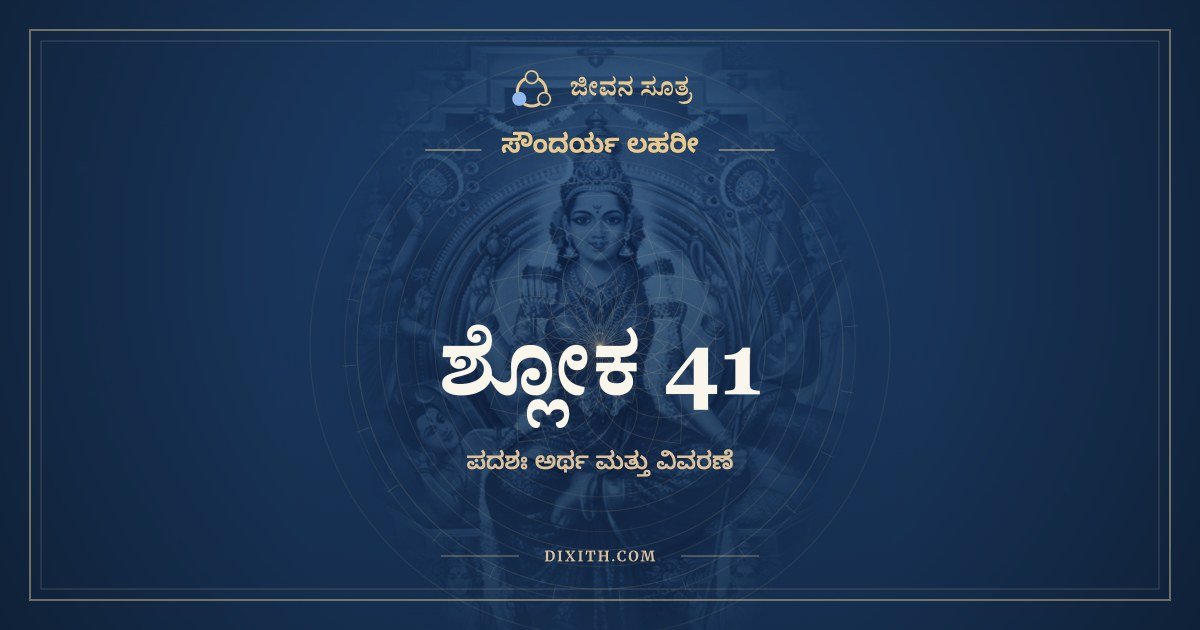
ಶ್ಲೋಕ (ಕನ್ನಡ)
ತವಾಧಾರೇ ಮೂಲೇ ಸಹ ಸಮಯಯಾ ಲಾಸ್ಯಪರಯಾ
ನವಾತ್ಮಾನಂ ಮನ್ಯೇ ನವರಸಮಹಾತಾಂಡವನಟಮ್ ।
ಉಭಾಭ್ಯಾಮೇತಾಭ್ಯಾಮ್ ಉದಯವಿಧಿಮುದ್ದಿಶ್ಯ ದಯಯಾ
ಸನಾಥಾಭ್ಯಾಂ ಜಜ್ಞೇ ಜನಕಜನನೀಮಜ್ಜಗದಿದಮ್ ॥ 41 ॥
ಶ್ಲೋಕ (ದೇವನಾಗರಿ)
तवाधारे मूले सह समयया लास्यपरया
नवात्मानं मन्ये नवरसमहाताण्डवनटम् ।
उभाभ्यामेताभ्याम् उदयविधिमुद्दिश्य दयया
सनाथाभ्यां जज्ञे जनकजननीमज्जगदिदम् ॥ 41 ॥
ಶ್ಲೋಕ (English IAST)
tavādhāre mūle saha samayayā lāsyaparayā
navātmānaṃ manye navarasamahātāṇḍavanaṭam |
ubhābhyāmetābhyām udayavidhimuddiśya dayayā
sanāthābhyāṃ jajñe janakajananīmajjagadidam || 41 ||
ಪದಶಃ ಅರ್ಥ
- ತವ (तव, tava) = ನಿನ್ನ (your)
- ಆಧಾರೇ (आधारे, ādhāre) = ಆಧಾರ ಚಕ್ರದಲ್ಲಿ (in the base centre)
- ಮೂಲೇ (मूले, mūle) = ಮೂಲದಲ್ಲಿ, ಅಂದರೆ ಮೂಲಾಧಾರದಲ್ಲಿ (at the root, that is, in the Muladhara)
- ಸಹ (सह, saha) = ಜೊತೆಯಲ್ಲಿ (together with)
- ಸಮಯಯಾ (समयया, samayayā) = ಸಮಯಾ ಎಂಬ ದೇವಿಯ (Samaya, the Goddess)
- ಲಾಸ್ಯಪರಯಾ (लास्यपरया, lāsyaparayā) = ಲಾಸ್ಯ ನೃತ್ಯದಲ್ಲಿ ತೊಡಗಿರುವ (who is absorbed in the gentle lasya dance)
- ನವಾತ್ಮಾನಮ್ (नवात्मानम्, navātmānam) = ನವಾತ್ಮನೆಂಬ ಶಿವನನ್ನು (Shiva, known as Navatman)
- ಮನ್ಯೇ (मन्ये, manye) = ಧ್ಯಾನಿಸುತ್ತೇನೆ (I contemplate)
- ನವರಸ (नवरस, navarasa) = ಒಂಬತ್ತು ರಸಗಳಿಂದ ಕೂಡಿದ (charged with the nine rasas)
- ಮಹಾತಾಂಡವನಟಮ್ (महाताण्डवनटम्, mahātāṇḍavanaṭam) = ಮಹಾತಾಂಡವವನ್ನು ಆಡುವ ನರ್ತಕನನ್ನು (the dancer of the great tandava)
- ಉಭಾಭ್ಯಾಮ್ (उभाभ्याम्, ubhābhyām) = ಇಬ್ಬರಿಂದ (by the two)
- ಏತಾಭ್ಯಾಮ್ (एताभ्याम्, etābhyām) = ಇವರಿಂದ (by these)
- ಉದಯವಿಧಿಮ್ (उदयविधिम्, udayavidhim) = ಹೊಸ ಸೃಷ್ಟಿಯನ್ನು (a new creation)
- ಉದ್ದಿಶ್ಯ (उद्दिश्य, uddiśya) = ಉದ್ದೇಶಿಸಿ (having in view)
- ದಯಯಾ (दयया, dayayā) = ಕರುಣೆಯಿಂದ (out of compassion)
- ಸನಾಥಾಭ್ಯಾಮ್ (सनाथाभ्याम्, sanāthābhyām) = ಜೊತೆಗೂಡಿದ (who have come together)
- ಜಜ್ಞೇ (जज्ञे, jajñe) = ಆಯಿತು (has become)
- ಜನಕಜನನೀಮತ್ (जनकजननीमत्, janakajananīmat) = ತಂದೆ ತಾಯಿ ಇರುವಂಥದ್ದು (one that has a father and a mother)
- ಜಗತ್ (जगत्, jagat) = ಜಗತ್ತು (world)
- ಇದಮ್ (इदम्, idam) = ಈ (this)
ಸಂಪೂರ್ಣ ಅರ್ಥ (ಕನ್ನಡ)
ನಿನ್ನ ಮೂಲಾಧಾರ ಚಕ್ರದಲ್ಲಿ, ಲಾಸ್ಯ ನೃತ್ಯದಲ್ಲಿ ತೊಡಗಿರುವ ಸಮಯಾ ದೇವಿಯ ಜೊತೆಗೆ, ಒಂಬತ್ತು ರಸಗಳನ್ನು ತುಂಬಿಕೊಂಡು ಮಹಾತಾಂಡವವನ್ನು ಆಡುವ ನವಾತ್ಮನನ್ನು ಧ್ಯಾನಿಸುತ್ತೇನೆ. ಹೊಸ ಸೃಷ್ಟಿಯಾಗಲೆಂದು ಕರುಣೆಯಿಂದ ಜೊತೆಗೂಡಿದ ಈ ಇಬ್ಬರಿಂದಾಗಿ, ಈ ಜಗತ್ತಿಗೆ ತಂದೆ ಮತ್ತು ತಾಯಿ ದೊರೆತಿದ್ದಾರೆ.
ಸಂಪೂರ್ಣ ಅರ್ಥ (ಇಂಗ್ಲಿಷ್)
In your Muladhara, the root centre, I contemplate Navatman, the dancer of the great tandava charged with all nine rasas, dancing with Samaya, who is absorbed in the gentle lasya. Because these two have come together in compassion, so that the world may be created anew, this world has a father and a mother.
ಶ್ಲೋಕ 41ರ ಸಾಂಪ್ರದಾಯಿಕ ವಿಧಿವಿಧಾನಗಳ ವಿವರಗಳುTraditional ritual details for shloka 41
- ಫಲ (ಸಿದ್ಧಿ)Result
- ಹೊಸ ಚೈತನ್ಯ, ಉತ್ಸಾಹ ಮತ್ತು ಆಶಾಭಾವNew vitality, enthusiasm and hope
- ಬೀಜ ಮಂತ್ರBeeja mantra
- ಯಂ ಮತ್ತು ಹ್ರೀಂyaṃ and hrīṃ
- ಯಂತ್ರYantra
- ಚಿನ್ನದ ತಗಡಿನ ಮೇಲೆ ಅಥವಾ ಬೆಳ್ಳಿಯ ತಟ್ಟೆಯಲ್ಲಿ ಸಮವಾಗಿ ಹರಡಿದ ಉಪ್ಪಿನ ಪುಡಿಯ ಮೇಲೆ ಬರೆದ ಯಂತ್ರDrawn on a gold plate, or on powdered salt spread evenly in a silver dish
ಪಾರಂಪರಿಕ ಚಿತ್ರದ ಆಧಾರದ ಮೇಲೆ ಪುನರ್ರಚಿತ ಯಂತ್ರದ ಚಿತ್ರ.
- ದಿಕ್ಕುDirection
- ಪೂರ್ವಾಭಿಮುಖವಾಗಿ ಕುಳಿತುSitting facing east
- ಜಪJapa count
- ದಿನಕ್ಕೆ 4000 ಬಾರಿ4000 times a day
- ಅವಧಿDuration
- 30 ದಿನ30 days
- ನೈವೇದ್ಯNaivedya / offering
- ಹೆಸರುಬೇಳೆ, ಮೆಣಸು ಮತ್ತು ತುಪ್ಪ ಹಾಕಿ ಬೇಯಿಸಿದ ಅನ್ನ, ಜೇನುತುಪ್ಪ ಮತ್ತು ಬಾಳೆಹಣ್ಣುRice cooked with green gram, pepper and ghee, honey and bananas
ಈ ವಿವರಗಳು ಮೂಲ ‘ಸೌಂದರ್ಯ ಲಹರಿ’ಯಲ್ಲಿ ಇಲ್ಲ ಎಂಬುದನ್ನು ಮೊದಲೇ ಸ್ಪಷ್ಟಪಡಿಸುತ್ತೇವೆ. ಪ್ರತಿ ಶ್ಲೋಕಕ್ಕೂ ಒಂದು ವಿಶಿಷ್ಟ ಯಂತ್ರ, ಬೀಜಮಂತ್ರ, ನಿಗದಿತ ಜಪಸಂಖ್ಯೆ ಮತ್ತು ನಿರ್ದಿಷ್ಟ ಫಲವನ್ನು ಜೋಡಿಸುವ ಪದ್ಧತಿಯು ನಂತರದ ಶತಮಾನಗಳ ಸಂಪ್ರದಾಯದಿಂದ ರೂಪುಗೊಂಡಿದ್ದಾಗಿದೆ. ಅಲ್ಲದೆ, ಈ ತಾಂತ್ರಿಕ ವಿವರಗಳು ಒಂದು ಹಸ್ತಪ್ರತಿಯಿಂದ ಮತ್ತೊಂದಕ್ಕೆ ಸ್ವಲ್ಪ ಮಟ್ಟಿಗೆ ಭಿನ್ನವಾಗಿರುತ್ತವೆ. ಇದೊಂದು ಪ್ರಾಚೀನ ಸಂಪ್ರದಾಯದ ದಾಖಲೆಯಷ್ಟೇ ಹೊರತು ಯಾವುದೇ ರೀತಿಯ ವೈದ್ಯಕೀಯ ಚಿಕಿತ್ಸಾ ಸಲಹೆಯಲ್ಲ.These details are not part of the original Saundarya Lahari, as we wish to state clearly at the outset. Associating each verse with a specific yantra, a seed syllable (bija mantra), a required chanting count (japa count), and a resulting benefit is a practice that evolved in later centuries. Furthermore, these technical details vary slightly from one text to another. This compilation represents a record of a traditional practice rather than any form of medical advice.
ಆಧಾರ: ಹಲವು ಮೂಲ ಗ್ರಂಥಗಳು. ಆಕರಗಳಲ್ಲಿ ಭಿನ್ನತೆ ಇರುವಲ್ಲಿ, ಗೊಂದಲವಿಡದೆ ಎರಡೂ ಆವೃತ್ತಿಗಳನ್ನು ಇಲ್ಲಿ ದಾಖಲಿಸಲಾಗಿದೆ.Sources: Several traditional texts. Where these sources differ, both versions have been provided here for completeness.
ಪಾಠದಲ್ಲಿ ತಪ್ಪೋ ಬೇರೆ ಪಾಠಾಂತರವೋ ಕಂಡಿತೇ? ನಮಗೆ ತಿಳಿಸಿ.
Noticed a mistake or a different reading? Tell us.
ಪ್ರತಿಕ್ರಿಯೆ ಬರೆಯಿರಿ