
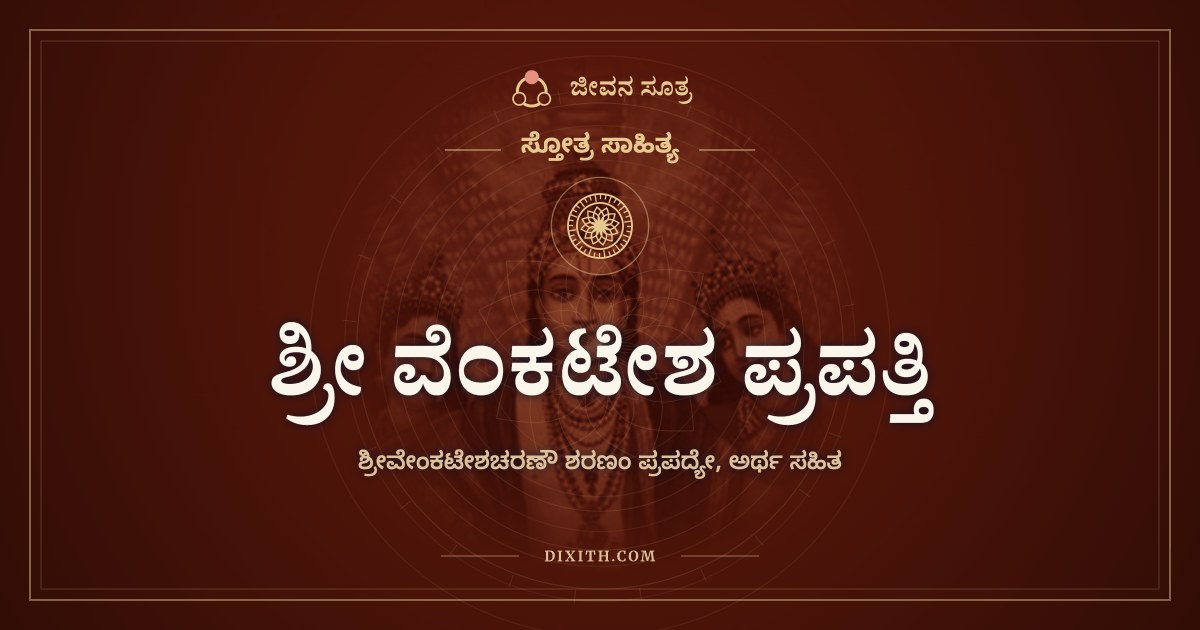
ಪ್ರಪತ್ತಿ ಎಂದರೆ ಶರಣಾಗತಿ, ಭಗವಂತನ ಪಾದಗಳನ್ನೇ ಉಪಾಯವೆಂದು ಹಿಡಿಯುವುದು. ಈ ಹದಿನಾರು ಶ್ಲೋಕಗಳು ಮೊದಲು ಜಗನ್ಮಾತೆಯಾದ ಲಕ್ಷ್ಮಿಗೆ ನಮಿಸಿ, ನಂತರ ವೆಂಕಟೇಶನ ಚರಣಗಳ ಸೌಂದರ್ಯ ಮತ್ತು ಮಹಿಮೆಯನ್ನು ಒಂದೊಂದಾಗಿ ವರ್ಣಿಸುತ್ತವೆ. ಪ್ರತಿ ಶ್ಲೋಕವೂ “ಶ್ರೀವೇಂಕಟೇಶಚರಣೌ ಶರಣಂ ಪ್ರಪದ್ಯೇ” ಎಂಬ ಸಾಲಿನಲ್ಲಿ ಮುಗಿಯುತ್ತದೆ.
Prapatti means surrender: holding the Lord’s feet alone as the means. These sixteen verses first bow to Lakshmi, mother of the world, and then describe, one by one, the beauty and glory of Venkatesha’s feet. Each verse ends with the line “śrīveṅkaṭeśacaraṇau śaraṇaṃ prapadye”.
ತಿರುಮಲದಲ್ಲಿ ಸುಪ್ರಭಾತ ಮತ್ತು ಸ್ತೋತ್ರದ ನಂತರ ಇದನ್ನು ಹಾಡುತ್ತಾರೆ. ಶ್ರೀವೈಷ್ಣವ ಪರಂಪರೆಯ ಶರಣಾಗತಿಯ ತತ್ತ್ವ ಇದರಲ್ಲಿ ಸರಳವಾದ ಹಾಡಿನ ರೂಪದಲ್ಲಿದೆ. ಕೆಳಗೆ ಪ್ರತಿ ಶ್ಲೋಕದ ಕನ್ನಡ ಮತ್ತು ಇಂಗ್ಲಿಷ್ ಅರ್ಥವನ್ನು ಕೊಟ್ಟಿದ್ದೇವೆ.
At Tirumala it is sung after the Suprabhatam and the Stotram. The Sri Vaishnava teaching of surrender is here in the simple form of a song. Below we give the meaning of each verse in Kannada and English.
ಪಾಠ (ಕನ್ನಡ)
ಈಶಾನಾಂ ಜಗತೋಽಸ್ಯ ವೇಂಕಟಪತೇರ್ವಿಷ್ಣೋಃ ಪರಾಂ ಪ್ರೇಯಸೀಂ
ತದ್ವಕ್ಷಃಸ್ಥಲನಿತ್ಯವಾಸರಸಿಕಾಂ ತತ್ಕ್ಷಾಂತಿಸಂವರ್ಧಿನೀಮ್ ।
ಪದ್ಮಾಲಂಕೃತಪಾಣಿಪಲ್ಲವಯುಗಾಂ ಪದ್ಮಾಸನಸ್ಥಾಂ ಶ್ರಿಯಂ
ವಾತ್ಸಲ್ಯಾದಿಗುಣೋಜ್ಜ್ವಲಾಂ ಭಗವತೀಂ ವಂದೇ ಜಗನ್ಮಾತರಮ್ ॥ 1 ॥
ಶ್ರೀಮನ್ ಕೃಪಾಜಲನಿಧೇ ಕೃತಸರ್ವಲೋಕ
ಸರ್ವಜ್ಞ ಶಕ್ತ ನತವತ್ಸಲ ಸರ್ವಶೇಷಿನ್ ।
ಸ್ವಾಮಿನ್ ಸುಶೀಲ ಸುಲಭಾಶ್ರಿತಪಾರಿಜಾತ
ಶ್ರೀವೇಂಕಟೇಶಚರಣೌ ಶರಣಂ ಪ್ರಪದ್ಯೇ ॥ 2 ॥
ಆನೂಪುರಾರ್ಪಿತಸುಜಾತಸುಗಂಧಿಪುಷ್ಪ
ಸೌರಭ್ಯಸೌರಭಕರೌ ಸಮಸನ್ನಿವೇಶೌ ।
ಸೌಮ್ಯೌ ಸದಾನುಭವನೇಽಪಿ ನವಾನುಭಾವ್ಯೌ
ಶ್ರೀವೇಂಕಟೇಶಚರಣೌ ಶರಣಂ ಪ್ರಪದ್ಯೇ ॥ 3 ॥
ಸದ್ಯೋವಿಕಾಸಿಸಮುದಿತ್ವರಸಾಂದ್ರರಾಗ
ಸೌರಭ್ಯನಿರ್ಭರಸರೋರುಹಸಾಮ್ಯವಾರ್ತಾಮ್ ।
ಸಮ್ಯಕ್ಷು ಸಾಹಸಪದೇಷು ವಿಲೇಖಯಂತೌ
ಶ್ರೀವೇಂಕಟೇಶಚರಣೌ ಶರಣಂ ಪ್ರಪದ್ಯೇ ॥ 4 ॥
ರೇಖಾಮಯಧ್ವಜಸುಧಾಕಲಶಾತಪತ್ರ
ವಜ್ರಾಂಕುಶಾಂಬುರುಹಕಲ್ಪಕಶಂಖಚಕ್ರೈಃ ।
ಭವ್ಯೈರಲಂಕೃತತಲೌ ಪರತತ್ತ್ವಚಿಹ್ನೈಃ
ಶ್ರೀವೇಂಕಟೇಶಚರಣೌ ಶರಣಂ ಪ್ರಪದ್ಯೇ ॥ 5 ॥
ತಾಮ್ರೋದರದ್ಯುತಿಪರಾಜಿತಪದ್ಮರಾಗೌ
ಬಾಹ್ಯೈರ್ಮಹೋಭಿರಭಿಭೂತಮಹೇಂದ್ರನೀಲೌ ।
ಉದ್ಯನ್ನಖಾಂಶುಭಿರುದಸ್ತಶಶಾಂಕಭಾಸೌ
ಶ್ರೀವೇಂಕಟೇಶಚರಣೌ ಶರಣಂ ಪ್ರಪದ್ಯೇ ॥ 6 ॥
ಸಪ್ರೇಮಭೀತಿ ಕಮಲಾಕರಪಲ್ಲವಾಭ್ಯಾಂ
ಸಂವಾಹನೇಽಪಿ ಸಪದಿ ಕ್ಲಮಮಾದಧಾನೌ ।
ಕಾಂತಾವವಾಙ್ಮನಸಗೋಚರಸೌಕುಮಾರ್ಯೌ
ಶ್ರೀವೇಂಕಟೇಶಚರಣೌ ಶರಣಂ ಪ್ರಪದ್ಯೇ ॥ 7 ॥
ಲಕ್ಷ್ಮೀಮಹೀತದನುರೂಪನಿಜಾನುಭಾವ
ನೀಲಾದಿದಿವ್ಯಮಹಿಷೀಕರಪಲ್ಲವಾನಾಮ್ ।
ಆರುಣ್ಯಸಂಕ್ರಮಣತಃ ಕಿಲ ಸಾಂದ್ರರಾಗೌ
ಶ್ರೀವೇಂಕಟೇಶಚರಣೌ ಶರಣಂ ಪ್ರಪದ್ಯೇ ॥ 8 ॥
ನಿತ್ಯಾನಮದ್ವಿಧಿಶಿವಾದಿಕಿರೀಟಕೋಟಿ
ಪ್ರತ್ಯುಪ್ತದೀಪ್ತನವರತ್ನಮಹಃಪ್ರರೋಹೈಃ ।
ನೀರಾಜನಾವಿಧಿಮುದಾರಮುಪಾದಧಾನೌ
ಶ್ರೀವೇಂಕಟೇಶಚರಣೌ ಶರಣಂ ಪ್ರಪದ್ಯೇ ॥ 9 ॥
ವಿಷ್ಣೋಃ ಪದೇ ಪರಮ ಇತ್ಯುದಿತಪ್ರಶಂಸೌ
ಯೌ ಮಧ್ವ ಉತ್ಸ ಇತಿ ಭೋಗ್ಯತಯಾಽಪ್ಯುಪಾತ್ತೌ ।
ಭೂಯಸ್ತಥೇತಿ ತವ ಪಾಣಿತಲಪ್ರದಿಷ್ಟೌ
ಶ್ರೀವೇಂಕಟೇಶಚರಣೌ ಶರಣಂ ಪ್ರಪದ್ಯೇ ॥ 10 ॥
ಪಾರ್ಥಾಯ ತತ್ಸದೃಶಸಾರಥಿನಾ ತ್ವಯೈವ
ಯೌ ದರ್ಶಿತೌ ಸ್ವಚರಣೌ ಶರಣಂ ವ್ರಜೇತಿ ।
ಭೂಯೋಽಪಿ ಮಹ್ಯಮಿಹ ತೌ ಕರದರ್ಶಿತೌ ತೇ
ಶ್ರೀವೇಂಕಟೇಶಚರಣೌ ಶರಣಂ ಪ್ರಪದ್ಯೇ ॥ 11 ॥
ಮನ್ಮೂರ್ಧ್ನಿ ಕಾಲಿಯಫಣೇ ವಿಕಟಾಟವೀಷು
ಶ್ರೀವೇಂಕಟಾದ್ರಿಶಿಖರೇ ಶಿರಸಿ ಶ್ರುತೀನಾಮ್ ।
ಚಿತ್ತೇಽಪ್ಯನನ್ಯಮನಸಾಂ ಸಮಮಾಹಿತೌ ತೇ
ಶ್ರೀವೇಂಕಟೇಶಚರಣೌ ಶರಣಂ ಪ್ರಪದ್ಯೇ ॥ 12 ॥
ಅಮ್ಲಾನಹೃಷ್ಯದವನೀತಲಕೀರ್ಣಪುಷ್ಪೌ
ಶ್ರೀವೇಂಕಟಾದ್ರಿಶಿಖರಾಭರಣಾಯಮಾನೌ ।
ಆನಂದಿತಾಖಿಲಮನೋನಯನೌ ತವೈತೌ
ಶ್ರೀವೇಂಕಟೇಶಚರಣೌ ಶರಣಂ ಪ್ರಪದ್ಯೇ ॥ 13 ॥
ಪ್ರಾಯಃ ಪ್ರಪನ್ನಜನತಾಪ್ರಥಮಾವಗಾಹ್ಯೌ
ಮಾತುಃ ಸ್ತನಾವಿವ ಶಿಶೋರಮೃತಾಯಮಾನೌ ।
ಪ್ರಾಪ್ತೌ ಪರಸ್ಪರತುಲಾಮತುಲಾಂತರೌ ತೇ
ಶ್ರೀವೇಂಕಟೇಶಚರಣೌ ಶರಣಂ ಪ್ರಪದ್ಯೇ ॥ 14 ॥
ಸತ್ತ್ವೋತ್ತರೈಃ ಸತತಸೇವ್ಯಪದಾಂಬುಜೇನ
ಸಂಸಾರತಾರಕದಯಾರ್ದ್ರದೃಗಂಚಲೇನ ।
ಸೌಮ್ಯೋಪಯಂತೃಮುನಿನಾ ಮಮ ದರ್ಶಿತೌ ತೇ
ಶ್ರೀವೇಂಕಟೇಶಚರಣೌ ಶರಣಂ ಪ್ರಪದ್ಯೇ ॥ 15 ॥
ಶ್ರೀಶ ಶ್ರಿಯಾ ಘಟಿಕಯಾ ತ್ವದುಪಾಯಭಾವೇ
ಪ್ರಾಪ್ಯೇ ತ್ವಯಿ ಸ್ವಯಮುಪೇಯತಯಾ ಸ್ಫುರಂತ್ಯಾ ।
ನಿತ್ಯಾಶ್ರಿತಾಯ ನಿರವದ್ಯಗುಣಾಯ ತುಭ್ಯಂ
ಸ್ಯಾಂ ಕಿಂಕರೋ ವೃಷಗಿರೀಶ ನ ಜಾತು ಮಹ್ಯಮ್ ॥ 16 ॥
ದೇವನಾಗರಿ ಲಿಪಿಯಲ್ಲಿ ಪಾಠText in Devanagari
ईशानां जगतोऽस्य वेंकटपतेर्विष्णोः परां प्रेयसीं
तद्वक्षःस्थलनित्यवासरसिकां तत्क्षांतिसंवर्धिनीम् ।
पद्मालंकृतपाणिपल्लवयुगां पद्मासनस्थां श्रियं
वात्सल्यादिगुणोज्ज्वलां भगवतीं वंदे जगन्मातरम् ॥ 1 ॥
श्रीमन् कृपाजलनिधे कृतसर्वलोक
सर्वज्ञ शक्त नतवत्सल सर्वशेषिन् ।
स्वामिन् सुशील सुलभाश्रितपारिजात
श्रीवेंकटेशचरणौ शरणं प्रपद्ये ॥ 2 ॥
आनूपुरार्पितसुजातसुगंधिपुष्प
सौरभ्यसौरभकरौ समसन्निवेशौ ।
सौम्यौ सदानुभवनेऽपि नवानुभाव्यौ
श्रीवेंकटेशचरणौ शरणं प्रपद्ये ॥ 3 ॥
सद्योविकासिसमुदित्वरसांद्रराग
सौरभ्यनिर्भरसरोरुहसाम्यवार्ताम् ।
सम्यक्षु साहसपदेषु विलेखयंतौ
श्रीवेंकटेशचरणौ शरणं प्रपद्ये ॥ 4 ॥
रेखामयध्वजसुधाकलशातपत्र
वज्रांकुशांबुरुहकल्पकशंखचक्रैः ।
भव्यैरलंकृततलौ परतत्त्वचिह्नैः
श्रीवेंकटेशचरणौ शरणं प्रपद्ये ॥ 5 ॥
ताम्रोदरद्युतिपराजितपद्मरागौ
बाह्यैर्महोभिरभिभूतमहेंद्रनीलौ ।
उद्यन्नखांशुभिरुदस्तशशांकभासौ
श्रीवेंकटेशचरणौ शरणं प्रपद्ये ॥ 6 ॥
सप्रेमभीति कमलाकरपल्लवाभ्यां
संवाहनेऽपि सपदि क्लममादधानौ ।
कांताववाङ्मनसगोचरसौकुमार्यौ
श्रीवेंकटेशचरणौ शरणं प्रपद्ये ॥ 7 ॥
लक्ष्मीमहीतदनुरूपनिजानुभाव
नीलादिदिव्यमहिषीकरपल्लवानाम् ।
आरुण्यसंक्रमणतः किल सांद्ररागौ
श्रीवेंकटेशचरणौ शरणं प्रपद्ये ॥ 8 ॥
नित्यानमद्विधिशिवादिकिरीटकोटि
प्रत्युप्तदीप्तनवरत्नमहःप्ररोहैः ।
नीराजनाविधिमुदारमुपादधानौ
श्रीवेंकटेशचरणौ शरणं प्रपद्ये ॥ 9 ॥
विष्णोः पदे परम इत्युदितप्रशंसौ
यौ मध्व उत्स इति भोग्यतयाऽप्युपात्तौ ।
भूयस्तथेति तव पाणितलप्रदिष्टौ
श्रीवेंकटेशचरणौ शरणं प्रपद्ये ॥ 10 ॥
पार्थाय तत्सदृशसारथिना त्वयैव
यौ दर्शितौ स्वचरणौ शरणं व्रजेति ।
भूयोऽपि मह्यमिह तौ करदर्शितौ ते
श्रीवेंकटेशचरणौ शरणं प्रपद्ये ॥ 11 ॥
मन्मूर्ध्नि कालियफणे विकटाटवीषु
श्रीवेंकटाद्रिशिखरे शिरसि श्रुतीनाम् ।
चित्तेऽप्यनन्यमनसां सममाहितौ ते
श्रीवेंकटेशचरणौ शरणं प्रपद्ये ॥ 12 ॥
अम्लानहृष्यदवनीतलकीर्णपुष्पौ
श्रीवेंकटाद्रिशिखराभरणायमानौ ।
आनंदिताखिलमनोनयनौ तवैतौ
श्रीवेंकटेशचरणौ शरणं प्रपद्ये ॥ 13 ॥
प्रायः प्रपन्नजनताप्रथमावगाह्यौ
मातुः स्तनाविव शिशोरमृतायमानौ ।
प्राप्तौ परस्परतुलामतुलांतरौ ते
श्रीवेंकटेशचरणौ शरणं प्रपद्ये ॥ 14 ॥
सत्त्वोत्तरैः सततसेव्यपदांबुजेन
संसारतारकदयार्द्रदृगंचलेन ।
सौम्योपयंतृमुनिना मम दर्शितौ ते
श्रीवेंकटेशचरणौ शरणं प्रपद्ये ॥ 15 ॥
श्रीश श्रिया घटिकया त्वदुपायभावे
प्राप्ये त्वयि स्वयमुपेयतया स्फुरंत्या ।
नित्याश्रिताय निरवद्यगुणाय तुभ्यं
स्यां किंकरो वृषगिरीश न जातु मह्यम् ॥ 16 ॥
IAST ಲಿಪ್ಯಂತರದಲ್ಲಿ ಪಾಠText in IAST transliteration
īśānāṃ jagato’sya veṃkaṭapaterviṣṇoḥ parāṃ preyasīṃ
tadvakṣaḥsthalanityavāsarasikāṃ tatkṣāṃtisaṃvardhinīm |
padmālaṃkṛtapāṇipallavayugāṃ padmāsanasthāṃ śriyaṃ
vātsalyādiguṇojjvalāṃ bhagavatīṃ vaṃde jaganmātaram || 1 ||
śrīman kṛpājalanidhe kṛtasarvaloka
sarvajña śakta natavatsala sarvaśeṣin |
svāmin suśīla sulabhāśritapārijāta
śrīveṃkaṭeśacaraṇau śaraṇaṃ prapadye || 2 ||
ānūpurārpitasujātasugaṃdhipuṣpa
saurabhyasaurabhakarau samasanniveśau |
saumyau sadānubhavane’pi navānubhāvyau
śrīveṃkaṭeśacaraṇau śaraṇaṃ prapadye || 3 ||
sadyovikāsisamuditvarasāṃdrarāga
saurabhyanirbharasaroruhasāmyavārtām |
samyakṣu sāhasapadeṣu vilekhayaṃtau
śrīveṃkaṭeśacaraṇau śaraṇaṃ prapadye || 4 ||
rekhāmayadhvajasudhākalaśātapatra
vajrāṃkuśāṃburuhakalpakaśaṃkhacakraiḥ |
bhavyairalaṃkṛtatalau paratattvacihnaiḥ
śrīveṃkaṭeśacaraṇau śaraṇaṃ prapadye || 5 ||
tāmrodaradyutiparājitapadmarāgau
bāhyairmahobhirabhibhūtamaheṃdranīlau |
udyannakhāṃśubhirudastaśaśāṃkabhāsau
śrīveṃkaṭeśacaraṇau śaraṇaṃ prapadye || 6 ||
sapremabhīti kamalākarapallavābhyāṃ
saṃvāhane’pi sapadi klamamādadhānau |
kāṃtāvavāṅmanasagocarasaukumāryau
śrīveṃkaṭeśacaraṇau śaraṇaṃ prapadye || 7 ||
lakṣmīmahītadanurūpanijānubhāva
nīlādidivyamahiṣīkarapallavānām |
āruṇyasaṃkramaṇataḥ kila sāṃdrarāgau
śrīveṃkaṭeśacaraṇau śaraṇaṃ prapadye || 8 ||
nityānamadvidhiśivādikirīṭakoṭi
pratyuptadīptanavaratnamahaḥprarohaiḥ |
nīrājanāvidhimudāramupādadhānau
śrīveṃkaṭeśacaraṇau śaraṇaṃ prapadye || 9 ||
viṣṇoḥ pade parama ityuditapraśaṃsau
yau madhva utsa iti bhogyatayā’pyupāttau |
bhūyastatheti tava pāṇitalapradiṣṭau
śrīveṃkaṭeśacaraṇau śaraṇaṃ prapadye || 10 ||
pārthāya tatsadṛśasārathinā tvayaiva
yau darśitau svacaraṇau śaraṇaṃ vrajeti |
bhūyo’pi mahyamiha tau karadarśitau te
śrīveṃkaṭeśacaraṇau śaraṇaṃ prapadye || 11 ||
manmūrdhni kāliyaphaṇe vikaṭāṭavīṣu
śrīveṃkaṭādriśikhare śirasi śrutīnām |
citte’pyananyamanasāṃ samamāhitau te
śrīveṃkaṭeśacaraṇau śaraṇaṃ prapadye || 12 ||
amlānahṛṣyadavanītalakīrṇapuṣpau
śrīveṃkaṭādriśikharābharaṇāyamānau |
ānaṃditākhilamanonayanau tavaitau
śrīveṃkaṭeśacaraṇau śaraṇaṃ prapadye || 13 ||
prāyaḥ prapannajanatāprathamāvagāhyau
mātuḥ stanāviva śiśoramṛtāyamānau |
prāptau parasparatulāmatulāṃtarau te
śrīveṃkaṭeśacaraṇau śaraṇaṃ prapadye || 14 ||
sattvottaraiḥ satatasevyapadāṃbujena
saṃsāratārakadayārdradṛgaṃcalena |
saumyopayaṃtṛmuninā mama darśitau te
śrīveṃkaṭeśacaraṇau śaraṇaṃ prapadye || 15 ||
śrīśa śriyā ghaṭikayā tvadupāyabhāve
prāpye tvayi svayamupeyatayā sphuraṃtyā |
nityāśritāya niravadyaguṇāya tubhyaṃ
syāṃ kiṃkaro vṛṣagirīśa na jātu mahyam || 16 ||
ಶ್ಲೋಕಗಳ ಅರ್ಥ
- 1 ಈ ಜಗತ್ತನ್ನು ಆಳುವವಳು, ವೇಂಕಟಪತಿಯಾದ ವಿಷ್ಣುವಿನ ಪರಮ ಪ್ರಿಯೆ, ಅವನ ಎದೆಯಲ್ಲಿ ಸದಾ ನೆಲೆಸುವುದರಲ್ಲಿ ಆನಂದಿಸುವವಳು, ಭಕ್ತರ ತಪ್ಪುಗಳನ್ನು ಸಹಿಸುವ ಅವನ ಕ್ಷಮೆಯನ್ನು ಹೆಚ್ಚಿಸುವವಳು, ಕಮಲಗಳಿಂದ ಅಲಂಕೃತವಾದ ಚಿಗುರಿನಂತಹ ಎರಡು ಕೈಗಳುಳ್ಳವಳು, ಕಮಲಾಸನದಲ್ಲಿ ಕುಳಿತವಳು, ವಾತ್ಸಲ್ಯ ಮೊದಲಾದ ಗುಣಗಳಿಂದ ಬೆಳಗುವವಳು. ಜಗನ್ಮಾತೆಯಾದ ಆ ಭಗವತಿ ಶ್ರೀದೇವಿಗೆ ನಾನು ನಮಿಸುತ್ತೇನೆ.
She rules this world, the supreme beloved of Vishnu, lord of Venkata, delighting in dwelling for ever on his chest, increasing his forbearance towards devotees’ faults, her two tender hands adorned with lotuses, seated on a lotus, shining with motherly love and other virtues. I bow to that divine Shri, mother of the world. - 2 ಶ್ರೀಯೊಡನಿರುವವನೇ, ಕೃಪೆಯ ಸಾಗರನೇ, ಎಲ್ಲ ಲೋಕಗಳನ್ನು ಸೃಷ್ಟಿಸಿದವನೇ, ಸರ್ವಜ್ಞನೇ, ಸರ್ವಶಕ್ತನೇ, ನಮಿಸುವವರ ಮೇಲೆ ವಾತ್ಸಲ್ಯವುಳ್ಳವನೇ, ಎಲ್ಲವೂ ಯಾರಿಗೆ ಸೇರಿದೆಯೋ ಆ ಸರ್ವಶೇಷಿಯೇ, ಸ್ವಾಮಿಯೇ, ದೊಡ್ಡವನಾಗಿದ್ದೂ ಎಲ್ಲರೊಡನೆ ಬೆರೆಯುವ ಸುಶೀಲನೇ, ಸುಲಭನೇ, ಆಶ್ರಿತರಿಗೆ ಕಲ್ಪವೃಕ್ಷನೇ, ಶ್ರೀವೇಂಕಟೇಶನ ಚರಣಗಳನ್ನೇ ಶರಣವೆಂದು ನಾನು ಹೊಂದುತ್ತೇನೆ.
O Lord with Shri, ocean of compassion, maker of all the worlds, all-knowing, all-powerful, loving to those who bow, master to whom all belong, Swami, gracious in mingling with all though so great, easy to reach, wish-granting tree to those who depend on you: I take the feet of Sri Venkatesha as my refuge. - 3 ಕಾಲ್ಗೆಜ್ಜೆಗಳವರೆಗೂ ಅರ್ಪಿಸಿದ ಸುಂದರ, ಸುವಾಸನೆಯ ಹೂವುಗಳ ಪರಿಮಳಕ್ಕೇ ಪರಿಮಳ ನೀಡುವ, ಸಮವಾಗಿ ರೂಪುಗೊಂಡ, ಸೌಮ್ಯವಾದ, ಸದಾ ಅನುಭವಿಸುತ್ತಿದ್ದರೂ ಹೊಸದಾಗಿಯೇ ಅನುಭವಕ್ಕೆ ಬರುವ ಆ ಶ್ರೀವೇಂಕಟೇಶನ ಚರಣಗಳಿಗೆ ಶರಣಾಗುತ್ತೇನೆ.
Feet that lend fragrance to the very fragrance of the fine, sweet-smelling flowers heaped up to the anklets, evenly formed, gentle, ever new though always enjoyed: I take refuge in those feet of Sri Venkatesha. - 4 ಆಗತಾನೇ ಅರಳಿ ನಿಂತ, ದಟ್ಟ ಕೆಂಬಣ್ಣದ, ಪರಿಮಳ ತುಂಬಿದ ಕಮಲಗಳಿಗೆ ಇವನ್ನು ಹೋಲಿಸುವ ಮಾತು ದುಸ್ಸಾಹಸದ ಮಾತುಗಳ ಪಟ್ಟಿಗೆ ಸೇರುವಂತೆ ಮಾಡುವ, ಅಂದರೆ ಕಮಲವನ್ನೂ ಮೀರಿಸುವ ಶ್ರೀವೇಂಕಟೇಶನ ಚರಣಗಳಿಗೆ ಶರಣಾಗುತ್ತೇನೆ.
Feet that make any talk of their likeness to fresh-blown lotuses, deep red and full of fragrance, count among the rash things poets say, for they surpass the lotus: I take refuge in the feet of Sri Venkatesha. - 5 ಧ್ವಜ, ಅಮೃತಕಲಶ, ಛತ್ರ, ವಜ್ರ, ಅಂಕುಶ, ಕಮಲ, ಕಲ್ಪವೃಕ್ಷ, ಶಂಖ ಮತ್ತು ಚಕ್ರ ಎಂಬ, ಪರತತ್ತ್ವವನ್ನು ಸೂಚಿಸುವ ಶುಭರೇಖೆಗಳಿಂದ ಅಲಂಕೃತವಾದ ಅಂಗಾಲುಗಳ ಶ್ರೀವೇಂಕಟೇಶನ ಚರಣಗಳಿಗೆ ಶರಣಾಗುತ್ತೇನೆ.
Feet whose soles are adorned with auspicious lines in the shape of flag, nectar pot, umbrella, vajra, goad, lotus, wish-granting tree, conch and discus, the marks of the Supreme: I take refuge in the feet of Sri Venkatesha. - 6 ತಾಮ್ರದಂತೆ ಕೆಂಪಾದ ಅಂಗಾಲಿನ ಕಾಂತಿಯಿಂದ ಪದ್ಮರಾಗ ಮಣಿಗಳನ್ನು ಸೋಲಿಸುವ, ಮೇಲ್ಭಾಗದ ಕಾಂತಿಯಿಂದ ಇಂದ್ರನೀಲ ಮಣಿಗಳನ್ನು ಮೀರಿಸುವ, ಹೊಳೆಯುವ ಉಗುರುಗಳ ಕಿರಣಗಳಿಂದ ಚಂದ್ರನ ಬೆಳಕನ್ನೂ ಮಸುಕಾಗಿಸುವ ಶ್ರೀವೇಂಕಟೇಶನ ಚರಣಗಳಿಗೆ ಶರಣಾಗುತ್ತೇನೆ.
Feet whose copper-red soles outshine rubies, whose upper glow overpowers sapphires, and whose gleaming toenails put the moon’s light to shame: I take refuge in the feet of Sri Venkatesha. - 7 ಪ್ರೀತಿಯಿಂದಲೂ ನೋವಾದೀತೆಂಬ ಅಂಜಿಕೆಯಿಂದಲೂ ಲಕ್ಷ್ಮಿ ತನ್ನ ಚಿಗುರಿನಂತಹ ಕೈಗಳಿಂದ ಒತ್ತುವಾಗಲೂ ಒಡನೆಯೇ ದಣಿಯುವ, ಮಾತಿಗೂ ಮನಸ್ಸಿಗೂ ನಿಲುಕದ ಕೋಮಲತೆಯ ಸುಂದರ ಚರಣಗಳು. ಆ ಶ್ರೀವೇಂಕಟೇಶನ ಚರಣಗಳಿಗೆ ಶರಣಾಗುತ್ತೇನೆ.
Feet so lovely and so tender, beyond words and thought, that they tire at once even when Lakshmi presses them with her leaf-soft hands, with love and with fear of hurting them: I take refuge in those feet of Sri Venkatesha. - 8 ಅವನ ಮಹಿಮೆಗೆ ತಕ್ಕ ಮಹಿಮೆಯುಳ್ಳ ಲಕ್ಷ್ಮಿ, ಭೂದೇವಿ, ನೀಳಾದೇವಿ ಮೊದಲಾದ ದಿವ್ಯ ಪತ್ನಿಯರ ಚಿಗುರುಕೈಗಳ ಕೆಂಪು ಹರಿದುಬಂದು ಗಾಢ ಕೆಂಬಣ್ಣ ತಳೆದಿವೆಯಂತೆ. ಆ ಶ್ರೀವೇಂಕಟೇಶನ ಚರಣಗಳಿಗೆ ಶರಣಾಗುತ್ತೇನೆ.
Feet deep red, it is said, from the redness passing into them from the tender hands of Lakshmi, Bhu, Nila and his other divine consorts, whose glory matches his own: I take refuge in those feet of Sri Venkatesha. - 9 ಸದಾ ತಲೆಬಾಗುವ ಬ್ರಹ್ಮ, ಶಿವ ಮೊದಲಾದವರ ಕೋಟಿ ಕಿರೀಟಗಳಲ್ಲಿ ಕೂರಿಸಿದ ನವರತ್ನಗಳ ಹೊಳೆಯುವ ಕಿರಣಗಳಿಂದ ಭವ್ಯವಾದ ಆರತಿಯನ್ನು ಪಡೆಯುವ ಶ್ರೀವೇಂಕಟೇಶನ ಚರಣಗಳಿಗೆ ಶರಣಾಗುತ್ತೇನೆ.
Feet that receive a grand waving of lamps from the shining rays of the nine gems set in the countless crowns of Brahma, Shiva and others who bow for ever: I take refuge in the feet of Sri Venkatesha. - 10 “ವಿಷ್ಣುವಿನ ಪರಮ ಪದ” ಎಂದು ವೇದ ಹೊಗಳಿದ, “ಅಲ್ಲಿ ಜೇನಿನ ಚಿಲುಮೆ ಇದೆ” ಎಂದು ಸವಿಯಬೇಕಾದದ್ದಾಗಿಯೂ ಹೇಳಿದ (ಋಗ್ವೇದ 1.154.5), ಮತ್ತೆ “ಅದು ಹಾಗೆಯೇ” ಎಂದು ನಿನ್ನ ಅಂಗೈಯೇ ತೋರಿಸುವ ಶ್ರೀವೇಂಕಟೇಶನ ಚರಣಗಳಿಗೆ ಶರಣಾಗುತ್ತೇನೆ.
Feet praised by the Veda as “Vishnu’s highest step”, held up as the sweetest thing to enjoy in the words “there is a spring of honey” (Rigveda 1.154.5), and pointed to once more by your own palm as truly so: I take refuge in the feet of Sri Venkatesha. - 11 ಪಾರ್ಥನಿಗೆ ತಕ್ಕ ಸಾರಥಿಯಾಗಿ ನೀನೇ “ನನ್ನನ್ನು ಶರಣು ಹೊಂದು” ಎಂದು ತೋರಿಸಿದ ನಿನ್ನ ಚರಣಗಳು (ಗೀತೆ 18.66), ಇಲ್ಲಿ ಮತ್ತೆ ನನಗೂ ನಿನ್ನ ಕೈಯಿಂದಲೇ ತೋರಿಸಿರುವ ಚರಣಗಳು. ತಿರುಮಲದ ಮೂರ್ತಿಯ ಬಲಗೈ ಪಾದಗಳತ್ತ ತೋರುತ್ತದೆ ಎಂದು ಪರಂಪರೆ ಇದನ್ನು ಓದುತ್ತದೆ. ಆ ಶ್ರೀವೇಂಕಟೇಶನ ಚರಣಗಳಿಗೆ ಶರಣಾಗುತ್ತೇನೆ.
The feet that you yourself, as Partha’s fitting charioteer, showed him with the words “take refuge in me” (Gita 18.66), and that here once more you show me with your own hand. Tradition reads this as the right hand of the Tirumala image, which points down to his feet. I take refuge in those feet of Sri Venkatesha. - 12 ನನ್ನ ತಲೆಯ ಮೇಲೆ, ಕಾಳಿಂಗನ ಹೆಡೆಯ ಮೇಲೆ, ದಟ್ಟ ಕಾಡುಗಳ ದಾರಿಯಲ್ಲಿ, ಶ್ರೀವೇಂಕಟಗಿರಿಯ ಶಿಖರದಲ್ಲಿ, ವೇದಗಳ ತಲೆಯಾದ ಉಪನಿಷತ್ತುಗಳಲ್ಲಿ, ಅನನ್ಯಭಕ್ತರ ಮನಸ್ಸಿನಲ್ಲಿ ಸಮಾನವಾಗಿ ಇಟ್ಟಿರುವ ಶ್ರೀವೇಂಕಟೇಶನ ಚರಣಗಳಿಗೆ ಶರಣಾಗುತ್ತೇನೆ.
Feet set with equal grace on my head, on the hood of Kaliya, on the paths of the wild forests, on the peak of the Venkata hill, at the head of the Vedas (the Upanishads), and in the minds of those devoted to none else: I take refuge in the feet of Sri Venkatesha. - 13 ಅವುಗಳ ಸ್ಪರ್ಶದಿಂದ ನಲಿಯುವ ನೆಲದ ಮೇಲೆ ಬಾಡದ ಹೂವುಗಳು ಹರಡಿರುವ, ಶ್ರೀವೇಂಕಟಗಿರಿಯ ಶಿಖರಕ್ಕೆ ಆಭರಣದಂತಿರುವ, ಎಲ್ಲರ ಮನಸ್ಸು ಮತ್ತು ಕಣ್ಣುಗಳನ್ನು ಆನಂದಗೊಳಿಸುವ ನಿನ್ನ ಈ ಚರಣಗಳು. ಆ ಶ್ರೀವೇಂಕಟೇಶನ ಚರಣಗಳಿಗೆ ಶರಣಾಗುತ್ತೇನೆ.
These feet of yours, around which unfading flowers lie strewn on the ground that rejoices at their touch, which are the ornament of the Venkata peak, and which delight every mind and eye: I take refuge in those feet of Sri Venkatesha. - 14 ಶರಣು ಬಂದ ಜನರು ಮೊದಲು ಮುಳುಗುವುದು ಸಾಮಾನ್ಯವಾಗಿ ಇವುಗಳಲ್ಲೇ. ಮಗುವಿಗೆ ತಾಯಿಯ ಸ್ತನಗಳಂತೆ ಇವು ಅಮೃತವಾಗಿವೆ. ಬೇರೆ ಹೋಲಿಕೆಯಿಲ್ಲದೆ ಒಂದಕ್ಕೊಂದೇ ಸಮವಾದ ನಿನ್ನ ಆ ಶ್ರೀವೇಂಕಟೇಶ ಚರಣಗಳಿಗೆ ಶರಣಾಗುತ್ತೇನೆ.
Feet into which those who surrender, as a rule, plunge first, which are nectar to them as a mother’s breasts are to a child, and which have no equal but each other: I take refuge in those feet of Sri Venkatesha. - 15 ಸತ್ತ್ವಗುಣ ತುಂಬಿದವರು ಸದಾ ಸೇವಿಸುವ ಪಾದಕಮಲಗಳುಳ್ಳ, ಸಂಸಾರದಿಂದ ದಾಟಿಸುವ ದಯೆಯಿಂದ ತೇವಗೊಂಡ ಕಡೆಗಣ್ಣಿನ ನೋಟವುಳ್ಳ ಸೌಮ್ಯಜಾಮಾತೃ ಮುನಿಗಳು, ಅಂದರೆ ಮಣವಾಳ ಮಾಮುನಿಗಳು, ನನಗೆ ತೋರಿಸಿಕೊಟ್ಟ ನಿನ್ನ ಆ ಶ್ರೀವೇಂಕಟೇಶ ಚರಣಗಳಿಗೆ ಶರಣಾಗುತ್ತೇನೆ.
Feet shown to me by Saumya Jamatri Muni, that is Manavala Mamuni, whose lotus feet are ever served by the pure of heart, and whose sidelong glance is moist with the compassion that carries souls across samsara: I take refuge in those feet of Sri Venkatesha. - 16 ಓ ಶ್ರೀಶನೇ, ವೃಷಗಿರಿಯ ಒಡೆಯನೇ, ನಿನ್ನನ್ನು ಉಪಾಯವಾಗಿ ಹಿಡಿಯುವಾಗ ನನ್ನನ್ನು ನಿನ್ನೊಡನೆ ಸೇರಿಸುವವಳು ಶ್ರೀ. ನೀನೇ ಗುರಿಯಾದಾಗ ಅವಳೂ ನಿನ್ನೊಡನೆ ಗುರಿಯಾಗಿ ಬೆಳಗುತ್ತಾಳೆ. ಅವಳೊಡನೆ ಸದಾ ಕೂಡಿರುವ, ದೋಷವಿಲ್ಲದ ಗುಣಗಳ ನಿನಗೆ ನಾನು ದಾಸನಾಗಿರುವಂತಾಗಲಿ, ಎಂದೂ ನನ್ನ ಸ್ವಂತಕ್ಕಾಗಿ ಅಲ್ಲ.
O Lord of Shri, lord of the Vrisha hill: when you are held as the means, it is Shri who joins me to you, and when you are the goal, she too shines as the goal together with you. To you, ever united with her and of flawless virtues, may I be a servant, never for my own sake.
ಈ ಸ್ತೋತ್ರದ ಬಗ್ಗೆAbout this hymn
ತಿರುಮಲದ ಸುಪ್ರಭಾತ ಸೇವೆಯ ನಾಲ್ಕು ಭಾಗಗಳಲ್ಲಿ ಇದು ಮೂರನೆಯದು. ಮೊದಲು ಸುಪ್ರಭಾತ, ನಂತರ ಸ್ತೋತ್ರ, ಅದರ ನಂತರ ಈ ಪ್ರಪತ್ತಿ, ಕೊನೆಗೆ ಮಂಗಳಾಶಾಸನ. ನಾಲ್ಕನ್ನೂ ಒಟ್ಟಿಗೆ ತಿರುಮಲ ದೇವಾಲಯದಲ್ಲಿ ಸೂರ್ಯೋದಯಕ್ಕೆ ಮುಂಚೆ ಹಾಡುತ್ತಾರೆ, ಅನೇಕ ಮನೆಗಳಲ್ಲೂ ಹಾಗೆಯೇ. ಉಳಿದ ಭಾಗಗಳಿಗೆ ನಮ್ಮ ಶ್ರೀ ವೆಂಕಟೇಶ ಸುಪ್ರಭಾತ, ಶ್ರೀ ವೆಂಕಟೇಶ ಸ್ತೋತ್ರ ಮತ್ತು ಶ್ರೀ ವೆಂಕಟೇಶ ಮಂಗಳಾಶಾಸನ ಪುಟಗಳನ್ನು ನೋಡಬಹುದು.
This is the third of the four parts of the Suprabhatam service at Tirumala: first the Suprabhatam, then the Stotram, then this Prapatti, and last the Mangalashasanam. All four are sung together before dawn at the Tirumala temple, and in many homes too. For the other parts see our pages ಶ್ರೀ ವೆಂಕಟೇಶ ಸುಪ್ರಭಾತ (Sri Venkatesha Suprabhatam), Sri Venkatesha Stotram and Sri Venkatesha Mangalashasanam.
ಪರಂಪರೆಯ ಪ್ರಕಾರ ಇದನ್ನು ಮಣವಾಳ ಮಾಮುನಿಗಳ ಶಿಷ್ಯರಾದ ಪ್ರತಿವಾದಿ ಭಯಂಕರ ಅಣ್ಣನ್ (ಅನಂತಾಚಾರ್ಯ) ಸುಮಾರು 15ನೇ ಶತಮಾನದಲ್ಲಿ, ಸುಮಾರು 1430ರ ಹೊತ್ತಿಗೆ ರಚಿಸಿದರು. ಹದಿನೈದನೇ ಶ್ಲೋಕದಲ್ಲಿ ಅವರು ತಮ್ಮ ಗುರುವನ್ನು ಸೌಮ್ಯಜಾಮಾತೃ ಮುನಿ ಎಂದು ನೆನೆಯುತ್ತಾರೆ. ಅರ್ಥವನ್ನು ಶ್ರೀವೈಷ್ಣವ (ರಾಮಾನುಜ) ಪರಂಪರೆಯ ತಿಳಿವಳಿಕೆಯಂತೆ ಕೊಟ್ಟಿದ್ದೇವೆ.
By tradition it was composed by Prativadi Bhayankara Annan (Anantacharya), a disciple of Manavala Mamuni, in about the 15th century, around 1430. In the fifteenth verse he remembers his teacher as Saumya Jamatri Muni. We have given the meanings as the Sri Vaishnava (Ramanuja) tradition understands them.
ಆ ಪರಂಪರೆಯಲ್ಲಿ ಶರಣಾಗತಿ ಶ್ರೀಯ ಮೂಲಕವೇ ಆಗುತ್ತದೆ. ಆದ್ದರಿಂದ ಮೊದಲ ಶ್ಲೋಕ ಲಕ್ಷ್ಮಿಗೆ ನಮಿಸುತ್ತದೆ, ಅವಳು ಅವನ ಕ್ಷಮೆಯನ್ನು ಹೆಚ್ಚಿಸುವವಳು. ಕೊನೆಯ ಶ್ಲೋಕ ಅವಳನ್ನು ಭಕ್ತನನ್ನು ಭಗವಂತನೊಡನೆ ಸೇರಿಸುವವಳಾಗಿ ಕಾಣುತ್ತದೆ. ಎರಡನೇ ಶ್ಲೋಕದ ವಾತ್ಸಲ್ಯ, ಸ್ವಾಮಿತ್ವ, ಸೌಶೀಲ್ಯ, ಸೌಲಭ್ಯ ಎಂಬ ಗುಣಗಳು ಶರಣಾಗತಿಗೆ ಧೈರ್ಯ ಕೊಡುವ ಗುಣಗಳೆಂದು ಆ ಪರಂಪರೆ ಹೇಳುತ್ತದೆ.
In that tradition surrender is made through Shri. So the first verse bows to Lakshmi, who increases his forbearance, and the last sees her as the one who joins the devotee to the Lord. The qualities named in the second verse, motherly love, lordship, gracious ease with all and accessibility, are in that tradition the ones that give a devotee the courage to surrender.
ಮೊದಲ ಶ್ಲೋಕ ಶಾರ್ದೂಲವಿಕ್ರೀಡಿತ ವೃತ್ತದಲ್ಲಿದೆ, ಉಳಿದವು ವಸಂತತಿಲಕದಲ್ಲಿ. ಎರಡರಿಂದ ಹದಿನೈದರವರೆಗಿನ ಶ್ಲೋಕಗಳು ಒಂದೇ ಸಾಲಿನಲ್ಲಿ ಮುಗಿಯುತ್ತವೆ, ಹದಿನಾರನೆಯದು ಸೇವೆಯ ಬೇಡಿಕೆಯಲ್ಲಿ ಮುಗಿಯುತ್ತದೆ. ಪಾಠವನ್ನು ಸ್ತೋತ್ರನಿಧಿಯಿಂದ ತೆಗೆದುಕೊಂಡಿದ್ದೇವೆ. ಶ್ಲೋಕ 9ರಲ್ಲಿ ಮೂಲದ ನಿತ್ಯಾನ್ನಮದ್ ಎಂಬುದನ್ನು ನಿತ್ಯಾನಮದ್ (ಸದಾ ನಮಿಸುವ) ಎಂದು ತಿದ್ದಿದ್ದೇವೆ, ಶ್ಲೋಕ 1ರ ತತ್ಕ್ಷಾಂತಿ ಎಂಬ ಪದವನ್ನು ಸಾಮಾನ್ಯ ರೂಪದಲ್ಲಿ ಬರೆದಿದ್ದೇವೆ.
The first verse is in the shardulavikridita metre, the rest in vasantatilaka. Verses 2 to 15 end in the same line, and the sixteenth ends in a prayer for service. The text is from stotranidhi.com. In verse 9 we have corrected the source’s nityānnamad to nityānamad (ever bowing), and in verse 1 we write tatkṣānti in its ordinary form.
ಆಧಾರ: ಹಲವು ಮೂಲಗಳು. ಆವೃತ್ತಿಗಳು ಭಿನ್ನವಾಗಿರುವಲ್ಲಿ ಅದನ್ನು ಇಲ್ಲಿ ಸೂಚಿಸಿದ್ದೇವೆ. · Sources: several. Where readings differ, the difference is noted here.
ಇಂದಿನ ಬದುಕಿಗೆFor life today
ವಾಹನದಟ್ಟಣೆಯ ರಸ್ತೆ ದಾಟುವ ಮಗು ತಂದೆ ಅಥವಾ ತಾಯಿಯ ಕೈ ಹಿಡಿದುಕೊಳ್ಳುತ್ತದೆ. ವಾಹನಗಳ ವೇಗವನ್ನು ಅದು ಲೆಕ್ಕ ಹಾಕುವುದಿಲ್ಲ, ಹಿಡಿದ ಕೈಯನ್ನು ಬಿಡದಿರುವುದೇ ಅದರ ಕೆಲಸ. ದಾಟಿಸುವ ಹೊಣೆ ಹಿರಿಯರದು.
A child crossing a busy road holds a parent’s hand. It does not work out the speed of the traffic: its part is simply not to let go of the hand it holds. The task of getting across belongs to the grown-up.
ಪ್ರಪತ್ತಿಯ ಭಾವವೂ ಹೀಗೆಯೇ ಎಂದು ಹಲವರು ಓದುತ್ತಾರೆ. ನಮ್ಮ ಶಕ್ತಿ ಮುಗಿದಲ್ಲಿ ನಂಬಿಕೆಯ ಕೈ ಹಿಡಿಯುವುದು ದೌರ್ಬಲ್ಯವಲ್ಲ. ಹನ್ನೊಂದನೇ ಶ್ಲೋಕದ ಚಿತ್ರದಲ್ಲಿ ಆ ಕೈ ಪಾದಗಳತ್ತ ತೋರುತ್ತಿದೆ.
Many read the spirit of prapatti in just this way. Where our own strength ends, taking hold of a trusted hand is no weakness. In the picture of the eleventh verse, that hand points to his feet.
ಪಾಠದಲ್ಲಿ ತಪ್ಪೋ ಬೇರೆ ಪಾಠಾಂತರವೋ ಕಂಡಿತೇ? ನಮಗೆ ತಿಳಿಸಿ.
Noticed a mistake or a different reading? Tell us.
ಪ್ರತಿಕ್ರಿಯೆ ಬರೆಯಿರಿ