
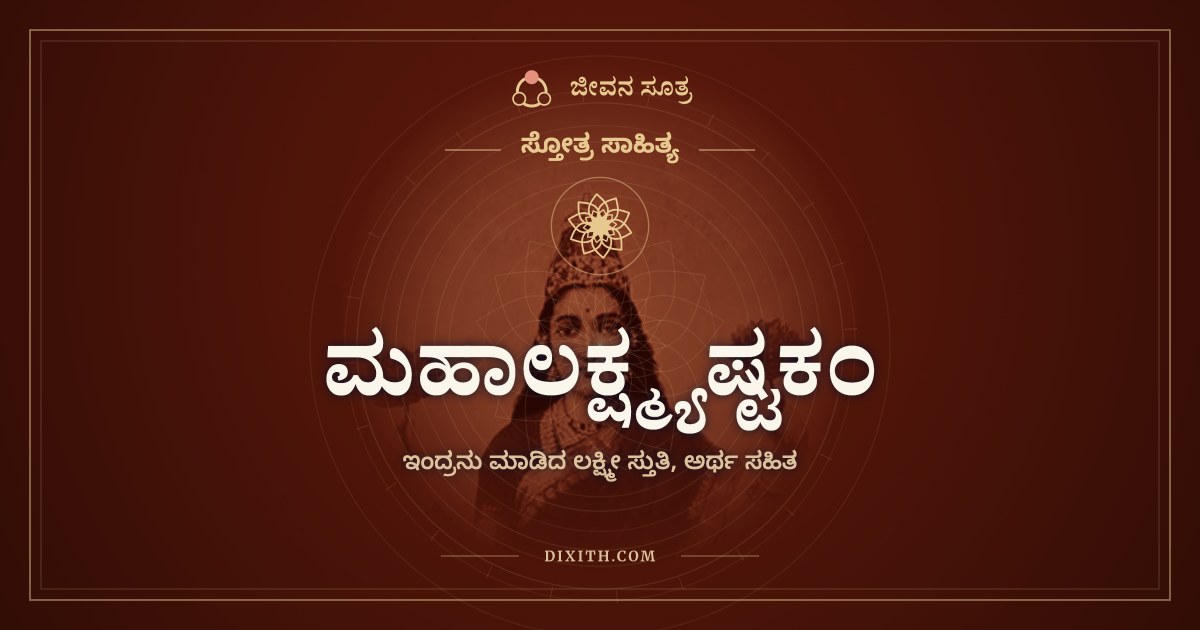
ಮಹಾಲಕ್ಷ್ಮ್ಯಷ್ಟಕಂ ಮನೆಮನೆಗಳಲ್ಲಿ ಹೆಚ್ಚು ಪಠಿಸಲಾಗುವ ಲಕ್ಷ್ಮೀಸ್ತೋತ್ರಗಳಲ್ಲಿ ಒಂದು. ಇಂದ್ರನು ಮಹಾಲಕ್ಷ್ಮಿಯನ್ನು ಸ್ತುತಿಸುತ್ತಾನೆ, ಪ್ರತಿ ಶ್ಲೋಕವೂ “ಮಹಾಲಕ್ಷ್ಮಿ ನಮೋಽಸ್ತು ತೇ” ಎಂಬ ನಮನದಲ್ಲಿ ಮುಗಿಯುತ್ತದೆ. ಸರಳ ಅನುಷ್ಟುಭ್ ಛಂದಸ್ಸಿನ ಈ ಶ್ಲೋಕಗಳನ್ನು ಮಕ್ಕಳೂ ಬೇಗ ಕಲಿಯುತ್ತಾರೆ.
The Mahalakshmi Ashtakam is one of the Lakshmi hymns most often recited at home. Indra praises Mahalakshmi, and every verse closes with the salutation “Mahalakshmi, I bow to you”. Written in the simple anushtubh metre, the verses are easily learnt even by children.
ಇಲ್ಲಿ ಲಕ್ಷ್ಮಿ ಸಂಪತ್ತಿನ ದೇವತೆ ಮಾತ್ರವಲ್ಲ. ಅವಳು ಆದಿಶಕ್ತಿ, ಮಂತ್ರಸ್ವರೂಪಿಣಿ, ಪರಬ್ರಹ್ಮಸ್ವರೂಪಿಣಿ ಎಂದು ಸ್ತೋತ್ರ ಅವಳನ್ನು ಕೊಂಡಾಡುತ್ತದೆ. ಎಂಟು ಶ್ಲೋಕಗಳ ನಂತರ ಮೂರು ಫಲಶ್ರುತಿ ಶ್ಲೋಕಗಳಿವೆ. ಪ್ರತಿ ಶ್ಲೋಕದ ಕನ್ನಡ ಮತ್ತು ಇಂಗ್ಲಿಷ್ ಅರ್ಥವನ್ನು ಕೆಳಗೆ ಕೊಟ್ಟಿದ್ದೇವೆ.
Here Lakshmi is more than the goddess of wealth. The hymn hails her as the primal power, the embodiment of mantra and the very form of the supreme Brahman. Three verses of phalashruti follow the eight. We give the meaning of each verse in Kannada and English below.
ಪಾಠ (ಕನ್ನಡ)
ಇಂದ್ರ ಉವಾಚ
ನಮಸ್ತೇಽಸ್ತು ಮಹಾಮಾಯೇ ಶ್ರೀಪೀಠೇ ಸುರಪೂಜಿತೇ ।
ಶಂಖಚಕ್ರಗದಾಹಸ್ತೇ ಮಹಾಲಕ್ಷ್ಮಿ ನಮೋಽಸ್ತು ತೇ ॥ 1 ॥
ನಮಸ್ತೇ ಗರುಡಾರೂಢೇ ಕೋಲಾಸುರಭಯಂಕರಿ ।
ಸರ್ವಪಾಪಹರೇ ದೇವಿ ಮಹಾಲಕ್ಷ್ಮಿ ನಮೋಽಸ್ತು ತೇ ॥ 2 ॥
ಸರ್ವಜ್ಞೇ ಸರ್ವವರದೇ ಸರ್ವದುಷ್ಟಭಯಂಕರಿ ।
ಸರ್ವದುಃಖಹರೇ ದೇವಿ ಮಹಾಲಕ್ಷ್ಮಿ ನಮೋಽಸ್ತು ತೇ ॥ 3 ॥
ಸಿದ್ಧಿಬುದ್ಧಿಪ್ರದೇ ದೇವಿ ಭುಕ್ತಿಮುಕ್ತಿಪ್ರದಾಯಿನಿ ।
ಮಂತ್ರಮೂರ್ತೇ ಸದಾ ದೇವಿ ಮಹಾಲಕ್ಷ್ಮಿ ನಮೋಽಸ್ತು ತೇ ॥ 4 ॥
ಆದ್ಯಂತರಹಿತೇ ದೇವಿ ಆದ್ಯಶಕ್ತಿ ಮಹೇಶ್ವರಿ ।
ಯೋಗಜ್ಞೇ ಯೋಗಸಂಭೂತೇ ಮಹಾಲಕ್ಷ್ಮಿ ನಮೋಽಸ್ತು ತೇ ॥ 5 ॥
ಸ್ಥೂಲಸೂಕ್ಷ್ಮಮಹಾರೌದ್ರೇ ಮಹಾಶಕ್ತೇ ಮಹೋದರೇ ।
ಮಹಾಪಾಪಹರೇ ದೇವಿ ಮಹಾಲಕ್ಷ್ಮಿ ನಮೋಽಸ್ತು ತೇ ॥ 6 ॥
ಪದ್ಮಾಸನಸ್ಥಿತೇ ದೇವಿ ಪರಬ್ರಹ್ಮಸ್ವರೂಪಿಣಿ ।
ಪರಮೇಶಿ ಜಗನ್ಮಾತರ್ಮಹಾಲಕ್ಷ್ಮಿ ನಮೋಽಸ್ತು ತೇ ॥ 7 ॥
ಶ್ವೇತಾಂಬರಧರೇ ದೇವಿ ನಾನಾಲಂಕಾರಭೂಷಿತೇ ।
ಜಗತ್ಸ್ಥಿತೇ ಜಗನ್ಮಾತರ್ಮಹಾಲಕ್ಷ್ಮಿ ನಮೋಽಸ್ತು ತೇ ॥ 8 ॥
ಫಲಶ್ರುತಿ
ಮಹಾಲಕ್ಷ್ಮ್ಯಷ್ಟಕಂ ಸ್ತೋತ್ರಂ ಯಃ ಪಠೇದ್ಭಕ್ತಿಮಾನ್ನರಃ ।
ಸರ್ವಸಿದ್ಧಿಮವಾಪ್ನೋತಿ ರಾಜ್ಯಂ ಪ್ರಾಪ್ನೋತಿ ಸರ್ವದಾ ॥ 9 ॥
ಏಕಕಾಲಂ ಪಠೇನ್ನಿತ್ಯಂ ಮಹಾಪಾಪವಿನಾಶನಮ್ ।
ದ್ವಿಕಾಲಂ ಯಃ ಪಠೇನ್ನಿತ್ಯಂ ಧನಧಾನ್ಯಸಮನ್ವಿತಃ ॥ 10 ॥
ತ್ರಿಕಾಲಂ ಯಃ ಪಠೇನ್ನಿತ್ಯಂ ಮಹಾಶತ್ರುವಿನಾಶನಮ್ ।
ಮಹಾಲಕ್ಷ್ಮೀರ್ಭವೇನ್ನಿತ್ಯಂ ಪ್ರಸನ್ನಾ ವರದಾ ಶುಭಾ ॥ 11 ॥
ದೇವನಾಗರಿ ಲಿಪಿಯಲ್ಲಿ ಪಾಠText in Devanagari
ಇಂದ್ರ ಉವಾಚ
नमस्तेऽस्तु महामाये श्रीपीठे सुरपूजिते ।
शंखचक्रगदाहस्ते महालक्ष्मि नमोऽस्तु ते ॥ 1 ॥
नमस्ते गरुडारूढे कोलासुरभयंकरि ।
सर्वपापहरे देवि महालक्ष्मि नमोऽस्तु ते ॥ 2 ॥
सर्वज्ञे सर्ववरदे सर्वदुष्टभयंकरि ।
सर्वदुःखहरे देवि महालक्ष्मि नमोऽस्तु ते ॥ 3 ॥
सिद्धिबुद्धिप्रदे देवि भुक्तिमुक्तिप्रदायिनि ।
मंत्रमूर्ते सदा देवि महालक्ष्मि नमोऽस्तु ते ॥ 4 ॥
आद्यंतरहिते देवि आद्यशक्ति महेश्वरि ।
योगज्ञे योगसंभूते महालक्ष्मि नमोऽस्तु ते ॥ 5 ॥
स्थूलसूक्ष्ममहारौद्रे महाशक्ते महोदरे ।
महापापहरे देवि महालक्ष्मि नमोऽस्तु ते ॥ 6 ॥
पद्मासनस्थिते देवि परब्रह्मस्वरूपिणि ।
परमेशि जगन्मातर्महालक्ष्मि नमोऽस्तु ते ॥ 7 ॥
श्वेतांबरधरे देवि नानालंकारभूषिते ।
जगत्स्थिते जगन्मातर्महालक्ष्मि नमोऽस्तु ते ॥ 8 ॥
ಫಲಶ್ರುತಿ
महालक्ष्म्यष्टकं स्तोत्रं यः पठेद्भक्तिमान्नरः ।
सर्वसिद्धिमवाप्नोति राज्यं प्राप्नोति सर्वदा ॥ 9 ॥
एककालं पठेन्नित्यं महापापविनाशनम् ।
द्विकालं यः पठेन्नित्यं धनधान्यसमन्वितः ॥ 10 ॥
त्रिकालं यः पठेन्नित्यं महाशत्रुविनाशनम् ।
महालक्ष्मीर्भवेन्नित्यं प्रसन्ना वरदा शुभा ॥ 11 ॥
IAST ಲಿಪ್ಯಂತರದಲ್ಲಿ ಪಾಠText in IAST transliteration
ಇಂದ್ರ ಉವಾಚ
namaste’stu mahāmāye śrīpīṭhe surapūjite |
śaṃkhacakragadāhaste mahālakṣmi namo’stu te || 1 ||
namaste garuḍārūḍhe kolāsurabhayaṃkari |
sarvapāpahare devi mahālakṣmi namo’stu te || 2 ||
sarvajñe sarvavarade sarvaduṣṭabhayaṃkari |
sarvaduḥkhahare devi mahālakṣmi namo’stu te || 3 ||
siddhibuddhiprade devi bhuktimuktipradāyini |
maṃtramūrte sadā devi mahālakṣmi namo’stu te || 4 ||
ādyaṃtarahite devi ādyaśakti maheśvari |
yogajñe yogasaṃbhūte mahālakṣmi namo’stu te || 5 ||
sthūlasūkṣmamahāraudre mahāśakte mahodare |
mahāpāpahare devi mahālakṣmi namo’stu te || 6 ||
padmāsanasthite devi parabrahmasvarūpiṇi |
parameśi jaganmātarmahālakṣmi namo’stu te || 7 ||
śvetāṃbaradhare devi nānālaṃkārabhūṣite |
jagatsthite jaganmātarmahālakṣmi namo’stu te || 8 ||
ಫಲಶ್ರುತಿ
mahālakṣmyaṣṭakaṃ stotraṃ yaḥ paṭhedbhaktimānnaraḥ |
sarvasiddhimavāpnoti rājyaṃ prāpnoti sarvadā || 9 ||
ekakālaṃ paṭhennityaṃ mahāpāpavināśanam |
dvikālaṃ yaḥ paṭhennityaṃ dhanadhānyasamanvitaḥ || 10 ||
trikālaṃ yaḥ paṭhennityaṃ mahāśatruvināśanam |
mahālakṣmīrbhavennityaṃ prasannā varadā śubhā || 11 ||
ಶ್ಲೋಕಗಳ ಅರ್ಥ
- 1 ಮಹಾಮಾಯೆಯೇ, ಶ್ರೀಪೀಠದಲ್ಲಿ ನೆಲೆಸಿರುವವಳೇ, ದೇವತೆಗಳಿಂದ ಪೂಜಿತಳೇ, ನಿನಗೆ ನಮಸ್ಕಾರ. ಶಂಖ, ಚಕ್ರ, ಗದೆಗಳನ್ನು ಕೈಯಲ್ಲಿ ಹಿಡಿದಿರುವ ಓ ಮಹಾಲಕ್ಷ್ಮಿಯೇ, ನಿನಗೆ ನಮಸ್ಕಾರ.
Salutations to you, great Maya, seated on the sacred throne of Shri, worshipped by the gods. O Mahalakshmi, holding conch, discus and mace in your hands, I bow to you. - 2 ಗರುಡನನ್ನು ಏರಿರುವವಳೇ, ಕೋಲಾಸುರನಿಗೆ ಭಯ ಹುಟ್ಟಿಸಿದವಳೇ, ನಿನಗೆ ನಮಸ್ಕಾರ. ಎಲ್ಲ ಪಾಪಗಳನ್ನು ಹೋಗಲಾಡಿಸುವ ದೇವಿಯೇ, ಓ ಮಹಾಲಕ್ಷ್ಮಿಯೇ, ನಿನಗೆ ನಮಸ್ಕಾರ. ಕೋಲಾಸುರ ಕೊಲ್ಹಾಪುರದ ಮಹಾಲಕ್ಷ್ಮಿ ಸಂಹರಿಸಿದ ರಾಕ್ಷಸ ಎಂದು ಸ್ಥಳಪುರಾಣ ಹೇಳುತ್ತದೆ.
Salutations to you who ride on Garuda, who struck terror into Kolasura. O goddess who takes away every sin, O Mahalakshmi, I bow to you. Kolasura, according to the local legend, is the demon slain by the Mahalakshmi of Kolhapur. - 3 ಎಲ್ಲವನ್ನೂ ಬಲ್ಲವಳೇ, ಎಲ್ಲರಿಗೂ ವರ ಕೊಡುವವಳೇ, ಎಲ್ಲ ದುಷ್ಟರಿಗೂ ಭಯ ಹುಟ್ಟಿಸುವವಳೇ, ಎಲ್ಲ ದುಃಖಗಳನ್ನು ಕಳೆಯುವ ದೇವಿಯೇ, ಓ ಮಹಾಲಕ್ಷ್ಮಿಯೇ, ನಿನಗೆ ನಮಸ್ಕಾರ.
You who know all, who grant every boon, who strike fear into all the wicked, goddess who removes every sorrow, O Mahalakshmi, I bow to you. - 4 ಸಿದ್ಧಿಯನ್ನೂ ಬುದ್ಧಿಯನ್ನೂ ಕೊಡುವ ದೇವಿಯೇ, ಲೌಕಿಕ ಸುಖವನ್ನೂ ಮೋಕ್ಷವನ್ನೂ ನೀಡುವವಳೇ, ಸದಾ ಮಂತ್ರವೇ ರೂಪವಾಗಿರುವ ದೇವಿಯೇ, ಓ ಮಹಾಲಕ್ಷ್ಮಿಯೇ, ನಿನಗೆ ನಮಸ್ಕಾರ.
Goddess who grants accomplishment and understanding, who bestows both worldly enjoyment and liberation, goddess whose form is ever the mantra itself, O Mahalakshmi, I bow to you. - 5 ಆದಿಯೂ ಅಂತ್ಯವೂ ಇಲ್ಲದ ದೇವಿಯೇ, ಆದಿಶಕ್ತಿಯೇ, ಮಹೇಶ್ವರಿಯೇ, ಯೋಗವನ್ನು ಬಲ್ಲವಳೇ, ಯೋಗದಿಂದ ಆವಿರ್ಭವಿಸಿದವಳೇ, ಓ ಮಹಾಲಕ್ಷ್ಮಿಯೇ, ನಿನಗೆ ನಮಸ್ಕಾರ.
Goddess without beginning or end, primal power, great sovereign, knower of yoga, you who arise through yoga, O Mahalakshmi, I bow to you. - 6 ಸ್ಥೂಲವೂ ಸೂಕ್ಷ್ಮವೂ ಆಗಿರುವವಳೇ, ಮಹಾರೌದ್ರರೂಪಿಣಿಯೇ, ಮಹಾಶಕ್ತಿಯೇ, ಇಡೀ ಜಗತ್ತನ್ನು ಒಡಲಲ್ಲಿ ಹೊತ್ತಿರುವ ಮಹೋದರಿಯೇ, ಮಹಾಪಾಪಗಳನ್ನು ಕಳೆಯುವ ದೇವಿಯೇ, ಓ ಮಹಾಲಕ್ಷ್ಮಿಯೇ, ನಿನಗೆ ನಮಸ್ಕಾರ.
You who are both gross and subtle, of great and fearsome form, great power, great-bellied one who holds the whole world within, goddess who removes the gravest sins, O Mahalakshmi, I bow to you. - 7 ಕಮಲಾಸನದಲ್ಲಿ ಕುಳಿತಿರುವ ದೇವಿಯೇ, ಪರಬ್ರಹ್ಮವೇ ಸ್ವರೂಪವಾಗಿರುವವಳೇ, ಪರಮೇಶ್ವರಿಯೇ, ಜಗನ್ಮಾತೆಯೇ, ಓ ಮಹಾಲಕ್ಷ್ಮಿಯೇ, ನಿನಗೆ ನಮಸ್ಕಾರ.
Goddess seated on the lotus, whose very nature is the supreme Brahman, supreme sovereign, mother of the world, O Mahalakshmi, I bow to you. - 8 ಬಿಳಿಯ ವಸ್ತ್ರವನ್ನು ಧರಿಸಿರುವ ದೇವಿಯೇ, ಬಗೆಬಗೆಯ ಆಭರಣಗಳಿಂದ ಅಲಂಕೃತಳೇ, ಜಗತ್ತಿನಲ್ಲೆಲ್ಲ ನೆಲೆಸಿರುವವಳೇ, ಅಥವಾ ಜಗತ್ತಿಗೆ ಆಧಾರವಾಗಿರುವವಳೇ, ಜಗನ್ಮಾತೆಯೇ, ಓ ಮಹಾಲಕ್ಷ್ಮಿಯೇ, ನಿನಗೆ ನಮಸ್ಕಾರ.
Goddess clad in white, adorned with ornaments of many kinds, you who dwell throughout the world, or who are its support, mother of the world, O Mahalakshmi, I bow to you. - 9 ಈ ಮಹಾಲಕ್ಷ್ಮ್ಯಷ್ಟಕ ಸ್ತೋತ್ರವನ್ನು ಭಕ್ತಿಯಿಂದ ಪಠಿಸುವ ಮನುಷ್ಯನು ಎಲ್ಲ ಸಿದ್ಧಿಗಳನ್ನು ಪಡೆಯುತ್ತಾನೆ. ಅವನಿಗೆ ಸದಾ ರಾಜ್ಯವೂ ಲಭಿಸುತ್ತದೆ.
Whoever recites this Mahalakshmi Ashtakam with devotion attains every accomplishment and ever gains sovereignty. - 10 ದಿನವೂ ಒಂದು ಹೊತ್ತು ಪಠಿಸಿದರೆ ಮಹಾಪಾಪಗಳು ನಾಶವಾಗುತ್ತವೆ. ದಿನವೂ ಎರಡು ಹೊತ್ತು ಪಠಿಸುವವನು ಧನಧಾನ್ಯಗಳಿಂದ ಕೂಡಿರುತ್ತಾನೆ.
Recited once a day, it destroys great sins. One who recites it twice a day is blessed with wealth and grain. - 11 ದಿನವೂ ಮೂರು ಹೊತ್ತು ಪಠಿಸುವವನ ಮಹಾಶತ್ರುಗಳು ನಾಶವಾಗುತ್ತಾರೆ. ಅವನಿಗೆ ಮಹಾಲಕ್ಷ್ಮಿ ಸದಾ ಪ್ರಸನ್ನಳಾಗಿ, ವರ ಕೊಡುವವಳಾಗಿ, ಮಂಗಳಕರಳಾಗಿ ಇರುತ್ತಾಳೆ.
For one who recites it three times a day, great enemies are destroyed. Mahalakshmi is ever pleased with him, granting boons and auspicious.
ಈ ಸ್ತೋತ್ರದ ಬಗ್ಗೆAbout this hymn
ಈ ಅಷ್ಟಕ ಪದ್ಮಪುರಾಣದ್ದು ಎಂದು ಪರಂಪರೆ ಹೇಳುತ್ತದೆ. ಆದರೆ ಪುರಾಣದ ಈಗಿನ ಮುದ್ರಿತ ಆವೃತ್ತಿಗಳಲ್ಲಿ ಇದರ ನಿಖರ ಸ್ಥಾನವನ್ನು ಗುರುತಿಸುವುದು ಸುಲಭವಲ್ಲ. ಸ್ತೋತ್ರದ ಆರಂಭದಲ್ಲಿರುವ “ಇಂದ್ರ ಉವಾಚ” ಎಂಬ ಮಾತು ಇದನ್ನು ಇಂದ್ರನು ಹೇಳಿದ ಸ್ತುತಿ ಎಂದು ಸೂಚಿಸುತ್ತದೆ.
Tradition assigns this ashtakam to the Padma Purana, though its exact place in the printed editions of the Purana is not easy to trace. The opening words “Indra said” present it as a hymn spoken by Indra.
ಎರಡನೇ ಶ್ಲೋಕದ ಕೋಲಾಸುರನ ಉಲ್ಲೇಖ ಈ ಸ್ತೋತ್ರವನ್ನು ಕೊಲ್ಹಾಪುರದ (ಕರವೀರಪುರ) ಮಹಾಲಕ್ಷ್ಮಿಯೊಂದಿಗೆ ಜೋಡಿಸುತ್ತದೆ. ಕೋಲಾಸುರ ಎಂಬ ರಾಕ್ಷಸನನ್ನು ದೇವಿ ಅಲ್ಲಿ ಸಂಹರಿಸಿದಳು, ಊರಿಗೆ ಅವನ ಹೆಸರೇ ಬಂತು ಎಂದು ಕರವೀರ ಮಾಹಾತ್ಮ್ಯ ಹೇಳುತ್ತದೆ. ಅದಲ್ಲದೆ ಗರುಡವಾಹನ, ಶಂಖ, ಚಕ್ರ, ಗದೆಗಳು ಅವಳನ್ನು ವಿಷ್ಣುವಿನ ಶಕ್ತಿಯಾಗಿ ಚಿತ್ರಿಸುತ್ತವೆ.
The mention of Kolasura in verse 2 links the hymn to Mahalakshmi of Kolhapur, the ancient Karavirapura. The Karavira Mahatmya tells that the goddess slew the demon Kolasura there and that the town took his name. Garuda, the conch, the discus and the mace also show her as the power of Vishnu.
ರಚನೆ ಸರಳವಾಗಿದೆ: ಅನುಷ್ಟುಭ್ ಛಂದಸ್ಸಿನ ಎಂಟು ಶ್ಲೋಕಗಳು, ಪ್ರತಿಯೊಂದೂ “ಮಹಾಲಕ್ಷ್ಮಿ ನಮೋಽಸ್ತು ತೇ” ಎಂದು ಮುಗಿಯುತ್ತದೆ. ನಂತರದ ಮೂರು ಶ್ಲೋಕಗಳು ಫಲಶ್ರುತಿ, ದಿನಕ್ಕೆ ಒಂದು, ಎರಡು, ಮೂರು ಹೊತ್ತು ಪಠಿಸುವುದರ ಫಲವನ್ನು ಅವು ಹೇಳುತ್ತವೆ.
The structure is simple: eight verses in anushtubh, each ending “Mahalakshmi namo’stu te”. The three verses that follow are the phalashruti, describing the fruit of reciting it once, twice or three times a day.
ಪಾಠವನ್ನು stotranidhi ಆವೃತ್ತಿಯಿಂದ ತೆಗೆದುಕೊಂಡಿದ್ದೇವೆ. ಐದನೇ ಶ್ಲೋಕದಲ್ಲಿ ಯೋಗಜ್ಞೇ (ಯೋಗವನ್ನು ಬಲ್ಲವಳೇ) ಎಂಬ ಪಾಠವನ್ನು ಆರಿಸಿಕೊಂಡಿದ್ದೇವೆ. stotranidhi ಮುಖ್ಯ ಪಾಠದಲ್ಲಿ ಯೋಗಜೇ (ಯೋಗದಿಂದ ಹುಟ್ಟಿದವಳೇ) ಎಂದಿದೆ, ಯೋಗಜ್ಞೇ ಅಲ್ಲಿ ಪಾಠಾಂತರವಾಗಿ ಬಂದಿದೆ.
We follow the stotranidhi text. In verse 5 we have chosen the reading yogajñe (knower of yoga). The main text of stotranidhi has yogaje (born of yoga) and gives yogajñe as a variant.
ಆಧಾರ: ಹಲವು ಮೂಲಗಳು. ಆವೃತ್ತಿಗಳು ಭಿನ್ನವಾಗಿರುವಲ್ಲಿ ಅದನ್ನು ಇಲ್ಲಿ ಸೂಚಿಸಿದ್ದೇವೆ. · Sources: several. Where readings differ, the difference is noted here.
ಇಂದಿನ ಬದುಕಿಗೆFor life today
ತಿಂಗಳ ಕೊನೆಯಲ್ಲಿ ಮನೆಯ ಲೆಕ್ಕ ಬರೆಯುವಾಗ ಲಕ್ಷ್ಮಿ ಅಂದರೆ ಹಣ ಎಂದೇ ನಮಗೆ ಅನ್ನಿಸುತ್ತದೆ. ಈ ಸ್ತೋತ್ರ ಅವಳನ್ನು ಸಿದ್ಧಿ, ಬುದ್ಧಿ, ಭುಕ್ತಿ, ಮುಕ್ತಿ ಎಲ್ಲವನ್ನೂ ಕೊಡುವವಳೆಂದು ನೆನಪಿಸುತ್ತದೆ. ವಿವೇಕದಿಂದ ಗಳಿಸಿ ವಿವೇಕದಿಂದ ಬಳಸುವ ಸಂಪತ್ತೂ ಅವಳ ಅನುಗ್ರಹವೇ ಎಂದು ಹಲವರು ಓದುತ್ತಾರೆ.
When we sit down with the household accounts at the end of the month, Lakshmi can seem to mean money and nothing more. This hymn reminds us that she grants accomplishment, understanding, enjoyment and liberation alike. Many read wealth that is earned and spent with good sense as her grace too.
ಪಾಠದಲ್ಲಿ ತಪ್ಪೋ ಬೇರೆ ಪಾಠಾಂತರವೋ ಕಂಡಿತೇ? ನಮಗೆ ತಿಳಿಸಿ.
Noticed a mistake or a different reading? Tell us.
ಪ್ರತಿಕ್ರಿಯೆ ಬರೆಯಿರಿ