
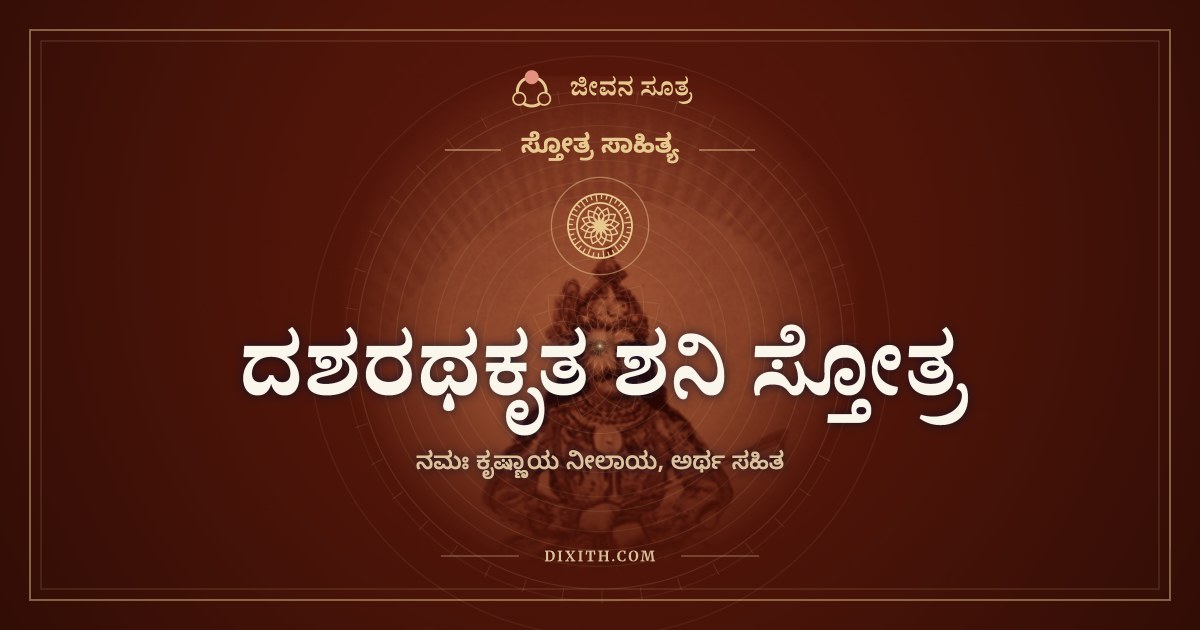
ಇದೊಂದು ಶನಿ ಗ್ರಹದ ಸ್ತೋತ್ರ. ಸರಸ್ವತಿ ಮತ್ತು ಗಣಪತಿಯನ್ನು ಧ್ಯಾನಿಸಿ ರಾಜ ದಶರಥನು ಇದನ್ನು ರಚಿಸಿದನು ಎಂದು ಮೊದಲ ಶ್ಲೋಕವೇ ಹೇಳುತ್ತದೆ. ನಂತರದ ಶ್ಲೋಕಗಳಲ್ಲಿ ಶನಿಯ ಉಗ್ರ ರೂಪವನ್ನೂ ಅವನ ದೃಷ್ಟಿಯ ಶಕ್ತಿಯನ್ನೂ ವರ್ಣಿಸಿ, ಕೊನೆಗೆ ಕೃಪೆ ಮತ್ತು ಕ್ಷಮೆಯನ್ನು ಬೇಡಲಾಗಿದೆ.
This is a hymn to Shani, the planet Saturn. Its first verse says that King Dasharatha composed it after meditating on Sarasvati and Ganesha. The verses that follow describe Shani’s fierce form and the power of his gaze, and the hymn closes with a plea for grace and forgiveness.
ಶನಿವಾರಗಳಂದು ಮತ್ತು ಸಾಡೇಸಾತಿಯಂತಹ ಶನಿಯ ಕಾಲದಲ್ಲಿ ಇದನ್ನು ಪಠಿಸುವ ರೂಢಿ ಇದೆ. ಇಲ್ಲಿ ಪ್ರತಿ ಶ್ಲೋಕಕ್ಕೆ ಕನ್ನಡ ಮತ್ತು ಇಂಗ್ಲಿಷ್ ಅರ್ಥವನ್ನು ಕೊಟ್ಟಿದ್ದೇವೆ. ಈ ಸ್ತೋತ್ರದ ಪಾಠ ಆವೃತ್ತಿಯಿಂದ ಆವೃತ್ತಿಗೆ ಸಾಕಷ್ಟು ಬದಲಾಗುತ್ತದೆ, ಆ ಬಗ್ಗೆ ಕೆಳಗೆ ಬರೆದಿದ್ದೇವೆ.
It is customarily recited on Saturdays and during Shani’s periods such as Sade Sati. We give a Kannada and an English meaning for each verse. The wording of this hymn varies a good deal from one edition to another, and we say more about that below.
ಪಾಠ (ಕನ್ನಡ)
ಧ್ಯಾತ್ವಾ ಸರಸ್ವತೀಂ ದೇವೀಂ ಗಣನಾಥಂ ವಿನಾಯಕಮ್ ।
ರಾಜಾ ದಶರಥಃ ಸ್ತೋತ್ರಂ ಸೌರೇರಿದಮಥಾಕರೋತ್ ॥ 1 ॥
ದಶರಥ ಉವಾಚ
ನಮಃ ಕೃಷ್ಣಾಯ ನೀಲಾಯ ಶಿತಿಕಂಠನಿಭಾಯ ಚ ।
ನಮೋ ನೀಲಮಯೂಖಾಯ ನೀಲೋತ್ಪಲನಿಭಾಯ ಚ ॥ 2 ॥
ನಮೋ ನಿರ್ಮಾಂಸದೇಹಾಯ ದೀರ್ಘಶ್ಮಶ್ರುಜಟಾಯ ಚ ।
ನಮೋ ವಿಶಾಲನೇತ್ರಾಯ ಶುಷ್ಕೋದರ ಭಯಾನಕ ॥ 3 ॥
ನಮಃ ಪರುಷಗಾತ್ರಾಯ ಸ್ಥೂಲರೋಮಾಯ ವೈ ನಮಃ ।
ನಮೋ ನಿತ್ಯಂ ಕ್ಷುಧಾರ್ತಾಯ ನಿತ್ಯತಪ್ತಾಯ ವೈ ನಮಃ ॥ 4 ॥
ನಮಃ ಕಾಲಾಗ್ನಿರೂಪಾಯ ಕೃತಾಂತಕ ನಮೋಽಸ್ತು ತೇ ।
ನಮಸ್ತೇ ಕೋಟರಾಕ್ಷಾಯ ದುರ್ನಿರೀಕ್ಷ್ಯಾಯ ವೈ ನಮಃ ॥ 5 ॥
ನಮೋ ಘೋರಾಯ ರೌದ್ರಾಯ ಭೀಷಣಾಯ ಕರಾಳಿನೇ ।
ನಮಸ್ತೇ ಸರ್ವಭಕ್ಷಾಯ ವಲೀಮುಖ ನಮೋಽಸ್ತು ತೇ ॥ 6 ॥
ಸೂರ್ಯಪುತ್ರ ನಮಸ್ತೇಽಸ್ತು ಭಾಸ್ಕರೇ ಭಯದಾಯಕ ।
ಅಧೋದೃಷ್ಟೇ ನಮಸ್ತುಭ್ಯಂ ವಪುಃಶ್ಯಾಮ ನಮೋಽಸ್ತು ತೇ ॥ 7 ॥
ನಮೋ ಮಂದಗತೇ ತುಭ್ಯಂ ನಿಸ್ತ್ರಿಂಶಾಯ ನಮೋ ನಮಃ ।
ತಪಸಾ ದಗ್ಧದೇಹಾಯ ನಿತ್ಯಯೋಗರತಾಯ ಚ ॥ 8 ॥
ನಮಸ್ತೇ ಜ್ಞಾನನೇತ್ರಾಯ ಕಾಶ್ಯಪಾತ್ಮಜಸೂನವೇ ।
ತುಷ್ಟೋ ದದಾಸಿ ವೈ ರಾಜ್ಯಂ ರುಷ್ಟೋ ಹರಸಿ ತತ್ಕ್ಷಣಾತ್ ॥ 9 ॥
ದೇವಾಸುರಮನುಷ್ಯಾಶ್ಚ ಪಶುಪಕ್ಷಿಸರೀಸೃಪಾಃ ।
ತ್ವಯಾ ವಿಲೋಕಿತಾಃ ಸೌರೇ ದೈನ್ಯಮಾಶು ವ್ರಜಂತಿ ಚ ॥ 10 ॥
ಬ್ರಹ್ಮಾ ಶಕ್ರೋ ಯಮಶ್ಚೈವ ಋಷಯಃ ಸಪ್ತತಾರಕಾಃ ।
ರಾಜ್ಯಭ್ರಷ್ಟಾಶ್ಚ ತೇ ಸರ್ವೇ ತವ ದೃಷ್ಟ್ಯಾ ವಿಲೋಕಿತಾಃ ॥ 11 ॥
ದೇಶಾ ನಗರಗ್ರಾಮಾಶ್ಚ ದ್ವೀಪಾಶ್ಚೈವಾದ್ರಯಸ್ತಥಾ ।
ರೌದ್ರದೃಷ್ಟ್ಯಾ ತು ಯೇ ದೃಷ್ಟಾಃ ಕ್ಷಯಂ ಗಚ್ಛಂತಿ ತತ್ಕ್ಷಣಾತ್ ॥ 12 ॥
ಪ್ರಸಾದಂ ಕುರು ಮೇ ಸೌರೇ ವರಾರ್ಥೇಽಹಂ ತವಾಶ್ರಿತಃ ।
ಸೌರೇ ಕ್ಷಮಸ್ವಾಪರಾಧಂ ಸರ್ವಭೂತಹಿತಾಯ ಚ ॥ 13 ॥
ದೇವನಾಗರಿ ಲಿಪಿಯಲ್ಲಿ ಪಾಠText in Devanagari
ध्यात्वा सरस्वतीं देवीं गणनाथं विनायकम् ।
राजा दशरथः स्तोत्रं सौरेरिदमथाकरोत् ॥ 1 ॥
ದಶರಥ ಉವಾಚ
नमः कृष्णाय नीलाय शितिकंठनिभाय च ।
नमो नीलमयूखाय नीलोत्पलनिभाय च ॥ 2 ॥
नमो निर्मांसदेहाय दीर्घश्मश्रुजटाय च ।
नमो विशालनेत्राय शुष्कोदर भयानक ॥ 3 ॥
नमः परुषगात्राय स्थूलरोमाय वै नमः ।
नमो नित्यं क्षुधार्ताय नित्यतप्ताय वै नमः ॥ 4 ॥
नमः कालाग्निरूपाय कृतांतक नमोऽस्तु ते ।
नमस्ते कोटराक्षाय दुर्निरीक्ष्याय वै नमः ॥ 5 ॥
नमो घोराय रौद्राय भीषणाय कराळिने ।
नमस्ते सर्वभक्षाय वलीमुख नमोऽस्तु ते ॥ 6 ॥
सूर्यपुत्र नमस्तेऽस्तु भास्करे भयदायक ।
अधोदृष्टे नमस्तुभ्यं वपुःश्याम नमोऽस्तु ते ॥ 7 ॥
नमो मंदगते तुभ्यं निस्त्रिंशाय नमो नमः ।
तपसा दग्धदेहाय नित्ययोगरताय च ॥ 8 ॥
नमस्ते ज्ञाननेत्राय काश्यपात्मजसूनवे ।
तुष्टो ददासि वै राज्यं रुष्टो हरसि तत्क्षणात् ॥ 9 ॥
देवासुरमनुष्याश्च पशुपक्षिसरीसृपाः ।
त्वया विलोकिताः सौरे दैन्यमाशु व्रजंति च ॥ 10 ॥
ब्रह्मा शक्रो यमश्चैव ऋषयः सप्ततारकाः ।
राज्यभ्रष्टाश्च ते सर्वे तव दृष्ट्या विलोकिताः ॥ 11 ॥
देशा नगरग्रामाश्च द्वीपाश्चैवाद्रयस्तथा ।
रौद्रदृष्ट्या तु ये दृष्टाः क्षयं गच्छंति तत्क्षणात् ॥ 12 ॥
प्रसादं कुरु मे सौरे वरार्थेऽहं तवाश्रितः ।
सौरे क्षमस्वापराधं सर्वभूतहिताय च ॥ 13 ॥
IAST ಲಿಪ್ಯಂತರದಲ್ಲಿ ಪಾಠText in IAST transliteration
dhyātvā sarasvatīṃ devīṃ gaṇanāthaṃ vināyakam |
rājā daśarathaḥ stotraṃ saureridamathākarot || 1 ||
ದಶರಥ ಉವಾಚ
namaḥ kṛṣṇāya nīlāya śitikaṃṭhanibhāya ca |
namo nīlamayūkhāya nīlotpalanibhāya ca || 2 ||
namo nirmāṃsadehāya dīrghaśmaśrujaṭāya ca |
namo viśālanetrāya śuṣkodara bhayānaka || 3 ||
namaḥ paruṣagātrāya sthūlaromāya vai namaḥ |
namo nityaṃ kṣudhārtāya nityataptāya vai namaḥ || 4 ||
namaḥ kālāgnirūpāya kṛtāṃtaka namo’stu te |
namaste koṭarākṣāya durnirīkṣyāya vai namaḥ || 5 ||
namo ghorāya raudrāya bhīṣaṇāya karāḷine |
namaste sarvabhakṣāya valīmukha namo’stu te || 6 ||
sūryaputra namaste’stu bhāskare bhayadāyaka |
adhodṛṣṭe namastubhyaṃ vapuḥśyāma namo’stu te || 7 ||
namo maṃdagate tubhyaṃ nistriṃśāya namo namaḥ |
tapasā dagdhadehāya nityayogaratāya ca || 8 ||
namaste jñānanetrāya kāśyapātmajasūnave |
tuṣṭo dadāsi vai rājyaṃ ruṣṭo harasi tatkṣaṇāt || 9 ||
devāsuramanuṣyāśca paśupakṣisarīsṛpāḥ |
tvayā vilokitāḥ saure dainyamāśu vrajaṃti ca || 10 ||
brahmā śakro yamaścaiva ṛṣayaḥ saptatārakāḥ |
rājyabhraṣṭāśca te sarve tava dṛṣṭyā vilokitāḥ || 11 ||
deśā nagaragrāmāśca dvīpāścaivādrayastathā |
raudradṛṣṭyā tu ye dṛṣṭāḥ kṣayaṃ gacchaṃti tatkṣaṇāt || 12 ||
prasādaṃ kuru me saure varārthe’haṃ tavāśritaḥ |
saure kṣamasvāparādhaṃ sarvabhūtahitāya ca || 13 ||
ಶ್ಲೋಕಗಳ ಅರ್ಥ
- 1 ದೇವಿ ಸರಸ್ವತಿಯನ್ನೂ ಗಣಗಳ ಒಡೆಯನಾದ ವಿನಾಯಕನನ್ನೂ ಧ್ಯಾನಿಸಿ, ರಾಜ ದಶರಥನು ಸೂರ್ಯಪುತ್ರನಾದ ಶನಿಯ ಈ ಸ್ತೋತ್ರವನ್ನು ರಚಿಸಿದನು.
Having meditated on the goddess Sarasvati and on Vinayaka, lord of the ganas, King Dasharatha then composed this hymn to Shani, the son of the Sun. - 2 ಕಪ್ಪು ವರ್ಣದವನಿಗೆ, ನೀಲವರ್ಣದವನಿಗೆ, ಶಿವನ ನೀಲಕಂಠದಂತೆ ಕಾಣುವವನಿಗೆ ನಮಸ್ಕಾರ. ನೀಲಿ ಕಿರಣಗಳುಳ್ಳವನಿಗೆ, ನೀಲಕಮಲದಂತೆ ಹೊಳೆಯುವವನಿಗೆ ನಮಸ್ಕಾರ.
Salutations to the dark one, the blue one, who looks like the blue throat of Shiva. Salutations to him of the blue rays, who shines like the blue lotus. - 3 ಮಾಂಸವೇ ಇಲ್ಲದಂತೆ ಬಡಕಲಾದ ದೇಹದವನಿಗೆ, ಉದ್ದ ಗಡ್ಡ ಮತ್ತು ಜಟೆಯುಳ್ಳವನಿಗೆ ನಮಸ್ಕಾರ. ವಿಶಾಲ ಕಣ್ಣುಗಳುಳ್ಳವನಿಗೆ ನಮಸ್ಕಾರ. ಒಣಗಿದ ಹೊಟ್ಟೆಯ ಭಯಂಕರನೇ, ನಿನಗೆ ನಮಸ್ಕಾರ.
Salutations to him whose body is gaunt, as if without flesh, who has a long beard and matted hair. Salutations to the wide-eyed one. O fearsome one with the shrunken belly, salutations to you. - 4 ಒರಟು ದೇಹದವನಿಗೆ, ದಪ್ಪ ರೋಮಗಳುಳ್ಳವನಿಗೆ ನಮಸ್ಕಾರ. ಸದಾ ಹಸಿವಿನಿಂದ ಬಳಲುವವನಿಗೆ, ಸದಾ ತಪಿಸುತ್ತಿರುವವನಿಗೆ ನಮಸ್ಕಾರ. ಕೆಲವು ಪಾಠಗಳಲ್ಲಿ ಇದು “ಸದಾ ತೃಪ್ತನಾದವನಿಗೆ” ಎಂದಿದೆ.
Salutations to him of the rough body and coarse hair. Salutations to him who is ever tormented by hunger, who is ever burning. Some texts read “ever satisfied” here instead. - 5 ಪ್ರಳಯಕಾಲದ ಅಗ್ನಿಯ ರೂಪದವನಿಗೆ ನಮಸ್ಕಾರ. ಎಲ್ಲದಕ್ಕೂ ಕೊನೆ ತರುವವನೇ, ನಿನಗೆ ನಮಸ್ಕಾರ. ಆಳಕ್ಕೆ ಇಳಿದ ಕಣ್ಣುಗಳುಳ್ಳವನಿಗೆ, ಕಣ್ಣೆತ್ತಿ ನೋಡಲೂ ಕಷ್ಟವಾದವನಿಗೆ ನಮಸ್ಕಾರ.
Salutations to him whose form is the fire of the world’s end. O bringer of the end, salutations to you. Salutations to him with deep-sunk eyes, who is hard even to look upon. - 6 ಘೋರನಿಗೆ, ರೌದ್ರನಿಗೆ, ಭೀಷಣನಿಗೆ, ಕರಾಳ ರೂಪದವನಿಗೆ ನಮಸ್ಕಾರ. ಎಲ್ಲವನ್ನೂ ನುಂಗುವವನೇ, ನಿನಗೆ ನಮಸ್ಕಾರ. ಸುಕ್ಕುಗಟ್ಟಿದ ಮುಖದವನೇ, ನಿನಗೆ ನಮಸ್ಕಾರ.
Salutations to the dreadful, the wrathful, the terrifying one with the fearsome face. O devourer of all, salutations to you. O wrinkle-faced one, salutations to you. - 7 ಸೂರ್ಯಪುತ್ರನೇ, ನಿನಗೆ ನಮಸ್ಕಾರ. ಭಾಸ್ಕರನ ಮಗನೇ, ಭಯ ಹುಟ್ಟಿಸುವವನೇ, ಕೆಳಮುಖ ದೃಷ್ಟಿಯವನೇ, ನಿನಗೆ ನಮಸ್ಕಾರ. ಕಪ್ಪು ಮೈಬಣ್ಣದವನೇ, ನಿನಗೆ ನಮಸ್ಕಾರ.
O son of the Sun, salutations to you. O child of Bhaskara, giver of fear, O you whose gaze is cast downward, salutations to you. O dark-bodied one, salutations to you. - 8 ನಿಧಾನವಾಗಿ ಚಲಿಸುವವನೇ, ನಿನಗೆ ನಮಸ್ಕಾರ. ಖಡ್ಗದಂತೆ ನಿಷ್ಠುರನಾದವನಿಗೆ ಮತ್ತೆ ಮತ್ತೆ ನಮಸ್ಕಾರ. ತಪಸ್ಸಿನಿಂದ ದೇಹವನ್ನು ಸುಟ್ಟುಕೊಂಡವನಿಗೆ, ಸದಾ ಯೋಗದಲ್ಲಿ ನಿರತನಾದವನಿಗೆ ನಮಸ್ಕಾರ.
O slow-moving one, salutations to you. Salutations again and again to him who is stern as a sword. Salutations to him whose body is burnt lean by austerity, who ever delights in yoga. - 9 ಜ್ಞಾನವೇ ಕಣ್ಣಾಗಿರುವವನೇ, ಕಶ್ಯಪರ ಮಗನಾದ ಸೂರ್ಯನ ಪುತ್ರನೇ, ನಿನಗೆ ನಮಸ್ಕಾರ. ನೀನು ಸಂತುಷ್ಟನಾದರೆ ರಾಜ್ಯವನ್ನೇ ಕೊಡುತ್ತೀಯೆ, ಕೋಪಗೊಂಡರೆ ಅದೇ ಕ್ಷಣ ಅದನ್ನು ಕಸಿದುಕೊಳ್ಳುತ್ತೀಯೆ.
Salutations to you whose eye is knowledge, son of the Sun who is himself the son of Kashyapa. Pleased, you grant a kingdom. Angered, you take it away that very instant. - 10 ಸೂರ್ಯಪುತ್ರನೇ, ದೇವತೆಗಳು, ಅಸುರರು, ಮನುಷ್ಯರು, ಪಶುಗಳು, ಪಕ್ಷಿಗಳು, ಹರಿದಾಡುವ ಜೀವಿಗಳು, ಯಾರ ಮೇಲೆ ನಿನ್ನ ದೃಷ್ಟಿ ಬೀಳುತ್ತದೆಯೋ ಅವರೆಲ್ಲರೂ ಬೇಗನೆ ದೀನಸ್ಥಿತಿಗೆ ಇಳಿಯುತ್ತಾರೆ.
O son of the Sun, gods, demons and humans, beasts, birds and creeping things: all on whom your glance falls soon sink into misery. - 11 ಬ್ರಹ್ಮ, ಇಂದ್ರ, ಯಮ, ಮತ್ತು ಏಳು ನಕ್ಷತ್ರಗಳಾಗಿ ಹೊಳೆಯುವ ಸಪ್ತರ್ಷಿಗಳು, ಇವರೆಲ್ಲರೂ ನಿನ್ನ ದೃಷ್ಟಿಗೆ ಗುರಿಯಾದಾಗ ತಮ್ಮ ಪದವಿಯನ್ನು ಕಳೆದುಕೊಂಡರು.
Brahma, Indra, Yama, and the sages who shine as the Seven Stars: all of them lost their high station when your gaze fell upon them. - 12 ದೇಶಗಳು, ನಗರಗಳು, ಹಳ್ಳಿಗಳು, ದ್ವೀಪಗಳು, ಪರ್ವತಗಳು ಕೂಡ ನಿನ್ನ ಉಗ್ರ ದೃಷ್ಟಿಗೆ ಗುರಿಯಾದರೆ ಆ ಕ್ಷಣವೇ ನಾಶದತ್ತ ಸಾಗುತ್ತವೆ.
Lands, cities and villages, islands and mountains too: whatever your fierce gaze falls on goes to ruin that very moment. - 13 ಸೂರ್ಯಪುತ್ರನೇ, ನನ್ನ ಮೇಲೆ ಕೃಪೆ ಮಾಡು. ವರವನ್ನು ಬೇಡಿ ನಾನು ನಿನ್ನ ಆಶ್ರಯಕ್ಕೆ ಬಂದಿದ್ದೇನೆ. ಶನಿದೇವನೇ, ನನ್ನ ಅಪರಾಧವನ್ನು ಕ್ಷಮಿಸು, ಎಲ್ಲ ಜೀವಿಗಳ ಹಿತಕ್ಕಾಗಿಯೂ ಪ್ರಸನ್ನನಾಗು.
O son of the Sun, be gracious to me. Seeking a boon, I have come to you for refuge. O Shani, forgive my offence, and be kind for the good of all beings.
ಈ ಸ್ತೋತ್ರದ ಬಗ್ಗೆAbout this hymn
ಈ ಸ್ತೋತ್ರದ ಹಿನ್ನೆಲೆಯ ಕಥೆ ಪದ್ಮ ಪುರಾಣದ ಉತ್ತರ ಖಂಡದಲ್ಲಿ ಇದೆ ಎಂದು ಹೇಳಲಾಗುತ್ತದೆ. ಬ್ರಹ್ಮಾಂಡ ಪುರಾಣವೂ ಸೇರಿದಂತೆ ಬೇರೆ ಕಡೆಗಳಲ್ಲೂ ಇದರ ರೂಪಾಂತರಗಳಿವೆ. ಶನಿಯು ರೋಹಿಣಿ ನಕ್ಷತ್ರದ ಶಕಟವನ್ನು ಭೇದಿಸಲಿದ್ದಾನೆ, ಅದರಿಂದ ಹನ್ನೆರಡು ವರ್ಷದ ಬರಗಾಲ ಬರುತ್ತದೆ ಎಂದು ಜ್ಯೋತಿಷಿಗಳು ಎಚ್ಚರಿಸಿದರು. ಆಗ ದಶರಥನು ತನ್ನ ರಥದಲ್ಲಿ ಆಕಾಶಕ್ಕೆ ಏರಿ ಶನಿಯನ್ನು ತಡೆಯಲು ಹೊರಟನು ಎಂದು ಕಥೆ ಹೇಳುತ್ತದೆ.
The story behind this hymn is said to be in the Uttara Khanda of the Padma Purana, and versions of it are told elsewhere, including the Brahmanda Purana. Astrologers warned that Shani was about to pierce the ‘cart’ of the star Rohini (Shakata-bheda), which would bring a twelve-year drought. Dasharatha, the story says, rode his chariot into the heavens to stop him.
ರಾಜನ ಧೈರ್ಯಕ್ಕೂ ಈ ಸ್ತುತಿಗೂ ಮೆಚ್ಚಿದ ಶನಿ, ಈ ಸ್ತೋತ್ರವನ್ನು ಪಠಿಸುವವರನ್ನು ಪೀಡಿಸುವುದಿಲ್ಲ ಎಂದು ವರ ಕೊಟ್ಟನು ಎಂದು ಪರಂಪರೆ ಹೇಳುತ್ತದೆ. ಆ ವರದ ಭಾಗ ನಾವು ಅನುಸರಿಸಿದ ಪಾಠದಲ್ಲಿ ಇಲ್ಲ. ಮೊದಲ ಶ್ಲೋಕ ಕಥೆ ಹೇಳುವವನ ಮಾತು, ಎರಡನೆಯದರಿಂದ ದಶರಥನ ಸ್ತುತಿ ಆರಂಭವಾಗುತ್ತದೆ. ಎಲ್ಲ ಶ್ಲೋಕಗಳೂ ಅನುಷ್ಟುಪ್ ಛಂದಸ್ಸಿನಲ್ಲಿವೆ.
Pleased by the king’s courage and by this praise, Shani is said to have promised not to trouble those who recite it. That section with the boon is not in the text we follow. The first verse is the narrator’s frame, and Dasharatha’s own hymn begins with the second. All the verses are in the anushtubh metre.
ಈ ಸ್ತೋತ್ರದ ಪಾಠ ಆವೃತ್ತಿಗಳ ನಡುವೆ ಬಹಳ ಬದಲಾಗುತ್ತದೆ. ದಶರಥಕೃತ ಎಂದೇ ಹೆಸರಾದ ಇನ್ನೊಂದು ದೀರ್ಘ ರೂಪವೂ ಶನೈಶ್ಚರಾಷ್ಟಕ ಎಂಬ ಹೆಸರಿನಲ್ಲಿ ಪ್ರಚಲಿತವಿದೆ. ನಾವು ಹದಿಮೂರು ಶ್ಲೋಕಗಳ ಪಾಠವನ್ನು ಅನುಸರಿಸಿದ್ದೇವೆ. ಹಲವು ಪದಗಳಿಗೆ ಬೇರೆ ಪಾಠಗಳಿವೆ, ಉದಾಹರಣೆಗೆ ನಾಲ್ಕನೆಯ ಶ್ಲೋಕದ ತಪ್ತ ಬದಲು ತೃಪ್ತ, ಒಂಬತ್ತನೆಯದರ ರುಷ್ಟ ಬದಲು ಕ್ರುದ್ಧ. ಮೂರನೆಯ ಶ್ಲೋಕದ ಕೊನೆಯನ್ನು ಕೆಲವರು ಭಯಾಕೃತೇ ಎಂದು ಓದುತ್ತಾರೆ.
The wording of this hymn differs a great deal between editions, and a longer form, also credited to Dasharatha, circulates as the Shanaishchara Ashtaka. We follow a thirteen-verse text. Many words have other readings, for example ‘satisfied’ (trpta) for ‘burning’ (tapta) in verse 4, and krudda for rushta (‘angered’) in verse 9. Some read the end of verse 3 as bhayakrte.
ಆರನೆಯ ಶ್ಲೋಕದ ವಲೀಮುಖ ಎಂಬ ಪದವನ್ನು ನಾವು ಸುಕ್ಕುಗಟ್ಟಿದ ಮುಖದವನು ಎಂದು ಓದಿದ್ದೇವೆ, ಈ ಪದಕ್ಕೆ ಕೋತಿ ಎಂಬ ಅರ್ಥವೂ ಇದೆ. ಏಳನೆಯ ಶ್ಲೋಕದ ಭಾಸ್ಕರೇ ಎಂಬುದು ಭಾಸ್ಕರನ ಮಗನನ್ನು ಕರೆಯುವ ಸಂಬೋಧನೆ. ಸ್ತೋತ್ರ ಶನಿಯ ದೃಷ್ಟಿಯನ್ನು ಭಯಂಕರವೆಂದು ವರ್ಣಿಸಿದರೂ, ಅದರ ಕೊನೆಯ ಮಾತು ಕೃಪೆ ಮತ್ತು ಕ್ಷಮೆಯ ಬೇಡಿಕೆ.
In verse 6 we read valimukha as ‘wrinkle-faced’, though the word can also mean a monkey. In verse 7, bhaskare addresses Shani as the son of Bhaskara, the Sun. The hymn paints Shani’s gaze as terrible, yet its last word is a request for grace and forgiveness.
ಆಧಾರ: ಹಲವು ಮೂಲಗಳು. ಆವೃತ್ತಿಗಳು ಭಿನ್ನವಾಗಿರುವಲ್ಲಿ ಅದನ್ನು ಇಲ್ಲಿ ಸೂಚಿಸಿದ್ದೇವೆ. · Sources: several. Where readings differ, the difference is noted here.
ಇಂದಿನ ಬದುಕಿಗೆFor life today
ಶನಿಯನ್ನು ಮಂದಗತಿ, ನಿಧಾನವಾಗಿ ಸಾಗುವವನು ಎಂದು ಈ ಸ್ತೋತ್ರ ಕರೆಯುತ್ತದೆ. ಸರ್ಕಾರಿ ಕಚೇರಿಯ ಉದ್ದ ಸಾಲಿನಲ್ಲಿ ಹೆಜ್ಜೆ ಹೆಜ್ಜೆಯಾಗಿ ಮುಂದೆ ಸಾಗುವವರಿಗೆ ನಿಧಾನದ ಭಾರ ಗೊತ್ತು. ಬದುಕಿನ ಕೆಲವು ಕಾಲಗಳೂ ಹಾಗೆಯೇ ನಿಧಾನವಾಗಿ ಸರಿಯುತ್ತವೆ.
The hymn calls Shani the slow-moving one. Anyone who has inched forward in a long queue at a government office knows the weight of slowness. Some seasons of life also pass that slowly.
ದಶರಥನು ಭಯದಿಂದ ಓಡಿಹೋಗದೆ ಎದುರು ನಿಂತು, ನಂತರ ವಿನಯದಿಂದ ಕೈ ಮುಗಿದನು. ಕಠಿಣ ಕಾಲದಲ್ಲಿ ನಮಗೂ ಬೇಕಾದದ್ದು ಬಹುಶಃ ಇವೆರಡೇ: ಎದುರಿಸುವ ಧೈರ್ಯ ಮತ್ತು ಬಾಗುವ ವಿನಯ.
Dasharatha did not run from what he feared. He stood his ground, and then folded his hands in humility. Perhaps these two are what we need in a hard season too: the courage to face it and the humility to bow.
ಪಾಠದಲ್ಲಿ ತಪ್ಪೋ ಬೇರೆ ಪಾಠಾಂತರವೋ ಕಂಡಿತೇ? ನಮಗೆ ತಿಳಿಸಿ.
Noticed a mistake or a different reading? Tell us.
ಪ್ರತಿಕ್ರಿಯೆ ಬರೆಯಿರಿ