
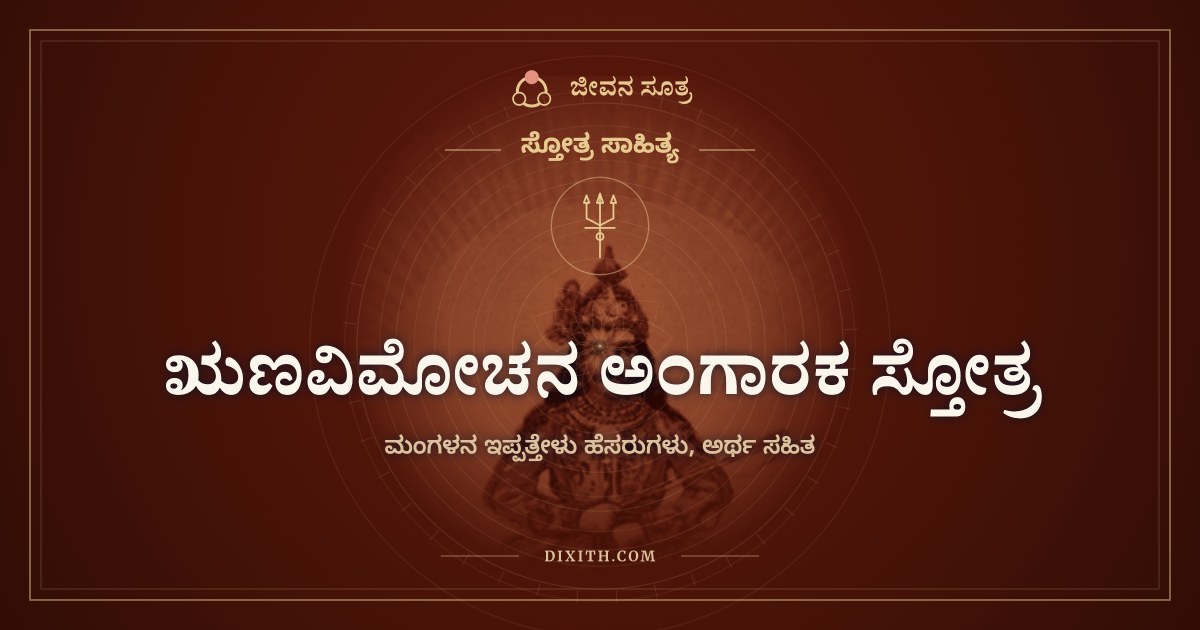
ಸಾಲದಲ್ಲಿ ಸಿಲುಕಿದ ಮನುಷ್ಯರಿಗೆ ಬಿಡುಗಡೆ ಹೇಗೆ ಎಂದು ಸ್ಕಂದ ಕೇಳುತ್ತಾನೆ. ಅದಕ್ಕೆ ಉತ್ತರವಾಗಿ ಬ್ರಹ್ಮ ಅಂಗಾರಕನ, ಅಂದರೆ ಮಂಗಳ ಗ್ರಹದ ಇಪ್ಪತ್ತೇಳು ಹೆಸರುಗಳನ್ನು ಹೇಳುತ್ತಾನೆ. ಅದರ ಜೊತೆಗೆ ಮಂಗಳವಾರದಂದು ಮಾಡಬೇಕಾದ ಒಂದು ಸರಳ ವಿಧಿಯನ್ನೂ ಸ್ತೋತ್ರ ತಿಳಿಸುತ್ತದೆ.
Skanda asks how people caught in debt can be set free. In answer Brahma gives the twenty-seven names of Angaraka, the planet Mars. The hymn also describes a simple rite to be performed on Tuesdays.
ಪಾಠದಲ್ಲಿ ಪ್ರಶ್ನೋತ್ತರದ ಪೀಠಿಕೆ, ವಿನಿಯೋಗ, ಧ್ಯಾನ, ಹೆಸರುಗಳ ಶ್ಲೋಕಗಳು, ವಿಧಿ ಮತ್ತು ಫಲಶ್ರುತಿ, ಕೊನೆಯಲ್ಲಿ ಮೂಲಮಂತ್ರ ಮತ್ತು ಅರ್ಘ್ಯ ಶ್ಲೋಕ ಇವೆ. ಪ್ರತಿ ಭಾಗದ ಅರ್ಥವನ್ನು ಕನ್ನಡದಲ್ಲಿ ಮತ್ತು ಇಂಗ್ಲಿಷಿನಲ್ಲಿ ಕೊಟ್ಟಿದ್ದೇವೆ.
The text has a question-and-answer opening, the viniyoga, a meditation verse, the verses of names, the rite and its fruits, and finally the root mantra and the arghya verse. We give the meaning of every part in Kannada and in English.
ಪಾಠ (ಕನ್ನಡ)
ಸ್ಕಂದ ಉವಾಚ
ಋಣಗ್ರಸ್ತನರಾಣಾಂ ತು ಋಣಮುಕ್ತಿಃ ಕಥಂ ಭವೇತ್ ।
ಬ್ರಹ್ಮೋವಾಚ
ವಕ್ಷ್ಯೇಽಹಂ ಸರ್ವಲೋಕಾನಾಂ ಹಿತಾರ್ಥಂ ಹಿತಕಾಮದಮ್ ॥
ವಿನಿಯೋಗ
ಅಸ್ಯ ಶ್ರೀ ಅಂಗಾರಕಸ್ತೋತ್ರಮಹಾಮಂತ್ರಸ್ಯ ಗೌತಮ ಋಷಿಃ, ಅನುಷ್ಟುಪ್ ಛಂದಃ, ಅಂಗಾರಕೋ ದೇವತಾ, ಮಮ ಋಣವಿಮೋಚನಾರ್ಥೇ ಜಪೇ ವಿನಿಯೋಗಃ ।
ಧ್ಯಾನ
ರಕ್ತಮಾಲ್ಯಾಂಬರಧರಃ ಶೂಲಶಕ್ತಿಗದಾಧರಃ ।
ಚತುರ್ಭುಜೋ ಮೇಷಗತೋ ವರದಶ್ಚ ಧರಾಸುತಃ ॥ 1 ॥
ಸ್ತೋತ್ರ
ಮಂಗಳೋ ಭೂಮಿಪುತ್ರಶ್ಚ ಋಣಹರ್ತಾ ಧನಪ್ರದಃ ।
ಸ್ಥಿರಾಸನೋ ಮಹಾಕಾಯಃ ಸರ್ವಕರ್ಮಾವಬೋಧಕಃ ॥ 2 ॥
ಲೋಹಿತೋ ಲೋಹಿತಾಂಗಶ್ಚ ಸಾಮಗಾಯೀ ಕೃಪಾಕರಃ ।
ಧರ್ಮರಾಜಃ ಕುಜೋ ಭೌಮೋ ಭೂಮಿಜೋ ಭೂಮಿನಂದನಃ ॥ 3 ॥
ಅಂಗಾರಕೋ ಯಮಶ್ಚೈವ ಸರ್ವರೋಗಾಪಹಾರಕಃ ।
ಸೃಷ್ಟಿಕರ್ತಾಽಪಹರ್ತಾ ಚ ಸರ್ವಕಾಮಫಲಪ್ರದಃ ॥ 4 ॥
ಭೂತಿದೋ ಗ್ರಹಪೂಜ್ಯಶ್ಚ ವಕ್ತ್ರೋ ರಕ್ತವಪುಃ ಪ್ರಭುಃ ।
ಏತಾನಿ ಕುಜನಾಮಾನಿ ಯೋ ನಿತ್ಯಂ ಪ್ರಯತಃ ಪಠೇತ್ ।
ಋಣಂ ನ ಜಾಯತೇ ತಸ್ಯ ಧನಂ ಪ್ರಾಪ್ನೋತ್ಯಸಂಶಯಮ್ ॥ 5 ॥
ರಕ್ತಪುಷ್ಪೈಶ್ಚ ಗಂಧೈಶ್ಚ ದೀಪಧೂಪಾದಿಭಿಸ್ತಥಾ ।
ಮಂಗಳಂ ಪೂಜಯಿತ್ವಾ ತು ಮಂಗಳೇಽಹನಿ ಸರ್ವದಾ ॥ 6 ॥
ಋಣರೇಖಾಃ ಪ್ರಕರ್ತವ್ಯಾ ದಗ್ಧಾಂಗಾರೈಸ್ತದಗ್ರತಃ ।
ಸಪ್ತವಿಂಶತಿನಾಮಾನಿ ಪಠಿತ್ವಾ ತು ತದಂತಿಕೇ ॥ 7 ॥
ತಾಶ್ಚ ಪ್ರಮಾರ್ಜಯೇತ್ಪಶ್ಚಾದ್ವಾಮಪಾದೇನ ಸಂಸ್ಪೃಶನ್ ।
ಏವಂ ಕೃತ್ವಾ ನ ಸಂದೇಹೋ ಋಣಹೀನೋ ಧನೀ ಭವೇತ್ ॥ 8 ॥
ಭೂಮಿಜಸ್ಯ ಪ್ರಸಾದೇನ ಗ್ರಹಪೀಡಾ ವಿನಶ್ಯತಿ ।
ಯೇನಾರ್ಜಿತಾ ಜಗತ್ಕೀರ್ತಿರ್ಭೂಮಿಪುತ್ರೇಣ ಶಾಶ್ವತೀ ॥ 9 ॥
ಶತ್ರವಶ್ಚ ಹತಾ ಯೇನ ಭೌಮೇನ ಮಹಿತಾತ್ಮನಾ ।
ಸ ಪ್ರೀಯತಾಂ ತು ಭೌಮೋಽದ್ಯ ತುಷ್ಟೋ ಭೂಯಾತ್ಸದಾ ಮಮ ॥ 10 ॥
ಮೂಲಮಂತ್ರ
ಅಂಗಾರಕ ಮಹೀಪುತ್ರ ಭಗವನ್ ಭಕ್ತವತ್ಸಲ ।
ನಮೋಽಸ್ತು ತೇ ಮಮಾಶೇಷಋಣಮಾಶು ವಿಮೋಚಯ ॥ 11 ॥
ಅರ್ಘ್ಯ
ಭೂಮಿಪುತ್ರ ಮಹಾತೇಜಃ ಸ್ವೇದೋದ್ಭವ ಪಿನಾಕಿನಃ ।
ಋಣಾರ್ತಸ್ತ್ವಾಂ ಪ್ರಪನ್ನೋಽಸ್ಮಿ ಗೃಹಾಣಾರ್ಘ್ಯಂ ನಮೋಽಸ್ತು ತೇ ॥ 12 ॥
ದೇವನಾಗರಿ ಲಿಪಿಯಲ್ಲಿ ಪಾಠText in Devanagari
ಸ್ಕಂದ ಉವಾಚ
ऋणग्रस्तनराणां तु ऋणमुक्तिः कथं भवेत् ।
ಬ್ರಹ್ಮೋವಾಚ
वक्ष्येऽहं सर्वलोकानां हितार्थं हितकामदम् ॥
ವಿನಿಯೋಗ
अस्य श्री अंगारकस्तोत्रमहामंत्रस्य गौतम ऋषिः, अनुष्टुप् छंदः, अंगारको देवता, मम ऋणविमोचनार्थे जपे विनियोगः ।
ಧ್ಯಾನ
रक्तमाल्यांबरधरः शूलशक्तिगदाधरः ।
चतुर्भुजो मेषगतो वरदश्च धरासुतः ॥ 1 ॥
ಸ್ತೋತ್ರ
मंगळो भूमिपुत्रश्च ऋणहर्ता धनप्रदः ।
स्थिरासनो महाकायः सर्वकर्मावबोधकः ॥ 2 ॥
लोहितो लोहितांगश्च सामगायी कृपाकरः ।
धर्मराजः कुजो भौमो भूमिजो भूमिनंदनः ॥ 3 ॥
अंगारको यमश्चैव सर्वरोगापहारकः ।
सृष्टिकर्ताऽपहर्ता च सर्वकामफलप्रदः ॥ 4 ॥
भूतिदो ग्रहपूज्यश्च वक्त्रो रक्तवपुः प्रभुः ।
एतानि कुजनामानि यो नित्यं प्रयतः पठेत् ।
ऋणं न जायते तस्य धनं प्राप्नोत्यसंशयम् ॥ 5 ॥
रक्तपुष्पैश्च गंधैश्च दीपधूपादिभिस्तथा ।
मंगळं पूजयित्वा तु मंगळेऽहनि सर्वदा ॥ 6 ॥
ऋणरेखाः प्रकर्तव्या दग्धांगारैस्तदग्रतः ।
सप्तविंशतिनामानि पठित्वा तु तदंतिके ॥ 7 ॥
ताश्च प्रमार्जयेत्पश्चाद्वामपादेन संस्पृशन् ।
एवं कृत्वा न संदेहो ऋणहीनो धनी भवेत् ॥ 8 ॥
भूमिजस्य प्रसादेन ग्रहपीडा विनश्यति ।
येनार्जिता जगत्कीर्तिर्भूमिपुत्रेण शाश्वती ॥ 9 ॥
शत्रवश्च हता येन भौमेन महितात्मना ।
स प्रीयतां तु भौमोऽद्य तुष्टो भूयात्सदा मम ॥ 10 ॥
ಮೂಲಮಂತ್ರ
अंगारक महीपुत्र भगवन् भक्तवत्सल ।
नमोऽस्तु ते ममाशेषऋणमाशु विमोचय ॥ 11 ॥
ಅರ್ಘ್ಯ
भूमिपुत्र महातेजः स्वेदोद्भव पिनाकिनः ।
ऋणार्तस्त्वां प्रपन्नोऽस्मि गृहाणार्घ्यं नमोऽस्तु ते ॥ 12 ॥
IAST ಲಿಪ್ಯಂತರದಲ್ಲಿ ಪಾಠText in IAST transliteration
ಸ್ಕಂದ ಉವಾಚ
ṛṇagrastanarāṇāṃ tu ṛṇamuktiḥ kathaṃ bhavet |
ಬ್ರಹ್ಮೋವಾಚ
vakṣye’haṃ sarvalokānāṃ hitārthaṃ hitakāmadam ||
ವಿನಿಯೋಗ
asya śrī aṃgārakastotramahāmaṃtrasya gautama ṛṣiḥ, anuṣṭup chaṃdaḥ, aṃgārako devatā, mama ṛṇavimocanārthe jape viniyogaḥ |
ಧ್ಯಾನ
raktamālyāṃbaradharaḥ śūlaśaktigadādharaḥ |
caturbhujo meṣagato varadaśca dharāsutaḥ || 1 ||
ಸ್ತೋತ್ರ
maṃgaḷo bhūmiputraśca ṛṇahartā dhanapradaḥ |
sthirāsano mahākāyaḥ sarvakarmāvabodhakaḥ || 2 ||
lohito lohitāṃgaśca sāmagāyī kṛpākaraḥ |
dharmarājaḥ kujo bhaumo bhūmijo bhūminaṃdanaḥ || 3 ||
aṃgārako yamaścaiva sarvarogāpahārakaḥ |
sṛṣṭikartā’pahartā ca sarvakāmaphalapradaḥ || 4 ||
bhūtido grahapūjyaśca vaktro raktavapuḥ prabhuḥ |
etāni kujanāmāni yo nityaṃ prayataḥ paṭhet |
ṛṇaṃ na jāyate tasya dhanaṃ prāpnotyasaṃśayam || 5 ||
raktapuṣpaiśca gaṃdhaiśca dīpadhūpādibhistathā |
maṃgaḷaṃ pūjayitvā tu maṃgaḷe’hani sarvadā || 6 ||
ṛṇarekhāḥ prakartavyā dagdhāṃgāraistadagrataḥ |
saptaviṃśatināmāni paṭhitvā tu tadaṃtike || 7 ||
tāśca pramārjayetpaścādvāmapādena saṃspṛśan |
evaṃ kṛtvā na saṃdeho ṛṇahīno dhanī bhavet || 8 ||
bhūmijasya prasādena grahapīḍā vinaśyati |
yenārjitā jagatkīrtirbhūmiputreṇa śāśvatī || 9 ||
śatravaśca hatā yena bhaumena mahitātmanā |
sa prīyatāṃ tu bhaumo’dya tuṣṭo bhūyātsadā mama || 10 ||
ಮೂಲಮಂತ್ರ
aṃgāraka mahīputra bhagavan bhaktavatsala |
namo’stu te mamāśeṣaṛṇamāśu vimocaya || 11 ||
ಅರ್ಘ್ಯ
bhūmiputra mahātejaḥ svedodbhava pinākinaḥ |
ṛṇārtastvāṃ prapanno’smi gṛhāṇārghyaṃ namo’stu te || 12 ||
ಶ್ಲೋಕಗಳ ಅರ್ಥ
- ಸ್ಕಂದ ಉವಾಚ ಸ್ಕಂದ ಕೇಳುತ್ತಾನೆ: ಸಾಲದಲ್ಲಿ ಸಿಲುಕಿರುವ ಮನುಷ್ಯರಿಗೆ ಸಾಲದಿಂದ ಬಿಡುಗಡೆ ಹೇಗೆ ಸಾಧ್ಯ?
Skanda asks: for people seized by debt, how can freedom from debt come about? - ಬ್ರಹ್ಮೋವಾಚ ಬ್ರಹ್ಮ ಹೇಳುತ್ತಾನೆ: ಎಲ್ಲ ಲೋಕಗಳ ಹಿತಕ್ಕಾಗಿ, ಒಳಿತನ್ನೂ ಬಯಕೆಗಳನ್ನೂ ಕೊಡುವ (ಸ್ತೋತ್ರವನ್ನು) ನಾನು ಹೇಳುತ್ತೇನೆ.
Brahma says: for the good of all the worlds, I shall tell you (a hymn) that grants welfare and what one desires. - ವಿನಿಯೋಗ ಈ ಶ್ರೀ ಅಂಗಾರಕ ಸ್ತೋತ್ರವೆಂಬ ಮಹಾಮಂತ್ರಕ್ಕೆ ಗೌತಮರು ಋಷಿ, ಅನುಷ್ಟುಪ್ ಛಂದಸ್ಸು, ಅಂಗಾರಕನು ದೇವತೆ. ನನ್ನ ಸಾಲದ ವಿಮೋಚನೆಗಾಗಿ ಇದನ್ನು ಜಪದಲ್ಲಿ ತೊಡಗಿಸುತ್ತೇನೆ.
Of this great mantra, the Sri Angaraka Stotra, the seer is Gautama, the metre anushtubh, and the deity Angaraka. I apply it in japa for my release from debt. - ಧ್ಯಾನ 1 ಕೆಂಪು ಹೂಮಾಲೆ ಮತ್ತು ಕೆಂಪು ವಸ್ತ್ರ ಧರಿಸಿದ, ಶೂಲ, ಶಕ್ತಿ ಮತ್ತು ಗದೆಗಳನ್ನು ಹಿಡಿದ, ನಾಲ್ಕು ಕೈಗಳ, ಟಗರಿನ ಮೇಲೆ ಕುಳಿತಿರುವ, ವರ ಕೊಡುವ ಭೂಮಿಯ ಮಗನು (ಅಂಗಾರಕ).
He wears a red garland and red garments, holds the trident, the spear and the mace, has four arms, rides a ram and grants boons: the son of the Earth (Angaraka). - 2 ಮಂಗಳ, ಭೂಮಿಪುತ್ರ (ಭೂಮಿಯ ಮಗ), ಋಣಹರ್ತಾ (ಸಾಲವನ್ನು ಹೋಗಲಾಡಿಸುವವನು), ಧನಪ್ರದ (ಸಂಪತ್ತು ಕೊಡುವವನು), ಸ್ಥಿರಾಸನ (ಸ್ಥಿರವಾದ ಆಸನದವನು), ಮಹಾಕಾಯ (ದೊಡ್ಡ ದೇಹದವನು), ಸರ್ವಕರ್ಮಾವಬೋಧಕ (ಎಲ್ಲ ಕರ್ಮಗಳನ್ನು ತಿಳಿಸುವವನು).
Mangala (the auspicious), Bhumiputra (son of the Earth), Rinaharta (remover of debt), Dhanaprada (giver of wealth), Sthirasana (of steady seat), Mahakaya (of great body), Sarvakarmavabodhaka (who makes all actions known). - 3 ಲೋಹಿತ (ಕೆಂಪಾದವನು), ಲೋಹಿತಾಂಗ (ಕೆಂಪು ಅಂಗಗಳವನು), ಸಾಮಗಾಯೀ (ಸಾಮವೇದವನ್ನು ಹಾಡುವವನು), ಕೃಪಾಕರ (ಕರುಣೆಯ ನಿಧಿ), ಧರ್ಮರಾಜ, ಕುಜ, ಭೌಮ, ಭೂಮಿಜ, ಭೂಮಿನಂದನ (ಈ ನಾಲ್ಕೂ ಭೂಮಿಯಿಂದ ಹುಟ್ಟಿದವನು ಎಂಬ ಅರ್ಥದವು).
Lohita (the red one), Lohitanga (red of limb), Samagayi (singer of the Sama Veda), Kripakara (store of compassion), Dharmaraja (king of dharma), Kuja, Bhauma, Bhumija, Bhuminandana (these four all mean born of the Earth). - 4 ಅಂಗಾರಕ (ಕೆಂಡದಂತೆ ಉರಿಯುವವನು), ಯಮ (ನಿಯಂತ್ರಿಸುವವನು), ಸರ್ವರೋಗಾಪಹಾರಕ (ಎಲ್ಲ ರೋಗಗಳನ್ನು ಹೋಗಲಾಡಿಸುವವನು), ಸೃಷ್ಟಿಕರ್ತಾ (ಸೃಷ್ಟಿಸುವವನು), ಅಪಹರ್ತಾ (ಹಿಂದಕ್ಕೆ ಸೆಳೆದುಕೊಳ್ಳುವವನು, ಸಂಹರಿಸುವವನು), ಸರ್ವಕಾಮಫಲಪ್ರದ (ಎಲ್ಲ ಬಯಕೆಗಳ ಫಲವನ್ನು ಕೊಡುವವನು).
Angaraka (glowing like a live coal), Yama (the controller), Sarvarogapaharaka (remover of all diseases), Srishtikarta (the creator), Apaharta (the one who withdraws, the destroyer), Sarvakamaphalaprada (giver of the fruit of every desire). - 5 ಭೂತಿದ (ಐಶ್ವರ್ಯ ಕೊಡುವವನು), ಗ್ರಹಪೂಜ್ಯ (ಗ್ರಹಗಳಿಂದ ಪೂಜಿತನು), ವಕ್ರ (ವಕ್ರಗತಿಯಲ್ಲಿ ಸಂಚರಿಸುವವನು), ರಕ್ತವಪು (ಕೆಂಪು ದೇಹದವನು), ಪ್ರಭು (ಒಡೆಯ). ಕುಜನ ಈ ಹೆಸರುಗಳನ್ನು ನಿತ್ಯವೂ ಶುಚಿಯಾಗಿ ಪಠಿಸುವವನಿಗೆ ಸಾಲ ಉಂಟಾಗುವುದಿಲ್ಲ, ಅವನು ಸಂಪತ್ತನ್ನು ಪಡೆಯುತ್ತಾನೆ, ಇದರಲ್ಲಿ ಸಂಶಯವಿಲ್ಲ.
Bhutida (giver of prosperity), Grahapujya (honoured by the planets), Vakra (of crooked, retrograde course), Raktavapu (red of body), Prabhu (the lord). Whoever recites these names of Kuja every day, with a pure and collected mind, will not fall into debt and will gain wealth. Of this there is no doubt. - 6 ಕೆಂಪು ಹೂಗಳಿಂದ, ಗಂಧದಿಂದ, ದೀಪ, ಧೂಪ ಮೊದಲಾದವುಗಳಿಂದ ಪ್ರತಿ ಮಂಗಳವಾರವೂ ಮಂಗಳನನ್ನು ಪೂಜಿಸಬೇಕು (ಮುಂದಿನ ಶ್ಲೋಕಗಳು ವಿಧಿಯನ್ನು ಮುಂದುವರಿಸುತ್ತವೆ).
On every Tuesday one should worship Mangala with red flowers, with sandal paste, and with lamps, incense and the like (the next verses continue the rite). - 7 ನಂತರ ಅವನ ಮುಂದೆ ಸುಟ್ಟ ಇದ್ದಿಲಿನಿಂದ ಸಾಲದ ಗೆರೆಗಳನ್ನು ಎಳೆಯಬೇಕು. ಅವನ ಸನ್ನಿಧಿಯಲ್ಲಿ ಈ ಇಪ್ಪತ್ತೇಳು ಹೆಸರುಗಳನ್ನು ಪಠಿಸಬೇಕು.
Then, in front of him, one should draw lines of debt with burnt charcoal, and recite the twenty-seven names in his presence. - 8 ಬಳಿಕ ಆ ಗೆರೆಗಳನ್ನು ಎಡಗಾಲಿನಿಂದ ಮುಟ್ಟಿ ಒರೆಸಿಹಾಕಬೇಕು. ಹೀಗೆ ಮಾಡಿದರೆ ಅವನು ಸಾಲವಿಲ್ಲದವನೂ ಧನವಂತನೂ ಆಗುತ್ತಾನೆ, ಇದರಲ್ಲಿ ಸಂದೇಹವಿಲ್ಲ.
Afterwards one should wipe those lines away, touching them with the left foot. Doing this, one becomes free of debt and wealthy. Of this there is no doubt. - 9 ಭೂಮಿಯ ಮಗನ ಅನುಗ್ರಹದಿಂದ ಗ್ರಹಪೀಡೆ ನಾಶವಾಗುತ್ತದೆ. ಈ ಭೂಮಿಪುತ್ರನು ಲೋಕದಲ್ಲಿ ಶಾಶ್ವತವಾದ ಕೀರ್ತಿಯನ್ನು ಗಳಿಸಿದವನು.
By the grace of the Earth-born one, affliction from the planets is destroyed. This son of the Earth has won lasting fame in the world. - 10 ಶತ್ರುಗಳನ್ನು ಸಂಹರಿಸಿದ ಆ ಮಹಾತ್ಮನಾದ ಭೌಮನು ಇಂದು ಪ್ರಸನ್ನನಾಗಲಿ, ನನ್ನ ಮೇಲೆ ಸದಾ ಸಂತುಷ್ಟನಾಗಿರಲಿ.
May that great-souled Bhauma, who slew his enemies, be pleased today, and may he always be content with me. - 11 ಅಂಗಾರಕನೇ, ಭೂಮಿಯ ಮಗನೇ, ಭಗವಂತನೇ, ಭಕ್ತರ ಮೇಲೆ ವಾತ್ಸಲ್ಯವುಳ್ಳವನೇ, ನಿನಗೆ ನಮಸ್ಕಾರ. ನನ್ನ ಎಲ್ಲ ಸಾಲದಿಂದ ನನ್ನನ್ನು ಬೇಗನೆ ಬಿಡುಗಡೆ ಮಾಡು.
O Angaraka, son of the Earth, O lord, loving to your devotees, salutations to you. Free me quickly from all my debt. - 12 ಭೂಮಿಯ ಮಗನೇ, ಮಹಾ ತೇಜಸ್ವಿಯೇ, ಪಿನಾಕಧಾರಿಯಾದ ಶಿವನ ಬೆವರಿನಿಂದ ಹುಟ್ಟಿದವನೇ, ಸಾಲದಿಂದ ನೊಂದ ನಾನು ನಿನಗೆ ಶರಣಾಗಿದ್ದೇನೆ. ಈ ಅರ್ಘ್ಯವನ್ನು ಸ್ವೀಕರಿಸು, ನಿನಗೆ ನಮಸ್ಕಾರ.
O son of the Earth, of great splendour, born of the sweat of Shiva who bears the Pinaka bow: troubled by debt, I have taken refuge in you. Accept this offering of water, salutations to you.
ಈ ಸ್ತೋತ್ರದ ಬಗ್ಗೆAbout this hymn
ಈ ಸ್ತೋತ್ರ ಸ್ಕಂದ ಪುರಾಣದ್ದೆಂದು ಪ್ರಸಿದ್ಧವಾಗಿದೆ, ಆದರೆ ಪುರಾಣದ ಯಾವ ಭಾಗದಲ್ಲಿ ಎಂಬುದು ಸ್ಪಷ್ಟವಿಲ್ಲ. ಸ್ಕಂದನ ಪ್ರಶ್ನೆ, ಬ್ರಹ್ಮನ ಉತ್ತರ ಎಂಬ ಚೌಕಟ್ಟಿನಲ್ಲಿ ಇದು ಸಾಗುತ್ತದೆ. ವಿನಿಯೋಗದ ಪ್ರಕಾರ ಗೌತಮರು ಋಷಿ, ಛಂದಸ್ಸು ಅನುಷ್ಟುಪ್. ಅರ್ಘ್ಯ ಶ್ಲೋಕ ಮಂಗಳನು ಶಿವನ ಬೆವರಿನಿಂದ ಹುಟ್ಟಿದ ಕಥೆಯನ್ನು ನೆನಪಿಸುತ್ತದೆ.
The hymn is popularly said to come from the Skanda Purana, though where in the Purana is not clear. It is framed as Skanda asking and Brahma answering. By the viniyoga, the seer is Gautama and the metre anushtubh. The arghya verse recalls the story of Mars being born from the sweat of Shiva.
ಶ್ಲೋಕ 2 ರಿಂದ 5 ರಲ್ಲಿ ನಾವು ಇಪ್ಪತ್ತೇಳು ಹೆಸರುಗಳನ್ನು ಎಣಿಸಿದ್ದೇವೆ: ಶ್ಲೋಕ 2 ರಲ್ಲಿ ಏಳು, ಶ್ಲೋಕ 3 ರಲ್ಲಿ ಒಂಬತ್ತು, ಶ್ಲೋಕ 4 ರಲ್ಲಿ ಆರು, ಶ್ಲೋಕ 5 ರಲ್ಲಿ ಐದು. ಇದು ಶ್ಲೋಕ 7 ಹೇಳುವ ಸಪ್ತವಿಂಶತಿ ನಾಮಗಳಿಗೆ ಸರಿಹೊಂದುತ್ತದೆ. ಆದರೆ ಸಮಾಸಗಳನ್ನು ಬೇರೆ ಬೇರೆಯಾಗಿ ಬಿಡಿಸಿದರೆ ಎಣಿಕೆ ಸ್ವಲ್ಪ ಬದಲಾಗಬಹುದು. ಶ್ಲೋಕ 5 ರ ಮೊದಲ ಸಾಲು ಹೆಸರುಗಳನ್ನು ಮುಗಿಸುತ್ತದೆ, ಉಳಿದ ಎರಡು ಸಾಲುಗಳು ಫಲಶ್ರುತಿ.
We count twenty-seven names in verses 2 to 5: seven in verse 2, nine in verse 3, six in verse 4 and five in verse 5. This matches the twenty-seven names that verse 7 speaks of, though the count can shift a little depending on how the compounds are split. The first line of verse 5 completes the names, and its other two lines are the phalashruti.
ಪಾಠವನ್ನು ಸ್ತೋತ್ರನಿಧಿಯಿಂದ ತೆಗೆದುಕೊಂಡಿದ್ದೇವೆ. ಶ್ಲೋಕ 5 ರಲ್ಲಿ ಅಲ್ಲಿನ ಪಾಠ ವಕ್ತ್ರೋ ಎಂದಿದೆ. ಇತರ ಆವೃತ್ತಿಗಳಲ್ಲಿ ಕಾಣುವ ವಕ್ರೋ ಎಂಬ ಪಾಠದ ಅರ್ಥವನ್ನು (ವಕ್ರಗತಿಯವನು) ನಾವು ಕೊಟ್ಟಿದ್ದೇವೆ.
We have taken the text from stotranidhi.com. In verse 5 its reading is vaktro, and we give the meaning of vakro (the one of retrograde course), the reading found in other versions.
ಸ್ತೋತ್ರದ ಮುಖ್ಯ ಭರವಸೆ ಸಾಲದಿಂದ ಬಿಡುಗಡೆ. ಹೆಸರುಗಳಲ್ಲಿ ಒಂದಾದ ಸರ್ವರೋಗಾಪಹಾರಕ ಎಂದರೆ ಎಲ್ಲ ರೋಗಗಳನ್ನು ಹೋಗಲಾಡಿಸುವವನು. ಪ್ರಾರ್ಥನೆ ಮತ್ತು ಪಠಣ ವೈದ್ಯಕೀಯ ಚಿಕಿತ್ಸೆಯ ಜಾಗವನ್ನು ತುಂಬುವುದಿಲ್ಲ.
The hymn’s main promise is freedom from debt. One of the names, Sarvarogapaharaka, means remover of all diseases. Prayer and chanting do not take the place of medical treatment.
ಒಂಬತ್ತು ಗ್ರಹಗಳ ಸ್ತುತಿಗಾಗಿ ನಮ್ಮ ನವಗ್ರಹ ಸ್ತೋತ್ರದ ಪುಟವನ್ನು ನೋಡಿ.
For hymns to all nine planets, see our Navagraha Stotram page.
ಆಧಾರ: ಹಲವು ಮೂಲಗಳು. ಆವೃತ್ತಿಗಳು ಭಿನ್ನವಾಗಿರುವಲ್ಲಿ ಅದನ್ನು ಇಲ್ಲಿ ಸೂಚಿಸಿದ್ದೇವೆ. · Sources: several. Where readings differ, the difference is noted here.
ಇಂದಿನ ಬದುಕಿಗೆFor life today
ಅಡುಗೆಮನೆಯ ಮೇಜಿನ ಮೇಲೆ ತೆರೆದಿಟ್ಟ ಬ್ಯಾಂಕ್ ಪಾಸ್ಬುಕ್ಕೋ ಸಾಲದ ಸ್ಟೇಟ್ಮೆಂಟೋ ಅನೇಕ ಮನೆಗಳಲ್ಲಿ ತಿಂಗಳ ಕೊನೆಯ ಪರಿಚಿತ ದೃಶ್ಯ. ಸಾಲ ಹೊತ್ತವರು ಅದನ್ನು ಹೆಚ್ಚಾಗಿ ಮೌನವಾಗಿ, ನಾಚಿಕೆಯಿಂದ ಹೊರುತ್ತಾರೆ.
A bank passbook or a loan statement lying open on the kitchen table is a familiar end-of-month sight in many homes. Those who carry debt often carry it silently, and with shame.
ಈ ಸ್ತೋತ್ರ ಸಾಲವನ್ನು ಮುಚ್ಚಿಡುವುದಿಲ್ಲ. ಸ್ಕಂದನಂತಹ ದೇವತೆಯೇ ಅದರ ಬಗ್ಗೆ ಕೇಳುತ್ತಾನೆ, ವಿಧಿಯಲ್ಲಿ ಸಾಲದ ಗೆರೆಗಳನ್ನು ದೇವರ ಮುಂದೆಯೇ ಎಳೆಯುತ್ತಾರೆ. ಸಾಲವೂ ಬದುಕಿನ ಒಂದು ಸಾಮಾನ್ಯ ಭಾರ, ಅದನ್ನು ಹೆಸರಿಸಿ ಎದುರಿಸುವುದರಲ್ಲಿ ಘನತೆ ಇದೆ ಎಂದು ನಮಗನಿಸುತ್ತದೆ.
This hymn does not hide debt away. A god such as Skanda asks about it, and in the rite the lines of debt are drawn openly before the deity. We feel that debt is one of life’s ordinary burdens, and that there is dignity in naming it and facing it.
ಪಾಠದಲ್ಲಿ ತಪ್ಪೋ ಬೇರೆ ಪಾಠಾಂತರವೋ ಕಂಡಿತೇ? ನಮಗೆ ತಿಳಿಸಿ.
Noticed a mistake or a different reading? Tell us.
ಪ್ರತಿಕ್ರಿಯೆ ಬರೆಯಿರಿ