
ಮನೆಯಲ್ಲಿ ಜಗಳವಾದ ಮೇಲೆ ಮೊದಲು ಮಾತನಾಡಿಸುವವರು ಸೋತವರಲ್ಲ, ಆ ಮನೆಯನ್ನು ಉಳಿಸಿದವರು ಎಂದು ಹಿರಿಯರು ಹೇಳುವುದುಂಟು.
ಈ ಅನುಷ್ಟುಪ್ ಶ್ಲೋಕ ನಾಲ್ಕು ಸಂಗತಿಗಳನ್ನು ಹೋಲಿಕೆಯಿಲ್ಲದವು ಎಂದು ಹೆಸರಿಸುತ್ತದೆ. ಕ್ಷಮೆ, ಸಂತೋಷ, ತೃಷ್ಣೆ ಮತ್ತು ದಯೆ ಎರಡು ಸಾಲುಗಳಲ್ಲಿ ಒಂದರ ಹಿಂದೆ ಒಂದು ಬರುತ್ತವೆ.
ಸುಭಾಷಿತ (ಕನ್ನಡ)
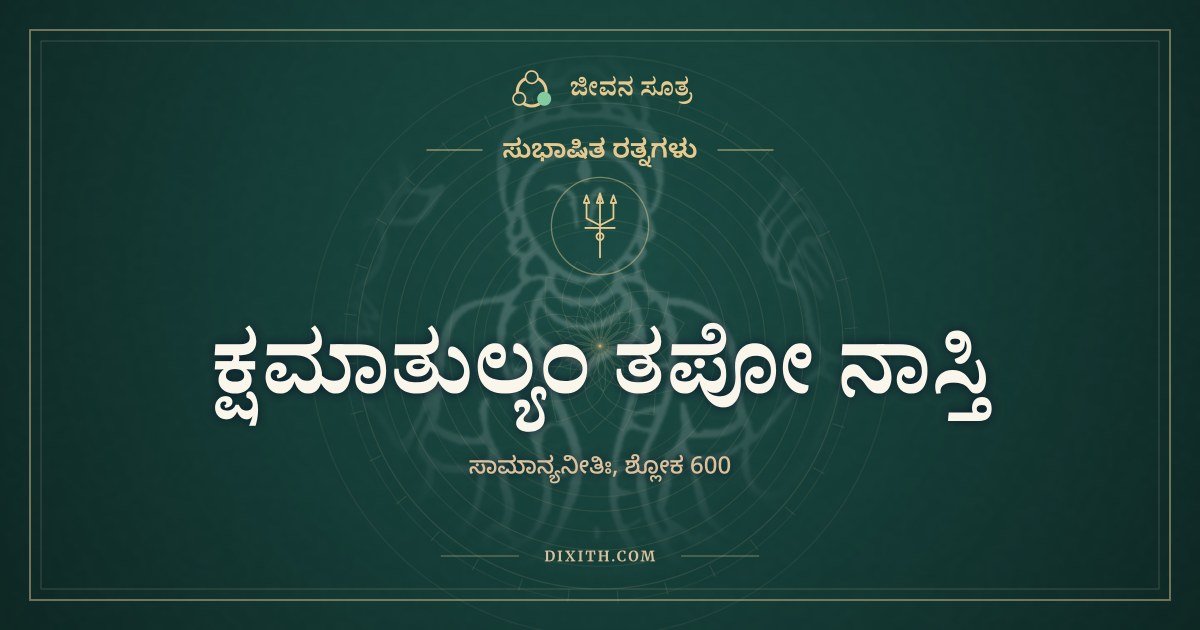
ಕ್ಷಮಾತುಲ್ಯಂ ತಪೋ ನಾಸ್ತಿ ನ ಸಂತೋಷಾತ್ಪರಂ ಸುಖಮ್
ನ ತೃಷ್ಣಾಯಾಃ ಪರೋ ವ್ಯಾಧಿರ್ನ ಚ ಧರ್ಮೋ ದಯಾಪರಃ
ಸುಭಾಷಿತ (ದೇವನಾಗರಿ)
क्षमातुल्यं तपो नास्ति न सन्तोषात्परं सुखम्
न तृष्णायाः परो व्याधिर्न च धर्मो दयापरः
ಸುಭಾಷಿತ (IAST)
kṣamātulyaṃ tapo nāsti na santoṣātparaṃ sukham
na tṛṣṇāyāḥ paro vyādhirna ca dharmo dayāparaḥ
ಪದಶಃ ಅರ್ಥ
- ಕ್ಷಮಾತುಲ್ಯಂ (क्षमातुल्यं, kṣamātulyaṃ) = ಕ್ಷಮೆಗೆ ಸಮಾನವಾದ (equal to forgiveness)
- ತಪೋ (तपो, tapo) = ತಪಸ್ಸು (ತಪಃ) (penance (tapah))
- ನಾಸ್ತಿ (नास्ति, nāsti) = ಇಲ್ಲ (ನ + ಅಸ್ತಿ) (there is none (na + asti))
- ನ (न, na) = ಇಲ್ಲ (not)
- ಸಂತೋಷಾತ್ಪರಂ (सन्तोषात्परं, santoṣātparaṃ) = ಸಂತೋಷಕ್ಕಿಂತ ಮಿಗಿಲಾದ (ಸಂತೋಷಾತ್ + ಪರಂ) (greater than contentment (santoshat + param))
- ಸುಖಮ್ (सुखम्, sukham) = ಸುಖ (happiness)
- ನ (न, na) = ಇಲ್ಲ (not)
- ತೃಷ್ಣಾಯಾಃ (तृष्णायाः, tṛṣṇāyāḥ) = ತೃಷ್ಣೆಗಿಂತ (than craving)
- ಪರೋ (परो, paro) = ದೊಡ್ಡದಾದ (ಪರಃ) (greater (parah))
- ವ್ಯಾಧಿರ್ನ (व्याधिर्न, vyādhirna) = ರೋಗ ಇಲ್ಲ (ವ್ಯಾಧಿಃ + ನ) (no disease (vyadhih + na))
- ಚ (च, ca) = ಮತ್ತು (and)
- ಧರ್ಮೋ (धर्मो, dharmo) = ಧರ್ಮ (ಧರ್ಮಃ) (duty, virtue (dharmah))
- ದಯಾಪರಃ (दयापरः, dayāparaḥ) = ದಯೆಗಿಂತ ಮಿಗಿಲಾದುದು (greater than compassion)
ಸಂಪೂರ್ಣ ಅರ್ಥ (ಕನ್ನಡ)
ಕ್ಷಮೆಗೆ ಸಮನಾದ ತಪಸ್ಸಿಲ್ಲ. ಸಂತೋಷಕ್ಕಿಂತ ಮಿಗಿಲಾದ ಸುಖವಿಲ್ಲ. ತೃಷ್ಣೆಗಿಂತ ದೊಡ್ಡ ರೋಗವಿಲ್ಲ. ದಯೆಗಿಂತ ಮಿಗಿಲಾದ ಧರ್ಮವೂ ಇಲ್ಲ.
ಸಂಪೂರ್ಣ ಅರ್ಥ (ಇಂಗ್ಲಿಷ್)
There is no penance equal to forgiveness, no happiness greater than contentment, no disease greater than craving, and no virtue greater than compassion.
ಈ ಸುಭಾಷಿತದ ಬಗ್ಗೆAbout this subhashita
ತೃಷ್ಣೆ ಎಂದರೆ ಬಾಯಾರಿಕೆ. ತಣಿಯದ ಆಸೆಗೂ ಅದೇ ಹೆಸರು. ಬಾಯಾರಿಕೆಯೇ ರೋಗವಾದಾಗ ತಣಿಯುವ ಕ್ಷಣ ಬರುವುದೇ ಇಲ್ಲ ಎಂಬುದು ಶ್ಲೋಕದ ಧ್ವನಿ.
Trishna means thirst, and the same word names an appetite that never settles. The suggestion is that when thirst itself is the sickness, the moment of being quenched never comes.
ತಪಸ್ಸು ಎಂದರೆ ಸಾಮಾನ್ಯವಾಗಿ ಕಠಿಣ ಸಾಧನೆ. ಅದಕ್ಕೆ ಸಮ ಕ್ಷಮೆ ಎಂದು ಹೇಳುವುದು ಶ್ಲೋಕದ ಅಚ್ಚರಿ. ಕೋಪವನ್ನು ತಡೆದು ಕ್ಷಮಿಸುವುದು ಕಾಡಿಗೆ ಹೋಗುವುದಕ್ಕಿಂತ ಸುಲಭವಲ್ಲ ಎಂಬ ಧ್ವನಿ ಇದೆ.
Tapas usually means hard discipline. To say forgiveness equals it is the verse’s surprise. The hint is that holding back anger and forgiving is no easier than going to the forest.
ಆಧಾರ: ಸುಭಾಷಿತರತ್ನಭಾಂಡಾಗಾರ, ರಾಜ ಪ್ರಕರಣ (ನಿರ್ಣಯಸಾಗರ ಮುದ್ರಣಾಲಯ, ಮುಂಬಯಿ), ಪುಟ 166. ಶ್ಲೋಕದ ಪಾಠವನ್ನು ಮುದ್ರಿತ ಪ್ರತಿಯ ಸ್ಕ್ಯಾನ್ನೊಂದಿಗೆ ಅಕ್ಷರಶಃ ಹೋಲಿಸಿದ್ದೇವೆ. ಅರ್ಥ ಮತ್ತು ವಿವರಣೆ ನಮ್ಮದು.
Source: Subhashitaratnabhandagara, Raja Prakarana (Nirnaya Sagar Press, Bombay), page 166. The text of the verse was checked letter by letter against a scan of the printed book. The meaning and notes are ours.
ಇಂದಿನ ಬದುಕಿಗೆFor life today
ಕ್ಲಿನಿಕ್ಕಿನಲ್ಲಿ ಕೋಪದಿಂದ ಬಂದ ರೋಗಿಯ ಸಂಬಂಧಿಕರ ಮಾತನ್ನು ಮರುಮಾತಿಲ್ಲದೆ ಕೇಳಿಸಿಕೊಳ್ಳುವುದು ಕ್ಷಮೆಯ ಒಂದು ಸಣ್ಣ ರೂಪ. ಅದು ಕೆಲವೊಮ್ಮೆ ಇಡೀ ಪರಿಸ್ಥಿತಿಯನ್ನು ತಣಿಸುತ್ತದೆ.
In a clinic, listening without a retort to the angry relatives of a patient is a small form of forgiveness. It sometimes cools the whole situation.
ಸಂತೋಷ ಎಂದರೆ ಪ್ರಯತ್ನ ಬಿಡುವುದಲ್ಲ. ಇರುವುದರಲ್ಲಿ ತೃಪ್ತಿ ಇಲ್ಲದಿದ್ದರೆ ಎಷ್ಟು ಸಿಕ್ಕರೂ ಸಾಲದು ಎಂಬ ಎಚ್ಚರಿಕೆಯಾಗಿ ಈ ಶ್ಲೋಕವನ್ನು ಓದಬಹುದು.
Contentment does not mean giving up effort. The verse can be read as a warning that without some satisfaction in what we have, no amount will ever be enough.
ಪಾಠದಲ್ಲಿ ತಪ್ಪೋ ಬೇರೆ ಪಾಠಾಂತರವೋ ಕಂಡಿತೇ? ನಮಗೆ ತಿಳಿಸಿ.
Noticed a mistake or a different reading? Tell us.
ಪ್ರತಿಕ್ರಿಯೆ ಬರೆಯಿರಿ