
ದೊಡ್ಡ ಕಚೇರಿಯ ಅಧಿಕಾರಿಯ ಸುತ್ತ ಚಾಡಿ ಹೇಳುವವರು ಸದಾ ಇರುತ್ತಾರೆ. ಇದು ಹೊಸ ವಿಷಯವಲ್ಲ.
ಈ ಅನುಷ್ಟುಪ್ ಶ್ಲೋಕ ಅದನ್ನು ಒಂದು ತಮಾಷೆಯ ಶ್ಲೇಷದಿಂದ ಹೇಳುತ್ತದೆ. ಅದಲ್ಲದೆ ಹಾವುಗಳು ಕಾಯುವ ನಿಧಿಯ ಹಳೆಯ ಕಲ್ಪನೆಯನ್ನೂ ಬಳಸಿಕೊಳ್ಳುತ್ತದೆ.
ಸುಭಾಷಿತ (ಕನ್ನಡ)
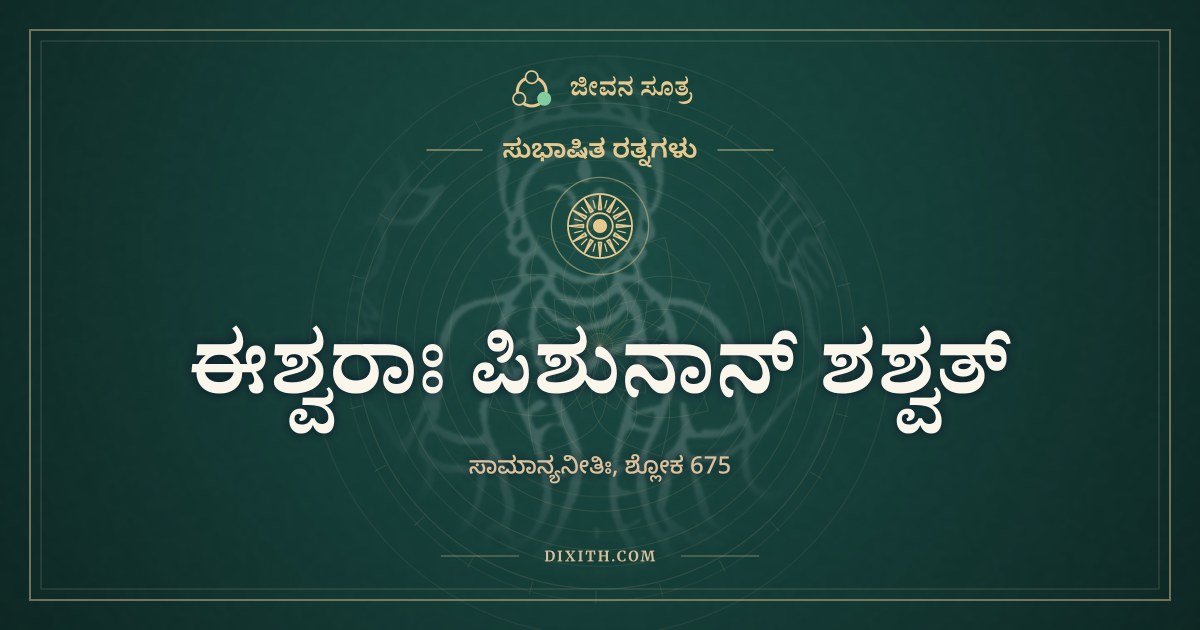
ಈಶ್ವರಾಃ ಪಿಶುನಾಞ್ಶಶ್ವದ್ಬಿಭ್ರತೀತಿ ಕಿಮದ್ಭುತಮ್
ಪ್ರಾಯೋ ನಿಧಯ ಏವಾಹೀಂದ್ವಿಜಿಹ್ವಾಂದಧತೇತರಾಮ್
ಸುಭಾಷಿತ (ದೇವನಾಗರಿ)
ईश्वराः पिशुनाञ्शश्वद्बिभ्रतीति किमद्भुतम्
प्रायो निधय एवाहीन्द्विजिह्वान्दधतेतराम्
ಸುಭಾಷಿತ (IAST)
īśvarāḥ piśunāñśaśvadbibhratīti kimadbhutam
prāyo nidhaya evāhīndvijihvāndadhatetarām
ಪದಶಃ ಅರ್ಥ
- ಈಶ್ವರಾಃ (ईश्वराः, īśvarāḥ) = ಸಿರಿವಂತರು, ಪ್ರಭುಗಳು (the rich and powerful)
- ಪಿಶುನಾಞ್ಶಶ್ವದ್ಬಿಭ್ರತೀತಿ (पिशुनाञ्शश्वद्बिभ्रतीति, piśunāñśaśvadbibhratīti) = ಚಾಡಿಕೋರರನ್ನು ಯಾವಾಗಲೂ ಹೊರುತ್ತಾರೆ ಎಂದು (ಪಿಶುನಾನ್ + ಶಶ್ವತ್ + ಬಿಭ್ರತಿ + ಇತಿ) (that they always bear the slanderers (pishunan + shashvat + bibhrati + iti))
- ಕಿಮದ್ಭುತಮ್ (किमद्भुतम्, kimadbhutam) = ಏನು ಅಚ್ಚರಿ (ಕಿಂ + ಅದ್ಭುತಂ) (what wonder is there (kim + adbhutam))
- ಪ್ರಾಯೋ (प्रायो, prāyo) = ಸಾಮಾನ್ಯವಾಗಿ (usually)
- ನಿಧಯ (निधय, nidhaya) = ನಿಧಿಗಳು (treasures)
- ಏವಾಹೀಂದ್ವಿಜಿಹ್ವಾಂದಧತೇತರಾಮ್ (एवाहीन्द्विजिह्वान्दधतेतराम्, evāhīndvijihvāndadhatetarām) = ಸ್ವತಃ ಹಾವುಗಳನ್ನು, ಎರಡು ನಾಲಗೆಯವುಗಳನ್ನು, ಬಹಳವಾಗಿ ಧರಿಸುತ್ತವೆ (ಏವ + ಅಹೀನ್ + ದ್ವಿಜಿಹ್ವಾನ್ + ದಧತೇ + ತರಾಂ) (themselves carry serpents, the two-tongued, in abundance (eva + ahin + dvijihvan + dadhate + taram))
ಸಂಪೂರ್ಣ ಅರ್ಥ (ಕನ್ನಡ)
ಸಿರಿವಂತರು ಚಾಡಿಕೋರರನ್ನು ಸದಾ ತಮ್ಮ ಸುತ್ತ ಇಟ್ಟುಕೊಳ್ಳುತ್ತಾರೆ ಎಂಬುದು ಅಚ್ಚರಿಯೇನು. ಸಾಮಾನ್ಯವಾಗಿ ನಿಧಿಗಳೇ ಎರಡು ನಾಲಗೆಯ ಹಾವುಗಳನ್ನು ಹೇರಳವಾಗಿ ಹೊತ್ತಿರುತ್ತವೆ.
ಸಂಪೂರ್ಣ ಅರ್ಥ (ಇಂಗ್ಲಿಷ್)
Is it any wonder that the rich and powerful always keep slanderers about them? Treasures themselves, as a rule, carry plenty of two-tongued serpents.
ಈ ಸುಭಾಷಿತದ ಬಗ್ಗೆAbout this subhashita
ದ್ವಿಜಿಹ್ವ ಎಂದರೆ ಎರಡು ನಾಲಗೆಯವನು. ಹಾವಿಗೆ ಸೀಳಿದ ನಾಲಗೆ ಇರುವುದರಿಂದ ಹಾವು ದ್ವಿಜಿಹ್ವ. ಒಬ್ಬರ ಮುಂದೆ ಒಂದು ಮಾತು, ಹಿಂದೆ ಇನ್ನೊಂದು ಆಡುವ ಚಾಡಿಕೋರನೂ ದ್ವಿಜಿಹ್ವ. ಈ ಒಂದೇ ಪದದಲ್ಲಿರುವ ಎರಡು ಅರ್ಥವೇ ಶ್ಲೇಷ.
Dvijihva means two-tongued. A snake has a forked tongue, so a snake is dvijihva. A backbiter who says one thing to your face and another behind your back is dvijihva too. The two senses in this single word are the pun.
ಹಾವು ನಿಧಿಯನ್ನು ಕಾಯುತ್ತದೆ ಎಂಬುದು ಜನಪದದಲ್ಲಿ ಹಳೆಯ ನಂಬಿಕೆ. ಅದರಿಂದ ನಿಧಿ ಹಾವನ್ನು ಹೊರುತ್ತದೆ ಎಂಬ ಮಾತು ಬಂದಿದೆ. ಹೀಗೆ ಸಿರಿವಂತರ ಬಳಿ ಚಾಡಿಕೋರರು ಸೇರುವುದು ಸಹಜ ಎಂದು ಕವಿ ವ್ಯಂಗ್ಯವಾಗಿ ಹೇಳುತ್ತಾನೆ. ಕಿಮದ್ಭುತಂ ಎಂಬ ಪ್ರಶ್ನೆಯೇ ಆ ವ್ಯಂಗ್ಯದ ಧ್ವನಿ.
That a snake guards a treasure is an old folk belief. From it comes the claim that a treasure bears snakes. So the poet says, with irony, that informers gathering near the wealthy is only natural. The very question kimadbhutam, what wonder, carries the tone of that irony.
ಆಧಾರ: ಸುಭಾಷಿತರತ್ನಭಾಂಡಾಗಾರ, ರಾಜ ಪ್ರಕರಣ (ನಿರ್ಣಯಸಾಗರ ಮುದ್ರಣಾಲಯ, ಮುಂಬಯಿ), ಪುಟ 168. ಶ್ಲೋಕದ ಪಾಠವನ್ನು ಮುದ್ರಿತ ಪ್ರತಿಯ ಸ್ಕ್ಯಾನ್ನೊಂದಿಗೆ ಅಕ್ಷರಶಃ ಹೋಲಿಸಿದ್ದೇವೆ. ಅರ್ಥ ಮತ್ತು ವಿವರಣೆ ನಮ್ಮದು.
Source: Subhashitaratnabhandagara, Raja Prakarana (Nirnaya Sagar Press, Bombay), page 168. The text of the verse was checked letter by letter against a scan of the printed book. The meaning and notes are ours.
ಇಂದಿನ ಬದುಕಿಗೆFor life today
ನಮ್ಮ ಮುಂದೆ ಮಧುರವಾಗಿ ಮಾತನಾಡಿ ಇತರರ ಬಗ್ಗೆ ಚಾಡಿ ಹೇಳುವವರು ನಮ್ಮ ಬಗ್ಗೆಯೂ ಬೇರೆ ಕಡೆ ಹಾಗೆಯೇ ಮಾತನಾಡಬಹುದು.
Those who speak sweetly to us and tell tales about others may speak of us in the same way elsewhere.
ತಂಡದ ಮುಖ್ಯಸ್ಥರಾದರೂ ಸರಿ, ಮನೆಯ ಹಿರಿಯರಾದರೂ ಸರಿ, ಕೇಳಿದ ಮಾತನ್ನು ತಾವೇ ಪರಿಶೀಲಿಸಿ ನೋಡುವುದು ಒಳ್ಳೆಯದು.
Whether one heads a team or is the elder of a house, it is good to check for oneself what one has been told.
ಪಾಠದಲ್ಲಿ ತಪ್ಪೋ ಬೇರೆ ಪಾಠಾಂತರವೋ ಕಂಡಿತೇ? ನಮಗೆ ತಿಳಿಸಿ.
Noticed a mistake or a different reading? Tell us.
ಪ್ರತಿಕ್ರಿಯೆ ಬರೆಯಿರಿ