
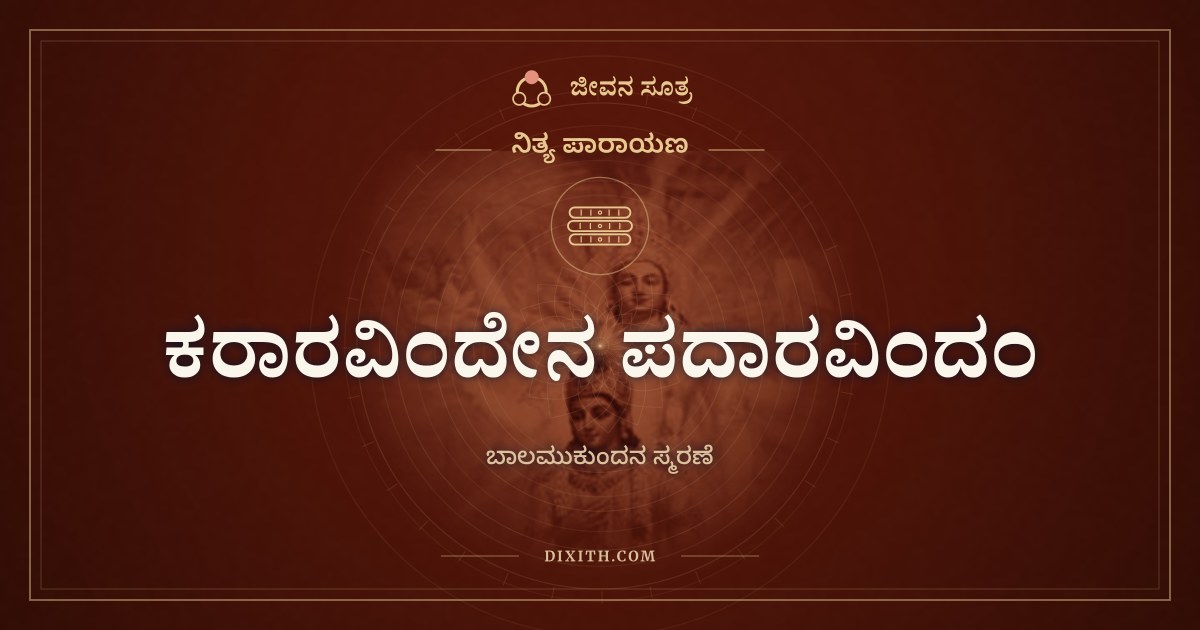
ಆಲದ ಎಲೆಯ ಮೇಲೆ ಮಲಗಿ ತನ್ನ ಕಾಲಿನ ಹೆಬ್ಬೆರಳನ್ನು ಬಾಯಿಗಿಟ್ಟುಕೊಂಡಿರುವ ಪುಟ್ಟ ಕೃಷ್ಣನನ್ನು ನೆನೆಯುವ ಶ್ಲೋಕ ಇದು. ಈ ಚಿತ್ರ ನಮ್ಮ ಮನೆಗಳ ದೇವರ ಪಟಗಳಲ್ಲಿ ಬಹಳ ಪರಿಚಿತ.
ಪ್ರಳಯದ ಕಾಲದಲ್ಲಿ ಜಲರಾಶಿಯ ನಡುವೆ ಮಾರ್ಕಂಡೇಯ ಮುನಿ ಕಂಡ ಆ ಮಗು ಇಡೀ ಜಗತ್ತನ್ನು ತನ್ನೊಳಗೆ ಇಟ್ಟುಕೊಂಡಿತ್ತು ಎಂಬ ಕಥೆ ಈ ಚಿತ್ರದ ಹಿಂದಿದೆ.
ಶ್ಲೋಕ (ಕನ್ನಡ)
ಕರಾರವಿಂದೇನ ಪದಾರವಿಂದಂ
ಮುಖಾರವಿಂದೇ ವಿನಿವೇಶಯಂತಮ್ ।
ವಟಸ್ಯ ಪತ್ರಸ್ಯ ಪುಟೇ ಶಯಾನಂ
ಬಾಲಂ ಮುಕುಂದಂ ಮನಸಾ ಸ್ಮರಾಮಿ ॥
ಶ್ಲೋಕ (ದೇವನಾಗರಿ)
करारविन्देन पदारविन्दं
मुखारविन्दे विनिवेशयन्तम् ।
वटस्य पत्रस्य पुटे शयानं
बालं मुकुन्दं मनसा स्मरामि ॥
ಶ್ಲೋಕ (IAST)
karāravindena padāravindaṃ
mukhāravinde viniveśayantam |
vaṭasya patrasya puṭe śayānaṃ
bālaṃ mukundaṃ manasā smarāmi ||
ಪದಶಃ ಅರ್ಥ
- ಕರಾರವಿಂದೇನ (करारविन्देन, karāravindena) = ಕಮಲದಂತಹ ಕೈಯಿಂದ (with his lotus hand)
- ಪದಾರವಿಂದಮ್ (पदारविन्दम्, padāravindam) = ಕಮಲದಂತಹ ಪಾದವನ್ನು (his lotus foot)
- ಮುಖಾರವಿಂದೇ (मुखारविन्दे, mukhāravinde) = ಕಮಲದಂತಹ ಬಾಯಿಗೆ (into his lotus mouth)
- ವಿನಿವೇಶಯಂತಮ್ (विनिवेशयन्तम्, viniveśayantam) = ಇಡುತ್ತಿರುವವನನ್ನು (placing)
- ವಟಸ್ಯ ಪತ್ರಸ್ಯ ಪುಟೇ (वटस्य पत्रस्य पुटे, vaṭasya patrasya puṭe) = ಆಲದ ಎಲೆಯ ಮಡಿಲಲ್ಲಿ (in the fold of a banyan leaf)
- ಶಯಾನಮ್ (शयानम्, śayānam) = ಮಲಗಿರುವವನನ್ನು (lying)
- ಬಾಲಂ ಮುಕುಂದಮ್ (बालं मुकुन्दम्, bālaṃ mukundam) = ಬಾಲಕ ಮುಕುಂದನನ್ನು (the child Mukunda)
- ಮನಸಾ ಸ್ಮರಾಮಿ (मनसा स्मरामि, manasā smarāmi) = ಮನಸ್ಸಿನಲ್ಲಿ ಸ್ಮರಿಸುತ್ತೇನೆ (I remember in my mind)
ಸಂಪೂರ್ಣ ಅರ್ಥ (ಕನ್ನಡ)
ಕಮಲದಂತಹ ಕೈಯಿಂದ ಕಮಲದಂತಹ ಪಾದವನ್ನು ಹಿಡಿದು ಕಮಲದಂತಹ ಬಾಯಿಗೆ ಇಟ್ಟುಕೊಳ್ಳುತ್ತ, ಆಲದ ಎಲೆಯ ಮಡಿಲಲ್ಲಿ ಮಲಗಿರುವ ಬಾಲಮುಕುಂದನನ್ನು ನಾನು ಮನಸ್ಸಿನಲ್ಲಿ ಸ್ಮರಿಸುತ್ತೇನೆ.
ಸಂಪೂರ್ಣ ಅರ್ಥ (ಇಂಗ್ಲಿಷ್)
I remember in my mind the child Mukunda, lying in the fold of a banyan leaf, lifting his lotus foot with his lotus hand and placing it in his lotus mouth.
ಈ ಶ್ಲೋಕದ ಬಗ್ಗೆAbout this verse
ಇದು ಬಾಲಮುಕುಂದಾಷ್ಟಕದ ಮೊದಲ ಶ್ಲೋಕ. ಆ ಅಷ್ಟಕವನ್ನು ಲೀಲಾಶುಕ ಅಥವಾ ಬಿಲ್ವಮಂಗಲರ ಕೃತಿ ಎಂದು ಪರಂಪರೆ ಹೇಳುತ್ತದೆ. ಆದರೆ ಈ ಒಂದು ಶ್ಲೋಕ ಇಡೀ ಅಷ್ಟಕಕ್ಕಿಂತ ಹೆಚ್ಚು ಜನಪ್ರಿಯವಾಗಿ, ಪ್ರತ್ಯೇಕವಾಗಿಯೇ ಬಳಕೆಯಲ್ಲಿದೆ.
This is the first verse of the Bala Mukundashtakam, which tradition attributes to Lilashuka, also called Bilvamangala. This single verse, however, is far better known on its own than the full hymn.
ಅರವಿಂದ ಎಂಬ ಪದ ಮೂರು ಬಾರಿ ಬರುತ್ತದೆ, ಕೈ, ಕಾಲು, ಮುಖ ಎಲ್ಲವೂ ಕಮಲ. ಛಂದಸ್ಸು ಉಪಜಾತಿ. ಮಾರ್ಕಂಡೇಯ ಮುನಿಗೆ ಪ್ರಳಯದ ನೀರಿನ ನಡುವೆ ಆಲದೆಲೆಯ ಮೇಲೆ ಮಗು ಕಾಣಿಸಿದ ಕಥೆ ಭಾಗವತದ ಹನ್ನೆರಡನೆಯ ಸ್ಕಂದದಲ್ಲಿ ಬರುತ್ತದೆ.
The word aravinda, lotus, comes three times: hand, foot and face are all lotuses. The metre is upajati. The story of the sage Markandeya seeing a child on a banyan leaf amid the waters of dissolution is told in the twelfth book of the Bhagavatam.
ಬಾಲಮುಕುಂದಾಷ್ಟಕದ ಎಂಟೂ ಶ್ಲೋಕಗಳಿಗೆ ಅರ್ಥಸಹಿತ ಬೇರೆ ಪುಟ ಈ ತಾಣದಲ್ಲಿದೆ.
All eight verses of the Bala Mukundashtakam, with meanings, have their own page on this site.
ಆಧಾರ: ಹಲವು ಮೂಲಗಳು. ಆವೃತ್ತಿಗಳು ಭಿನ್ನವಾಗಿರುವಲ್ಲಿ ಅದನ್ನು ಇಲ್ಲಿ ಸೂಚಿಸಿದ್ದೇವೆ.
Sources: several. Where versions differ, we have noted it here.
ಇಂದಿನ ಬದುಕಿಗೆFor life today
ಕಾಲಿನ ಹೆಬ್ಬೆರಳನ್ನು ಬಾಯಿಗಿಡುವುದು ಎಲ್ಲ ಪುಟ್ಟ ಮಕ್ಕಳೂ ಮಾಡುವ ಕೆಲಸ. ಜಗತ್ತನ್ನೇ ಒಳಗಿಟ್ಟುಕೊಂಡ ದೇವರನ್ನು ಅಂಥ ಸಾಮಾನ್ಯ ಮಗುವಿನ ಚಿತ್ರದಲ್ಲಿ ಕಾಣುವುದು, ನಮ್ಮ ಮನೆಯ ಪುಟ್ಟ ಮಕ್ಕಳ ಆಟದಲ್ಲೂ ದೈವಿಕತೆಯನ್ನು ಕಾಣಲು ಕಲಿಸುತ್ತದೆ.
Putting a big toe in the mouth is something every baby does. Seeing the God who holds the whole world within him in so ordinary a picture of a child teaches us to see something divine in the play of the little ones in our own homes.
ಪಾಠದಲ್ಲಿ ತಪ್ಪೋ ಬೇರೆ ಪಾಠಾಂತರವೋ ಕಂಡಿತೇ? ನಮಗೆ ತಿಳಿಸಿ.
Noticed a mistake or a different reading? Tell us.
ಪ್ರತಿಕ್ರಿಯೆ ಬರೆಯಿರಿ