
ಆಸ್ಪತ್ರೆಯ ವಿಭಾಗದಲ್ಲಿ ಒಬ್ಬ ಸಹೋದ್ಯೋಗಿ ಒಂದು ದಿನ ಕೆಲಸ ತಪ್ಪಿದರೆ ನಾವು ಸುಮ್ಮನಾಗುತ್ತೇವೆ. ಅದೇ ತಪ್ಪು ವಾರವಾರ ಬರತೊಡಗಿದರೆ ಮನಸ್ಸು ಬೇರೆಯಾಗಿ ಯೋಚಿಸುತ್ತದೆ.
ಈ ಶ್ಲೋಕ ಕ್ಷಮೆಗೆ ಇರುವ ಇಂಥ ಮಿತಿಯನ್ನು ಒಂದು ಪ್ರಶ್ನೆಯಲ್ಲಿ ಇಡುತ್ತದೆ. ಇದು ಅನುಷ್ಟುಪ್ ಛಂದಸ್ಸಿನ ಶ್ಲೋಕ.
ಸುಭಾಷಿತ (ಕನ್ನಡ)
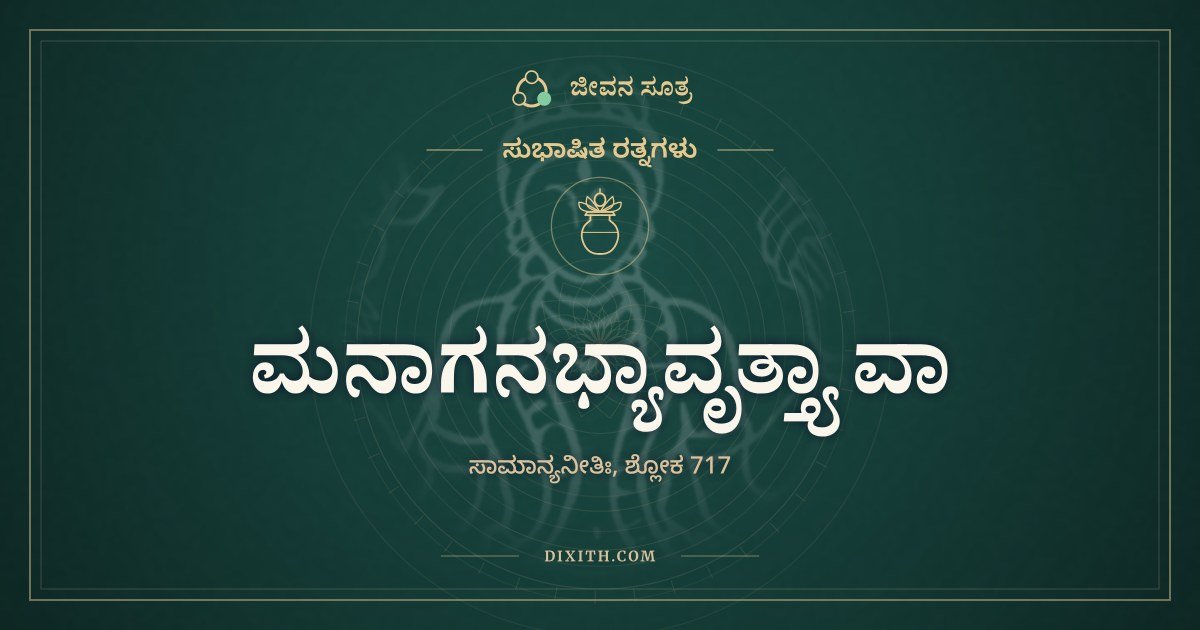
ಮನಾಗನಭ್ಯಾವೃತ್ತ್ಯಾ ವಾ ಕಾಮಂ ಕ್ಷಾಮ್ಯತು ಯಃ ಕ್ಷಮೀ
ಕ್ರಿಯಾಸಮಭಿಹಾರೇಣ ವಿರಾಧ್ಯಂತಂ ಕ್ಷಮೇತ ಕಃ
ಸುಭಾಷಿತ (ದೇವನಾಗರಿ)
मनागनभ्यावृत्त्या वा कामं क्षाम्यतु यः क्षमी
क्रियासमभिहारेण विराध्यन्तं क्षमेत कः
ಸುಭಾಷಿತ (IAST)
manāganabhyāvṛttyā vā kāmaṃ kṣāmyatu yaḥ kṣamī
kriyāsamabhihāreṇa virādhyantaṃ kṣameta kaḥ
ಪದಶಃ ಅರ್ಥ
- ಮನಾಗನಭ್ಯಾವೃತ್ತ್ಯಾ (मनागनभ्यावृत्त्या, manāganabhyāvṛttyā) = ಸ್ವಲ್ಪವೇ, ಪುನರಾವರ್ತನೆ ಇಲ್ಲದೆ (ಮನಾಕ್ + ಅನಭ್ಯಾವೃತ್ತ್ಯಾ) (slightly, without repetition)
- ವಾ (वा, vā) = ಅಥವಾ (or)
- ಕಾಮಂ (कामं, kāmaṃ) = ಬೇಕಾದರೆ, ಇಚ್ಛೆಯಂತೆ (as he wishes)
- ಕ್ಷಾಮ್ಯತು (क्षाम्यतु, kṣāmyatu) = ಕ್ಷಮಿಸಲಿ (let him forgive)
- ಯಃ (यः, yaḥ) = ಯಾರು (who)
- ಕ್ಷಮೀ (क्षमी, kṣamī) = ಕ್ಷಮಾಶೀಲನು (the forbearing one)
- ಕ್ರಿಯಾಸಮಭಿಹಾರೇಣ (क्रियासमभिहारेण, kriyāsamabhihāreṇa) = ಕ್ರಿಯೆಯ ಪುನರಾವರ್ತನೆಯಿಂದ (by repetition of the act)
- ವಿರಾಧ್ಯಂತಂ (विराध्यन्तं, virādhyantaṃ) = ತಪ್ಪುತ್ತಿರುವವನನ್ನು, ಅಪರಾಧ ಮಾಡುತ್ತಿರುವವನನ್ನು (the one who goes on offending)
- ಕ್ಷಮೇತ (क्षमेत, kṣameta) = ಕ್ಷಮಿಸಾನು (would forgive)
- ಕಃ (कः, kaḥ) = ಯಾರು (who)
ಸಂಪೂರ್ಣ ಅರ್ಥ (ಕನ್ನಡ)
ಕ್ಷಮಿಸುವ ಗುಣವುಳ್ಳವನು ಸ್ವಲ್ಪವೇ ಆದ ಅಥವಾ ಪುನರಾವರ್ತನೆ ಇಲ್ಲದ ತಪ್ಪನ್ನು ಬೇಕಾದರೆ ಕ್ಷಮಿಸಲಿ. ಆದರೆ ಅದೇ ಕ್ರಿಯೆಯನ್ನು ಮತ್ತೆ ಮತ್ತೆ ಮಾಡಿ ತಪ್ಪುತ್ತಿರುವವನನ್ನು ಯಾರು ತಾನೇ ಕ್ಷಮಿಸಾನು.
ಸಂಪೂರ್ಣ ಅರ್ಥ (ಇಂಗ್ಲಿಷ್)
Let the forbearing man forgive, if he likes, a slight offence or one that is not repeated. But who would forgive one who goes on offending by repeating the same act again and again.
ಈ ಸುಭಾಷಿತದ ಬಗ್ಗೆAbout this subhashita
ಕೊನೆಯ ಕಃ ಕ್ಷಮೇತ ಎಂಬುದು ಉತ್ತರ ಬೇಡದ ಪ್ರಶ್ನೆ. ಯಾರೂ ಕ್ಷಮಿಸುವುದಿಲ್ಲ ಎಂಬ ಒಲವು ಅದರಲ್ಲಿದೆ ಎಂದು ನಾವು ಓದುತ್ತೇವೆ. ಇಂಥ ಪ್ರಶ್ನೆ ಸಂಸ್ಕೃತ ನೀತಿಯಲ್ಲಿ ಹೆಚ್ಚು ಕಾಣುತ್ತದೆ.
The closing words kah kshameta are a question that needs no answer. We read them as meaning that hardly anyone would forgive. Such questions are common in Sanskrit moral verse.
ಕ್ರಿಯಾಸಮಭಿಹಾರ ಎಂದರೆ ಕ್ರಿಯೆಯ ಪುನರಾವರ್ತನೆ. ವ್ಯಾಕರಣದಲ್ಲೂ ಈ ಪದ ಕ್ರಿಯೆ ಮತ್ತೆ ಮತ್ತೆ ನಡೆಯುವುದನ್ನು ಹೇಳುತ್ತದೆ. ಒಮ್ಮೆಯ ತಪ್ಪು ಮತ್ತು ಅಭ್ಯಾಸದ ತಪ್ಪು ಬೇರೆ ಎಂಬುದೇ ಇಲ್ಲಿನ ಸೂಕ್ಷ್ಮ.
Kriyasamabhihara means repetition of an action. In grammar too the term names an action done again and again. The point is that a single lapse and a habitual one are different things.
ಆಧಾರ: ಸುಭಾಷಿತರತ್ನಭಾಂಡಾಗಾರ, ರಾಜ ಪ್ರಕರಣ (ನಿರ್ಣಯಸಾಗರ ಮುದ್ರಣಾಲಯ, ಮುಂಬಯಿ), ಪುಟ 169. ಶ್ಲೋಕದ ಪಾಠವನ್ನು ಮುದ್ರಿತ ಪ್ರತಿಯ ಸ್ಕ್ಯಾನ್ನೊಂದಿಗೆ ಅಕ್ಷರಶಃ ಹೋಲಿಸಿದ್ದೇವೆ. ಅರ್ಥ ಮತ್ತು ವಿವರಣೆ ನಮ್ಮದು.
Source: Subhashitaratnabhandagara, Raja Prakarana (Nirnaya Sagar Press, Bombay), page 169. The text of the verse was checked letter by letter against a scan of the printed book. The meaning and notes are ours.
ಇಂದಿನ ಬದುಕಿಗೆFor life today
ಒಮ್ಮೆ ತಪ್ಪಿದವನಿಗೆ ಕಲಿಯುವ ಅವಕಾಶ ಸಿಗಲಿ. ಆದರೆ ಅದೇ ತಪ್ಪು ಮತ್ತೆ ಮತ್ತೆ ಬಂದರೆ ಅದು ತಪ್ಪಲ್ಲ, ಅಭ್ಯಾಸ ಎಂದು ಮನದಟ್ಟು ಮಾಡಿಕೊಳ್ಳಬೇಕು. ರೋಗಿಯ ಸುರಕ್ಷತೆಯ ವಿಷಯದಲ್ಲಿ ಈ ವ್ಯತ್ಯಾಸ ತುಂಬ ಮುಖ್ಯವಾಗುತ್ತದೆ.
Let one who slips once get the chance to learn. But when the same lapse comes again and again it is a habit and not a lapse. In matters of patient safety this difference matters a great deal.
ಕ್ಷಮೆ ಎಂದರೆ ಪರಿಣಾಮ ಕಾಣದಿರುವುದಲ್ಲ. ಕ್ಷಮಿಸಿದ ಮೇಲೂ ಅದೇ ತಪ್ಪು ಮರುಕಳಿಸದಂತೆ ವ್ಯವಸ್ಥೆ ಮಾಡಬಹುದು. ಶ್ಲೋಕ ಇದನ್ನು ಹೇಳುವುದಿಲ್ಲ, ಆದರೆ ಓದುಗ ಅಲ್ಲಿಗೆ ಬರಬಹುದು.
Forgiveness does not mean there are no consequences. Even after forgiving, we can arrange things so that the same lapse does not recur. The verse does not say this, but the reader may get there.
ಪಾಠದಲ್ಲಿ ತಪ್ಪೋ ಬೇರೆ ಪಾಠಾಂತರವೋ ಕಂಡಿತೇ? ನಮಗೆ ತಿಳಿಸಿ.
Noticed a mistake or a different reading? Tell us.
ಪ್ರತಿಕ್ರಿಯೆ ಬರೆಯಿರಿ