
ಮಕ್ಕಳಿಗೆ ಮೊದಲು ಹೇಳಿಕೊಡುವ ಪಾಠಗಳು ಸರಳ. ಹೊಡೆಯಬೇಡ, ಕದಿಯಬೇಡ, ಇನ್ನೊಬ್ಬರ ಮನೆ ಒಡೆಯಬೇಡ.
ಅದೇ ಸರಳ ಪಾಠಗಳನ್ನು ಈ ಶ್ಲೋಕ ಮೂರು ಪಾಪಗಳ ಹೆಸರಿನಲ್ಲಿ ಹೇಳುತ್ತದೆ. ಇದೊಂದು ಅನುಷ್ಟುಪ್ ಛಂದಸ್ಸಿನ ಶ್ಲೋಕ.
ಸುಭಾಷಿತ (ಕನ್ನಡ)
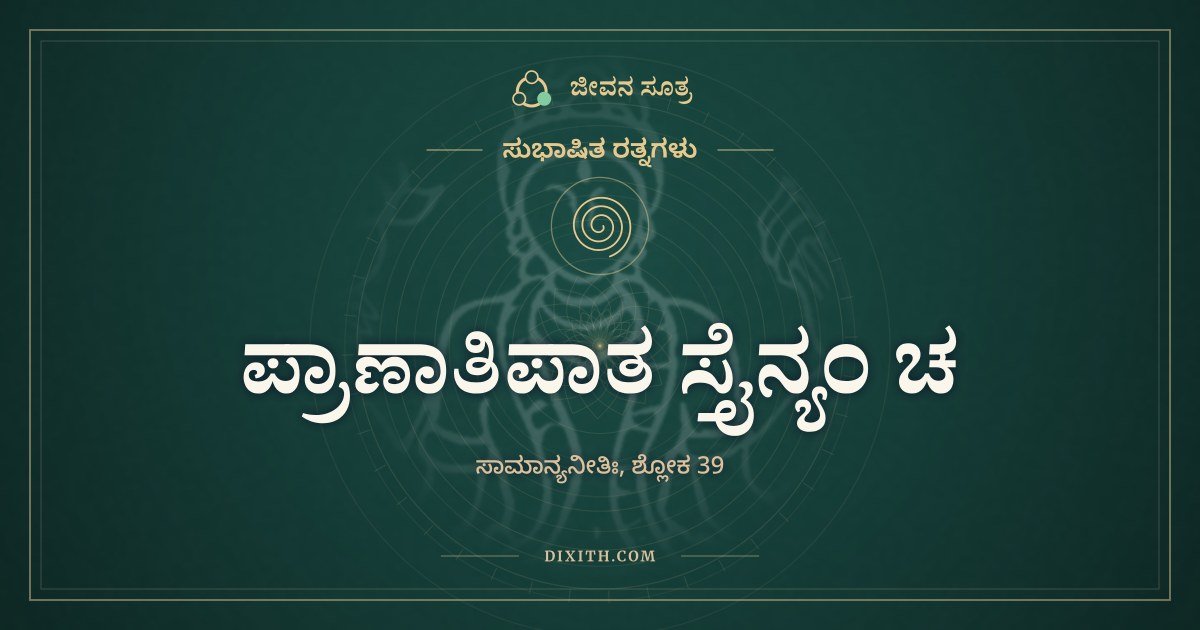
ಪ್ರಾಣಾತಿಪಾತಃ ಸ್ತೈನ್ಯಂ ಚ ಪರದಾರಾಭಿಮರ್ಶನಮ್
ತ್ರೀಣಿ ಪಾಪಾನಿ ವಿದುಷಾ ನಿತ್ಯಶಃ ಪರಿವರ್ಜಯೇತ್
ಸುಭಾಷಿತ (ದೇವನಾಗರಿ)
प्राणातिपातः स्तैन्यं च परदाराभिमर्शनम्
त्रीणि पापानि विदुषा नित्यशः परिवर्जयेत्
ಸುಭಾಷಿತ (IAST)
prāṇātipātaḥ stainyaṃ ca paradārābhimarśanam
trīṇi pāpāni viduṣā nityaśaḥ parivarjayet
ಪದಶಃ ಅರ್ಥ
- ಪ್ರಾಣಾತಿಪಾತಃ (प्राणातिपातः, prāṇātipātaḥ) = ಪ್ರಾಣಿ ಹಿಂಸೆ, ಜೀವ ತೆಗೆಯುವುದು (killing of living beings)
- ಸ್ತೈನ್ಯಂ (स्तैन्यं, stainyaṃ) = ಕಳ್ಳತನ (theft)
- ಚ (च, ca) = ಮತ್ತು (and)
- ಪರದಾರಾಭಿಮರ್ಶನಮ್ (परदाराभिमर्शनम्, paradārābhimarśanam) = ಇನ್ನೊಬ್ಬನ ಪತ್ನಿಯನ್ನು ಸಮೀಪಿಸುವುದು (approaching another man’s wife)
- ತ್ರೀಣಿ (त्रीणि, trīṇi) = ಮೂರು (three)
- ಪಾಪಾನಿ (पापानि, pāpāni) = ಪಾಪಗಳನ್ನು (wrongs)
- ವಿದುಷಾ (विदुषा, viduṣā) = ತಿಳಿದವನಿಂದ, ವಿದ್ವಾಂಸನಿಂದ (by the learned man)
- ನಿತ್ಯಶಃ (नित्यशः, nityaśaḥ) = ಸದಾ (always)
- ಪರಿವರ್ಜಯೇತ್ (परिवर्जयेत्, parivarjayet) = ಸಂಪೂರ್ಣವಾಗಿ ಬಿಡಬೇಕು (should be avoided)
ಸಂಪೂರ್ಣ ಅರ್ಥ (ಕನ್ನಡ)
ಜೀವಹಾನಿ, ಕಳ್ಳತನ ಮತ್ತು ಇನ್ನೊಬ್ಬನ ಪತ್ನಿಯನ್ನು ಸಮೀಪಿಸುವುದು. ಈ ಮೂರು ಪಾಪಗಳನ್ನು ತಿಳಿದವನು ಸದಾ ಸಂಪೂರ್ಣವಾಗಿ ಬಿಡಬೇಕು.
ಸಂಪೂರ್ಣ ಅರ್ಥ (ಇಂಗ್ಲಿಷ್)
Taking life, theft, and approaching another man’s wife. These three wrongs the learned man should always avoid completely.
ಈ ಸುಭಾಷಿತದ ಬಗ್ಗೆAbout this subhashita
ಇಲ್ಲಿ ಮೂರೂ ಕೆಲಸಗಳು ದೇಹದಿಂದ ಮಾಡುವವು. ಶ್ಲೋಕ ಇವುಗಳನ್ನು ಪಾಪ ಎಂದು ಹೇಳಿ ಬಿಡಿ ಎನ್ನುತ್ತದೆ, ಯಾವ ಶಿಕ್ಷೆಯನ್ನೂ ಹೇಳುವುದಿಲ್ಲ. ಇದೊಂದು ನೈತಿಕ ಪಟ್ಟಿ, ವಿವರಣೆಯಲ್ಲ.
All three here are things done with the body. The verse calls them wrongs and says leave them, it names no punishment. It is a moral list, not an explanation.
ಮುದ್ರಿತ ಪುಸ್ತಕದಲ್ಲಿ ಎರಡನೆಯ ಸಾಲಿನಲ್ಲಿ ವಿದುಷಾ ಎಂದಿದೆ. ನಮ್ಮ ಡಿಜಿಟಲ್ ಪಾಠದಲ್ಲಿ ಅಲ್ಲಿ ಕಾಯೇನ ಎಂದಿತ್ತು. ನಾವು ಮುದ್ರಣದ ಪಾಠವನ್ನೇ ಕೊಟ್ಟಿದ್ದೇವೆ. ಈ ಓದು ಸ್ವಲ್ಪ ಅನಿಶ್ಚಿತವಾಗಿರಬಹುದು.
The printed book reads vidusha in the second line, where our digital text had kayena. We give the printed reading. This reading may be slightly uncertain.
ಆಧಾರ: ಸುಭಾಷಿತರತ್ನಭಾಂಡಾಗಾರ, ರಾಜ ಪ್ರಕರಣ (ನಿರ್ಣಯಸಾಗರ ಮುದ್ರಣಾಲಯ, ಮುಂಬಯಿ), ಪುಟ 154. ಶ್ಲೋಕದ ಪಾಠವನ್ನು ಮುದ್ರಿತ ಪ್ರತಿಯ ಸ್ಕ್ಯಾನ್ನೊಂದಿಗೆ ಅಕ್ಷರಶಃ ಹೋಲಿಸಿದ್ದೇವೆ. ಅರ್ಥ ಮತ್ತು ವಿವರಣೆ ನಮ್ಮದು.
Source: Subhashitaratnabhandagara, Raja Prakarana (Nirnaya Sagar Press, Bombay), page 154. The text of the verse was checked letter by letter against a scan of the printed book. The meaning and notes are ours.
ಇಂದಿನ ಬದುಕಿಗೆFor life today
ಪಟ್ಟಿ ಚಿಕ್ಕದು, ಆದರೆ ಅದರ ಪಾಲನೆ ದೊಡ್ಡ ಕೆಲಸ. ಯಾವ ವೃತ್ತಿಯಲ್ಲಿದ್ದರೂ ನಂಬಿಕೆಗೆ ಅರ್ಹರಾಗುವುದು ಈ ಮೂಲ ನಿಯಮಗಳಿಂದಲೇ ಆರಂಭವಾಗುತ್ತದೆ.
The list is short but keeping it is a great task. In any profession, becoming worthy of trust begins with these basic rules.
ಶ್ಲೋಕ ಬಿಡಬೇಕಾದ ಕೆಲಸಗಳ ಪಟ್ಟಿ ಕೊಡುತ್ತದೆ, ಮಾಡಬೇಕಾದ ಒಳ್ಳೆಯದನ್ನು ಹೇಳುವುದಿಲ್ಲ. ಒಳ್ಳೆಯತನ ಎಂದರೆ ಕೆಟ್ಟದನ್ನು ಬಿಡುವುದಕ್ಕಿಂತ ಹೆಚ್ಚು ಎಂದು ನಾವು ನೆನಪಿಟ್ಟುಕೊಳ್ಳಬಹುದು.
The verse gives a list of things to avoid and says nothing of the good to be done. We may remember that goodness is more than merely avoiding the bad.
ಪಾಠದಲ್ಲಿ ತಪ್ಪೋ ಬೇರೆ ಪಾಠಾಂತರವೋ ಕಂಡಿತೇ? ನಮಗೆ ತಿಳಿಸಿ.
Noticed a mistake or a different reading? Tell us.
ಪ್ರತಿಕ್ರಿಯೆ ಬರೆಯಿರಿ