
ಒಂದು ಮದುವೆಮನೆಯಲ್ಲಿ ಯಾರ ಬಳಿ ಎಷ್ಟು ಒಡವೆ ಇದೆ ಎಂಬುದು ಮೊದಲು ಕಣ್ಣಿಗೆ ಬೀಳುತ್ತದೆ. ಆದರೆ ಮಾತಿಗೆ ಕುಳಿತ ಮೇಲೆ ಅದು ನೆನಪಿನಲ್ಲಿ ಉಳಿಯುವುದಿಲ್ಲ.
ಆ ವ್ಯತ್ಯಾಸವನ್ನು ಈ ವಂಶಸ್ಥ ಶ್ಲೋಕ ಎರಡು ಜೋಡಿಗಳಲ್ಲಿ ಇಟ್ಟು ತೋರಿಸುತ್ತದೆ.
ಸುಭಾಷಿತ (ಕನ್ನಡ)
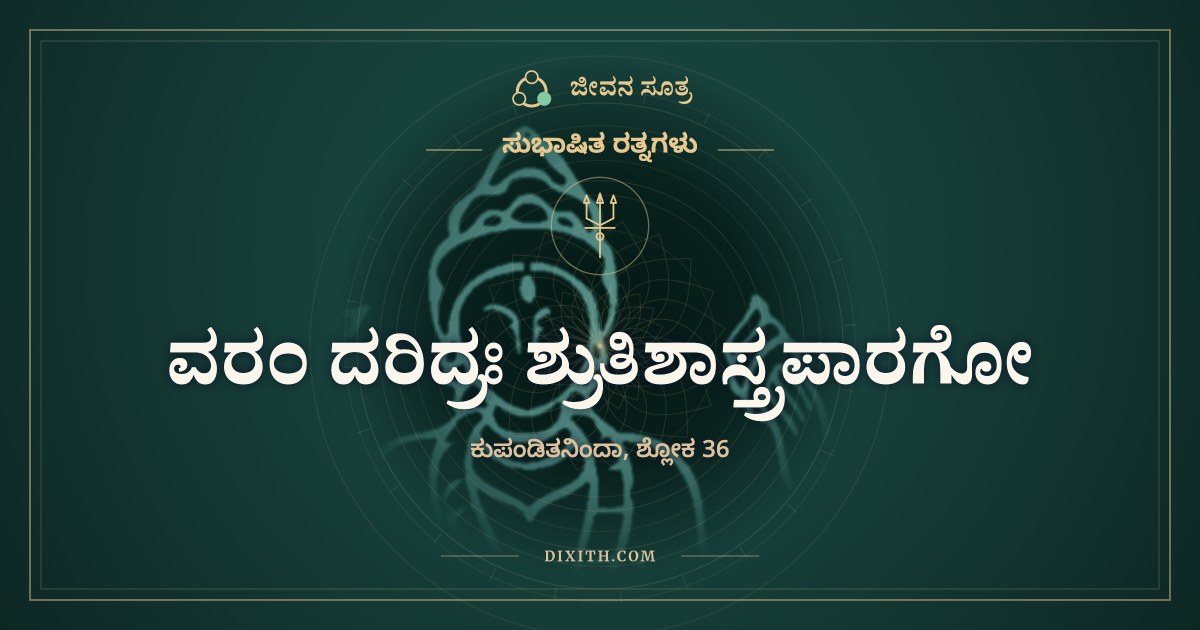
ವರಂ ದರಿದ್ರಃ ಶ್ರುತಿಶಾಸ್ತ್ರಪಾರಗೋ
ನ ಚಾಪಿ ಮೂರ್ಖೋ ಬಹುರತ್ನಸಂಯುತಃ ।
ಸುಲೋಚನಾ ಜೀರ್ಣಪಟಾಪಿ ಶೋಭತೇ
ನ ನೇತ್ರಹೀನಾ ಕನಕೈರಲಂಕೃತಾ ॥
ಸುಭಾಷಿತ (ದೇವನಾಗರಿ)
वरं दरिद्रः श्रुतिशास्त्रपारगो
न चापि मूर्खो बहुरत्नसंयुतः ।
सुलोचना जीर्णपटापि शोभते
न नेत्रहीना कनकैरलंकृता ॥
ಸುಭಾಷಿತ (IAST)
varaṃ daridraḥ śrutiśāstrapārago
na cāpi mūrkho bahuratnasaṃyutaḥ |
sulocanā jīrṇapaṭāpi śobhate
na netrahīnā kanakairalaṃkṛtā ||
ಪದಶಃ ಅರ್ಥ
- ವರಂ (वरं, varaṃ) = ಹೆಚ್ಚು ಒಳ್ಳೆಯದು (better is)
- ದರಿದ್ರಃ (दरिद्रः, daridraḥ) = ಬಡವ (a poor man)
- ಶ್ರುತಿಶಾಸ್ತ್ರಪಾರಗೋ (श्रुतिशास्त्रपारगो, śrutiśāstrapārago) = ಶ್ರುತಿ ಮತ್ತು ಶಾಸ್ತ್ರಗಳ ಆಚೆ ದಡ ಮುಟ್ಟಿದವನು (one who has crossed to the far shore of scripture and treatise)
- ನ ಚಾಪಿ (न चापि, na cāpi) = ಆದರೆ ಅವನಲ್ಲ (but by no means)
- ಮೂರ್ಖೋ (मूर्खो, mūrkho) = ಮೂರ್ಖ (the fool)
- ಬಹುರತ್ನಸಂಯುತಃ (बहुरत्नसंयुतः, bahuratnasaṃyutaḥ) = ಬಹಳ ರತ್ನಗಳಿಂದ ಕೂಡಿದವನು (joined with a heap of jewels)
- ಸುಲೋಚನಾ (सुलोचना, sulocanā) = ಚೆಲುವಾದ ಕಣ್ಣುಗಳ ಹೆಣ್ಣು (a woman with fine eyes)
- ಜೀರ್ಣಪಟಾಪಿ (जीर्णपटापि, jīrṇapaṭāpi) = ಹರಿದ ಬಟ್ಟೆಯಲ್ಲಿದ್ದರೂ (even in a worn cloth)
- ಶೋಭತೇ (शोभते, śobhate) = ಕಳೆಯಿಂದ ಕಾಣುತ್ತಾಳೆ (has grace)
- ನ (न, na) = ಹಾಗೆ ಕಾಣುವುದಿಲ್ಲ (not so)
- ನೇತ್ರಹೀನಾ (नेत्रहीना, netrahīnā) = ಕಣ್ಣಿಲ್ಲದವಳು (she who is without eyes)
- ಕನಕೈರಲಂಕೃತಾ (कनकैरलंकृता, kanakairalaṃkṛtā) = ಚಿನ್ನದ ಒಡವೆ ತೊಟ್ಟಿದ್ದರೂ (though decked out in gold)
ಸಂಪೂರ್ಣ ಅರ್ಥ (ಕನ್ನಡ)
ಶ್ರುತಿ ಮತ್ತು ಶಾಸ್ತ್ರಗಳ ಆಚೆ ದಡ ಮುಟ್ಟಿದ ಬಡವನೇ ಹೆಚ್ಚು, ಬಹಳ ರತ್ನಗಳಿದ್ದ ಮೂರ್ಖ ಅಲ್ಲ. ಚೆಲುವಾದ ಕಣ್ಣಿನವಳು ಹರಿದ ಬಟ್ಟೆಯಲ್ಲಿದ್ದರೂ ಕಳೆಯಿಂದ ಕಾಣುತ್ತಾಳೆ. ಕಣ್ಣಿಲ್ಲದವಳು ಚಿನ್ನದ ಒಡವೆ ತೊಟ್ಟರೂ ಹಾಗೆ ಕಾಣುವುದಿಲ್ಲ.
ಸಂಪೂರ್ಣ ಅರ್ಥ (ಇಂಗ್ಲಿಷ್)
Better a poor man who has crossed to the far shore of scripture than a fool loaded with jewels. A woman with fine eyes has grace even in a worn cloth; one without eyes has none, though she be decked out in gold.
ಈ ಸುಭಾಷಿತದ ಬಗ್ಗೆAbout this subhashita
ಪಾರಗ ಎಂದರೆ ಆಚೆ ದಡ ಮುಟ್ಟಿದವನು. ಓದಿದವನು ಎಂದಷ್ಟೇ ಅಲ್ಲ, ಕೊನೆಯವರೆಗೆ ಹೋದವನು ಎಂಬ ಅರ್ಥ ಈ ಪದದಲ್ಲಿದೆ.
Paraga means one who has reached the far bank. It says not merely that he has read, but that he went the whole way.
ಎರಡನೆಯ ಜೋಡಿ ಮೊದಲನೆಯದಕ್ಕೆ ಸರಿಯಾಗಿ ಹೊಂದುತ್ತದೆ. ಕಣ್ಣು ಮೈಯದೇ ಭಾಗ, ಒಡವೆ ಹೊರಗಿನಿಂದ ಬಂದದ್ದು. ವಿದ್ಯೆ ಮತ್ತು ಸಂಪತ್ತಿನ ವ್ಯತ್ಯಾಸವೂ ಅದೇ.
The second pair matches the first exactly. Eyes belong to the body; jewels come from outside. The difference between learning and wealth is of the same kind.
ಸುಲೋಚನಾ ಎಂಬ ಪದಕ್ಕೆ ಚೆಲುವಾದ ಕಣ್ಣಿನವಳು ಎಂಬ ಅರ್ಥ, ಚೆನ್ನಾಗಿ ಕಾಣುವವಳು ಎಂಬ ಅರ್ಥವೂ ಉಂಟು. ಶ್ಲೋಕ ಕಣ್ಣಿನ ಚೆಲುವನ್ನೂ ಕಣ್ಣಿನ ನೋಟವನ್ನೂ ಒಟ್ಟಿಗೆ ದುಡಿಸಿಕೊಳ್ಳುತ್ತದೆ.
Sulochana means both a woman with beautiful eyes and one who sees well. The verse puts the beauty of the eye and the sight of the eye to work at once.
ಆಧಾರ: ಸುಭಾಷಿತರತ್ನಭಾಂಡಾಗಾರ, ಸಾಮಾನ್ಯ ಪ್ರಕರಣ (ನಿರ್ಣಯಸಾಗರ ಮುದ್ರಣಾಲಯ, ಮುಂಬಯಿ), ಪುಟ 40. ಶ್ಲೋಕದ ಪಾಠವನ್ನು ಮುದ್ರಿತ ಪ್ರತಿಯ ಸ್ಕ್ಯಾನ್ನೊಂದಿಗೆ ಅಕ್ಷರಶಃ ಹೋಲಿಸಿದ್ದೇವೆ. ಅರ್ಥ ಮತ್ತು ವಿವರಣೆ ನಮ್ಮದು.
Source: Subhashitaratnabhandagara, Samanya Prakarana (Nirnaya Sagar Press, Bombay), page 40. The text of the verse was checked letter by letter against a scan of the printed book. The meaning and notes are ours.
ಇಂದಿನ ಬದುಕಿಗೆFor life today
ಯಾವ ಉಪಕರಣವೂ ಇಲ್ಲದೆ ಹಿರಿಯ ವೈದ್ಯನೊಬ್ಬ ರೋಗಿಯನ್ನು ಮುಟ್ಟಿ ನೋಡಿ ಹೇಳುವುದನ್ನು ಕಂಡಾಗ ಈ ಶ್ಲೋಕ ನೆನಪಾಗುತ್ತದೆ. ಸಾಧನ ಸಹಾಯ ಮಾಡುತ್ತದೆ, ಆದರೆ ಅದು ಕಣ್ಣಲ್ಲ.
This verse comes to mind when a senior physician, with no instrument in hand, examines a patient and says what is wrong. Equipment helps, but it is not the eye.
ಬಡತನವನ್ನು ಶ್ಲೋಕ ಹೊಗಳುತ್ತಿಲ್ಲ. ಎರಡರಲ್ಲಿ ಒಂದನ್ನೇ ಆರಿಸಬೇಕಾದರೆ ಯಾವುದು ಹೆಚ್ಚು ಎಂದಷ್ಟೇ ಅದು ಹೇಳುತ್ತಿದೆ.
The verse is not praising poverty. It says only which of the two is worth more if one has to choose.
ಪಾಠದಲ್ಲಿ ತಪ್ಪೋ ಬೇರೆ ಪಾಠಾಂತರವೋ ಕಂಡಿತೇ? ನಮಗೆ ತಿಳಿಸಿ.
Noticed a mistake or a different reading? Tell us.
ಪ್ರತಿಕ್ರಿಯೆ ಬರೆಯಿರಿ