
ರಸಿಕ ಎಂದರೆ ಯಾರು? ಬಹಳ ಓದಿದವನೆ, ಬಹಳ ಬರೆದವನೆ?
ಅಲ್ಲ ಎನ್ನುತ್ತದೆ ಈ ಶ್ಲೋಕ. ಬೇರೆಯವರ ಒಳ್ಳೆಯ ಕೆಲಸವನ್ನು ಕಂಡಾಗ ಯಾರ ಕಣ್ಣಲ್ಲಿ ನೀರು ಬರುತ್ತದೋ ಅವನೇ ರಸಿಕ.
ಸುಭಾಷಿತ (ಕನ್ನಡ)
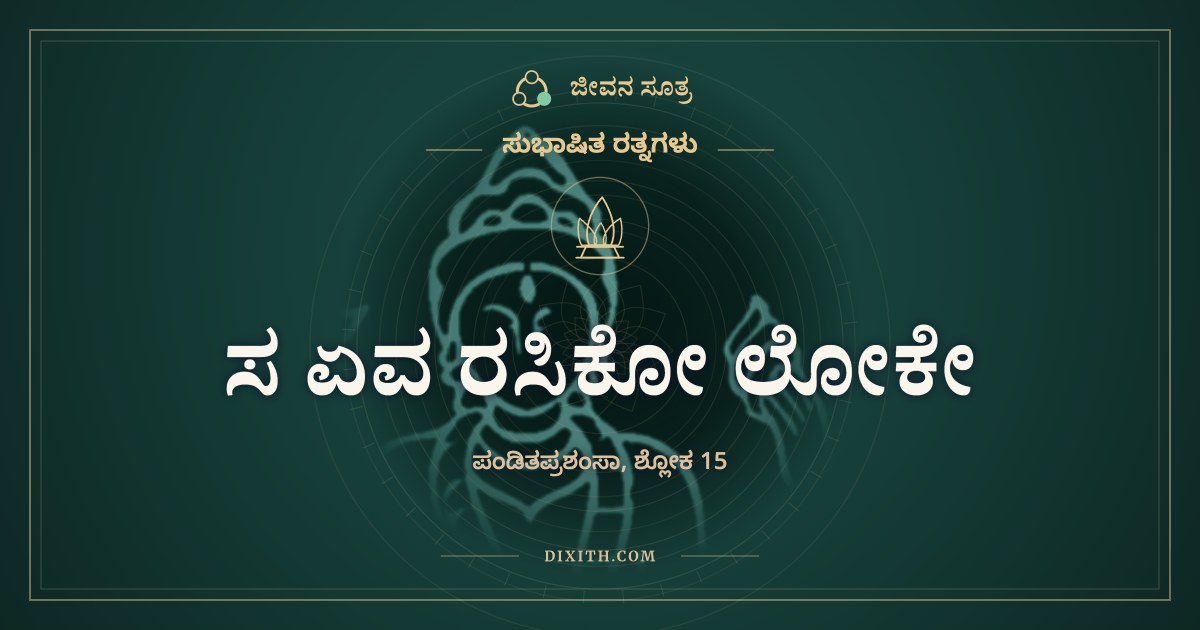
ಸ ಏವ ರಸಿಕೋ ಲೋಕೇ ಶ್ರುತ್ವಾ ಕಾವ್ಯಂ ಪರೈಃ ಕೃತಮ್ ।
ಉತ್ಪದ್ಯತೇ ಚ ಯುಗಪದ್ವದನೇಽಕ್ಷ್ಣೋಶ್ಚ ಯಸ್ಯ ವಾಃ ॥
ಸುಭಾಷಿತ (ದೇವನಾಗರಿ)
स एव रसिको लोके श्रुत्वा काव्यं परैः कृतम् ।
उत्पद्यते च युगपद्वदनेऽक्ष्णोश्च यस्य वाः ॥
ಸುಭಾಷಿತ (IAST)
sa eva rasiko loke śrutvā kāvyaṃ paraiḥ kṛtam |
utpadyate ca yugapadvadane’kṣṇośca yasya vāḥ ||
ಪದಶಃ ಅರ್ಥ
- ಸಃ ಏವ (सः एव, saḥ eva) = ಅವನೇ (he alone)
- ರಸಿಕಃ ಲೋಕೇ (रसिकः लोके, rasikaḥ loke) = ಲೋಕದಲ್ಲಿ ರಸಿಕ (is the connoisseur in this world)
- ಶ್ರುತ್ವಾ ಕಾವ್ಯಮ್ (श्रुत्वा काव्यम्, śrutvā kāvyam) = ಕಾವ್ಯವನ್ನು ಕೇಳಿ (on hearing a poem)
- ಪರೈಃ ಕೃತಮ್ (परैः कृतम्, paraiḥ kṛtam) = ಬೇರೆಯವರು ಮಾಡಿದ (made by others)
- ಉತ್ಪದ್ಯತೇ ಚ ಯುಗಪತ್ (उत्पद्यते च युगपत्, utpadyate ca yugapat) = ಒಟ್ಟಿಗೇ ಹುಟ್ಟುತ್ತದೆ (and arises at the same moment)
- ವದನೇ ಅಕ್ಷ್ಣೋಃ ಚ (वदने अक्ष्णोः च, vadane akṣṇoḥ ca) = ಬಾಯಲ್ಲಿ ಮತ್ತು ಕಣ್ಣುಗಳಲ್ಲಿ (in the mouth and in the eyes)
- ಯಸ್ಯ ವಾಃ (यस्य वाः, yasya vāḥ) = ಯಾರ ವಾಃ (whose vah)
ಸಂಪೂರ್ಣ ಅರ್ಥ (ಕನ್ನಡ)
ಬೇರೆಯವರು ಮಾಡಿದ ಕಾವ್ಯವನ್ನು ಕೇಳಿದಾಗ ಯಾರ ಕಣ್ಣುಗಳಲ್ಲಿ ನೀರೂ ಬಾಯಲ್ಲಿ ವಾಹ್ ಎಂಬ ಮಾತೂ ಒಟ್ಟಿಗೇ ಬರುತ್ತದೋ, ಲೋಕದಲ್ಲಿ ಅವನೇ ನಿಜವಾದ ರಸಿಕ.
ಸಂಪೂರ್ಣ ಅರ್ಥ (ಇಂಗ್ಲಿಷ್)
He alone is a connoisseur in this world in whom, on hearing a poem made by another, water rises in the eyes and the word of praise on the lips at the very same moment.
ಈ ಸುಭಾಷಿತದ ಬಗ್ಗೆAbout this subhashita
ವಾಃ ಎಂಬ ಪದದ ಮೇಲೆ ಈ ಶ್ಲೋಕ ನಿಂತಿದೆ. ಮುದ್ರಿತ ಪ್ರತಿಯ ಅಡಿಟಿಪ್ಪಣಿ ಅದನ್ನು ಬಿಡಿಸಿ ಹೇಳುತ್ತದೆ. ಕಣ್ಣಿನಲ್ಲಿ ವಾಃ ಎಂದರೆ ಆನಂದಬಾಷ್ಪ, ಬಾಯಲ್ಲಿ ವಾಃ ಎಂದರೆ ವಾಹವಾ ಎಂಬ ಮೆಚ್ಚುಗೆಯ ಮಾತು.
The verse turns on the word vah. The footnote in the printed edition unpacks it: in the eyes vah is water, that is, tears of joy; in the mouth it is vahava, the everyday word of applause.
ಪರೈಃ ಕೃತಮ್ ಎಂಬ ಮಾತು ಮುಖ್ಯ. ತನ್ನದೇ ಕೆಲಸಕ್ಕೆ ಕಣ್ಣೀರು ಬರುವುದು ಸುಲಭ. ಬೇರೆಯವರ ಕೆಲಸಕ್ಕೆ ಬರುವುದೇ ರಸಿಕತೆಯ ಪರೀಕ್ಷೆ.
The phrase paraih kritam matters. Tears for one’s own work come easily. Tears for another’s work are the test of true taste.
ಆಧಾರ: ಸುಭಾಷಿತರತ್ನಭಾಂಡಾಗಾರ, ಸಾಮಾನ್ಯ ಪ್ರಕರಣ (ನಿರ್ಣಯಸಾಗರ ಮುದ್ರಣಾಲಯ, ಮುಂಬಯಿ), ಪುಟ 39. ಶ್ಲೋಕದ ಪಾಠವನ್ನು ಮುದ್ರಿತ ಪ್ರತಿಯ ಸ್ಕ್ಯಾನ್ನೊಂದಿಗೆ ಅಕ್ಷರಶಃ ಹೋಲಿಸಿದ್ದೇವೆ. ಅರ್ಥ ಮತ್ತು ವಿವರಣೆ ನಮ್ಮದು.
Source: Subhashitaratnabhandagara, Samanya Prakarana (Nirnaya Sagar Press, Bombay), page 39. The text of the verse was checked letter by letter against a scan of the printed book. The meaning and notes are ours.
ಇಂದಿನ ಬದುಕಿಗೆFor life today
ಬೇರೆಯವರ ಒಳ್ಳೆಯ ಕೆಲಸವನ್ನು ಮನಸಾರೆ ಮೆಚ್ಚುವುದು ಸುಲಭವಲ್ಲ. ಹೊಟ್ಟೆಕಿಚ್ಚು ಸಹಜ, ಆದರೆ ಅದನ್ನು ಮೀರಿದವನೇ ಮುಂದೆ ಬೆಳೆಯುತ್ತಾನೆ.
Admiring someone else’s good work wholeheartedly is not easy. Envy is natural, but the one who moves past it is the one who grows.
ಮೆಚ್ಚುಗೆಯನ್ನು ಮನಸ್ಸಿನಲ್ಲೇ ಇಟ್ಟುಕೊಳ್ಳದೆ ಹೇಳಿಬಿಡುವುದು ಒಳ್ಳೆಯದು. ಕಣ್ಣಲ್ಲಿ ನೀರು ಬಂದರೆ ಸಾಲದು, ಬಾಯಲ್ಲಿ ಮಾತೂ ಬರಬೇಕು ಎನ್ನುತ್ತದೆ ಶ್ಲೋಕ.
It is good to say admiration aloud rather than keep it inside. Tears in the eyes are not enough, says the verse; the word must come too.
ಪಾಠದಲ್ಲಿ ತಪ್ಪೋ ಬೇರೆ ಪಾಠಾಂತರವೋ ಕಂಡಿತೇ? ನಮಗೆ ತಿಳಿಸಿ.
Noticed a mistake or a different reading? Tell us.


ಪ್ರತಿಕ್ರಿಯೆ ಬರೆಯಿರಿ