
ಹಿಂದಿನ ಶ್ಲೋಕ ರಸಿಕನನ್ನು ಹೊಗಳಿತು. ಇದು ಅದರ ಇನ್ನೊಂದು ಮುಖ.
ಕೇಳಿಯೂ ಏನೂ ಆಗದಿದ್ದರೆ ಅವನನ್ನು ಏನೆನ್ನಬೇಕು ಎಂಬುದನ್ನು ಈ ಶ್ಲೋಕ ಒಂದೇ ಮಾತಿನಲ್ಲಿ ಹೇಳಿಬಿಡುತ್ತದೆ.
ಸುಭಾಷಿತ (ಕನ್ನಡ)
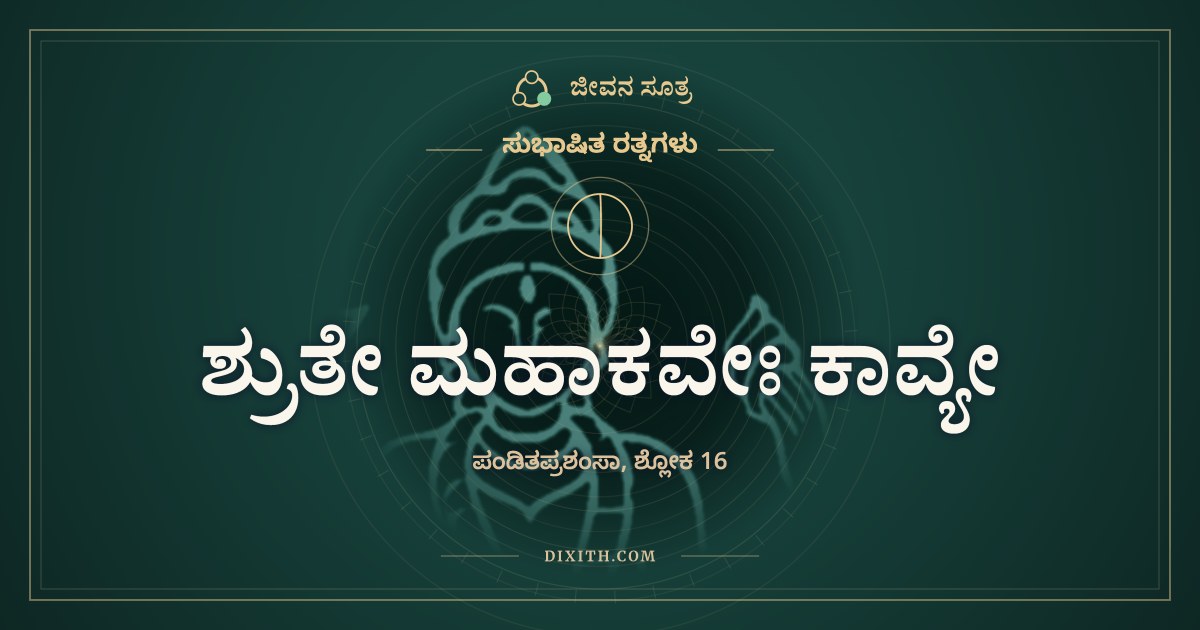
ಶ್ರುತೇ ಮಹಾಕವೇಃ ಕಾವ್ಯೇ ನಯನೇ ವದನೇ ಚ ವಾಃ ।
ಯುಗಪದ್ಯಸ್ಯ ನೋದೇತಿ ಸ ವೃಷೋ ಮಹಿಷೋಽಥವಾ ॥
ಸುಭಾಷಿತ (ದೇವನಾಗರಿ)
श्रुते महाकवेः काव्ये नयने वदने च वाः ।
युगपद्यस्य नोदेति स वृषो महिषोऽथवा ॥
ಸುಭಾಷಿತ (IAST)
śrute mahākaveḥ kāvye nayane vadane ca vāḥ |
yugapadyasya nodeti sa vṛṣo mahiṣo’thavā ||
ಪದಶಃ ಅರ್ಥ
- ಶ್ರುತೇ (श्रुते, śrute) = ಕೇಳಿದಾಗ (when it has been heard)
- ಮಹಾಕವೇಃ ಕಾವ್ಯೇ (महाकवेः काव्ये, mahākaveḥ kāvye) = ಮಹಾಕವಿಯ ಕಾವ್ಯ (the poem of a great poet)
- ನಯನೇ ವದನೇ ಚ (नयने वदने च, nayane vadane ca) = ಕಣ್ಣುಗಳಲ್ಲೂ ಬಾಯಲ್ಲೂ (in the eyes and in the mouth)
- ವಾಃ (वाः, vāḥ) = ವಾಃ, ಅಂದರೆ ನೀರು ಮತ್ತು ವಾಹವಾ (vah, that is, water and the word of praise)
- ಯುಗಪತ್ ಯಸ್ಯ ನ ಉದೇತಿ (युगपत् यस्य न उदेति, yugapat yasya na udeti) = ಯಾರಲ್ಲಿ ಒಟ್ಟಿಗೇ ಏಳುವುದಿಲ್ಲವೋ (in whom they do not rise together)
- ಸಃ ವೃಷಃ ಮಹಿಷಃ ಅಥವಾ (सः वृषः महिषः अथवा, saḥ vṛṣaḥ mahiṣaḥ athavā) = ಅವನು ಎತ್ತು ಇಲ್ಲವೇ ಕೋಣ (he is a bull, or else a buffalo)
ಸಂಪೂರ್ಣ ಅರ್ಥ (ಕನ್ನಡ)
ಮಹಾಕವಿಯ ಕಾವ್ಯವನ್ನು ಕೇಳಿದಾಗ ಯಾರ ಕಣ್ಣುಗಳಲ್ಲಿ ನೀರೂ ಬಾಯಲ್ಲಿ ವಾಹವಾ ಎಂಬ ಮಾತೂ ಒಟ್ಟಿಗೇ ಏಳುವುದಿಲ್ಲವೋ, ಅವನು ಎತ್ತು, ಇಲ್ಲವೇ ಕೋಣ.
ಸಂಪೂರ್ಣ ಅರ್ಥ (ಇಂಗ್ಲಿಷ್)
When a great poet’s poem has been heard, the man in whom water does not rise in the eyes and the word of praise on the lips at the same moment is a bull, or else a buffalo.
ಈ ಸುಭಾಷಿತದ ಬಗ್ಗೆAbout this subhashita
ಈ ಶ್ಲೋಕ ಹಿಂದಿನದರ ಜೊತೆಗಾರ. ಒಂದು ಹೊಗಳಿಕೆ, ಇನ್ನೊಂದು ನಿಂದನೆ. ಎರಡನ್ನೂ ಒಟ್ಟಿಗೆ ಓದಿದರೆ ಪೂರ್ಣ ಚಿತ್ರ ಸಿಗುತ್ತದೆ.
This verse is the companion of the one before it, praise on one side and reproach on the other. Read together they give the whole picture.
ಎತ್ತು ಮತ್ತು ಕೋಣ ಎರಡೂ ದೊಡ್ಡ ಪ್ರಾಣಿಗಳು, ದುಡಿಯುವಂಥವು. ಆದರೆ ಎರಡಕ್ಕೂ ಕಾವ್ಯದ ಅರಿವಿಲ್ಲ. ಶ್ಲೋಕ ಆರಿಸಿಕೊಂಡ ಪ್ರಾಣಿಗಳಲ್ಲಿಯೇ ಚುರುಕು ಇದೆ.
A bull and a buffalo are both large working animals, and neither knows anything of poetry. The sting is in the choice of animals.
ಆಧಾರ: ಸುಭಾಷಿತರತ್ನಭಾಂಡಾಗಾರ, ಸಾಮಾನ್ಯ ಪ್ರಕರಣ (ನಿರ್ಣಯಸಾಗರ ಮುದ್ರಣಾಲಯ, ಮುಂಬಯಿ), ಪುಟ 39. ಶ್ಲೋಕದ ಪಾಠವನ್ನು ಮುದ್ರಿತ ಪ್ರತಿಯ ಸ್ಕ್ಯಾನ್ನೊಂದಿಗೆ ಅಕ್ಷರಶಃ ಹೋಲಿಸಿದ್ದೇವೆ. ಅರ್ಥ ಮತ್ತು ವಿವರಣೆ ನಮ್ಮದು.
Source: Subhashitaratnabhandagara, Samanya Prakarana (Nirnaya Sagar Press, Bombay), page 39. The text of the verse was checked letter by letter against a scan of the printed book. The meaning and notes are ours.
ಇಂದಿನ ಬದುಕಿಗೆFor life today
ಇದನ್ನು ಬೇರೆಯವರಿಗೆ ಹಚ್ಚುವುದಕ್ಕಿಂತ ತನಗೇ ಹಚ್ಚಿಕೊಳ್ಳುವುದು ಒಳ್ಳೆಯದು. ಕೊನೆಯ ಬಾರಿ ಒಂದು ಸಾಲು ಓದಿ ಮನಸ್ಸು ನಿಂತದ್ದು ಯಾವಾಗ?
This is better applied to oneself than to others. When was the last time a line read made you stop?
ಸ್ಪಂದನೆ ಕಡಿಮೆಯಾಗಲು ಗಡಿಬಿಡಿಯೂ ಒಂದು ಕಾರಣ. ಆದರೆ ಯಾವುದೂ ಸಂತೋಷ ಕೊಡದ ಸ್ಥಿತಿ ಎರಡು ವಾರಕ್ಕಿಂತ ಹೆಚ್ಚು ಕಾಲ ಉಳಿದರೆ ಅದನ್ನು ಬೇರೆಯದಾಗಿ ನೋಡಬೇಕು, ವೈದ್ಯರೊಡನೆ ಮಾತನಾಡುವುದು ಒಳ್ಳೆಯದು.
Hurry is one reason responses grow dull. But when nothing at all gives pleasure for more than two weeks, that is a different matter, and worth talking to a doctor about.
ಪಾಠದಲ್ಲಿ ತಪ್ಪೋ ಬೇರೆ ಪಾಠಾಂತರವೋ ಕಂಡಿತೇ? ನಮಗೆ ತಿಳಿಸಿ.
Noticed a mistake or a different reading? Tell us.


ಪ್ರತಿಕ್ರಿಯೆ ಬರೆಯಿರಿ