
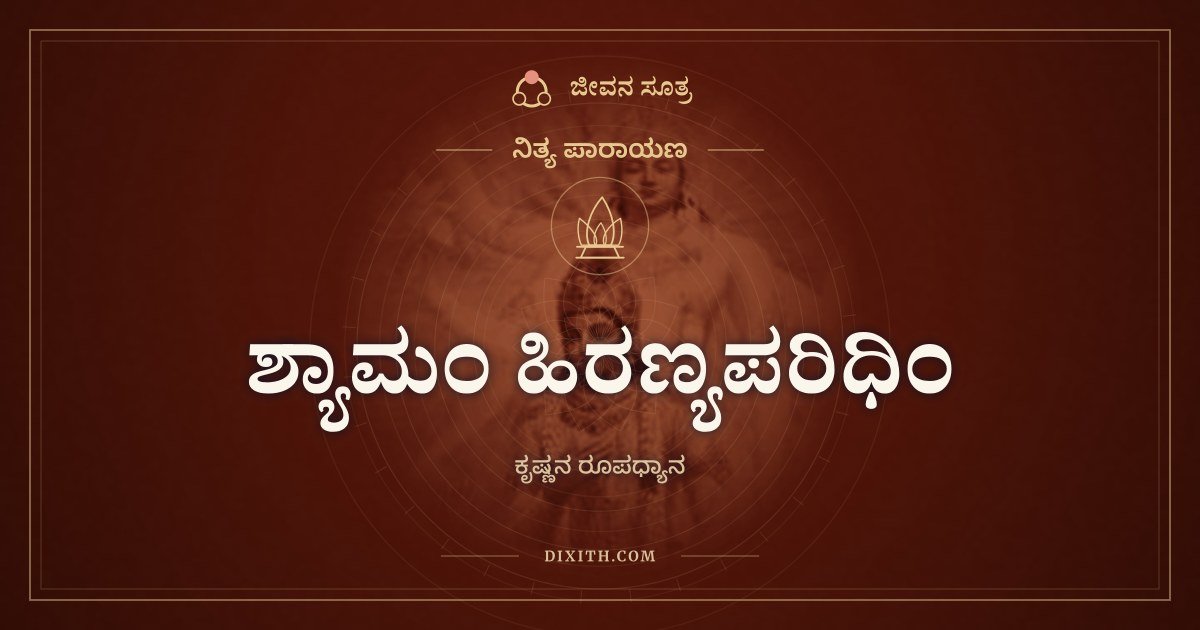
ಭಾಗವತ ಪುರಾಣದಲ್ಲಿ ಬ್ರಾಹ್ಮಣ ಪತ್ನಿಯರು ಕೃಷ್ಣನನ್ನು ಕಂಡಾಗ ಅವನ ರೂಪವನ್ನು ವರ್ಣಿಸುವ ಧ್ಯಾನ ಶ್ಲೋಕ ಇದು.
ಶ್ಯಾಮವರ್ಣ, ಹೊಂಬಣ್ಣದ ವಸ್ತ್ರ, ವನಮಾಲೆ, ನವಿಲುಗರಿ ಮತ್ತು ಮುಗುಳ್ನಗೆಯನ್ನು ಒಂದೊಂದಾಗಿ ಕಣ್ಣ ಮುಂದೆ ತರುತ್ತದೆ. ಸಂಜೆ ದೀಪದ ಮುಂದೆ ಕುಳಿತು ಈ ರೂಪವನ್ನು ಮನಸ್ಸಿನಲ್ಲಿ ಚಿತ್ರಿಸಿಕೊಳ್ಳಲು ಇದು ಅನುಕೂಲ.
ಶ್ಲೋಕ (ಕನ್ನಡ)
ಶ್ಯಾಮಂ ಹಿರಣ್ಯಪರಿಧಿಂ ವನಮಾಲ್ಯಬರ್ಹ
ಧಾತುಪ್ರವಾಲನಟವೇಷಮನುವ್ರತಾಂಸೇ ।
ವಿನ್ಯಸ್ತಹಸ್ತಮಿತರೇಣ ಧುನಾನಮಬ್ಜಂ
ಕರ್ಣೋತ್ಪಲಾಲಕಕಪೋಲಮುಖಾಬ್ಜಹಾಸಮ್ ॥
ಶ್ಲೋಕ (ದೇವನಾಗರಿ)
श्यामं हिरण्यपरिधिं वनमाल्यबर्ह
धातुप्रवालनटवेषमनुव्रतांसे ।
विन्यस्तहस्तमितरेण धुनानमब्जं
कर्णोत्पलालककपोलमुखाब्जहासम् ॥
ಶ್ಲೋಕ (IAST)
śyāmaṃ hiraṇyaparidhiṃ vanamālyabarha
dhātupravālanaṭaveṣamanuvratāṃse |
vinyastahastamitareṇa dhunānamabjaṃ
karṇotpalālakakapolamukhābjahāsam ||
ಪದಶಃ ಅರ್ಥ
- ಶ್ಯಾಮಂ (श्यामं, śyāmaṃ) = ಕಪ್ಪು ನೀಲ ಬಣ್ಣದವನನ್ನು (dark blue in colour)
- ಹಿರಣ್ಯಪರಿಧಿಂ (हिरण्यपरिधिं, hiraṇyaparidhiṃ) = ಹೊನ್ನಿನ ಬಣ್ಣದ ವಸ್ತ್ರ ಉಟ್ಟವನನ್ನು (wearing golden garments)
- ವನಮಾಲ್ಯಬರ್ಹಧಾತುಪ್ರವಾಲನಟವೇಷಂ (वनमाल्यबर्हधातुप्रवालनटवेषं, vanamālyabarhadhātupravālanaṭaveṣaṃ) = ವನಮಾಲೆ, ನವಿಲುಗರಿ, ಖನಿಜದ ಬಣ್ಣಗಳು ಮತ್ತು ಚಿಗುರುಗಳಿಂದ ನಟನ ವೇಷ ತಾಳಿದವನನ್ನು (ವನಮಾಲ್ಯ + ಬರ್ಹ + ಧಾತು + ಪ್ರವಾಲ + ನಟವೇಷಂ) (dressed like an actor in forest garland, peacock feather, mineral colours and fresh shoots)
- ಅನುವ್ರತಾಂಸೇ (अनुव्रतांसे, anuvratāṃse) = ಸಂಗಾತಿಯ ಹೆಗಲ ಮೇಲೆ (ಅನುವ್ರತ + ಅಂಸೇ) (on the shoulder of a companion)
- ವಿನ್ಯಸ್ತಹಸ್ತಂ (विन्यस्तहस्तं, vinyastahastaṃ) = ಕೈಯನ್ನು ಇಟ್ಟವನನ್ನು (with a hand resting)
- ಇತರೇಣ (इतरेण, itareṇa) = ಇನ್ನೊಂದು ಕೈಯಿಂದ (with the other hand)
- ಧುನಾನಮಬ್ಜಂ (धुनानमब्जं, dhunānamabjaṃ) = ಕಮಲವನ್ನು ತಿರುಗಿಸುತ್ತಿರುವವನನ್ನು (ಧುನಾನಂ + ಅಬ್ಜಂ) (twirling a lotus)
- ಕರ್ಣೋತ್ಪಲಾಲಕಕಪೋಲಮುಖಾಬ್ಜಹಾಸಂ (कर्णोत्पलालककपोलमुखाब्जहासं, karṇotpalālakakapolamukhābjahāsaṃ) = ಕಿವಿಯಲ್ಲಿ ನೈದಿಲೆ, ಕೆನ್ನೆಯ ಮೇಲೆ ಮುಂಗುರುಳು, ಕಮಲದಂತಹ ಮುಖದಲ್ಲಿ ನಗು ಉಳ್ಳವನನ್ನು (ಕರ್ಣ + ಉತ್ಪಲ + ಅಲಕ + ಕಪೋಲ + ಮುಖ + ಅಬ್ಜ + ಹಾಸಂ) (with a lily at the ear, curls on the cheek and a smile on a lotus face)
ಸಂಪೂರ್ಣ ಅರ್ಥ (ಕನ್ನಡ)
ಅವನು ಶ್ಯಾಮ ವರ್ಣದವನು. ಹೊನ್ನಿನ ಬಣ್ಣದ ವಸ್ತ್ರ ಉಟ್ಟಿದ್ದಾನೆ. ವನಮಾಲೆ, ನವಿಲುಗರಿ, ಖನಿಜದ ಬಣ್ಣಗಳು ಮತ್ತು ಚಿಗುರುಗಳಿಂದ ನಟನಂತೆ ಅಲಂಕೃತನಾಗಿದ್ದಾನೆ. ಒಂದು ಕೈಯನ್ನು ಸಂಗಾತಿಯ ಹೆಗಲ ಮೇಲೆ ಇಟ್ಟಿದ್ದಾನೆ. ಇನ್ನೊಂದು ಕೈಯಲ್ಲಿ ಕಮಲವನ್ನು ತಿರುಗಿಸುತ್ತಿದ್ದಾನೆ. ಕಿವಿಯಲ್ಲಿ ನೈದಿಲೆ ಇದೆ. ಕೆನ್ನೆಯ ಮೇಲೆ ಮುಂಗುರುಳು ಬಿದ್ದಿದೆ. ಕಮಲದಂತಹ ಮುಖದಲ್ಲಿ ಮುಗುಳ್ನಗೆ ಇದೆ.
ಸಂಪೂರ್ಣ ಅರ್ಥ (ಇಂಗ್ಲಿಷ್)
He is dark blue in colour and wears golden garments. He is adorned like an actor with a forest garland, a peacock feather, mineral colours and fresh shoots. One hand rests on a companion’s shoulder. With the other he twirls a lotus. A lily is at his ear, curls fall on his cheek, and a smile plays on his lotus face.
ಈ ಶ್ಲೋಕದ ಬಗ್ಗೆAbout this verse
ಭಾಗವತದ ಕಥೆಯಂತೆ ಬ್ರಾಹ್ಮಣರ ಪತ್ನಿಯರು ಕೃಷ್ಣನ ಬಗ್ಗೆ ಕೇಳಿ ಅವನನ್ನು ನೋಡಲು ಅನ್ನ ತೆಗೆದುಕೊಂಡು ಹೊರಟರು. ಅವರು ಕಂಡ ರೂಪವನ್ನು ಈ ಶ್ಲೋಕ ವರ್ಣಿಸುತ್ತದೆ. ಹಲವರು ಇದನ್ನು ಕೃಷ್ಣನ ಧ್ಯಾನ ಶ್ಲೋಕವಾಗಿ ಬಳಸುತ್ತಾರೆ.
In the Bhagavata story the wives of some brahmanas heard of Krishna and set out to see him, carrying food. This verse describes the form they saw. Many people use it as a meditation verse on Krishna.
ಎರಡನೇ ಸಾಲಿನಲ್ಲಿ ಅನುವ್ರತಾಂಸೇ ಎಂಬ ಪಾಠ ಹೆಚ್ಚು ಮುದ್ರಣಗಳಲ್ಲಿ ಇದೆ. ಒಂದು ಮೂಲದ ರೋಮನ್ ಲಿಪಿಯಲ್ಲಿ ಅನವ್ರತಾಂಸೇ ಎಂದು ಕಂಡಿತು, ಆದರೆ ಅದೇ ಮೂಲದ ದೇವನಾಗರಿಯಲ್ಲಿ ಅನುವ್ರತಾಂಸೇ ಇದೆ. ಅನುವ್ರತ ಎಂದರೆ ಹಿಂಬಾಲಿಸುವ ಗೆಳೆಯ ಎಂದು ವ್ಯಾಖ್ಯಾನಕಾರರು ಹೇಳುತ್ತಾರೆ.
In the second line most printings read anuvratamse. One source showed anavratamse in its Roman text, but its Devanagari reads anuvratamse. Commentators take anuvrata to mean a following companion.
ಆಧಾರ: ಹಲವು ಮೂಲಗಳು. ಆವೃತ್ತಿಗಳು ಭಿನ್ನವಾಗಿರುವಲ್ಲಿ ಅದನ್ನು ಇಲ್ಲಿ ಸೂಚಿಸಿದ್ದೇವೆ.
Sources: several. Where versions differ, we have noted it here.
ಇಂದಿನ ಬದುಕಿಗೆFor life today
ಸಂಜೆ ದೀಪದ ಮುಂದೆ ಕುಳಿತು ಈ ಶ್ಲೋಕದ ಒಂದೊಂದು ಅಲಂಕಾರವನ್ನು ಮನಸ್ಸಿನಲ್ಲಿ ಚಿತ್ರಿಸಿಕೊಳ್ಳಬಹುದು. ದಿನದ ಗಡಿಬಿಡಿಯ ನಂತರ ಮನಸ್ಸು ನಿಧಾನವಾಗಲು ಇದು ನೆರವಾಗಬಲ್ಲದು.
Sitting by the evening lamp we can picture each detail of this verse in the mind. After a rushed day, that can help the mind slow down.
ಬ್ರಾಹ್ಮಣ ಪತ್ನಿಯರ ಕಥೆಯಲ್ಲಿ ಇರುವುದು ಸರಳ ಭಕ್ತಿ ಮತ್ತು ಹೊರಡುವ ಧೈರ್ಯ. ಯಾವುದನ್ನು ಪ್ರೀತಿಸುತ್ತೇವೋ ಅದರ ಕಡೆಗೆ ಹೆಜ್ಜೆ ಇಡುವ ಸರಳತೆ ನಮಗೂ ಒಳ್ಳೆಯದು.
What stands out in the wives’ story is plain devotion and the courage to set out. The simplicity of stepping towards what we love is good for us too.
ಪಾಠದಲ್ಲಿ ತಪ್ಪೋ ಬೇರೆ ಪಾಠಾಂತರವೋ ಕಂಡಿತೇ? ನಮಗೆ ತಿಳಿಸಿ.
Noticed a mistake or a different reading? Tell us.


ಪ್ರತಿಕ್ರಿಯೆ ಬರೆಯಿರಿ