
ರಾತ್ರಿ ನಿದ್ದೆ ಬರದೆ ಹೊರಳಾಡುವವರನ್ನು ಕೇಳಿ ನೋಡಿ. ಅವರ ಚಿಂತೆ ಹೆಚ್ಚಾಗಿ ಯಾವುದೋ ಒಂದು ನೋವಿನ ಹೆಸರಿನಲ್ಲಿ ಇರುತ್ತದೆ, ಜ್ವರದ ಹೆಸರಿನಲ್ಲಿ ಅಲ್ಲ.
ಈ ಎರಡು ಸಾಲಿನ ಪದ್ಯ ಅಂಥ ಐದು ನೋವುಗಳನ್ನು ಹೆಸರಿಸಿ, ಅವು ಬೆಂಕಿಯಿಲ್ಲದೆ ದೇಹ ಸುಡುತ್ತವೆ ಎಂದು ಮುಗಿಸುತ್ತದೆ.
ಸುಭಾಷಿತ (ಕನ್ನಡ)
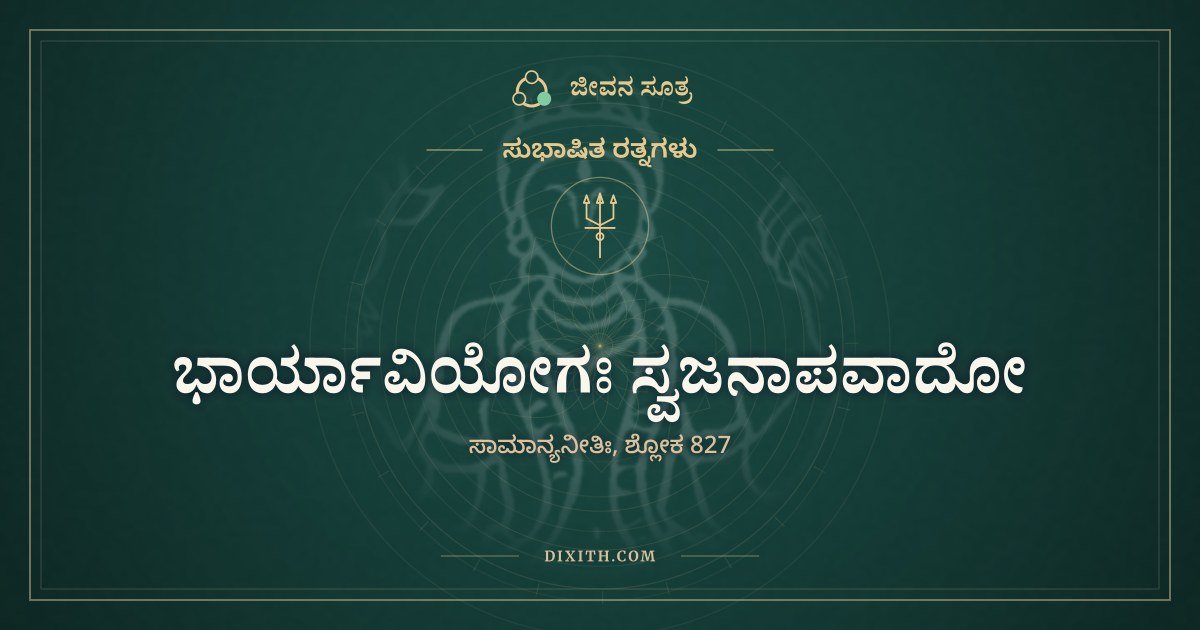
ಭಾರ್ಯಾವಿಯೋಗಃ ಸ್ವಜನಾಪವಾದೋ ಋಣಸ್ಯ ಶೇಷಂ ಕೃಪಣಸ್ಯ ಸೇವಾ
ದಾರಿದ್ರ್ಯಕಾಲೇ ಪ್ರಿಯದರ್ಶನಂ ಚ ವಿನಾಗ್ನಿನಾ ಪಂಚ ದಹಂತಿ ಕಾಯಮ್
ಸುಭಾಷಿತ (ದೇವನಾಗರಿ)
भार्यावियोगः स्वजनापवादो ऋणस्य शेषं कृपणस्य सेवा
दारिद्र्यकाले प्रियदर्शनं च विनाग्निना पञ्च दहन्ति कायम्
ಸುಭಾಷಿತ (IAST)
bhāryāviyogaḥ svajanāpavādo ṛṇasya śeṣaṃ kṛpaṇasya sevā
dāridryakāle priyadarśanaṃ ca vināgninā pañca dahanti kāyam
ಪದಶಃ ಅರ್ಥ
- ಭಾರ್ಯಾವಿಯೋಗಃ (भार्यावियोगः, bhāryāviyogaḥ) = ಪತ್ನಿಯ ಅಗಲಿಕೆ (separation from one’s wife)
- ಸ್ವಜನಾಪವಾದೋ (स्वजनापवादो, svajanāpavādo) = ಬಂಧುಗಳಿಂದ ನಿಂದೆ (ಸ್ವಜನ + ಅಪವಾದಃ) (blame from one’s own people (svajana + apavadah))
- ಋಣಸ್ಯ (ऋणस्य, ṛṇasya) = ಸಾಲದ (of a debt)
- ಶೇಷಂ (शेषं, śeṣaṃ) = ಉಳಿದ ಭಾಗ (the remainder)
- ಕೃಪಣಸ್ಯ (कृपणस्य, kṛpaṇasya) = ಜಿಪುಣನ (of a miser)
- ಸೇವಾ (सेवा, sevā) = ಸೇವೆ (service)
- ದಾರಿದ್ರ್ಯಕಾಲೇ (दारिद्र्यकाले, dāridryakāle) = ಬಡತನದ ಕಾಲದಲ್ಲಿ (in a time of poverty)
- ಪ್ರಿಯದರ್ಶನಂ (प्रियदर्शनं, priyadarśanaṃ) = ಪ್ರಿಯರನ್ನು ಕಾಣುವುದು (the sight of dear ones)
- ಚ (च, ca) = ಮತ್ತು (and)
- ವಿನಾಗ್ನಿನಾ (विनाग्निना, vināgninā) = ಬೆಂಕಿಯಿಲ್ಲದೆ (ವಿನಾ + ಅಗ್ನಿನಾ) (without fire (vina + agnina))
- ಪಂಚ (पञ्च, pañca) = ಐದು (five)
- ದಹಂತಿ (दहन्ति, dahanti) = ಸುಡುತ್ತವೆ (burn)
- ಕಾಯಮ್ (कायम्, kāyam) = ದೇಹವನ್ನು (the body)
ಸಂಪೂರ್ಣ ಅರ್ಥ (ಕನ್ನಡ)
ಪತ್ನಿಯ ಅಗಲಿಕೆ, ಬಂಧುಗಳ ನಿಂದೆ, ತೀರದೆ ಉಳಿದ ಸಾಲ, ಜಿಪುಣನ ಸೇವೆ ಮತ್ತು ಬಡತನದ ಕಾಲದಲ್ಲಿ ಪ್ರಿಯರನ್ನು ಭೇಟಿಯಾಗುವುದು. ಈ ಐದು ಬೆಂಕಿಯಿಲ್ಲದೆ ದೇಹವನ್ನು ಸುಡುತ್ತವೆ.
ಸಂಪೂರ್ಣ ಅರ್ಥ (ಇಂಗ್ಲಿಷ್)
Separation from one’s wife, blame from one’s own people, a debt left unpaid, service to a miser, and meeting dear ones in a time of poverty. These five burn the body without fire.
ಈ ಸುಭಾಷಿತದ ಬಗ್ಗೆAbout this subhashita
ಪ್ರಿಯದರ್ಶನ ಎಂದರೆ ಪ್ರಿಯರನ್ನು ಕಾಣುವುದು. ಬಡತನದ ಕಾಲದಲ್ಲಿ ಅದು ಸುಖವಲ್ಲ, ನೋವು ಎಂದು ಕವಿ ಹೇಳುತ್ತಾನೆ. ತನ್ನ ಸ್ಥಿತಿಯ ಅರಿವಿನ ನಾಚಿಕೆ ಇಲ್ಲಿನ ಅರ್ಥ ಎಂದು ಓದಬಹುದು. ಅದು ವ್ಯಾಖ್ಯಾನದ ಮಾತು, ಪದ್ಯ ಅದನ್ನು ನೇರವಾಗಿ ಹೇಳುವುದಿಲ್ಲ.
Priyadarshana means seeing dear ones. In a time of poverty, the poet says, it is a pain and not a pleasure. It may be read as the shame of being seen in one’s own condition. That is a reading, since the verse does not say so directly.
ವಿನಾಗ್ನಿನಾ ದಹಂತಿ ಎಂಬುದೇ ಪದ್ಯದ ಚಮತ್ಕಾರ. ಬೆಂಕಿ ಇಲ್ಲದೆ ಸುಡುವುದು ಎಂಬ ವಿರೋಧ ಕಲ್ಪನೆ ಚಿಂತೆಗೆ ಬೆಂಕಿಯ ಹೋಲಿಕೆ ಕೊಡುತ್ತದೆ. ಮುದ್ರಿತ ಪುಸ್ತಕದಲ್ಲಿ ಎರಡನೇ ಸಾಲಿನ ಎರಡು ಪದಗಳು ಡಿಜಿಟಲ್ ಪಾಠಕ್ಕಿಂತ ಬೇರೆ ಇದ್ದವು. ನಾವು ಮುದ್ರಿತ ಪಾಠವನ್ನೇ ಅನುಸರಿಸಿದ್ದೇವೆ.
The conceit of the verse is burning without fire. The apparent contradiction gives grief the image of a flame. In the printed book two words of the second line differ a little from the digital text, and we have followed the print.
ಆಧಾರ: ಸುಭಾಷಿತರತ್ನಭಾಂಡಾಗಾರ, ರಾಜ ಪ್ರಕರಣ (ನಿರ್ಣಯಸಾಗರ ಮುದ್ರಣಾಲಯ, ಮುಂಬಯಿ), ಪುಟ 172. ಶ್ಲೋಕದ ಪಾಠವನ್ನು ಮುದ್ರಿತ ಪ್ರತಿಯ ಸ್ಕ್ಯಾನ್ನೊಂದಿಗೆ ಅಕ್ಷರಶಃ ಹೋಲಿಸಿದ್ದೇವೆ. ಅರ್ಥ ಮತ್ತು ವಿವರಣೆ ನಮ್ಮದು.
Source: Subhashitaratnabhandagara, Raja Prakarana (Nirnaya Sagar Press, Bombay), page 172. The text of the verse was checked letter by letter against a scan of the printed book. The meaning and notes are ours.
ಇಂದಿನ ಬದುಕಿಗೆFor life today
ಚಿಂತೆ ದೇಹದ ಮೇಲೆ ಪರಿಣಾಮ ಬೀರುತ್ತದೆ ಎಂದು ವೈದ್ಯರ ಅನುಭವವೂ ಹೇಳುತ್ತದೆ. ಹಾಗೆಂದು ಇಲ್ಲಿನ ಐದು ನೋವುಗಳನ್ನು ಒಬ್ಬರೇ ಹೊತ್ತುಕೊಳ್ಳಬೇಕಿಲ್ಲ. ಅವನ್ನು ಹೇಳಿಕೊಳ್ಳಲು ಒಬ್ಬರಾದರೂ ಇರಲಿ ಎಂಬುದು ಒಳ್ಳೆಯ ಮನಸ್ಸಿನ ಆಸೆ.
A doctor’s experience also says that worry tells on the body. Even so, one need not carry the five griefs here alone. It is a kindly wish that there be at least one person to tell them to.
ಪದ್ಯ ಯಾವ ಪರಿಹಾರವನ್ನೂ ಕೊಡುತ್ತಿಲ್ಲ, ಕೇವಲ ಹೆಸರಿಸುತ್ತದೆ. ಅದಲ್ಲದೆ ಹೆಸರಿಸುವುದೇ ಕೆಲವೊಮ್ಮೆ ಮೊದಲ ಹೆಜ್ಜೆ.
The verse offers no remedy, it only names the griefs. Naming them is sometimes the first step.
ಪಾಠದಲ್ಲಿ ತಪ್ಪೋ ಬೇರೆ ಪಾಠಾಂತರವೋ ಕಂಡಿತೇ? ನಮಗೆ ತಿಳಿಸಿ.
Noticed a mistake or a different reading? Tell us.
ಪ್ರತಿಕ್ರಿಯೆ ಬರೆಯಿರಿ