
I was sitting in that roadside café, watching the world outside.
Terrible traffic. Everyone in a hurry to reach somewhere. Vehicles surging forward the moment the signal let go. A kind of rush on every face. In someone’s head, the sums for next month’s EMI. In someone else’s eyes, the dream of building a new house. A suffocating day of work, and on the weekend a search for some ‘relax’ that makes one forget everything.
Life.
Is this all life is? Only an endless race between earning and spending?
Our elders gave this complicated journey of life a marvellous frame: dharma, artha, kama and moksha. It may sound like lines from some old book of Vedanta. But look a little deeper, and you will rarely find another formula in the world that lays out human psychology so simply.
Today our life spins around only the two steps in the middle.
‘Artha’ and ‘kama’.
That is, wealth and desire.
We work from morning till night for ‘artha’. Buying what we need and like with the money we earned, and enjoying it, is ‘kama’.
Earning wealth is certainly not wrong. Nor is it a crime to enjoy the pleasures and comforts that wealth brings. That is a basic human tendency. Everyone has a right to a peaceful and happy life.
But there is one small problem here.
By nature, desires have no brakes. The day after we buy a small car, the mind longs for the neighbour’s bigger car. After building a lovely house, we dream of a bigger, more luxurious one. We spend half of life collecting things we do not truly need, but which we imagine will raise our standing in the eyes of society.
That is why that ‘kama’ needs a bridle.
What kind of bridle?
It is the limit set by ‘artha’ and ‘moksha’. Our desires should not be mere balloons floating in the air. They should have the rope of ‘artha’ (is this within my means?) and the aim of ‘moksha’ (where is this desire taking me?).
More than that, both need a firm foundation. That is dharma.
Dharma does not mean going to the temple every morning. It does not mean wearing kumkum or vibhuti on the forehead. Dharma is loyalty, honesty and ethics in the work we do.
Our profession may be anything. But it matters a great deal that we do it in a dharmic way, that is, by the right path. It is a trader’s dharma to sell his goods without cheating the customer. It is a doctor’s dharma to treat a patient without making capital of his helplessness.
Only by that path of dharma should we earn ‘artha’.
Money earned by crooked means, by taking bribes or trampling others, may raise our bank balance. It may build a big bungalow. But it steals our sleep at night. It creates a kind of emptiness within. Artha without the foundation of dharma becomes mere paper notes, not a support for life.
In the same way, we must enjoy that ‘kama’ too along the path of dharma.
Our joy should not cause another’s tears. Our comfort should not stand on another’s pain. Every pleasure we enjoy should have a frame of ethics. That is enjoying kama along the path of dharma.
But life does not stop there. It must not.
Our greatest tragedy is that we settle for good at the stage of ‘kama’. The house is built, the children are married, everything has come to a certain point. What next? The same house with a new coat of paint, new furniture. Again the same small, spinning circle of desires.
Moksha does not mean leaving wife and children, putting on saffron clothes and going to the Himalayas.
It is the art of letting go.
It is the process of slowly coming out of the illusion of “I”, “mine” and “everything happens because of me”. After a certain age we need a vision that sees beyond the wealth we have earned and the pleasures we have enjoyed. As our role on the stage of life draws to a close, we need the maturity to wipe off the make-up slowly and step back in peace.
That is the walk towards moksha.
Not getting lost in kama, not being held captive by material pleasures, but walking towards the stillness beyond. A small, quiet effort to walk towards the source we came from.
These four steps are woven together.
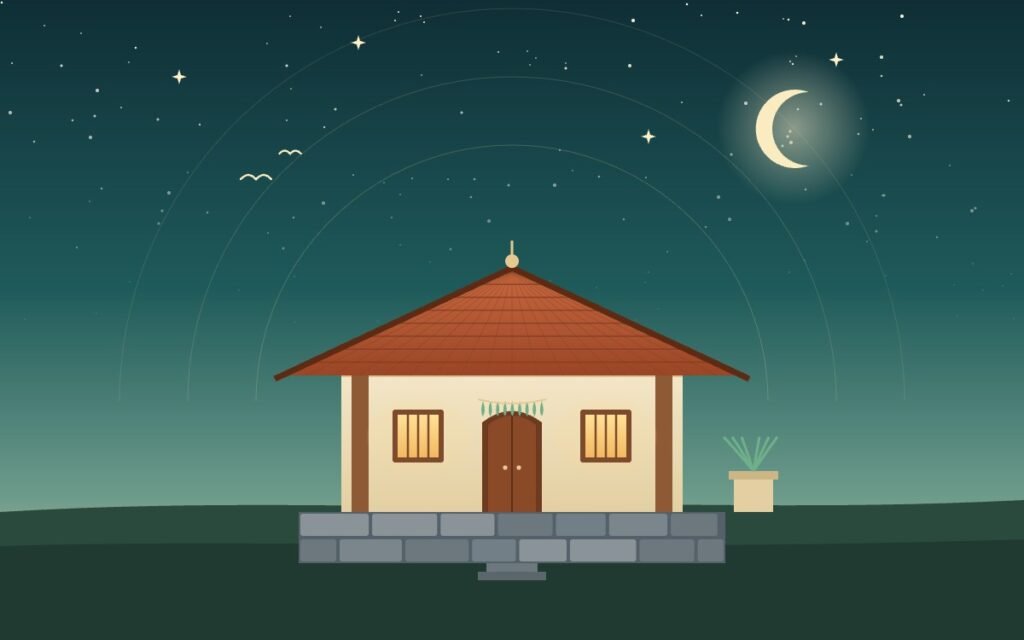
Dharma is the foundation.
Artha is the firm wall of that building.
Kama is the lovely roof above it.
Moksha is the endless, open sky over that building.
Walls without a foundation may collapse at any moment.
In the same way, a house with no awareness of the sky, however beautiful, becomes only a luxurious prison.
The traffic on the road had still not eased. When the signal turned green, everyone surged forward at once, sounding their horns. I felt how good it would be if at least a few of them stopped for a moment to think where they were going, and why they were in such a hurry.
Let the chariot of life run. Let there be earning of wealth, and the enjoyment of pleasure.
But let the reins of that chariot be in the hands of ‘dharma’ and ‘moksha’.


Leave a comment