
ಕೋಪ ಬಂದ ಕ್ಷಣದಲ್ಲಿ ಕೈ ನಡುಗುವುದು, ಎದೆ ಬಡಿದುಕೊಳ್ಳುವುದು ನಮ್ಮೆಲ್ಲರ ಅನುಭವ. ಆ ಕ್ಷಣ ಕಳೆದ ಮೇಲೆ ಒಂದು ದಣಿವು ಉಳಿಯುತ್ತದೆ.
ಈ ಅನುಭವವನ್ನು ಪದ್ಯ ಕಟ್ಟಿಗೆಯೊಳಗಿನ ಬೆಂಕಿಯ ಉಪಮೆಯಲ್ಲಿ ಹೇಳುತ್ತದೆ. ಶತ್ರು ಹೊರಗಿನವನಲ್ಲ, ಒಳಗೇ ಇರುವವನು ಎಂದು ತಿರುವು ಕೊಡುತ್ತದೆ.
ಸುಭಾಷಿತ (ಕನ್ನಡ)
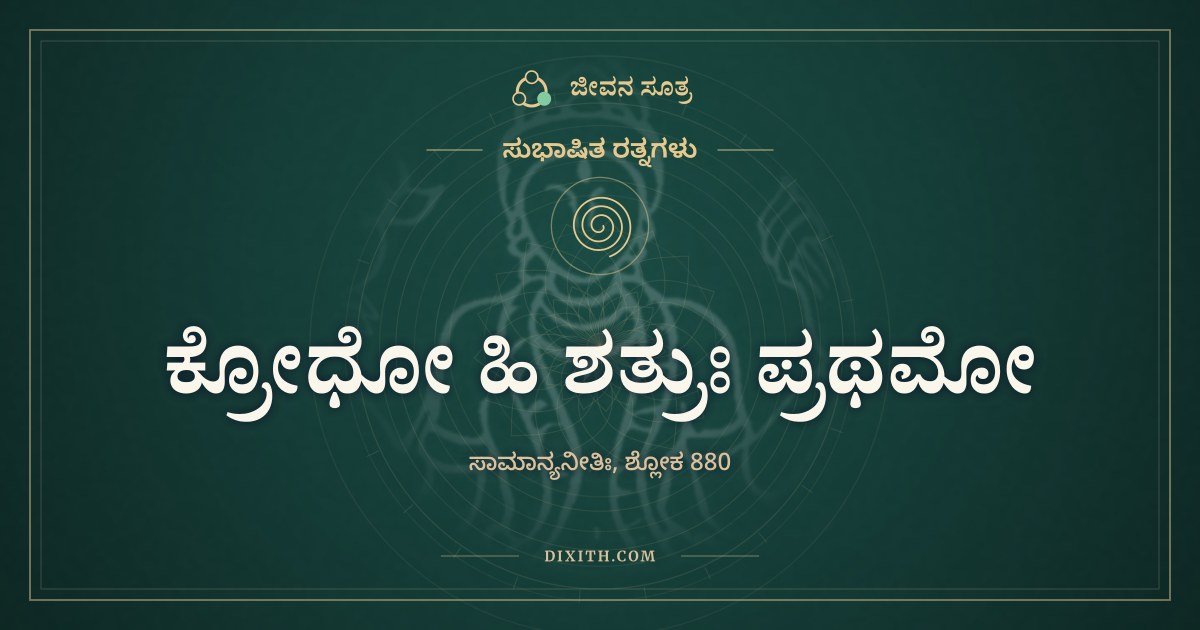
ಕ್ರೋಧೋ ಹಿ ಶತ್ರುಃ ಪ್ರಥಮೋ ನರಾಣಾಂ ದೇಹಸ್ಥಿತೋ ದೇಹವಿನಾಶನಾಯ
ಯಥಾ ಸ್ಥಿತ ಕಾಷ್ಠಗತೋ ಹಿ ವಹ್ನಿಃ ಸ ಏವ ವಹ್ನಿರ್ದಹತೇ ಶರೀರಮ್
ಸುಭಾಷಿತ (ದೇವನಾಗರಿ)
क्रोधो हि शत्रुः प्रथमो नराणां देहस्थितो देहविनाशनाय
यथा स्थित काष्ठगतो हि वह्निः स एव वह्निर्दहते शरीरम्
ಸುಭಾಷಿತ (IAST)
krodho hi śatruḥ prathamo narāṇāṃ dehasthito dehavināśanāya
yathā sthita kāṣṭhagato hi vahniḥ sa eva vahnirdahate śarīram
ಪದಶಃ ಅರ್ಥ
- ಕ್ರೋಧೋ (क्रोधो, krodho) = ಕೋಪ (anger)
- ಹಿ (हि, hi) = ನಿಜವಾಗಿ (indeed)
- ಶತ್ರುಃ (शत्रुः, śatruḥ) = ಶತ್ರು (the enemy)
- ಪ್ರಥಮೋ (प्रथमो, prathamo) = ಮೊದಲನೆಯ (the first)
- ನರಾಣಾಂ (नराणां, narāṇāṃ) = ಮನುಷ್ಯರಿಗೆ (of men)
- ದೇಹಸ್ಥಿತೋ (देहस्थितो, dehasthito) = ದೇಹದೊಳಗೆ ನೆಲೆಸಿದ್ದು (abiding in the body)
- ದೇಹವಿನಾಶನಾಯ (देहविनाशनाय, dehavināśanāya) = ದೇಹದ ನಾಶಕ್ಕಾಗಿ (for the destruction of the body)
- ಯಥಾ (यथा, yathā) = ಹೇಗೋ ಹಾಗೆ (as)
- ಸ್ಥಿತ (स्थित, sthita) = ನೆಲೆಸಿದ. ಮುದ್ರಣದಲ್ಲಿ ವಿಸರ್ಗ ಕಾಣುವುದಿಲ್ಲ, ಸ್ಥಿತಃ ಎಂದು ಓದಿ ಅರ್ಥ ಹೇಳಿದೆ (abiding. The visarga is missing in print, read here as sthitah)
- ಕಾಷ್ಠಗತೋ (काष्ठगतो, kāṣṭhagato) = ಕಟ್ಟಿಗೆಯೊಳಗೆ ಸೇರಿದ (lodged in wood)
- ಹಿ (हि, hi) = ನಿಜವಾಗಿ (indeed)
- ವಹ್ನಿಃ (वह्निः, vahniḥ) = ಬೆಂಕಿ (fire)
- ಸ (स, sa) = ಅದು (that)
- ಏವ (एव, eva) = ಅದೇ (very)
- ವಹ್ನಿರ್ದಹತೇ (वह्निर्दहते, vahnirdahate) = ಬೆಂಕಿ ಸುಡುತ್ತದೆ [ವಹ್ನಿಃ + ದಹತೇ] (the fire burns)
- ಶರೀರಮ್ (शरीरम्, śarīram) = ಕಟ್ಟಿಗೆಯನ್ನು, ದೇಹವನ್ನು (the body, the frame)
ಸಂಪೂರ್ಣ ಅರ್ಥ (ಕನ್ನಡ)
ಕೋಪವೇ ಮನುಷ್ಯರ ಮೊದಲ ಶತ್ರು. ಅದು ದೇಹದೊಳಗೇ ನೆಲೆಸಿ ದೇಹವನ್ನು ನಾಶಮಾಡುತ್ತದೆ. ಕಟ್ಟಿಗೆಯೊಳಗೇ ಇರುವ ಬೆಂಕಿಯೇ ಆ ಕಟ್ಟಿಗೆಯನ್ನು ಸುಡುವಂತೆ.
ಸಂಪೂರ್ಣ ಅರ್ಥ (ಇಂಗ್ಲಿಷ್)
Anger is the first enemy of men. It dwells within the body and works to destroy it, just as fire lodged in wood is the very fire that burns the wood.
ಈ ಸುಭಾಷಿತದ ಬಗ್ಗೆAbout this subhashita
ಉಪಮೆಯ ಹರಿತ ಇರುವುದು ಇಲ್ಲಿ. ಬೆಂಕಿ ಹೊರಗಿನಿಂದ ಬರುವುದಿಲ್ಲ, ಕಟ್ಟಿಗೆಯೊಳಗೇ ಅಡಗಿರುತ್ತದೆ. ಕೋಪವೂ ಹಾಗೆ. ಯಾರೋ ಕಿಡಿ ಹೊತ್ತಿಸಿದರೂ ಉರಿಯುವುದು ನಮ್ಮೊಳಗೇ.
The edge of the image lies here. The fire does not come from outside but hides in the wood. Anger is the same: someone may strike the spark, but it burns within us.
ಶತ್ರು ಎಂದರೆ ಸಾಮಾನ್ಯವಾಗಿ ಹೊರಗಿನವನು. ಮೊದಲ ಶತ್ರು ದೇಹದೊಳಗೇ ನೆಲೆಸಿದ್ದು ಎಂಬುದು ಪದ್ಯದ ತಿರುವು. ದೇಹ ನಾಶವಾಗುತ್ತದೆ ಎಂಬುದು ಕಾವ್ಯದ ಒತ್ತು, ವೈದ್ಯಕೀಯ ಹೇಳಿಕೆಯಲ್ಲ.
An enemy is usually outside. That the first enemy dwells within the body is the turn of the verse. The destruction of the body is poetic emphasis, not a medical statement.
ಮುದ್ರಿತ ಪಾಠದಲ್ಲಿ ಸ್ಥಿತ ಎಂಬ ಪದದ ಕೊನೆಯಲ್ಲಿ ವಿಸರ್ಗ ಕಾಣುವುದಿಲ್ಲ. ಇದು ಮುದ್ರಣದ ದೋಷ ಆಗಿರಬಹುದು. ನಾವು ಮುದ್ರಿತ ಪಾಠವನ್ನೇ ಅನುಸರಿಸಿದ್ದೇವೆ, ಓದು ಸ್ವಲ್ಪ ಅನಿಶ್ಚಿತವಾಗಿರಬಹುದು.
In the printed text the word sthita shows no final visarga. This may be a printing flaw. We follow the print, and the reading may be slightly uncertain.
ಆಧಾರ: ಸುಭಾಷಿತರತ್ನಭಾಂಡಾಗಾರ, ರಾಜ ಪ್ರಕರಣ (ನಿರ್ಣಯಸಾಗರ ಮುದ್ರಣಾಲಯ, ಮುಂಬಯಿ), ಪುಟ 173. ಶ್ಲೋಕದ ಪಾಠವನ್ನು ಮುದ್ರಿತ ಪ್ರತಿಯ ಸ್ಕ್ಯಾನ್ನೊಂದಿಗೆ ಅಕ್ಷರಶಃ ಹೋಲಿಸಿದ್ದೇವೆ. ಅರ್ಥ ಮತ್ತು ವಿವರಣೆ ನಮ್ಮದು.
Source: Subhashitaratnabhandagara, Raja Prakarana (Nirnaya Sagar Press, Bombay), page 173. The text of the verse was checked letter by letter against a scan of the printed book. The meaning and notes are ours.
ಇಂದಿನ ಬದುಕಿಗೆFor life today
ವಿದ್ಯಾರ್ಥಿಯೊಬ್ಬ ಗುರುವಿನ ಕಠಿಣ ಮಾತಿಗೆ ಒಳಗೇ ದಿನವಿಡೀ ಕುದಿಯುವುದುಂಟು. ಆ ಉರಿ ಗುರುವನ್ನು ಮುಟ್ಟುವುದಿಲ್ಲ, ಕುದಿಯುವವನನ್ನೇ ದಣಿಸುತ್ತದೆ.
A student may simmer all day inside at a teacher’s harsh word. That heat does not touch the teacher, it only wears down the one who simmers.
ಕೋಪ ಬರಬಾರದು ಎಂದು ಹೇಳುವುದು ಸುಲಭ. ಬಂದಾಗ ಅದನ್ನು ಗುರುತಿಸಿ ಒಂದು ಕ್ಷಣ ನಿಲ್ಲುವುದು ಸಾಧ್ಯವಾಗುವ ಕೆಲಸ. ಪದ್ಯ ಅಷ್ಟನ್ನು ನೆನಪಿಸುತ್ತದೆ.
It is easy to say anger should not come. Noticing it when it does and pausing for a moment is within reach. The verse reminds us of that much.
ಪಾಠದಲ್ಲಿ ತಪ್ಪೋ ಬೇರೆ ಪಾಠಾಂತರವೋ ಕಂಡಿತೇ? ನಮಗೆ ತಿಳಿಸಿ.
Noticed a mistake or a different reading? Tell us.
ಪ್ರತಿಕ್ರಿಯೆ ಬರೆಯಿರಿ