
ಔಷಧ ಬಿಟ್ಟರೆ ಏನಾಗುತ್ತದೆ ಎಂಬುದನ್ನು ಒಬ್ಬನೇ ರೋಗಿಗೆ ಮೂರು ಸಲ ಹೇಳಿದ ದಿನಗಳು ಎಲ್ಲ ವೈದ್ಯರಿಗೂ ಇರುತ್ತವೆ. ಹೇಳದೆ ಇರಲಿಲ್ಲ, ಆದರೆ ತಲುಪಲಿಲ್ಲ.
ಆಶ್ಚರ್ಯ ಎಲ್ಲಿದೆ ಎಂಬುದನ್ನು ಈ ವಿಯೋಗಿನೀ ಶ್ಲೋಕ ನಿಖರವಾಗಿ ಗುರುತಿಸುತ್ತದೆ.
ಸುಭಾಷಿತ (ಕನ್ನಡ)
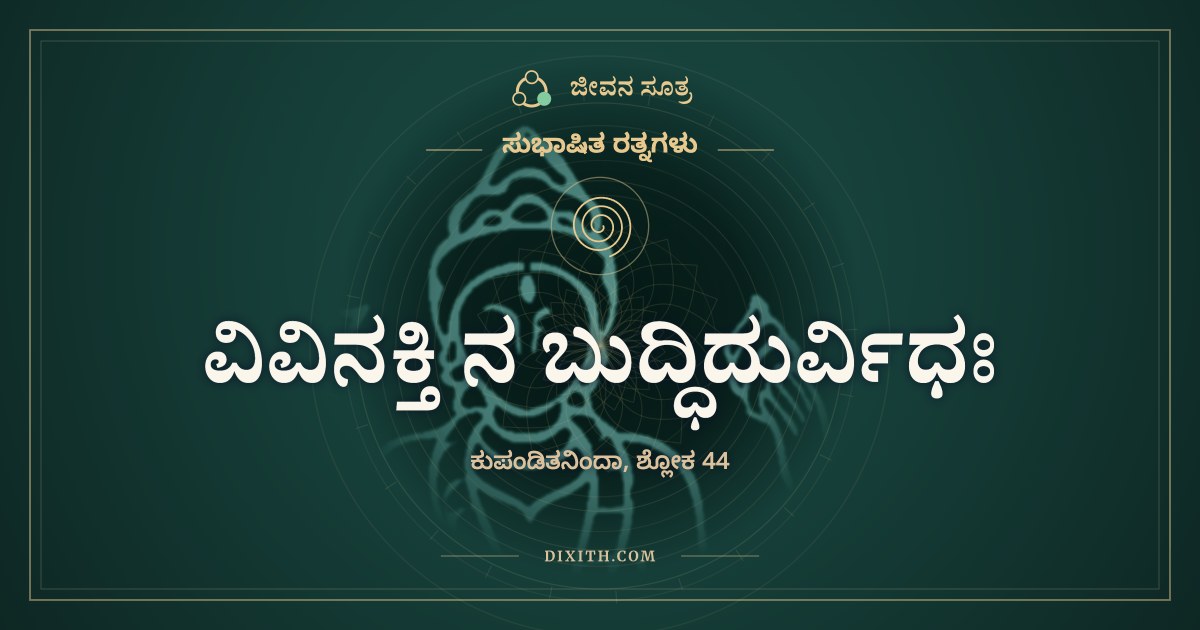
ವಿವಿನಕ್ತಿ ನ ಬುದ್ಧಿದುರ್ವಿಧಃ
ಸ್ವಯಮೇವ ಸ್ವಹಿತಂ ಪೃಥಗ್ಜನಃ ।
ಯದುದೀರಿತಮಪ್ಯದಃ ಪರೈ-
ರ್ನ ವಿಜಾನಾತಿ ತದದ್ಭುತಂ ಮಹತ್ ॥
ಸುಭಾಷಿತ (ದೇವನಾಗರಿ)
विविनक्ति न बुद्धिदुर्विधः
स्वयमेव स्वहितं पृथग्जनः ।
यदुदीरितमप्यदः परै-
र्न विजानाति तदद्भुतं महत् ॥
ಸುಭಾಷಿತ (IAST)
vivinakti na buddhidurvidhaḥ
svayameva svahitaṃ pṛthagjanaḥ |
yadudīritamapyadaḥ parai-
rna vijānāti tadadbhutaṃ mahat ||
ಪದಶಃ ಅರ್ಥ
- ವಿವಿನಕ್ತಿ (विविनक्ति, vivinakti) = ಬೇರ್ಪಡಿಸಿ ಕಾಣುತ್ತಾನೆ (makes out, tells apart)
- ನ (न, na) = ಇಲ್ಲ (not)
- ಬುದ್ಧಿದುರ್ವಿಧಃ (बुद्धिदुर्विधः, buddhidurvidhaḥ) = ಬುದ್ಧಿಯಲ್ಲಿ ಬಡವನಾದ (poor in understanding)
- ಸ್ವಯಮೇವ (स्वयमेव, svayameva) = ತಾನೇ (by himself)
- ಸ್ವಹಿತಂ (स्वहितं, svahitaṃ) = ತನ್ನ ಹಿತವನ್ನು (his own good)
- ಪೃಥಗ್ಜನಃ (पृथग्जनः, pṛthagjanaḥ) = ಸಾಮಾನ್ಯ ಮನುಷ್ಯ (the common man)
- ಯತ್ (यत्, yat) = ಯಾವುದನ್ನು (that which)
- ಉದೀರಿತಮ್ (उदीरितम्, udīritam) = ಹೇಳಲಾಗಿದೆ (has been spoken)
- ಅಪಿ (अपि, api) = ಆದರೂ (even so)
- ಅದಃ (अदः, adaḥ) = ಇದನ್ನು (this)
- ಪರೈಃ (परैः, paraiḥ) = ಬೇರೆಯವರಿಂದ (by others)
- ನ ವಿಜಾನಾತಿ (न विजानाति, na vijānāti) = ತಿಳಿಯುವುದಿಲ್ಲ (he does not understand)
- ತತ್ (तत्, tat) = ಅದು (that)
- ಅದ್ಭುತಂ (अद्भुतं, adbhutaṃ) = ಆಶ್ಚರ್ಯ (a wonder)
- ಮಹತ್ (महत्, mahat) = ದೊಡ್ಡ (great)
ಸಂಪೂರ್ಣ ಅರ್ಥ (ಕನ್ನಡ)
ಬುದ್ಧಿಯಲ್ಲಿ ಬಡವನಾದ ಸಾಮಾನ್ಯ ಮನುಷ್ಯ ತನ್ನ ಹಿತವನ್ನು ತಾನೇ ಬೇರ್ಪಡಿಸಿ ಕಾಣುವುದಿಲ್ಲ. ಬೇರೆಯವರು ಅದನ್ನು ಹೇಳಿದರೂ ಅವನಿಗೆ ತಿಳಿಯುವುದಿಲ್ಲ. ಅದು ದೊಡ್ಡ ಆಶ್ಚರ್ಯ.
ಸಂಪೂರ್ಣ ಅರ್ಥ (ಇಂಗ್ಲಿಷ್)
A common man poor in understanding does not make out his own good by himself. That he does not understand it even when others have said it to him: that is the great wonder.
ಈ ಸುಭಾಷಿತದ ಬಗ್ಗೆAbout this subhashita
ದುರ್ವಿಧ ಎಂದರೆ ಬಡವ, ಗತಿಯಿಲ್ಲದವನು. ಬುದ್ಧಿದುರ್ವಿಧ ಎಂಬ ಜೋಡಣೆ ಬುದ್ಧಿಯನ್ನೂ ಒಂದು ಸಂಪತ್ತಾಗಿ ನೋಡುತ್ತದೆ.
Durvidha means poor, badly off. The compound buddhidurvidha treats understanding itself as a kind of property.
ಶ್ಲೋಕದ ತಿರುವು ಎರಡನೆಯ ಅರ್ಧದಲ್ಲಿದೆ. ತಾನೇ ತಿಳಿಯದಿರುವುದು ಆಶ್ಚರ್ಯವಲ್ಲ. ಹೇಳಿದ ಮೇಲೂ ತಿಳಿಯದಿರುವುದೇ ಆಶ್ಚರ್ಯ ಎಂದು ಅದು ಸ್ಪಷ್ಟವಾಗಿ ಬೇರ್ಪಡಿಸುತ್ತದೆ.
The turn comes in the second half. That he cannot see it himself is no wonder; the wonder is that he still does not see it after being told. The verse separates the two clearly.
ಪೃಥಗ್ಜನ ಎಂಬ ಪದ ಗುಂಪಿನಲ್ಲಿ ಬೆರೆತ ಸಾಮಾನ್ಯ ಮನುಷ್ಯನನ್ನು ಸೂಚಿಸುತ್ತದೆ. ಬೇರೆಯವರಂತೆಯೇ ಇರುವವನು ಎಂಬ ಛಾಯೆ ಅದರಲ್ಲಿದೆ.
Prithagjana points to the ordinary man in the crowd. The shade of meaning is: one who is just like the rest.
ಆಧಾರ: ಸುಭಾಷಿತರತ್ನಭಾಂಡಾಗಾರ, ಸಾಮಾನ್ಯ ಪ್ರಕರಣ (ನಿರ್ಣಯಸಾಗರ ಮುದ್ರಣಾಲಯ, ಮುಂಬಯಿ), ಪುಟ 40. ಶ್ಲೋಕದ ಪಾಠವನ್ನು ಮುದ್ರಿತ ಪ್ರತಿಯ ಸ್ಕ್ಯಾನ್ನೊಂದಿಗೆ ಅಕ್ಷರಶಃ ಹೋಲಿಸಿದ್ದೇವೆ. ಅರ್ಥ ಮತ್ತು ವಿವರಣೆ ನಮ್ಮದು.
Source: Subhashitaratnabhandagara, Samanya Prakarana (Nirnaya Sagar Press, Bombay), page 40. The text of the verse was checked letter by letter against a scan of the printed book. The meaning and notes are ours.
ಇಂದಿನ ಬದುಕಿಗೆFor life today
ಹೇಳಿದ ಮಾತು ತಲುಪದಿದ್ದರೆ ಕೇಳಿದವನ ತಪ್ಪೇ ಎಂದು ತೀರ್ಮಾನಿಸುವ ಮೊದಲು, ಹೇಗೆ ಹೇಳಿದೆವು ಎಂಬುದನ್ನೂ ನೋಡಬೇಕು. ಶ್ಲೋಕ ಕೇಳುವವನ ಕಡೆ ಬೊಟ್ಟು ಮಾಡುತ್ತದೆ, ಆದರೆ ಪಾಠ ಎರಡೂ ಕಡೆಗೂ ಇದೆ.
Before deciding that the listener is at fault when advice does not land, it is worth looking at how it was said. The verse points at the listener, but the lesson runs both ways.
ತನ್ನ ಹಿತವನ್ನು ತಾನೇ ಕಾಣುವುದು ಯಾರಿಗೂ ಸುಲಭವಲ್ಲ. ಆದ್ದರಿಂದಲೇ ಹೇಳುವ ಒಬ್ಬರು ಬೇಕು. ಅದಲ್ಲದೆ ಕೇಳುವ ತಾಳ್ಮೆಯೂ ಬೇಕು.
Seeing one’s own good is not easy for anyone. That is why someone is needed to say it. Besides that, the patience to listen is needed too.
ಪಾಠದಲ್ಲಿ ತಪ್ಪೋ ಬೇರೆ ಪಾಠಾಂತರವೋ ಕಂಡಿತೇ? ನಮಗೆ ತಿಳಿಸಿ.
Noticed a mistake or a different reading? Tell us.


ಪ್ರತಿಕ್ರಿಯೆ ಬರೆಯಿರಿ