
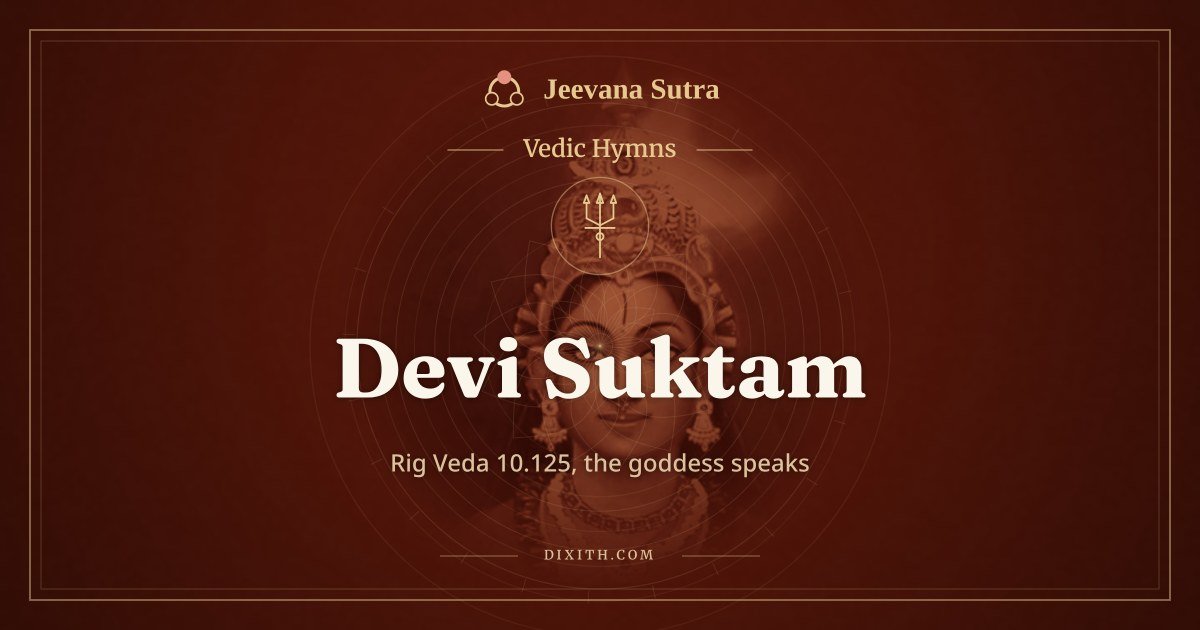
In most Vedic hymns the seer praises the deity. In this hymn the deity herself speaks. In all eight mantras one word comes again and again: ahaṃ, I.
The tradition says that Vak, the daughter of the seer Ambhṛṇa, is the seer of this hymn. There is a custom of reciting it at the end of the Durga Saptashati recitation.
Text with svara (Devanagari)
ॐ अ॒हं रु॒द्रेभि॒र्वसु॑भिश्चराम्य॒हमा᳚दि॒त्यैरु॒त वि॒श्वदे᳚वैः ।
अ॒हं मि॒त्रावरु॑णो॒भा बि॑भर्म्य॒हमिं᳚द्रा॒ग्नी अ॒हम॒श्विनो॒भा ॥ 1 ॥
अ॒हं सोम॑माह॒नसं᳚ बिभर्म्य॒हं त्वष्टा᳚रमु॒त पू॒षणं॒ भगं᳚ ।
अ॒हं द॑धामि॒ द्रवि॑णं ह॒विष्म॑ते सुप्रा॒व्ये॒ ये॑ 3 यज॑मानाय सुन्व॒ते ॥ 2 ॥
अ॒हं राष्ट्री᳚ सं॒गम॑नी॒ वसू᳚नां चिकि॒तुषी᳚ प्रथ॒मा य॒ज्ञिया᳚नाम् ।
तां मा᳚ दे॒वा व्य॑दधुः पुरु॒त्रा भूरि॑स्थात्रां॒ भू~र्या᳚वे॒शयं᳚तीम् ॥ 3 ॥
मया॒ सो अन्न॑मत्ति यो वि॒पश्य॑ति॒ यः प्राणि॑ति॒ य ईं᳚ शृ॒णोत्यु॒क्तम् ।
अ॒मं॒त॒वो॒मांत उप॑क्षियंति॒ श्रु॒धि श्रु॑तं श्रद्धि॒वं ते᳚ वदामि ॥ 4 ॥
अ॒हमे॒व स्व॒यमि॒दं-वँदा॑मि॒ जुष्टं᳚ दे॒वेभि॑रु॒त मानु॑षेभिः ।
यं का॒मये॒ तं त॑मु॒ग्रं कृ॑णोमि॒ तं ब्र॒ह्माणं॒ तमृषिं॒ तं सु॑मे॒धाम् ॥ 5 ॥
अ॒हं रु॒द्राय॒ धनु॒रात॑नोमि ब्रह्म॒द्विषे॒ शर॑वे हंत॒ वा उ॑ ।
अ॒हं जना᳚य स॒मदं᳚ कृणोम्य॒हं द्यावा᳚पृथि॒वी आवि॑वेश ॥ 6 ॥
अ॒हं सु॑वे पि॒तर॑मस्य मू॒र्धन् मम॒ योनि॑र॒प्स्वं॒तः स॑मु॒द्रे ।
ततो॒ विति॑ष्ठे॒ भुव॒नानु॒ विश्वो॒तामूं द्यां-वँ॒र्ष्मणोप॑ स्पृशामि ॥ 7 ॥
अ॒हमे॒व वात॑ इव॒ प्रवा᳚म्या॒-रभ॑माणा॒ भुव॑नानि॒ विश्वा᳚ ।
प॒रो दि॒वापर॒ ए॒ना पृ॑थि॒व्यै-ताव॑ती महि॒ना संब॑भूव ॥ 8 ॥
ॐ शांतिः॒ शांतिः॒ शांतिः॑ ॥
Text in English IAST transliteration
oṃ a̱haṃ ru̱drebhi̱rvasúbhiścarāmya̱hamā̋di̱tyairu̱ta vi̱śvade̋vaiḥ |
a̱haṃ mi̱trāvarúṇo̱bhā bíbharmya̱hami̋ṃdrā̱gnī a̱hama̱śvino̱bhā || 1 ||
a̱haṃ somámāha̱nasa̋ṃ bibharmya̱haṃ tvaṣṭā̋ramu̱ta pū̱ṣaṇa̱ṃ bhaga̋ṃ |
a̱haṃ dádhāmi̱ dravíṇaṃ ha̱viṣmáte suprā̱vye̱ yé 3 yajámānāya sunva̱te || 2 ||
a̱haṃ rāṣṭrī̋ sa̱ṃgamánī̱ vasū̋nāṃ ciki̱tuṣī̋ pratha̱mā ya̱jñiyā̋nām |
tāṃ mā̋ de̱vā vyádadhuḥ puru̱trā bhūrísthātrā̱ṃ bhū~ryā̋ve̱śaya̋ṃtīm || 3 ||
mayā̱ so annámatti yo vi̱paśyáti̱ yaḥ prāṇíti̱ ya ī̋ṃ śṛ̱ṇotyu̱ktam |
a̱ma̱ṃta̱vo̱māṃta upákṣiyaṃti̱ śru̱dhi śrútaṃ śraddhi̱vaṃ te̋ vadāmi || 4 ||
a̱hame̱va sva̱yami̱daṃ-va~dā́mi̱ juṣṭa̋ṃ de̱vebhíru̱ta mānúṣebhiḥ |
yaṃ kā̱maye̱ taṃ támu̱graṃ kṛ́ṇomi̱ taṃ bra̱hmāṇa̱ṃ tamṛṣi̱ṃ taṃ súme̱dhām || 5 ||
a̱haṃ ru̱drāya̱ dhanu̱rātánomi brahma̱dviṣe̱ śaráve haṃta̱ vā ú |
a̱haṃ janā̋ya sa̱mada̋ṃ kṛṇomya̱haṃ dyāvā̋pṛthi̱vī āvíveśa || 6 ||
a̱haṃ súve pi̱tarámasya mū̱rdhan mama̱ yoníra̱psva̱ṃtaḥ sámu̱dre |
tato̱ vitíṣṭhe̱ bhuva̱nānu̱ viśvo̱tāmūṃ dyāṃ-va̱~rṣmaṇopá spṛśāmi || 7 ||
a̱hame̱va vātá iva̱ pravā̋myā̱-rabhámāṇā̱ bhuvánāni̱ viśvā̋ |
pa̱ro di̱vāpara̱ e̱nā pṛ́thi̱vyai-tāvátī mahi̱nā saṃbábhūva || 8 ||
oṃ śāṃti̱ḥ śāṃti̱ḥ śāṃtíḥ ||
Accents: macron below for anudātta, acute for svarita, double acute for the kampa; udātta is unmarked.
About this hymn
It is also called the Vagambhrini Sukta or Vak Sukta. Vak here is not merely speech but the consciousness that upholds all the gods and worlds. The Shakta tradition reads it as the goddess praising herself; Advaitins read it as a declaration of realised selfhood.
In many places it is recited at the start or end of the Chandi Patha, the recitation of the Durga Saptashati, where it goes by the name Devi Sukta.
The numeral 3 beside suprāvye in the second mantra marks pluta, a vowel drawn out to three measures. The mark beside bhūryāveśayantīm in the third mantra is kept as it is in the source copy.
The accented text follows the 2026 collection of Vedic hymns prepared by Aprameya of Udupi. How to read the marks: a line below a syllable is anudatta, a vertical stroke above is svarita, a double stroke above is the long svarita. Learning from a teacher remains the right way.
Sources: several. Where versions differ, we have noted it here.
For life today
The fourth mantra names the most ordinary acts, seeing, breathing, hearing, eating, as the signs of the goddess’s presence. The divine need not be sought in a distant sky.
As physicians we examine these very functions every day: breath, sight, hearing, appetite. Most people realise what a gift each one is only when it is lost.
Noticed a mistake or a different reading? Tell us.


Leave a comment