
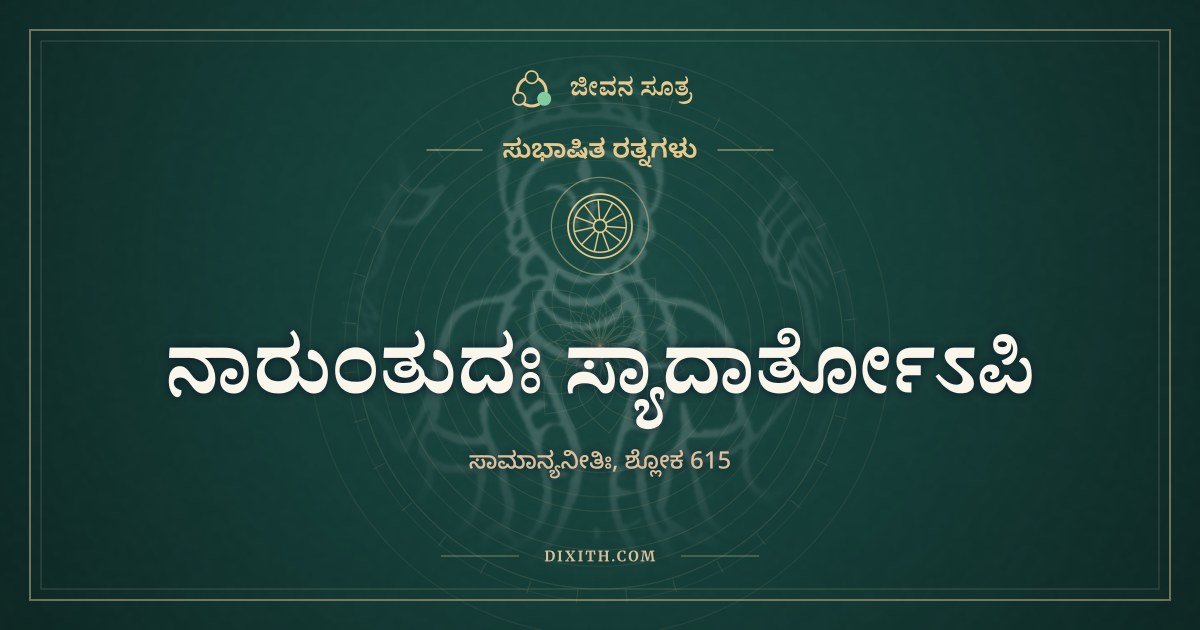
ರಾತ್ರಿ ಪಾಳಿಯ ದಣಿವಿನಲ್ಲಿ ಕಿರಿಯರ ಮೇಲೆ ಏರಿದ ಧ್ವನಿ ಬಹಳ ದಿನ ಅವರ ನೆನಪಿನಲ್ಲಿ ಉಳಿಯುತ್ತದೆ. ಹೇಳಿದವನಿಗೆ ಅದು ಮರೆತುಹೋಗಿರುತ್ತದೆ.
ಈ ಶ್ಲೋಕ ತನಗೆ ನೋವಾದಾಗಲೂ ಇನ್ನೊಬ್ಬರನ್ನು ನೋಯಿಸಬಾರದು ಎನ್ನುತ್ತದೆ. ಇದೊಂದು ಅನುಷ್ಟುಪ್ ಶ್ಲೋಕ, ಮನುಸ್ಮೃತಿಯಲ್ಲಿ ಕಾಣುವ ಮಾತು ಎಂದು ಪ್ರಸಿದ್ಧವಾಗಿದೆ.
ಸುಭಾಷಿತ (ಕನ್ನಡ)
ನಾರುಂತುದಃ ಸ್ಯಾದಾರ್ತೋಽಪಿ ನ ಪರದ್ರೋಹಕರ್ಮಭಿಃ
ಯಯಾಸ್ಯೋದ್ವಿಜತೇ ವಾಚಾ ನಾಲೋಕ್ಯಾಂ ತಾಮುದೀರಯೇತ್
ಸುಭಾಷಿತ (ದೇವನಾಗರಿ)
नारुन्तुदः स्यादार्तोऽपि न परद्रोहकर्मभिः
ययास्योद्विजते वाचा नालोक्यां तामुदीरयेत्
ಸುಭಾಷಿತ (IAST)
nāruntudaḥ syādārto’pi na paradrohakarmabhiḥ
yayāsyodvijate vācā nālokyāṃ tāmudīrayet
ಪದಶಃ ಅರ್ಥ
- ನಾರುಂತುದಃ (नारुन्तुदः, nāruntudaḥ) = ಮರ್ಮಕ್ಕೆ ಚುಚ್ಚುವವನು ಆಗಬಾರದು (ನ ಅರುಂತುದಃ) (one should not be a pricker of tender spots (na aruntudaḥ))
- ಸ್ಯಾದಾರ್ತೋಽಪಿ (स्यादार्तोऽपि, syādārto’pi) = ತಾನು ಆರ್ತನಾದರೂ (ಸ್ಯಾತ್ ಆರ್ತಃ ಅಪಿ) (even if he is afflicted (syāt ārtaḥ api))
- ನ (न, na) = ಬೇಡ (nor)
- ಪರದ್ರೋಹಕರ್ಮಭಿಃ (परद्रोहकर्मभिः, paradrohakarmabhiḥ) = ಬೇರೆಯವರಿಗೆ ದ್ರೋಹ ಮಾಡುವ ಕೆಲಸಗಳಿಂದ (by acts of malice towards others)
- ಯಯಾಸ್ಯೋದ್ವಿಜತೇ (ययास्योद्विजते, yayāsyodvijate) = ಯಾವ ಮಾತಿನಿಂದ ಇವನಿಗೆ ಕಸಿವಿಸಿ ಆಗುತ್ತದೋ (ಯಯಾ ಅಸ್ಯ ಉದ್ವಿಜತೇ) (by which this person is agitated (yayā asya udvijate))
- ವಾಚಾ (वाचा, vācā) = ಮಾತಿನಿಂದ (by speech)
- ನಾಲೋಕ್ಯಾಂ (नालोक्यां, nālokyāṃ) = ಒಳ್ಳೆಯದಕ್ಕೆ ದಾರಿಯಾಗದ (ನ ಅಲೋಕ್ಯಾಂ) (not leading to a good world (na alokyām))
- ತಾಮುದೀರಯೇತ್ (तामुदीरयेत्, tāmudīrayet) = ಅಂಥ ಮಾತನ್ನು ಆಡಬಾರದು (ತಾಂ ಉದೀರಯೇತ್) (one should not utter that (tām udīrayet))
ಸಂಪೂರ್ಣ ಅರ್ಥ (ಕನ್ನಡ)
ತಾನೇ ನೋವಿನಲ್ಲಿದ್ದರೂ ಇನ್ನೊಬ್ಬರ ಮರ್ಮಕ್ಕೆ ಚುಚ್ಚುವವನು ಆಗಬಾರದು. ಬೇರೆಯವರಿಗೆ ದ್ರೋಹ ಮಾಡುವ ಕೆಲಸವನ್ನೂ ಮಾಡಬಾರದು. ಯಾವ ಮಾತಿನಿಂದ ಅವರಿಗೆ ಕಸಿವಿಸಿ ಆಗುತ್ತದೋ, ಒಳ್ಳೆಯದಕ್ಕೆ ದಾರಿಯಾಗದ ಅಂಥ ಮಾತನ್ನು ಆಡಬಾರದು.
ಸಂಪೂರ್ಣ ಅರ್ಥ (ಇಂಗ್ಲಿಷ್)
Even when he is himself in pain, one should not be a pricker of other people’s tender spots, nor do acts of malice against them. One should not utter speech that unsettles the other, speech that leads to no good.
ಈ ಸುಭಾಷಿತದ ಬಗ್ಗೆAbout this subhashita
ಅರುಂತುದ ಎಂದರೆ ಅರುಸ್ ಅನ್ನು, ಅಂದರೆ ಮರ್ಮಸ್ಥಾನ ಅಥವಾ ಹುಣ್ಣನ್ನು ಚುಚ್ಚುವವನು. ದೈಹಿಕ ಗಾಯದ ಹೋಲಿಕೆಯಲ್ಲಿ ಕಟುಮಾತನ್ನು ಹೇಳುವ ಚಿತ್ರ ಇಲ್ಲಿದೆ.
Aruntuda means one who pricks the aruh, the tender spot or sore. The verse draws speech as if it were a physical wound.
ಅಲೋಕ್ಯ ಎಂದರೆ ಒಳ್ಳೆಯ ಲೋಕಗಳಿಗೆ ದಾರಿಯಾಗದ ಎಂದು ವ್ಯಾಖ್ಯಾನಕಾರರು ಹೇಳುತ್ತಾರೆ ಎಂದು ನಾವು ತಿಳಿದಿದ್ದೇವೆ. ಸರಳವಾಗಿ ಹೇಳುವುದಾದರೆ ಯಾರಿಗೂ ಹಿತವಾಗದ ಮಾತು.
We understand that commentators explain alokya as not leading to good worlds. Put simply, it is speech that does good to no one.
ಆಧಾರ: ಸುಭಾಷಿತರತ್ನಭಾಂಡಾಗಾರ, ರಾಜ ಪ್ರಕರಣ (ನಿರ್ಣಯಸಾಗರ ಮುದ್ರಣಾಲಯ, ಮುಂಬಯಿ), ಪುಟ 167. ಶ್ಲೋಕದ ಪಾಠವನ್ನು ಮುದ್ರಿತ ಪ್ರತಿಯ ಸ್ಕ್ಯಾನ್ನೊಂದಿಗೆ ಅಕ್ಷರಶಃ ಹೋಲಿಸಿದ್ದೇವೆ. ಅರ್ಥ ಮತ್ತು ವಿವರಣೆ ನಮ್ಮದು.
Source: Subhashitaratnabhandagara, Raja Prakarana (Nirnaya Sagar Press, Bombay), page 167. The text of the verse was checked letter by letter against a scan of the printed book. The meaning and notes are ours.
ಇಂದಿನ ಬದುಕಿಗೆFor life today
ದಣಿವು, ನೋವು, ಒತ್ತಡ ಇವು ಕಟುವಾಗಿ ಮಾತಾಡಲು ಕಾರಣಗಳು ಆಗಬಹುದು, ಆದರೆ ಸಮರ್ಥನೆ ಅಲ್ಲ. ಕೇಳಿದವನಿಗೆ ಆ ಮಾತು ನೋವಿನ ಕಾರಣ ಹೇಳುವುದಿಲ್ಲ, ಮಾತನ್ನು ಮಾತ್ರ ಉಳಿಸಿಕೊಳ್ಳುತ್ತದೆ.
Tiredness, pain and pressure may explain sharp speech, but they do not justify it. The listener does not hear the reason, he keeps only the words.
ಮನಸ್ಸು ಕೆಟ್ಟಿರುವಾಗ ಒಮ್ಮೆ ನಿಲ್ಲುವುದು ಒಳ್ಳೆಯ ಅಭ್ಯಾಸ. ಸಿಟ್ಟಿನ ಮಾತು ಬಾಯಿಂದ ಹೊರಟ ಮೇಲೆ ಹಿಂದೆ ಕರೆಯಲಾಗುವುದಿಲ್ಲ.
When the mind is upset, pausing once is a good habit. Once an angry word has left the mouth it cannot be called back.
ಪಾಠದಲ್ಲಿ ತಪ್ಪೋ ಬೇರೆ ಪಾಠಾಂತರವೋ ಕಂಡಿತೇ? ನಮಗೆ ತಿಳಿಸಿ.
Noticed a mistake or a different reading? Tell us.
ಪ್ರತಿಕ್ರಿಯೆ ಬರೆಯಿರಿ