
ಕನ್ನಡಕ ಇಲ್ಲದೆ ಪತ್ರಿಕೆಯ ಮೊದಲ ಸಾಲು ಓದಲು ಹೆಣಗಾಡಿದ ಹಿರಿಯರು, ಕನ್ನಡಕ ಹಾಕಿದ ಕ್ಷಣ ಮುಖ ಅರಳಿಸುವುದನ್ನು ನಾವು ನೋಡಿದ್ದೇವೆ.
ಕನ್ನಡಕ ಕಣ್ಣಿಗೆ ದಾರಿ ತೋರಿಸುವಂತೆ ವಿದ್ಯೆ ಮನಸ್ಸಿಗೆ ತೋರಿಸುತ್ತದೆ ಎಂದು ಈ ಅನುಷ್ಟುಪ್ ಶ್ಲೋಕ ನಾಲ್ಕು ಹೋಲಿಕೆಗಳಲ್ಲಿ ಹೇಳುತ್ತದೆ.
ಸುಭಾಷಿತ (ಕನ್ನಡ)
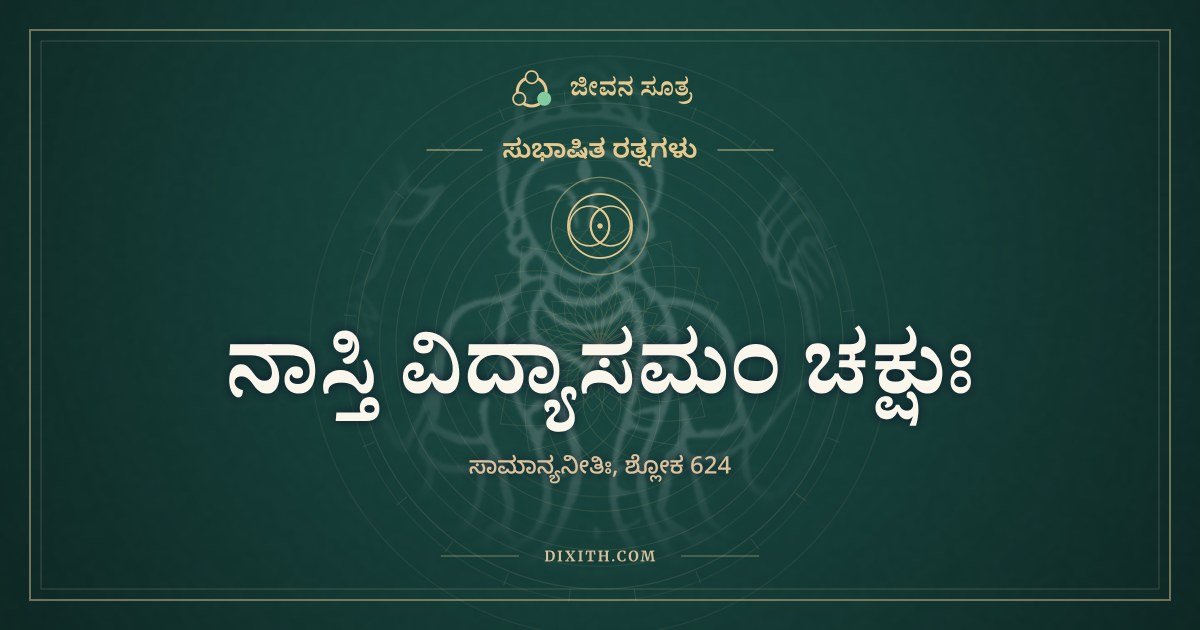
ನಾಸ್ತಿ ವಿದ್ಯಾಸಮಂ ಚಕ್ಷುರ್ನಾಸ್ತಿ ಸತ್ಯಸಮಂ ತಪಃ
ನಾಸ್ತಿ ರಾಗಸಮಂ ದುಃಖಂ ನಾಸ್ತಿ ತ್ಯಾಗಸಮಂ ಸುಖಮ್
ಸುಭಾಷಿತ (ದೇವನಾಗರಿ)
नास्ति विद्यासमं चक्षुर्नास्ति सत्यसमं तपः
नास्ति रागसमं दुःखं नास्ति त्यागसमं सुखम्
ಸುಭಾಷಿತ (IAST)
nāsti vidyāsamaṃ cakṣurnāsti satyasamaṃ tapaḥ
nāsti rāgasamaṃ duḥkhaṃ nāsti tyāgasamaṃ sukham
ಪದಶಃ ಅರ್ಥ
- ನಾಸ್ತಿ (नास्ति, nāsti) = ಇಲ್ಲ [ನ + ಅಸ್ತಿ] (there is not)
- ವಿದ್ಯಾಸಮಂ (विद्यासमं, vidyāsamaṃ) = ವಿದ್ಯೆಗೆ ಸಮನಾದ (equal to knowledge)
- ಚಕ್ಷುರ್ನಾಸ್ತಿ (चक्षुर्नास्ति, cakṣurnāsti) = ಕಣ್ಣು ಇಲ್ಲ [ಚಕ್ಷುಃ + ನ + ಅಸ್ತಿ] (an eye, there is not)
- ಸತ್ಯಸಮಂ (सत्यसमं, satyasamaṃ) = ಸತ್ಯಕ್ಕೆ ಸಮನಾದ (equal to truth)
- ತಪಃ (तपः, tapaḥ) = ತಪಸ್ಸು (austerity)
- ನಾಸ್ತಿ (नास्ति, nāsti) = ಇಲ್ಲ [ನ + ಅಸ್ತಿ] (there is not)
- ರಾಗಸಮಂ (रागसमं, rāgasamaṃ) = ಮೋಹಕ್ಕೆ ಸಮನಾದ (equal to attachment)
- ದುಃಖಂ (दुःखं, duḥkhaṃ) = ದುಃಖ (sorrow)
- ನಾಸ್ತಿ (नास्ति, nāsti) = ಇಲ್ಲ [ನ + ಅಸ್ತಿ] (there is not)
- ತ್ಯಾಗಸಮಂ (त्यागसमं, tyāgasamaṃ) = ತ್ಯಾಗಕ್ಕೆ ಸಮನಾದ (equal to renunciation)
- ಸುಖಮ್ (सुखम्, sukham) = ಸುಖ (happiness)
ಸಂಪೂರ್ಣ ಅರ್ಥ (ಕನ್ನಡ)
ವಿದ್ಯೆಗೆ ಸಮನಾದ ಕಣ್ಣಿಲ್ಲ. ಸತ್ಯಕ್ಕೆ ಸಮನಾದ ತಪಸ್ಸಿಲ್ಲ. ಮೋಹಕ್ಕೆ ಸಮನಾದ ದುಃಖವಿಲ್ಲ. ತ್ಯಾಗಕ್ಕೆ ಸಮನಾದ ಸುಖವಿಲ್ಲ.
ಸಂಪೂರ್ಣ ಅರ್ಥ (ಇಂಗ್ಲಿಷ್)
There is no eye like knowledge. There is no austerity like truth. There is no sorrow like attachment. There is no happiness like renunciation.
ಈ ಸುಭಾಷಿತದ ಬಗ್ಗೆAbout this subhashita
ವಿದ್ಯೆಯನ್ನು ಕಣ್ಣಿಗೆ ಹೋಲಿಸುವುದು ಸಂಸ್ಕೃತದಲ್ಲಿ ಸಾಮಾನ್ಯ ಉಪಮೆ. ಕಣ್ಣು ಹೊರಗಿನ ದಾರಿ ತೋರಿಸಿದರೆ ವಿದ್ಯೆ ಬದುಕಿನ ದಾರಿ ತೋರಿಸುತ್ತದೆ ಎಂಬುದು ಇಲ್ಲಿನ ಭಾವ.
Likening knowledge to the eye is a common image in Sanskrit. The thought here is that the eye shows the road outside, knowledge shows the road of life.
ಶ್ಲೋಕ ನಾಲ್ಕು ಬಾರಿ ಒಂದೇ ಸೂತ್ರ ಬಳಸುತ್ತದೆ: ನಾಸ್ತಿ ಮತ್ತು ಸಮ. ಮೊದಲ ಎರಡು ಒಳ್ಳೆಯದನ್ನು, ಕೊನೆಯ ಎರಡು ದುಃಖ ಮತ್ತು ಸುಖದ ಬೇರುಗಳನ್ನು ಹೇಳುತ್ತವೆ. ರಾಗ ಎಂದರೆ ಇಲ್ಲಿ ಅತಿ ಆಸಕ್ತಿ ಅಥವಾ ಹಿಡಿತ.
The verse uses one formula four times, nasti and sama. The first two name what is good, the last two name the roots of sorrow and happiness. Raga here means excessive attachment or clinging.
ಮುದ್ರಣದ ಪುಟದಲ್ಲಿ ತಪಃ, ದುಃಖಂ ಮತ್ತು ಕೆಲವು ಅನುಸ್ವಾರಗಳು ಅಸ್ಪಷ್ಟವಾಗಿ ಬಂದಿವೆ. ವ್ಯಾಕರಣಕ್ಕೆ ಹೊಂದುವಂತೆ ಓದಿದ್ದೇವೆ.
On the printed page tapah, duhkham and some anusvaras came out faint. We have read them as grammar requires.
ಆಧಾರ: ಸುಭಾಷಿತರತ್ನಭಾಂಡಾಗಾರ, ರಾಜ ಪ್ರಕರಣ (ನಿರ್ಣಯಸಾಗರ ಮುದ್ರಣಾಲಯ, ಮುಂಬಯಿ), ಪುಟ 167. ಶ್ಲೋಕದ ಪಾಠವನ್ನು ಮುದ್ರಿತ ಪ್ರತಿಯ ಸ್ಕ್ಯಾನ್ನೊಂದಿಗೆ ಅಕ್ಷರಶಃ ಹೋಲಿಸಿದ್ದೇವೆ. ಅರ್ಥ ಮತ್ತು ವಿವರಣೆ ನಮ್ಮದು.
Source: Subhashitaratnabhandagara, Raja Prakarana (Nirnaya Sagar Press, Bombay), page 167. The text of the verse was checked letter by letter against a scan of the printed book. The meaning and notes are ours.
ಇಂದಿನ ಬದುಕಿಗೆFor life today
ವಿದ್ಯೆ ಎಂದರೆ ಪದವಿ ಮಾತ್ರವಲ್ಲ. ಕಲಿತದ್ದನ್ನು ರೋಗಿಯ ಮುಂದೆ, ಸಹೋದ್ಯೋಗಿಯ ಮುಂದೆ ನೋಡುವ ದೃಷ್ಟಿಯಾಗಿ ಬಳಸುವುದೇ ಇಲ್ಲಿ ವಿದ್ಯೆ.
Vidya is not only a degree. Here it is what we learn put to use as a way of seeing, in front of a patient or a colleague.
ತ್ಯಾಗವೇ ಸುಖ ಎಂದು ಶ್ಲೋಕ ಹೇಳುವುದು ಮೋಹವನ್ನು ಬಿಡುವ ಅರ್ಥದಲ್ಲಿ. ಎಲ್ಲವನ್ನೂ ಬಿಟ್ಟುಬಿಡಬೇಕು ಎಂಬ ಸೂಚನೆ ಅಲ್ಲ, ಹಿಡಿತ ಸಡಿಲಿಸಿದಾಗ ಸಿಗುವ ಹಗುರತೆ ಎಂದು ತೆಗೆದುಕೊಳ್ಳಬಹುದು.
When the verse calls renunciation happiness, it means letting go of attachment. It is not a call to give up everything, it can be taken as the lightness that comes when the grip loosens.
ಪಾಠದಲ್ಲಿ ತಪ್ಪೋ ಬೇರೆ ಪಾಠಾಂತರವೋ ಕಂಡಿತೇ? ನಮಗೆ ತಿಳಿಸಿ.
Noticed a mistake or a different reading? Tell us.
ಪ್ರತಿಕ್ರಿಯೆ ಬರೆಯಿರಿ