
ಕೊಟ್ಟದ್ದು ಹೋಯಿತು ಎಂದು ಲೆಕ್ಕ ಹಾಕುವವರು ಹೆಚ್ಚು. ಆದರೂ ಕೆಲವರಿಗೆ ಕೊಟ್ಟದ್ದೇ ಉಳಿದ ಸಂಪತ್ತಿನಂತೆ ತೋರುತ್ತದೆ.
ಆರ್ಯಾ ಛಂದಸ್ಸಿನ ಈ ಶ್ಲೋಕ ಆ ಭಾವನೆಯನ್ನು ಶಿವನ ಮುಡಿಯ ಮೇಲಿನ ಚಂದ್ರಕಲೆಯ ಚಿತ್ರದಿಂದ ಹೇಳುತ್ತದೆ.
ಸುಭಾಷಿತ (ಕನ್ನಡ)
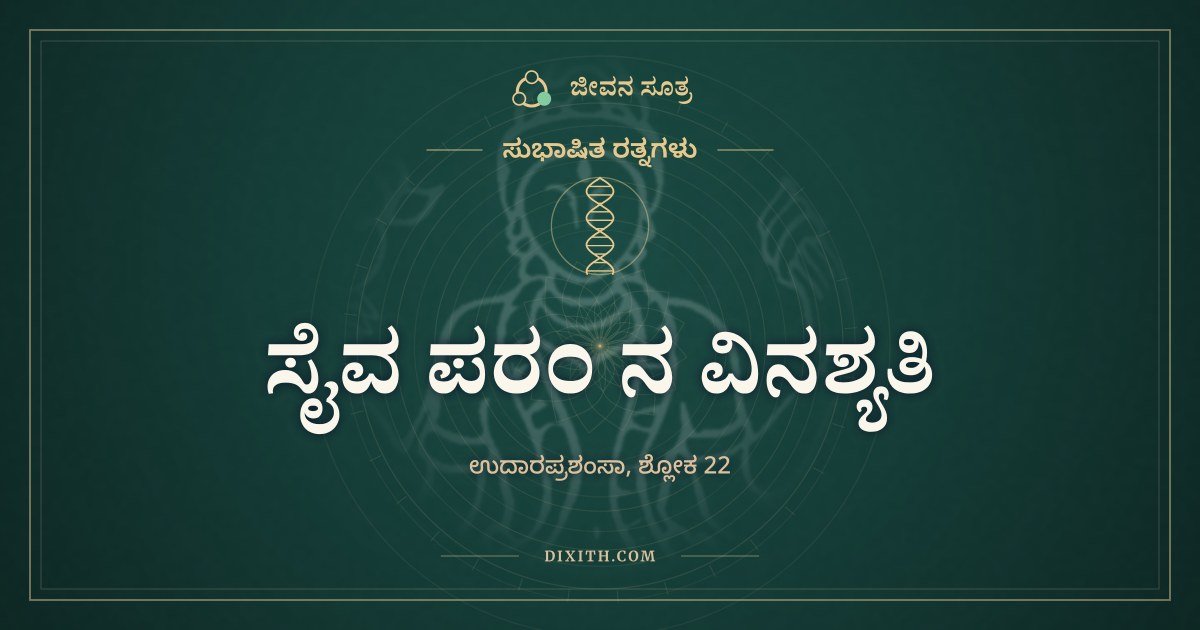
ಸೈವ ಪರಂ ನ ವಿನಶ್ಯತಿ ತನುರಪಿ ಯಾ ಶ್ರೀರ್ನಿವೇಶಿತಾ ಸತ್ಸು
ಅವಶಿಷ್ಯತೇ ಹಿಮಾಂಶೋಃ ಸೈವ ಕಲಾ ಯಾ ಸ್ಥಿತಾ ಶಂಭೌ
ಸುಭಾಷಿತ (ದೇವನಾಗರಿ)
सैव परं न विनश्यति तनुरपि या श्रीर्निवेशिता सत्सु
अवशिष्यते हिमांशोः सैव कला या स्थिता शंभौ
ಸುಭಾಷಿತ (IAST)
saiva paraṃ na vinaśyati tanurapi yā śrīrniveśitā satsu
avaśiṣyate himāṃśoḥ saiva kalā yā sthitā śaṃbhau
ಪದಶಃ ಅರ್ಥ
- ಸೈವ (सैव, saiva) = ಅದೇ (ಸಾ + ಏವ) (that very one)
- ಪರಂ (परं, paraṃ) = ಮಾತ್ರ (alone)
- ನ (न, na) = ಇಲ್ಲ (not)
- ವಿನಶ್ಯತಿ (विनश्यति, vinaśyati) = ನಾಶವಾಗುತ್ತದೆ (is lost)
- ತನುರಪಿ (तनुरपि, tanurapi) = ಸ್ವಲ್ಪವಾದರೂ (ತನುಃ + ಅಪಿ) (though slight)
- ಯಾ (या, yā) = ಯಾವುದು (which)
- ಶ್ರೀರ್ನಿವೇಶಿತಾ (श्रीर्निवेशिता, śrīrniveśitā) = ಸಂಪತ್ತು ಇಟ್ಟದ್ದು (ಶ್ರೀಃ + ನಿವೇಶಿತಾ) (the wealth that is placed)
- ಸತ್ಸು (सत्सु, satsu) = ಸಜ್ಜನರಲ್ಲಿ (among the good)
- ಅವಶಿಷ್ಯತೇ (अवशिष्यते, avaśiṣyate) = ಉಳಿಯುತ್ತದೆ (remains)
- ಹಿಮಾಂಶೋಃ (हिमांशोः, himāṃśoḥ) = ಚಂದ್ರನಲ್ಲಿ, ತಂಪುಕಿರಣದವನ (of the moon, the cool-rayed one)
- ಸೈವ (सैव, saiva) = ಅದೇ (ಸಾ + ಏವ) (that very one)
- ಕಲಾ (कला, kalā) = ಕಲೆ, ಚಂದ್ರನ ಒಂದು ಭಾಗ (the digit, a part of the moon)
- ಯಾ (या, yā) = ಯಾವುದು (which)
- ಸ್ಥಿತಾ (स्थिता, sthitā) = ನೆಲೆಸಿದೆ (stands)
- ಶಂಭೌ (शंभौ, śaṃbhau) = ಶಂಭುವಿನಲ್ಲಿ, ಶಿವನಲ್ಲಿ (on Shambhu, on Shiva)
ಸಂಪೂರ್ಣ ಅರ್ಥ (ಕನ್ನಡ)
ಸಜ್ಜನರಲ್ಲಿ ಇಟ್ಟ ಸಂಪತ್ತು ಸ್ವಲ್ಪವೇ ಆಗಿದ್ದರೂ ಅದೊಂದೇ ನಾಶವಾಗುವುದಿಲ್ಲ. ಚಂದ್ರನಲ್ಲಿ ಉಳಿಯುವುದು ಶಂಭುವಿನ ಮೇಲೆ ನೆಲೆಸಿರುವ ಆ ಕಲೆಯೇ.
ಸಂಪೂರ್ಣ ಅರ್ಥ (ಇಂಗ್ಲಿಷ್)
Wealth placed with the good, however slight, is the one thing that does not perish. Of the moon, what remains is only that digit which rests on Shambhu.
ಈ ಸುಭಾಷಿತದ ಬಗ್ಗೆAbout this subhashita
ಕಲಾ ಎಂದರೆ ಚಂದ್ರನ ಒಂದು ಭಾಗ. ಚಂದ್ರ ಕ್ಷೀಣಿಸುತ್ತಾನೆ, ಆದರೆ ಶಿವನ ಜಟೆಯ ಮೇಲಿನ ಕಲೆ ಕುಂದುವುದಿಲ್ಲ ಎಂಬುದು ಸಂಪ್ರದಾಯದ ಕಲ್ಪನೆ. ಕವಿ ಅದನ್ನು ಸಾಕ್ಷಿಯಾಗಿ ಬಳಸಿದ್ದಾನೆ.
Kala means one digit of the moon. The moon wanes, but the digit on Shiva’s matted hair does not fade. This is a traditional notion, and the poet uses it as his witness.
ಶ್ರೀ ಎಂದರೆ ಸಂಪತ್ತು, ಲಕ್ಷ್ಮಿ. ಇದೊಂದು ಹೋಲಿಕೆ. ಎರಡು ಸಾಲುಗಳಲ್ಲಿ ಸೈವ ಎಂಬ ಪದ ಎರಡು ಬಾರಿ ಬಂದು ಹೋಲಿಕೆಯ ಎರಡು ತುದಿಗಳನ್ನು ಜೋಡಿಸುತ್ತದೆ.
Shri means wealth, Lakshmi. This is a comparison. The word saiva appears once in each line and ties the two ends of the comparison together.
ಆಧಾರ: ಸುಭಾಷಿತರತ್ನಭಾಂಡಾಗಾರ, ಸಾಮಾನ್ಯ ಪ್ರಕರಣ (ನಿರ್ಣಯಸಾಗರ ಮುದ್ರಣಾಲಯ, ಮುಂಬಯಿ), ಪುಟ 70. ಶ್ಲೋಕದ ಪಾಠವನ್ನು ಮುದ್ರಿತ ಪ್ರತಿಯ ಸ್ಕ್ಯಾನ್ನೊಂದಿಗೆ ಅಕ್ಷರಶಃ ಹೋಲಿಸಿದ್ದೇವೆ. ಅರ್ಥ ಮತ್ತು ವಿವರಣೆ ನಮ್ಮದು.
Source: Subhashitaratnabhandagara, Samanya Prakarana (Nirnaya Sagar Press, Bombay), page 70. The text of the verse was checked letter by letter against a scan of the printed book. The meaning and notes are ours.
ಇಂದಿನ ಬದುಕಿಗೆFor life today
ಕೊಟ್ಟದ್ದು ಎಲ್ಲಿ ಇಟ್ಟೆವು ಎಂಬುದೇ ಮುಖ್ಯ ಎನ್ನುತ್ತದೆ ಶ್ಲೋಕ. ಸಮಯ ಮತ್ತು ಜ್ಞಾನಕ್ಕೂ ಈ ಮಾತು ಹೊಂದುತ್ತದೆ. ಕಿರಿಯ ವೈದ್ಯರಿಗೆ ಕಲಿಸಿದ ಒಂದು ಪಾಠ ಅವರ ಮುಂದಿನ ರೋಗಿಗಳಲ್ಲಿ ಉಳಿಯುತ್ತದೆ.
The verse says it matters where we place what we give. The same holds for time and knowledge. One lesson taught to a junior doctor lingers in all the patients that doctor sees later.
ಕೊಟ್ಟದ್ದು ಉಳಿಯುತ್ತದೆ ಎಂಬುದು ಕವಿಯ ನಂಬಿಕೆ ಮತ್ತು ಹೋಲಿಕೆ, ಲೆಕ್ಕದ ಖಾತರಿ ಅಲ್ಲ. ಇದನ್ನು ಹಣಕಾಸಿನ ಸಲಹೆಯಾಗಿ ತೆಗೆದುಕೊಳ್ಳಬಾರದು.
That what is given endures is the poet’s belief and comparison, not an accountant’s guarantee. It should not be taken as financial advice.
ಪಾಠದಲ್ಲಿ ತಪ್ಪೋ ಬೇರೆ ಪಾಠಾಂತರವೋ ಕಂಡಿತೇ? ನಮಗೆ ತಿಳಿಸಿ.
Noticed a mistake or a different reading? Tell us.


ಪ್ರತಿಕ್ರಿಯೆ ಬರೆಯಿರಿ