
ಕ್ಲಿನಿಕ್ಕಿನ ಕೋಣೆಯಲ್ಲಿ ಒಂದು ಕಟುವಾದ ಮಾತು ಕೆಲವೊಮ್ಮೆ ಶಸ್ತ್ರಚಿಕಿತ್ಸೆಯ ಚಾಕುವಿಗಿಂತ ಆಳವಾಗಿ ಗಾಯ ಮಾಡುತ್ತದೆ. ಆ ಗಾಯ ಮಾಯಲು ತಿಂಗಳುಗಳೇ ಬೇಕಾಗಬಹುದು.
ಈ ಶ್ಲೋಕ ಅನುಷ್ಟುಪ್ ಛಂದಸ್ಸಿನಲ್ಲಿದೆ. ಸೃಷ್ಟಿಕರ್ತನಿಗೇ ಒಂದು ತಮಾಷೆಯ ಪ್ರಶ್ನೆ ಕೇಳುವ ಮೂಲಕ ದುಷ್ಟನ ನಾಲಿಗೆಯ ಶಕ್ತಿಯನ್ನು ಹೇಳುತ್ತದೆ.
ಸುಭಾಷಿತ (ಕನ್ನಡ)
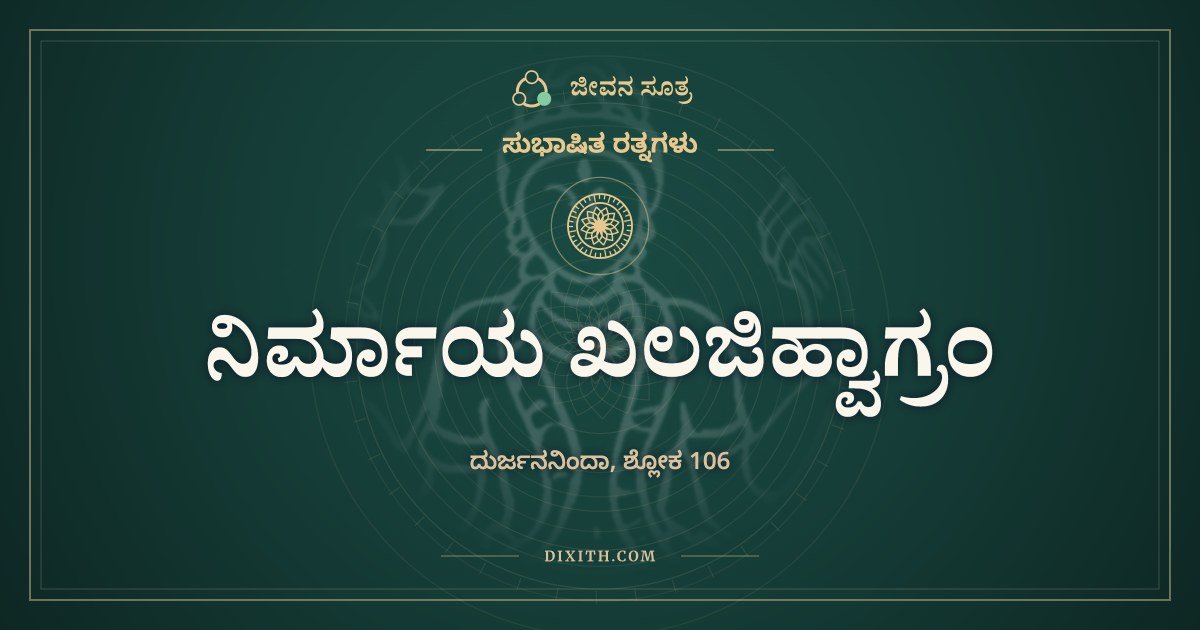
ನಿರ್ಮಾಯ ಖಲಜಿಹ್ವಾಗ್ರಂ ಸರ್ವಪ್ರಾಣಹರಂ ನೃಣಾಮ್
ಚಕಾರ ಕಿಂ ವೃಥಾ ಶಸ್ತ್ರವಿಷವಹ್ನೀನ್ಪ್ರಜಾಪತಿಃ
ಸುಭಾಷಿತ (ದೇವನಾಗರಿ)
निर्माय खलजिह्वाग्रं सर्वप्राणहरं नृणाम्
चकार किं वृथा शस्त्रविषवह्नीन्प्रजापतिः
ಸುಭಾಷಿತ (IAST)
nirmāya khalajihvāgraṃ sarvaprāṇaharaṃ nṛṇām
cakāra kiṃ vṛthā śastraviṣavahnīnprajāpatiḥ
ಪದಶಃ ಅರ್ಥ
- ನಿರ್ಮಾಯ (निर्माय, nirmāya) = ಮಾಡಿ (having made)
- ಖಲಜಿಹ್ವಾಗ್ರಮ್ (खलजिह्वाग्रम्, khalajihvāgram) = ದುಷ್ಟನ ನಾಲಿಗೆಯ ತುದಿಯನ್ನು (the tip of the wicked man’s tongue)
- ಸರ್ವಪ್ರಾಣಹರಮ್ (सर्वप्राणहरम्, sarvaprāṇaharam) = ಎಲ್ಲರ ಪ್ರಾಣವನ್ನು ಹರಿಸುವುದನ್ನು (that takes the life of all)
- ನೃಣಾಮ್ (नृणाम्, nṛṇām) = ಮನುಷ್ಯರ (of men)
- ಚಕಾರ (चकार, cakāra) = ಮಾಡಿದ (made)
- ಕಿಮ್ (किम्, kim) = ಏಕೆ (why)
- ವೃಥಾ (वृथा, vṛthā) = ವ್ಯರ್ಥವಾಗಿ (in vain)
- ಶಸ್ತ್ರವಿಷವಹ್ನೀನ್ (शस्त्रविषवह्नीन्, śastraviṣavahnīn) = ಶಸ್ತ್ರ, ವಿಷ ಮತ್ತು ಬೆಂಕಿಗಳನ್ನು (weapons, poison and fire)
- ಪ್ರಜಾಪತಿಃ (प्रजापतिः, prajāpatiḥ) = ಪ್ರಜಾಪತಿ, ಸೃಷ್ಟಿಕರ್ತ (Prajapati, the creator)
ಸಂಪೂರ್ಣ ಅರ್ಥ (ಕನ್ನಡ)
ಮನುಷ್ಯರೆಲ್ಲರ ಪ್ರಾಣ ತೆಗೆಯಬಲ್ಲ ದುಷ್ಟನ ನಾಲಿಗೆಯ ತುದಿಯನ್ನೇ ಮಾಡಿದ ಮೇಲೆ, ಪ್ರಜಾಪತಿ ಶಸ್ತ್ರ, ವಿಷ ಮತ್ತು ಬೆಂಕಿಗಳನ್ನು ಏಕೆ ವ್ಯರ್ಥವಾಗಿ ಮಾಡಿದನೋ.
ಸಂಪೂರ್ಣ ಅರ್ಥ (ಇಂಗ್ಲಿಷ್)
Having made the tip of the wicked man’s tongue, which can take the life of every man, why did Prajapati go and make weapons, poison and fire for nothing.
ಈ ಸುಭಾಷಿತದ ಬಗ್ಗೆAbout this subhashita
ಪ್ರಜಾಪತಿ ಎಂದರೆ ಪುರಾಣದಲ್ಲಿ ಜೀವಿಗಳನ್ನು ಸೃಷ್ಟಿಸಿದವನು, ಅಂದರೆ ಬ್ರಹ್ಮ ಎಂದು ಪ್ರಸಿದ್ಧವಾಗಿದೆ. ಕವಿ ಅವನ ಕೆಲಸವನ್ನೇ ಅಲ್ಲಿ ಪ್ರಶ್ನಿಸುವಂತೆ ನಟಿಸುತ್ತಾನೆ.
Prajapati, the lord of creatures, is the creator of myth, commonly taken to be Brahma. The poet pretends to question the creator’s own workmanship.
ಶಸ್ತ್ರ, ವಿಷ, ಬೆಂಕಿ ಎಂಬ ಮೂರೂ ಕೊಲ್ಲುವ ಸಾಧನಗಳು. ಇವೆಲ್ಲ ವ್ಯರ್ಥ ಎಂದರೆ ನಾಲಿಗೆ ಒಂದೇ ಮೂರರ ಕೆಲಸವನ್ನೂ ಮಾಡುತ್ತದೆ ಎಂಬ ಅರ್ಥ ಬರುತ್ತದೆ.
Weapon, poison and fire are the three tools of killing. Calling them needless means the one tongue does the work of all three.
ಆಧಾರ: ಸುಭಾಷಿತರತ್ನಭಾಂಡಾಗಾರ, ಸಾಮಾನ್ಯ ಪ್ರಕರಣ (ನಿರ್ಣಯಸಾಗರ ಮುದ್ರಣಾಲಯ, ಮುಂಬಯಿ), ಪುಟ 56. ಶ್ಲೋಕದ ಪಾಠವನ್ನು ಮುದ್ರಿತ ಪ್ರತಿಯ ಸ್ಕ್ಯಾನ್ನೊಂದಿಗೆ ಅಕ್ಷರಶಃ ಹೋಲಿಸಿದ್ದೇವೆ. ಅರ್ಥ ಮತ್ತು ವಿವರಣೆ ನಮ್ಮದು.
Source: Subhashitaratnabhandagara, Samanya Prakarana (Nirnaya Sagar Press, Bombay), page 56. The text of the verse was checked letter by letter against a scan of the printed book. The meaning and notes are ours.
ಇಂದಿನ ಬದುಕಿಗೆFor life today
ಮಾತಿನಿಂದ ಆದ ಗಾಯಕ್ಕೆ ಪಟ್ಟಿ ಕಟ್ಟಲಾಗದು. ರೋಗಿಯ ಮುಂದೆ ಮಾತಾಡುವಾಗ ತೂಗಿ ಮಾತಾಡುವುದು ಔಷಧ ಕೊಡುವಷ್ಟೇ ಮುಖ್ಯ.
A wound made by words cannot be bandaged. Weighing what we say to a patient matters as much as the prescription.
ನಾಲಿಗೆ ಎಲ್ಲರಿಗೂ ಇದೆ ಎಂಬುದನ್ನು ಶ್ಲೋಕ ಮರೆಯುವುದಿಲ್ಲ. ದುಷ್ಟನ ಮಾತಿನ ಬಗ್ಗೆ ನಗುವ ನಾವೂ ನಮ್ಮ ತುದಿಯ ಹರಿತವನ್ನು ಒಮ್ಮೆ ನೋಡಿಕೊಳ್ಳಬಹುದು.
The verse does not forget that everyone has a tongue. Those of us who smile at the wicked man’s speech may also look once at the edge of our own.
ಪಾಠದಲ್ಲಿ ತಪ್ಪೋ ಬೇರೆ ಪಾಠಾಂತರವೋ ಕಂಡಿತೇ? ನಮಗೆ ತಿಳಿಸಿ.
Noticed a mistake or a different reading? Tell us.


ಪ್ರತಿಕ್ರಿಯೆ ಬರೆಯಿರಿ