
ಯಾರದೋ ಕೆಟ್ಟ ದಿನಗಳು ಬಂದಾಗ ಜನ ಹೇಳುತ್ತಾರೆ: ಅವನಿಗೆ ಬುದ್ಧಿಯೇ ಕೆಲಸ ಮಾಡಲಿಲ್ಲ. ಕೆಟ್ಟ ಕಾಲ ಬರುವುದು ಹೇಗೆ ಎಂಬ ಪ್ರಶ್ನೆಗೆ ಈ ಶ್ಲೋಕ ಒಂದು ಉತ್ತರ ಕೊಡುತ್ತದೆ.
ಅನುಷ್ಟುಪ್ ಛಂದಸ್ಸಿನ ಈ ಪದ್ಯ ಕಾಲನ ಕೈಯಲ್ಲಿ ಖಡ್ಗವಿಲ್ಲ ಎನ್ನುತ್ತದೆ. ಎರಡನೆಯ ಸಾಲಿನಲ್ಲಿ ಅವನ ನಿಜವಾದ ಶಕ್ತಿ ಬೇರೆಯದು ಎಂದು ಹೇಳುತ್ತದೆ.
ಸುಭಾಷಿತ (ಕನ್ನಡ)
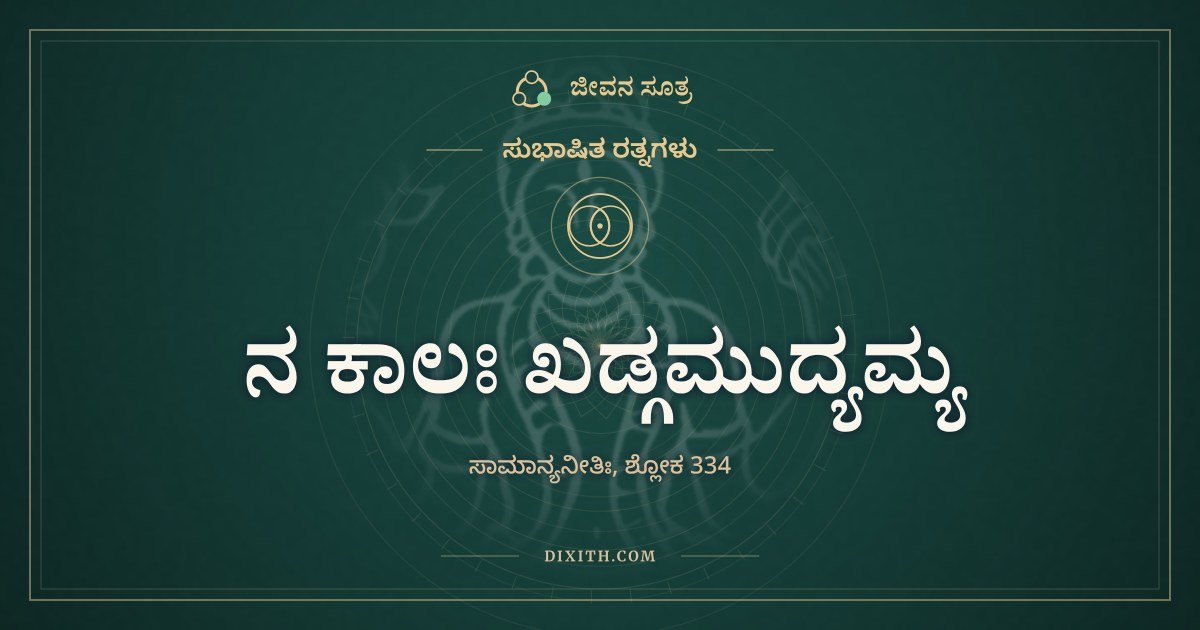
ನ ಕಾಲಃ ಖಡ್ಗಮುದ್ಯಮ್ಯ ಶಿರಃ ಕೃಂತತಿ ಕಸ್ಯಚಿತ್
ಕಾಲಸ್ಯ ಬಲಮೇತಾವದ್ವಿಪರೀತಾರ್ಥದರ್ಶನಮ್
ಸುಭಾಷಿತ (ದೇವನಾಗರಿ)
न कालः खड्गमुद्यम्य शिरः कृन्तति कस्यचित्
कालस्य बलमेतावद्विपरीतार्थदर्शनम्
ಸುಭಾಷಿತ (IAST)
na kālaḥ khaḍgamudyamya śiraḥ kṛntati kasyacit
kālasya balametāvadviparītārthadarśanam
ಪದಶಃ ಅರ್ಥ
- ನ (न, na) = ಇಲ್ಲ (does not)
- ಕಾಲಃ (कालः, kālaḥ) = ಕಾಲ (time)
- ಖಡ್ಗಮುದ್ಯಮ್ಯ (खड्गमुद्यम्य, khaḍgamudyamya) = ಖಡ್ಗವನ್ನು ಎತ್ತಿ (ಖಡ್ಗಮ್ + ಉದ್ಯಮ್ಯ) (having raised a sword (khadgam + udyamya))
- ಶಿರಃ (शिरः, śiraḥ) = ತಲೆಯನ್ನು (the head)
- ಕೃಂತತಿ (कृन्तति, kṛntati) = ಕತ್ತರಿಸುತ್ತಾನೆ (cuts off)
- ಕಸ್ಯಚಿತ್ (कस्यचित्, kasyacit) = ಯಾರದೇ (of anyone)
- ಕಾಲಸ್ಯ (कालस्य, kālasya) = ಕಾಲದ (of time)
- ಬಲಮೇತಾವದ್ವಿಪರೀತಾರ್ಥದರ್ಶನಮ್ (बलमेतावद्विपरीतार्थदर्शनम्, balametāvadviparītārthadarśanam) = ಬಲ ಇಷ್ಟು: ವಿಪರೀತ ಅರ್ಥವನ್ನು ತೋರಿಸುವುದು (ಬಲಮ್ + ಏತಾವತ್ + ವಿಪರೀತ + ಅರ್ಥ + ದರ್ಶನಮ್) (its strength is just this: showing things in a reversed sense (balam + etavat + viparita + artha + darshanam))
ಸಂಪೂರ್ಣ ಅರ್ಥ (ಕನ್ನಡ)
ಕಾಲ ಖಡ್ಗವನ್ನು ಎತ್ತಿ ಯಾರ ತಲೆಯನ್ನೂ ಕತ್ತರಿಸುವುದಿಲ್ಲ. ಕಾಲದ ಬಲ ಇಷ್ಟೇ ಎಂದರೆ ಅದು ವಿಷಯಗಳನ್ನು ವಿಪರೀತ ಅರ್ಥದಲ್ಲಿ ತೋರಿಸುತ್ತದೆ.
ಸಂಪೂರ್ಣ ಅರ್ಥ (ಇಂಗ್ಲಿಷ್)
Time does not raise a sword and cut off anyone’s head. The strength of time lies in this: it makes things appear in a reversed sense.
ಈ ಸುಭಾಷಿತದ ಬಗ್ಗೆAbout this subhashita
ಇಲ್ಲಿ ಕಾಲನನ್ನು ಖಡ್ಗ ಹಿಡಿದ ಯೋಧನಂತೆ ಕಲ್ಪಿಸಿ ಮೊದಲ ಸಾಲಿನಲ್ಲಿ ಆ ಚಿತ್ರವನ್ನೇ ನಿರಾಕರಿಸಲಾಗಿದೆ. ಓದುಗ ನಿರೀಕ್ಷಿಸುವ ಚಿತ್ರ ಮುರಿದಾಗ ಎರಡನೆಯ ಸಾಲಿನ ಮಾತು ಹೆಚ್ಚು ಚುಚ್ಚುತ್ತದೆ.
Time is first pictured as a warrior with a sword, and the first line then denies that very picture. When the picture the reader expects breaks, the second line lands harder.
ವಿಪರೀತಾರ್ಥದರ್ಶನ ಎಂದರೆ ಇರುವುದರ ಉಲ್ಟಾ ಅರ್ಥ ಕಾಣುವುದು. ಅಪಾಯವನ್ನು ಅವಕಾಶವೆಂದೂ, ಒಳ್ಳೆಯ ಸಲಹೆಯನ್ನು ಶತ್ರುತ್ವವೆಂದೂ ಕಾಣುವ ಸ್ಥಿತಿ ಇದು.
Viparitartha-darshana means seeing the opposite of what is there. It is the state of seeing danger as opportunity and good advice as hostility.
ವಿನಾಶಕಾಲೇ ವಿಪರೀತಬುದ್ಧಿಃ ಎಂಬ ಪ್ರಸಿದ್ಧ ಮಾತಿನ ಭಾವಕ್ಕೆ ಇದು ಹತ್ತಿರ ಎನ್ನಬಹುದು. ಆದರೆ ಈ ಪದ್ಯ ಯಾವ ಕೃತಿಯದು ಎಂದು ನಾವು ಹೇಳುತ್ತಿಲ್ಲ.
It can be said to be close in feeling to the well known saying that at the time of ruin the mind turns perverse. We do not say which work this verse comes from.
ಆಧಾರ: ಸುಭಾಷಿತರತ್ನಭಾಂಡಾಗಾರ, ರಾಜ ಪ್ರಕರಣ (ನಿರ್ಣಯಸಾಗರ ಮುದ್ರಣಾಲಯ, ಮುಂಬಯಿ), ಪುಟ 160. ಶ್ಲೋಕದ ಪಾಠವನ್ನು ಮುದ್ರಿತ ಪ್ರತಿಯ ಸ್ಕ್ಯಾನ್ನೊಂದಿಗೆ ಅಕ್ಷರಶಃ ಹೋಲಿಸಿದ್ದೇವೆ. ಅರ್ಥ ಮತ್ತು ವಿವರಣೆ ನಮ್ಮದು.
Source: Subhashitaratnabhandagara, Raja Prakarana (Nirnaya Sagar Press, Bombay), page 160. The text of the verse was checked letter by letter against a scan of the printed book. The meaning and notes are ours.
ಇಂದಿನ ಬದುಕಿಗೆFor life today
ಆಸ್ಪತ್ರೆಯಲ್ಲಿ ಹಲವು ಬಾರಿ ದೊಡ್ಡ ತಪ್ಪು ಒಂದು ಕ್ಷಣದಲ್ಲಿ ಬರುವುದಿಲ್ಲ. ಆಯಾಸ, ತರಾತುರಿ ಮತ್ತು ಅತಿಯಾದ ಆತ್ಮವಿಶ್ವಾಸದಿಂದ ತೀರ್ಮಾನ ಮಂಕಾಗಿ ಹೆಜ್ಜೆಗಳು ಒಂದೊಂದಾಗಿ ತಪ್ಪುತ್ತವೆ. ಸ್ಪಷ್ಟವಿಲ್ಲದಾಗ ಇನ್ನೊಬ್ಬರನ್ನು ಕೇಳುವುದು ಒಳ್ಳೆಯ ಅಭ್ಯಾಸ.
In a hospital a serious error often does not arrive in a single moment. Tiredness, haste and overconfidence dull the judgement and the steps go wrong one by one. Asking a colleague when things are unclear is a good habit.
ಆದರೆ ಎಲ್ಲ ಕಷ್ಟವೂ ಬುದ್ಧಿ ತಪ್ಪಿದ್ದರಿಂದಲೇ ಬರುತ್ತದೆ ಎಂದು ಹೇಳಲಾಗದು. ಕೆಲವು ಕಷ್ಟಗಳು ನಮ್ಮ ಕೈಯಲ್ಲಿರುವುದಿಲ್ಲ. ಶ್ಲೋಕ ಸೂಚಿಸುವುದು ನಮ್ಮ ಕೈಯಲ್ಲಿರುವ ಭಾಗವನ್ನು ಮಾತ್ರ.
But we cannot say that every hardship comes from a failure of judgement. Some are beyond our hands. The verse points only to the part that is in our hands.
ಪಾಠದಲ್ಲಿ ತಪ್ಪೋ ಬೇರೆ ಪಾಠಾಂತರವೋ ಕಂಡಿತೇ? ನಮಗೆ ತಿಳಿಸಿ.
Noticed a mistake or a different reading? Tell us.


ಪ್ರತಿಕ್ರಿಯೆ ಬರೆಯಿರಿ