
ಜಾತ್ರೆಯ ಅಂಗಡಿಯಲ್ಲಿ ಬಣ್ಣದ ಗಾಜಿನ ಹರಳುಗಳು ಬೆಳಕಿನಲ್ಲಿ ರತ್ನಗಳಂತೆಯೇ ಹೊಳೆಯುತ್ತವೆ. ಹೊಳಪನ್ನು ನೋಡಿ ಕೊಂಡವನಿಗೆ ಮನೆಗೆ ಬಂದ ಮೇಲೆ ಗೊತ್ತಾಗುತ್ತದೆ.
ಈ ಶ್ಲೋಕ ಆ ಗೊಂದಲವನ್ನು ಬುದ್ಧಿಯ ಅಳತೆಗೋಲಾಗಿ ಮಾಡುತ್ತದೆ. ಅನುಷ್ಟುಪ್ ಛಂದಸ್ಸಿನ ನಾಲ್ಕು ಪಾದಗಳಲ್ಲಿ ಎರಡೇ ಪದಗಳನ್ನು ಎರಡು ಬಾರಿ ತಿರುಗಿಸಿ ಇಟ್ಟಿದೆ.
ಸುಭಾಷಿತ (ಕನ್ನಡ)
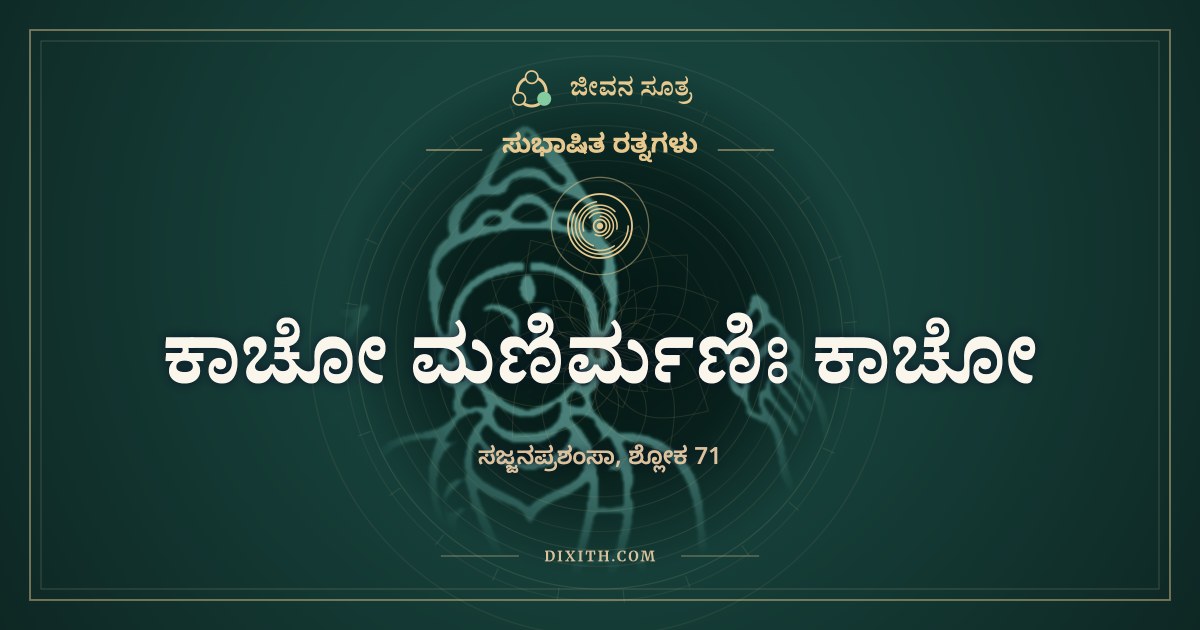
ಕಾಚೋ ಮಣಿರ್ಮಣಿಃ ಕಾಚೋ ಯೇಷಾಂ ತೇಽನ್ಯೇ ಹಿ ದೇಹಿನಃ ।
ಸನ್ತಿ ತೇ ಸುಧಿಯೋ ಯೇಷಾಂ ಕಾಚಃ ಕಾಚೋ ಮಣಿರ್ಮಣಿಃ ॥
ಸುಭಾಷಿತ (ದೇವನಾಗರಿ)
काचो मणिर्मणिः काचो येषां तेऽन्ये हि देहिनः ।
सन्ति ते सुधियो येषां काचः काचो मणिर्मणिः ॥
ಸುಭಾಷಿತ (IAST)
kāco maṇirmaṇiḥ kāco yeṣāṃ te’nye hi dehinaḥ |
santi te sudhiyo yeṣāṃ kācaḥ kāco maṇirmaṇiḥ ||
ಪದಶಃ ಅರ್ಥ
- ಕಾಚೋ ಮಣಿಃ (काचो मणिः, kāco maṇiḥ) = ಗಾಜೇ ರತ್ನ (glass is a gem)
- ಮಣಿಃ ಕಾಚಃ (मणिः काचः, maṇiḥ kācaḥ) = ರತ್ನವೇ ಗಾಜು (a gem is glass)
- ಯೇಷಾಮ್ (येषाम्, yeṣām) = ಯಾರಿಗೆ (for whom)
- ತೇ (ते, te) = ಅವರು (those)
- ಅನ್ಯೇ (अन्ये, anye) = ಬೇರೆ ಬಗೆಯವರು (of some other kind)
- ಹಿ (हि, hi) = ನಿಜಕ್ಕೂ (indeed)
- ದೇಹಿನಃ (देहिनः, dehinaḥ) = ದೇಹ ಹೊತ್ತ ಜೀವಿಗಳು (creatures that carry a body)
- ಸನ್ತಿ (सन्ति, santi) = ಇದ್ದಾರೆ (are)
- ತೇ (ते, te) = ಅವರೇ (they are the ones)
- ಸುಧಿಯಃ (सुधियः, sudhiyaḥ) = ಒಳ್ಳೆಯ ಬುದ್ಧಿ ಉಳ್ಳವರು (who have sound sense)
- ಯೇಷಾಮ್ (येषाम्, yeṣām) = ಯಾರಿಗೆ (for whom)
- ಕಾಚಃ ಕಾಚಃ (काचः काचः, kācaḥ kācaḥ) = ಗಾಜು ಗಾಜೇ (glass is glass)
- ಮಣಿರ್ಮಣಿಃ (मणिर्मणिः, maṇirmaṇiḥ) = ರತ್ನ ರತ್ನವೇ (a gem is a gem)
ಸಂಪೂರ್ಣ ಅರ್ಥ (ಕನ್ನಡ)
ಯಾರಿಗೆ ಗಾಜೇ ರತ್ನ, ರತ್ನವೇ ಗಾಜು, ಅವರು ಬೇರೆ ಬಗೆಯ ಜೀವಿಗಳು. ಯಾರಿಗೆ ಗಾಜು ಗಾಜೇ, ರತ್ನ ರತ್ನವೇ, ಅವರೇ ಒಳ್ಳೆಯ ಬುದ್ಧಿ ಉಳ್ಳವರು.
ಸಂಪೂರ್ಣ ಅರ್ಥ (ಇಂಗ್ಲಿಷ್)
Those for whom glass is a gem and a gem is glass are creatures of some other kind. They are the ones with sound sense for whom glass is glass and a gem is a gem.
ಈ ಸುಭಾಷಿತದ ಬಗ್ಗೆAbout this subhashita
ದೇಹಿನಃ ಎಂಬುದು ತಣ್ಣನೆಯ ಪದ. ದೇಹ ಹೊತ್ತಿರುವವು ಎಂದಷ್ಟೇ ಅರ್ಥ. ಮನುಷ್ಯರು ಎನ್ನದೆ ಜೀವಿಗಳು ಎಂದು ಕರೆದು, ಅವರು ಬೇರೆ ಬಗೆಯವರು ಎಂದು ಸೇರಿಸಿರುವಲ್ಲಿ ಚುರುಕು ಇದೆ.
Dehinah is a cold word. It means no more than those that carry a body. Calling them creatures rather than men, and adding that they are of some other kind, is where the sting is.
ಎರಡನೆಯ ಅರ್ಧದಲ್ಲಿ ಹೊಸ ಮಾತು ಒಂದೂ ಇಲ್ಲ. ಅದೇ ನಾಲ್ಕು ಪದಗಳು, ಸರಿಯಾದ ಜೋಡಿಯಲ್ಲಿ. ಬುದ್ಧಿವಂತಿಕೆ ಇಲ್ಲಿ ಯಾವ ಹೊಸ ಒಳನೋಟವೂ ಅಲ್ಲ. ಇರುವುದನ್ನು ಇರುವಂತೆ ಹೇಳುವುದಷ್ಟೇ.
Not one new word comes in the second half. The same four nouns, put in the right pairs. Wisdom here is no fresh insight at all. It is only calling a thing what it is.
ಕಾಚ ಎಂದರೆ ಗಾಜು. ರತ್ನದ ಬದಲಿಗೆ ಬಣ್ಣದ ಗಾಜನ್ನು ಮಾರುವ ವ್ಯಾಪಾರ ಹಿಂದೆಯೂ ಇತ್ತು. ಆ ಸಂತೆಯನ್ನು ಶ್ಲೋಕ ಹಿಂದೆ ಇಟ್ಟುಕೊಂಡೇ ಮಾತಾಡುತ್ತಿದೆ.
Kacha is glass. The trade of selling coloured glass in place of gems is old. The verse speaks with that market behind it.
ಆಧಾರ: ಸುಭಾಷಿತರತ್ನಭಾಂಡಾಗಾರ, ಸಾಮಾನ್ಯ ಪ್ರಕರಣ (ನಿರ್ಣಯಸಾಗರ ಮುದ್ರಣಾಲಯ, ಮುಂಬಯಿ), ಪುಟ 46. ಶ್ಲೋಕದ ಪಾಠವನ್ನು ಮುದ್ರಿತ ಪ್ರತಿಯ ಸ್ಕ್ಯಾನ್ನೊಂದಿಗೆ ಅಕ್ಷರಶಃ ಹೋಲಿಸಿದ್ದೇವೆ. ಅರ್ಥ ಮತ್ತು ವಿವರಣೆ ನಮ್ಮದು.
Source: Subhashitaratnabhandagara, Samanya Prakarana (Nirnaya Sagar Press, Bombay), page 46. The text of the verse was checked letter by letter against a scan of the printed book. The meaning and notes are ours.
ಇಂದಿನ ಬದುಕಿಗೆFor life today
ಹೊಸದಾಗಿ ಬಂದ ಹೊಳಪಿನ ಔಷಧ ಮತ್ತು ಹಳೆಯದಾದ, ಸಾಕಷ್ಟು ಪರೀಕ್ಷೆಗೆ ನಿಂತ ಔಷಧ. ಎರಡರ ನಡುವೆ ಆಯ್ಕೆ ಮಾಡುವಾಗ ಈ ಶ್ಲೋಕದ ಅಳತೆಗೋಲು ಕೆಲಸಕ್ಕೆ ಬರುತ್ತದೆ.
A shiny new drug and an old one that has stood enough testing. This verse’s measure is useful when choosing between the two.
ಗಾಜನ್ನು ಗಾಜು ಎನ್ನುವುದು ಎಲ್ಲವನ್ನೂ ಅನುಮಾನಿಸುವುದು ಅಲ್ಲ. ರತ್ನವನ್ನು ರತ್ನ ಎನ್ನುವುದೂ ಅದೇ ಶ್ಲೋಕದಲ್ಲಿದೆ. ಎರಡನ್ನೂ ಸರಿಯಾಗಿ ಹೇಳುವುದೇ ಕಷ್ಟದ ಭಾಗ.
Calling glass glass is not the same as doubting everything. Calling a gem a gem is in the same verse. Getting both right is the hard part.
ಪಾಠದಲ್ಲಿ ತಪ್ಪೋ ಬೇರೆ ಪಾಠಾಂತರವೋ ಕಂಡಿತೇ? ನಮಗೆ ತಿಳಿಸಿ.
Noticed a mistake or a different reading? Tell us.


ಪ್ರತಿಕ್ರಿಯೆ ಬರೆಯಿರಿ