
ಆಸ್ಪತ್ರೆಗೆ ಬರುವ ಹಿರಿಯರು ಒಮ್ಮೊಮ್ಮೆ ಈಗ ನನಗೆ ಕೋಪವೇ ಬರುವುದಿಲ್ಲ ಎನ್ನುತ್ತಾರೆ. ಅದು ಸ್ವಭಾವ ಪಕ್ವವಾದ ಫಲವೋ, ಶಕ್ತಿ ಕುಗ್ಗಿದ ಫಲವೋ ಎಂಬ ಪ್ರಶ್ನೆ ತುಂಬ ಹಳೆಯದು.
ಈ ಎರಡು ಸಾಲಿನ ಶ್ಲೋಕ ಆ ಪ್ರಶ್ನೆಗೆ ತನ್ನ ಅಭಿಪ್ರಾಯ ಹೇಳುತ್ತದೆ. ಛಂದಸ್ಸಿನ ಹೆಸರು ಇಲ್ಲಿ ಖಚಿತವಾಗಿಲ್ಲ, ಪ್ರತಿ ಸಾಲಿನಲ್ಲಿ ಸುಮಾರು ಹದಿನಾರು ಅಕ್ಷರ ಇವೆ.
ಸುಭಾಷಿತ (ಕನ್ನಡ)
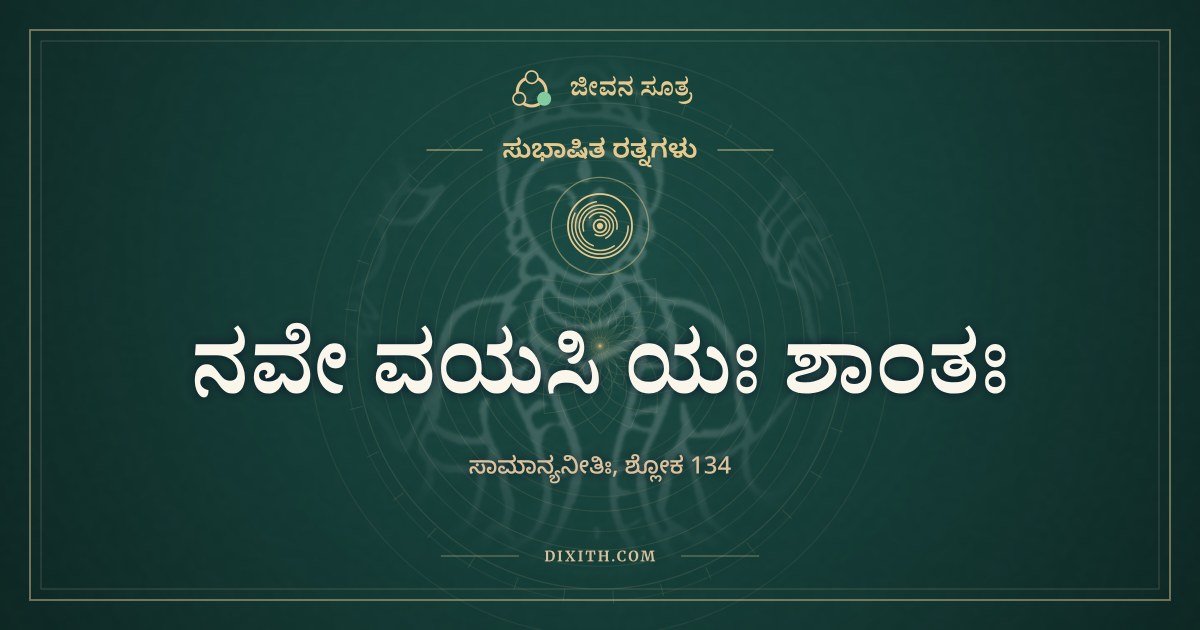
ನವೇ ವಯಸಿ ಯಃ ಶಾಂತಃ ಸ ಶಾಂತ ಇತಿ ಮೇ ಮತಿಃ
ಧಾತುಷು ಕ್ಷೀಯಮಾಣೇಷು ಶಾಂತಿಃ ಕಸ್ಯ ನ ಜಾಯತೇ
ಸುಭಾಷಿತ (ದೇವನಾಗರಿ)
नवे वयसि यः शान्तः स शान्त इति मे मतिः
धातुषु क्षीयमाणेषु शान्तिः कस्य न जायते
ಸುಭಾಷಿತ (IAST)
nave vayasi yaḥ śāntaḥ sa śānta iti me matiḥ
dhātuṣu kṣīyamāṇeṣu śāntiḥ kasya na jāyate
ಪದಶಃ ಅರ್ಥ
- ನವೇ ವಯಸಿ (नवे वयसि, nave vayasi) = ಹೊಸ ವಯಸ್ಸಿನಲ್ಲಿ, ಯೌವನದಲ್ಲಿ (in fresh youth)
- ಯಃ (यः, yaḥ) = ಯಾರು (who)
- ಶಾಂತಃ (शान्तः, śāntaḥ) = ಶಾಂತನಾಗಿರುವನು (is calm)
- ಸ (स, sa) = ಅವನು (he)
- ಶಾಂತ ಇತಿ (शान्त इति, śānta iti) = ಶಾಂತ ಎಂದು (ಶಾಂತಃ + ಇತಿ) (calm, thus (shantah + iti))
- ಮೇ (मे, me) = ನನ್ನ (my)
- ಮತಿಃ (मतिः, matiḥ) = ಅಭಿಪ್ರಾಯ (opinion)
- ಧಾತುಷು (धातुषु, dhātuṣu) = ದೇಹದ ಧಾತುಗಳಲ್ಲಿ (in the bodily constituents)
- ಕ್ಷೀಯಮಾಣೇಷು (क्षीयमाणेषु, kṣīyamāṇeṣu) = ಕ್ಷೀಣಿಸುತ್ತಿರುವಾಗ (while they wear away)
- ಶಾಂತಿಃ (शान्तिः, śāntiḥ) = ಶಾಂತಿ (calm)
- ಕಸ್ಯ (कस्य, kasya) = ಯಾರಿಗೆ (for whom)
- ನ (न, na) = ಇಲ್ಲ (not)
- ಜಾಯತೇ (जायते, jāyate) = ಉಂಟಾಗುತ್ತದೆ (arises)
ಸಂಪೂರ್ಣ ಅರ್ಥ (ಕನ್ನಡ)
ಹೊಸ ವಯಸ್ಸಿನಲ್ಲಿ ಯಾರು ಶಾಂತನಾಗಿರುತ್ತಾನೋ ಅವನೇ ನಿಜವಾದ ಶಾಂತ ಎಂಬುದು ಈ ಮಾತಿನ ಅಭಿಪ್ರಾಯ. ದೇಹದ ಧಾತುಗಳು ಕ್ಷೀಣಿಸುತ್ತಿರುವಾಗ ಯಾರಿಗೆ ತಾನೇ ಶಾಂತಿ ಬರುವುದಿಲ್ಲ.
ಸಂಪೂರ್ಣ ಅರ್ಥ (ಇಂಗ್ಲಿಷ್)
The view put forward is that the one who stays calm in fresh youth is the one who is truly calm. When the bodily constituents are wearing away, for whom does calm not come.
ಈ ಸುಭಾಷಿತದ ಬಗ್ಗೆAbout this subhashita
ಧಾತು ಎಂದರೆ ಆಯುರ್ವೇದದಲ್ಲಿ ದೇಹವನ್ನು ಹಿಡಿದಿಡುವ ರಸ, ರಕ್ತ, ಮಾಂಸದಂಥ ಘಟಕಗಳು. ಇಲ್ಲಿ ಅದೇ ಅರ್ಥ ಎಂದು ತೆಗೆದುಕೊಂಡಿದ್ದೇವೆ. ಬಲ ಅಥವಾ ಚೈತನ್ಯ ಎಂದು ವಿಶಾಲವಾಗಿ ಓದಿದರೂ ಭಾವ ಸ್ವಲ್ಪ ಬದಲಾಗಿರುತ್ತದೆ ಮಾತ್ರ.
In Ayurveda, dhatu means the constituents that hold the body together, such as plasma, blood and flesh. We take it so here. Read more broadly as strength or vitality, the sense shifts only a little.
ಶಾಂತಿ ಎಂಬ ಒಂದೇ ಪದ ಎರಡು ಸಾಲಿನಲ್ಲಿ ಎರಡು ಬೇರೆ ಅರ್ಥ ಪಡೆಯುತ್ತದೆ. ಮೊದಲನೆಯದು ಗುಣ, ಎರಡನೆಯದು ಶಕ್ತಿ ಇಲ್ಲದ್ದರ ಪರಿಣಾಮ. ಕೊನೆಯ ಪ್ರಶ್ನೆಯ ಉತ್ತರ ಎಲ್ಲರಿಗೂ ಎಂದೇ, ಅದು ಉತ್ತರ ಬೇಡದ ಪ್ರಶ್ನೆ.
The one word shanti takes two meanings across the two lines. The first is a virtue, the second is the result of lost strength. The closing question answers itself, for everyone, so it needs no reply.
ಆಧಾರ: ಸುಭಾಷಿತರತ್ನಭಾಂಡಾಗಾರ, ರಾಜ ಪ್ರಕರಣ (ನಿರ್ಣಯಸಾಗರ ಮುದ್ರಣಾಲಯ, ಮುಂಬಯಿ), ಪುಟ 156. ಶ್ಲೋಕದ ಪಾಠವನ್ನು ಮುದ್ರಿತ ಪ್ರತಿಯ ಸ್ಕ್ಯಾನ್ನೊಂದಿಗೆ ಅಕ್ಷರಶಃ ಹೋಲಿಸಿದ್ದೇವೆ. ಅರ್ಥ ಮತ್ತು ವಿವರಣೆ ನಮ್ಮದು.
Source: Subhashitaratnabhandagara, Raja Prakarana (Nirnaya Sagar Press, Bombay), page 156. The text of the verse was checked letter by letter against a scan of the printed book. The meaning and notes are ours.
ಇಂದಿನ ಬದುಕಿಗೆFor life today
ಒಬ್ಬ ಹಿರಿಯರ ಶಾಂತತೆಯನ್ನು ಮೆಚ್ಚುವ ಮುನ್ನ ಅದು ಹೇಗೆ ಬಂತು ಎಂದು ಕೇಳಿಕೊಳ್ಳಬಹುದು. ಅನುಭವದಿಂದ ಬಂದ ಶಾಂತಿಗೂ ಬಳಲಿಕೆಯಿಂದ ಬಂದ ಮೌನಕ್ಕೂ ವ್ಯತ್ಯಾಸ ಇರುತ್ತದೆ.
Before admiring an elder calm, we can ask how it came. Peace that comes from experience is not the same as silence that comes from tiredness.
ಹಿರಿಯರ ಮೌನವನ್ನು ಸಂತೃಪ್ತಿ ಎಂದೇ ತಿಳಿಯಬಾರದು. ಕೆಲವೊಮ್ಮೆ ಅದು ಆಯಾಸದ ಸೂಚನೆಯೂ ಆಗಿರಬಹುದು, ಆದ್ದರಿಂದ ಆತ್ಮೀಯವಾಗಿ ವಿಚಾರಿಸುವುದು ಒಳ್ಳೆಯದು.
An elder quiet should not always be read as contentment. Sometimes it may be a sign of weariness, so a friendly inquiry is a good idea.
ಪಾಠದಲ್ಲಿ ತಪ್ಪೋ ಬೇರೆ ಪಾಠಾಂತರವೋ ಕಂಡಿತೇ? ನಮಗೆ ತಿಳಿಸಿ.
Noticed a mistake or a different reading? Tell us.


ಪ್ರತಿಕ್ರಿಯೆ ಬರೆಯಿರಿ