
ಯೋಗ ತರಗತಿಗೆ ಹೋಗುವವರಿಗೆ ಯಮ, ನಿಯಮ, ಆಸನ ಎಂಬ ಹೆಸರುಗಳು ಪರಿಚಿತ. ಉಸಿರಾಟ ಮತ್ತು ಭಂಗಿಯ ಬಗ್ಗೆ ಮಾತನಾಡುವ ವೈದ್ಯರಿಗೂ ಅವು ಕೇಳಿ ಗೊತ್ತು.
ಈ ಶ್ಲೋಕದ ಕವಿ ಆ ಎಂಟು ಹೆಸರುಗಳನ್ನು ರಾಜನ ಬಾಣ, ವಿಜಯ, ಗುಣ ಮತ್ತು ಧರ್ಮದ ಜೊತೆ ಒಂದೊಂದಾಗಿ ಜೋಡಿಸುತ್ತಾನೆ. ಕೊನೆಯಲ್ಲಿ ಪತಂಜಲಿಯ ಯೋಗ ಬೇಕೇ ಎಂದು ತಿರುವು ಕೊಡುತ್ತಾನೆ.
ಸುಭಾಷಿತ (ಕನ್ನಡ)
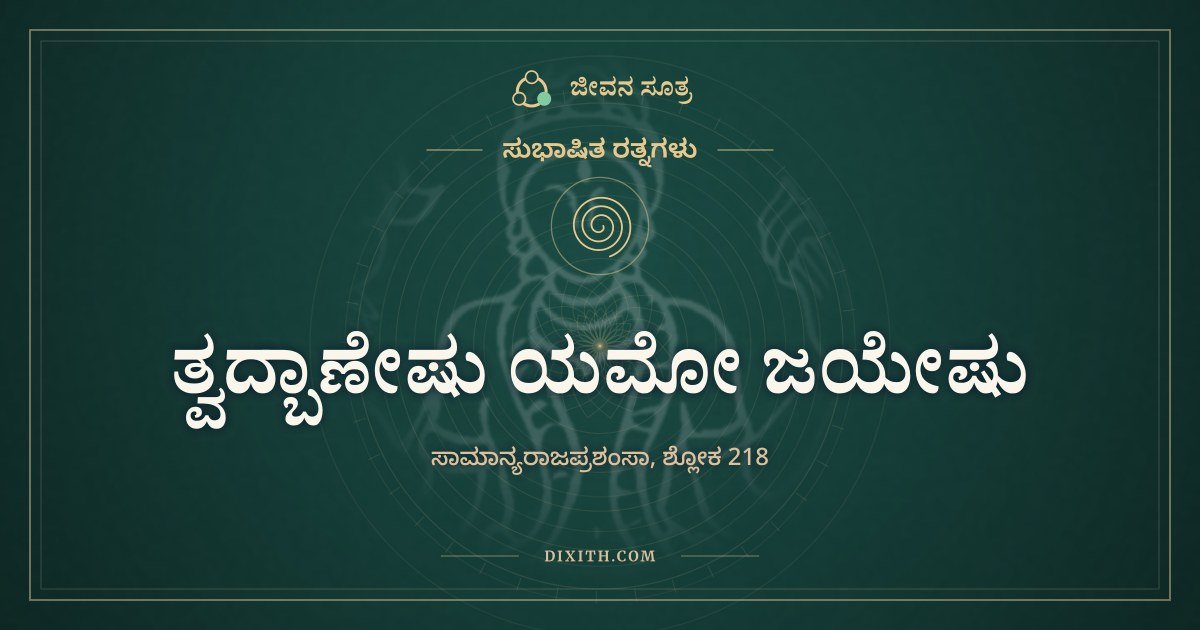
ತ್ವದ್ಬಾಣೇಷು ಯಮೋ ಜಯೇಷು ನಿಯಮಃ ಪಾತೇ ಸ್ಥಿರಂ ಚಾಸನಂ ಭ್ರಾಂತೌ ಶ್ವಾಸವಿನಿಗ್ರಹೋ ಗುಣಗಣೇ ಪ್ರತ್ಯಾಹೃತಿಃ ಶ್ರೀಮತಃ
ಧ್ಯಾನಂ ಶೂಲಿನಿ ಧಾರಣಾ ಚ ಧರಣೇರ್ಧರ್ಮೇ ಸಮಾಧಿರ್ಯತಸ್ತನ್ನಿರ್ವಿಣ್ಣಹೃದಃ ಕಿಮೀಶ್ವರಪರೇ ವಾಂಛಂತಿ ಪಾತಂಜಲೇ
ಸುಭಾಷಿತ (ದೇವನಾಗರಿ)
त्वद्बाणेषु यमो जयेषु नियमः पाते स्थिरं चासनं भ्रान्तौ श्वासविनिग्रहो गुणगणे प्रत्याहृतिः श्रीमतः
ध्यानं शूलिनि धारणा च धरणेर्धर्मे समाधिर्यतस्तन्निर्विण्णहृदः किमीश्वरपरे वाञ्छन्ति पातञ्जले
ಸುಭಾಷಿತ (IAST)
tvadbāṇeṣu yamo jayeṣu niyamaḥ pāte sthiraṃ cāsanaṃ bhrāntau śvāsavinigraho guṇagaṇe pratyāhṛtiḥ śrīmataḥ
dhyānaṃ śūlini dhāraṇā ca dharaṇerdharme samādhiryatastannirviṇṇahṛdaḥ kimīśvarapare vāñchanti pātañjale
ಪದಶಃ ಅರ್ಥ
- ತ್ವದ್ಬಾಣೇಷು (त्वद्बाणेषु, tvadbāṇeṣu) = ನಿನ್ನ ಬಾಣಗಳಲ್ಲಿ (in your arrows)
- ಯಮೋ (यमो, yamo) = ಯಮ, ಅಂದರೆ ಸಂಯಮ, ಮೃತ್ಯುದೇವತೆಯ ಹೆಸರೂ ಹೌದು (yama, restraint, also the name of the god of death)
- ಜಯೇಷು (जयेषु, jayeṣu) = ವಿಜಯಗಳಲ್ಲಿ (in victories)
- ನಿಯಮಃ (नियमः, niyamaḥ) = ನಿಯಮ (observance, rule)
- ಪಾತೇ (पाते, pāte) = ಬೀಳುವಾಗ ಅಥವಾ ಕಾಯುವಾಗ, ಖಚಿತವಿಲ್ಲ (in falling or in guarding, uncertain)
- ಸ್ಥಿರಂ (स्थिरं, sthiraṃ) = ಸ್ಥಿರವಾದ (steady)
- ಚಾಸನಂ (चासनं, cāsanaṃ) = ಆಸನ, ಅಂದರೆ ಕೂರುವ ಭಂಗಿ ಅಥವಾ ಪೀಠ (ಚ + ಆಸನಂ) (and the seat, a posture or a throne (cha + asanam))
- ಭ್ರಾಂತೌ (भ्रान्तौ, bhrāntau) = ಗೊಂದಲದಲ್ಲಿ (in bewilderment)
- ಶ್ವಾಸವಿನಿಗ್ರಹೋ (श्वासविनिग्रहो, śvāsavinigraho) = ಉಸಿರನ್ನು ತಡೆಯುವುದು, ಅಂದರೆ ಪ್ರಾಣಾಯಾಮ (holding the breath, that is pranayama)
- ಗುಣಗಣೇ (गुणगणे, guṇagaṇe) = ಗುಣಗಳ ಸಮೂಹದಲ್ಲಿ (in the host of virtues)
- ಪ್ರತ್ಯಾಹೃತಿಃ (प्रत्याहृतिः, pratyāhṛtiḥ) = ಹಿಂತೆಗೆದುಕೊಳ್ಳುವುದು, ಅಂದರೆ ಪ್ರತ್ಯಾಹಾರ (drawing in, that is pratyahara)
- ಶ್ರೀಮತಃ (श्रीमतः, śrīmataḥ) = ಶ್ರೀಮಂತನಾದ ನಿನ್ನ (of you the glorious)
- ಧ್ಯಾನಂ (ध्यानं, dhyānaṃ) = ಧ್ಯಾನ (meditation)
- ಶೂಲಿನಿ (शूलिनि, śūlini) = ಶೂಲಧಾರಿ ಶಿವನಲ್ಲಿ (on the trident-bearer, Shiva)
- ಧಾರಣಾ (धारणा, dhāraṇā) = ಧಾರಣೆ, ಅಂದರೆ ಹೊರುವುದು (holding, bearing)
- ಚ (च, ca) = ಮತ್ತು (and)
- ಧರಣೇರ್ಧರ್ಮೇ (धरणेर्धर्मे, dharaṇerdharme) = ಭೂಮಿಯ ಮತ್ತು ಧರ್ಮದಲ್ಲಿ (ಧರಣೇಃ + ಧರ್ಮೇ) (of the earth and in dharma (dharaneh + dharme))
- ಸಮಾಧಿರ್ಯತಸ್ತನ್ನಿರ್ವಿಣ್ಣಹೃದಃ (समाधिर्यतस्तन्निर्विण्णहृदः, samādhiryatastannirviṇṇahṛdaḥ) = ಸಮಾಧಿ, ಏಕೆಂದರೆ ಆದ್ದರಿಂದ ಬೇಸತ್ತ ಮನಸ್ಸಿನವರು (ಸಮಾಧಿಃ + ಯತಃ + ತತ್ + ನಿರ್ವಿಣ್ಣಹೃದಃ) (samadhi, since that is so, those weary of heart (samadhih + yatah + tat + nirvinnahridah))
- ಕಿಮೀಶ್ವರಪರೇ (किमीश्वरपरे, kimīśvarapare) = ಏಕೆ ಈಶ್ವರನಿಗೆ ಮೀಸಲಾದ (ಕಿಮ್ + ಈಶ್ವರಪರೇ) (why, in that which is devoted to the Lord (kim + ishvarapare))
- ವಾಂಛಂತಿ (वाञ्छन्ति, vāñchanti) = ಬಯಸುತ್ತಾರೆ (do they wish for)
- ಪಾತಂಜಲೇ (पातञ्जले, pātañjale) = ಪತಂಜಲಿಯ ಯೋಗಶಾಸ್ತ್ರದಲ್ಲಿ (in the system of Patanjali)
ಸಂಪೂರ್ಣ ಅರ್ಥ (ಕನ್ನಡ)
ನಿನ್ನ ಬಾಣಗಳಲ್ಲಿ ಯಮ, ವಿಜಯಗಳಲ್ಲಿ ನಿಯಮ, ಸ್ಥಿರವಾದ ಆಸನ ನಿನ್ನ ಪೀಠದಲ್ಲಿ, ಶತ್ರುವಿನ ಗೊಂದಲದಲ್ಲಿ ಉಸಿರು ಕಟ್ಟುವುದು. ಶ್ರೀಮಂತನಾದ ನಿನ್ನ ಗುಣಗಳ ಸಮೂಹದಲ್ಲಿ ಪ್ರತ್ಯಾಹಾರ, ಶಿವನಲ್ಲಿ ಧ್ಯಾನ, ಭೂಮಿಯನ್ನು ಹೊರುವುದರಲ್ಲಿ ಧಾರಣೆ, ಧರ್ಮದಲ್ಲಿ ಸಮಾಧಿ ಇವೆ. ಹೀಗಿರುವಾಗ ಬೇಸತ್ತ ಮನಸ್ಸಿನವರು ಈಶ್ವರನಿಗೆ ಮೀಸಲಾದ ಪತಂಜಲಿಯ ಯೋಗಶಾಸ್ತ್ರದಲ್ಲಿ ಏನನ್ನು ಬಯಸುತ್ತಾರೆ.
ಸಂಪೂರ್ಣ ಅರ್ಥ (ಇಂಗ್ಲಿಷ್)
Restraint is in your arrows, observance in your victories, a steady seat in your position, and the holding of breath in the confusion of your foes. In the host of your virtues is withdrawal, in Shiva your meditation, in the bearing of the earth your holding, and in dharma your absorption. That being so, what would the weary of heart seek in Patanjali’s yoga, which centres on the Lord.
ಈ ಸುಭಾಷಿತದ ಬಗ್ಗೆAbout this subhashita
ಪತಂಜಲಿಯ ಯೋಗದಲ್ಲಿ ಯಮ, ನಿಯಮ, ಆಸನ, ಪ್ರಾಣಾಯಾಮ, ಪ್ರತ್ಯಾಹಾರ, ಧಾರಣೆ, ಧ್ಯಾನ, ಸಮಾಧಿ ಎಂಬ ಎಂಟು ಅಂಗಗಳು ಎಂದು ಪ್ರಸಿದ್ಧವಾಗಿದೆ. ಶ್ಲೋಕ ಈ ಎಂಟು ಪದಗಳನ್ನೂ ರಾಜನ ಜೀವನಕ್ಕೆ ಹೊಂದುವ ಬೇರೆ ಅರ್ಥದಲ್ಲಿ ಬಳಸುತ್ತದೆ.
In Patanjali’s yoga the eight limbs are known to be yama, niyama, asana, pranayama, pratyahara, dharana, dhyana and samadhi. The verse uses all eight words in other senses that fit the king’s life.
ಇಲ್ಲಿ ಹಲವು ಪದಗಳಿಗೆ ಎರಡು ಅರ್ಥ. ಯಮ ಎಂದರೆ ಸಂಯಮ, ಮೃತ್ಯುದೇವತೆಯೂ ಹೌದು. ಹಾಗಾಗಿ ಶತ್ರುವಿಗೆ ಬಾಣದಲ್ಲಿ ಯಮನೇ ಕಾಣುತ್ತಾನೆ. ಶ್ವಾಸವಿನಿಗ್ರಹ ಎಂದರೆ ಪ್ರಾಣಾಯಾಮ, ಇಲ್ಲಿ ಹೆದರಿದ ಶತ್ರುವಿನ ಉಸಿರು ಕಟ್ಟುವುದು.
Several words carry two senses. Yama means restraint and is also the god of death, so the enemy sees Yama himself in the arrow. Shvasa vinigraha means pranayama, here the breath stopping in a frightened enemy.
ಕೆಲವು ಜೋಡಿಗಳು ನಮಗೆ ಪೂರ್ತಿ ಸ್ಪಷ್ಟವಿಲ್ಲ. ವಿಶೇಷವಾಗಿ ಪಾತೇ ಎಂಬ ಪದವನ್ನು ಬೀಳುವುದು ಅಥವಾ ಕಾಯುವುದು ಎಂದು ಎರಡು ರೀತಿ ಓದಬಹುದು. ಹಾಗಾಗಿ ಆ ಭಾಗದ ಅರ್ಥ ಸ್ವಲ್ಪ ಬದಲಾಗಿರಬಹುದು.
Some pairings are not fully clear to us. In particular the word pate can be read two ways, as falling or as guarding. The sense of that part may therefore differ a little.
ಆಧಾರ: ಸುಭಾಷಿತರತ್ನಭಾಂಡಾಗಾರ, ರಾಜ ಪ್ರಕರಣ (ನಿರ್ಣಯಸಾಗರ ಮುದ್ರಣಾಲಯ, ಮುಂಬಯಿ), ಪುಟ 109. ಶ್ಲೋಕದ ಪಾಠವನ್ನು ಮುದ್ರಿತ ಪ್ರತಿಯ ಸ್ಕ್ಯಾನ್ನೊಂದಿಗೆ ಅಕ್ಷರಶಃ ಹೋಲಿಸಿದ್ದೇವೆ. ಅರ್ಥ ಮತ್ತು ವಿವರಣೆ ನಮ್ಮದು.
Source: Subhashitaratnabhandagara, Raja Prakarana (Nirnaya Sagar Press, Bombay), page 109. The text of the verse was checked letter by letter against a scan of the printed book. The meaning and notes are ours.
ಇಂದಿನ ಬದುಕಿಗೆFor life today
ಪದಗಳನ್ನು ಬೇರೆ ಅರ್ಥದಲ್ಲಿ ತಿರುಗಿಸಿ ಬಳಸುವುದು ಬುದ್ಧಿಯ ಆಟ. ಆದರೆ ಯೋಗದ ಅಂಗಗಳು ಅಭ್ಯಾಸದ ವಿಷಯ. ಬಾಣದಲ್ಲಿ ಯಮ ಕಂಡವನು ಸಂಯಮ ಕಲಿತ ಎಂದು ಯಾರೂ ಹೇಳುವುದಿಲ್ಲ.
Turning words to another sense is a game of wit. But the limbs of yoga are a matter of practice. No one would say that a man who saw Yama in an arrow has learned restraint.
ಉಸಿರಾಟ, ಭಂಗಿ ಮತ್ತು ಏಕಾಗ್ರತೆಯ ಬಗ್ಗೆ ಹೊಸದಾಗಿ ಆಸಕ್ತಿ ತಾಳಿದವರು ಅರ್ಹ ಶಿಕ್ಷಕರ ಬಳಿ ಕಲಿಯುವುದು ಒಳ್ಳೆಯದು. ಹೊಗಳಿಕೆಯ ಶ್ಲೋಕ ಅದಕ್ಕೆ ಬದಲಿಯಲ್ಲ, ಅದೊಂದು ಚಮತ್ಕಾರ.
Those newly interested in breathing, posture and concentration do well to learn from a qualified teacher. A verse of praise is no substitute for that. It is a clever turn of words.
ಪಾಠದಲ್ಲಿ ತಪ್ಪೋ ಬೇರೆ ಪಾಠಾಂತರವೋ ಕಂಡಿತೇ? ನಮಗೆ ತಿಳಿಸಿ.
Noticed a mistake or a different reading? Tell us.


ಪ್ರತಿಕ್ರಿಯೆ ಬರೆಯಿರಿ