
ಮನೆಯಲ್ಲಿ ಪುಟ್ಟ ಮಗು ಕೋಪದಿಂದ ಕಾಲು ಬಡಿದು ನಿಂತರೆ ನಾವು ನಗುತ್ತೇವೆ, ಹೆದರುವುದಿಲ್ಲ. ಕೋಪಕ್ಕೆ ಬೆಲೆ ಬರುವುದು ಅದರ ಹಿಂದೆ ಶಕ್ತಿ ಇದ್ದಾಗ ಮಾತ್ರ.
ಅದೇ ಮಾತನ್ನು ಈ ಶ್ಲೋಕ ರಾಜನೀತಿಯ ಭಾಷೆಯಲ್ಲಿ ಹೇಳುತ್ತದೆ. ಇದೊಂದು ಅನುಷ್ಟುಪ್ ಛಂದಸ್ಸಿನ ಶ್ಲೋಕ. ಕೊನೆಯ ಪ್ರಶ್ನೆಯೇ ಇದರ ಚುರುಕು.
ಸುಭಾಷಿತ (ಕನ್ನಡ)
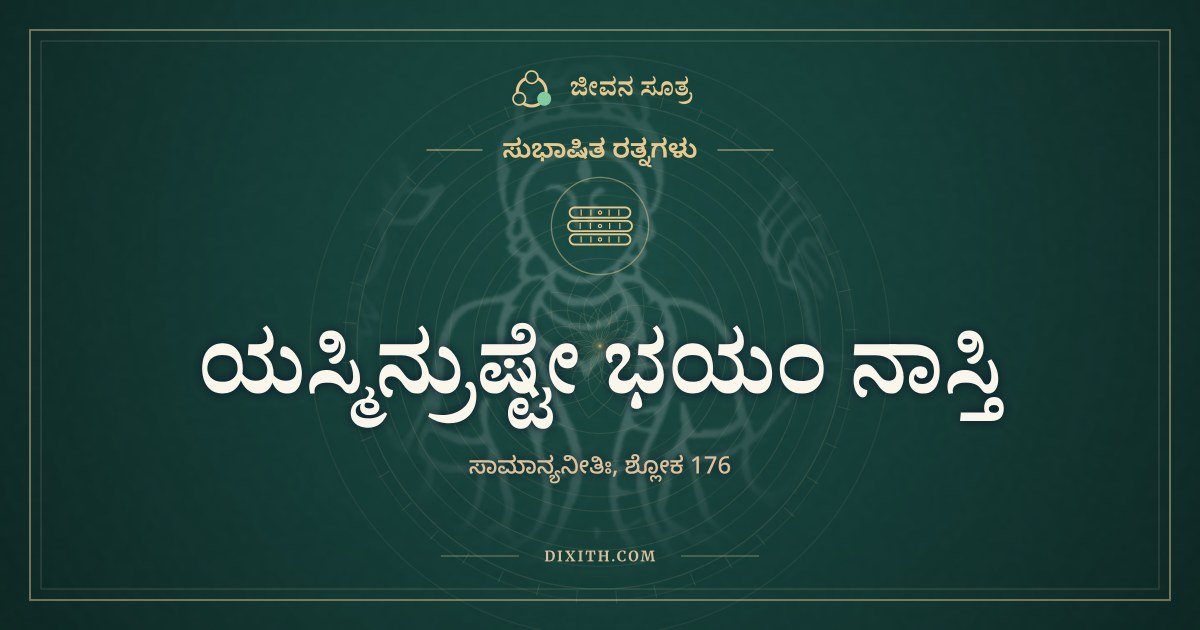
ಯಸ್ಮಿನ್ರುಷ್ಟೇ ಭಯಂ ನಾಸ್ತಿ ತುಷ್ಟೇ ನೈವ ಧನಾಗಮಃ
ನಿಗ್ರಹಾನುಗ್ರಹೌ ನ ಸ್ತಃ ಸ ರುಷ್ಟಃ ಕಿಂ ಕರಿಷ್ಯತಿ
ಸುಭಾಷಿತ (ದೇವನಾಗರಿ)
यस्मिन्रुष्टे भयं नास्ति तुष्टे नैव धनागमः
निग्रहानुग्रहौ न स्तः स रुष्टः किं करिष्यति
ಸುಭಾಷಿತ (IAST)
yasminruṣṭe bhayaṃ nāsti tuṣṭe naiva dhanāgamaḥ
nigrahānugrahau na staḥ sa ruṣṭaḥ kiṃ kariṣyati
ಪದಶಃ ಅರ್ಥ
- ಯಸ್ಮಿನ್ರುಷ್ಟೇ (यस्मिन्रुष्टे, yasminruṣṭe) = ಯಾರು ಕೋಪಗೊಂಡಾಗ (ಯಸ್ಮಿನ್ + ರುಷ್ಟೇ) (in whose anger (yasmin + rushte))
- ಭಯಂ (भयं, bhayaṃ) = ಭಯ (fear)
- ನಾಸ್ತಿ (नास्ति, nāsti) = ಇಲ್ಲ (ನ + ಅಸ್ತಿ) (there is none (na + asti))
- ತುಷ್ಟೇ (तुष्टे, tuṣṭe) = ಸಂತುಷ್ಟನಾದಾಗ (when he is pleased)
- ನೈವ (नैव, naiva) = ಎಂದಿಗೂ ಇಲ್ಲ (never)
- ಧನಾಗಮಃ (धनागमः, dhanāgamaḥ) = ಧನ ಬರುವುದು (ಧನ + ಆಗಮಃ) (the coming of wealth (dhana + agamah))
- ನಿಗ್ರಹಾನುಗ್ರಹೌ (निग्रहानुग्रहौ, nigrahānugrahau) = ಶಿಕ್ಷಿಸುವ ಮತ್ತು ಕರುಣಿಸುವ ಶಕ್ತಿಗಳು (ನಿಗ್ರಹ + ಅನುಗ್ರಹೌ) (the power to punish and the power to favour (nigraha + anugrahau))
- ನ ಸ್ತಃ (न स्तः, na staḥ) = ಇಲ್ಲ (are not there)
- ಸ (स, sa) = ಅಂಥವನು (such a man)
- ರುಷ್ಟಃ (रुष्टः, ruṣṭaḥ) = ಕೋಪಗೊಂಡು (having become angry)
- ಕಿಂ (किं, kiṃ) = ಏನನ್ನು (what)
- ಕರಿಷ್ಯತಿ (करिष्यति, kariṣyati) = ಮಾಡಬಲ್ಲ (will he do)
ಸಂಪೂರ್ಣ ಅರ್ಥ (ಕನ್ನಡ)
ಯಾರು ಕೋಪಗೊಂಡರೆ ಭಯವಿಲ್ಲವೋ, ಮೆಚ್ಚಿದರೆ ಧನ ಬರುವುದಿಲ್ಲವೋ, ಶಿಕ್ಷಿಸುವ ಅಥವಾ ಕರುಣಿಸುವ ಶಕ್ತಿಯೇ ಇಲ್ಲವೋ, ಅಂಥವನು ಕೋಪಗೊಂಡು ಏನು ಮಾಡಬಲ್ಲ.
ಸಂಪೂರ್ಣ ಅರ್ಥ (ಇಂಗ್ಲಿಷ್)
He whose anger brings no fear, whose pleasure brings no wealth, and who has neither the power to punish nor the power to favour: what can such a man do, even when he is angry?
ಈ ಸುಭಾಷಿತದ ಬಗ್ಗೆAbout this subhashita
ನಿಗ್ರಹ ಮತ್ತು ಅನುಗ್ರಹ ಎಂಬ ಜೋಡಿ ಪದ ಹಳೆಯ ರಾಜನೀತಿಯಲ್ಲಿ ಅಧಿಕಾರದ ಎರಡು ಮುಖಗಳು. ಒಂದು ದಂಡಿಸುವುದು, ಇನ್ನೊಂದು ಕೃಪೆ ತೋರಿಸುವುದು. ಇವೆರಡೂ ಇಲ್ಲದವನ ಕೋಪ ಬರೀ ಸದ್ದು.
The pair nigraha and anugraha names the two faces of authority in old statecraft: to restrain or punish, and to favour. A man with neither has anger that is only noise.
ಶ್ಲೋಕ ಪ್ರಶ್ನೆಯಲ್ಲಿ ಮುಗಿಯುತ್ತದೆ. ಕೇಳುವ ರೀತಿಯಲ್ಲೇ ಉತ್ತರ ಇದೆ, ಏನೂ ಇಲ್ಲ ಎಂದು. ಇದು ವ್ಯಂಗ್ಯದ ಧ್ವನಿ.
The verse ends on a question, and the way it is asked carries the answer: nothing. The tone is dry irony.
ಮುದ್ರಣದಲ್ಲಿ ಕೆಲವು ಕೊನೆಯ ವಿಸರ್ಗ ಮತ್ತು ಅನುಸ್ವಾರ ಚಿಹ್ನೆಗಳು ಮಸುಕಾಗಿವೆ. ಅವುಗಳನ್ನು ವ್ಯಾಕರಣದ ಪ್ರಕಾರ ಓದಿದ್ದೇವೆ.
In the print some final visarga and anusvara marks are faint. We have read them as grammar requires.
ಆಧಾರ: ಸುಭಾಷಿತರತ್ನಭಾಂಡಾಗಾರ, ರಾಜ ಪ್ರಕರಣ (ನಿರ್ಣಯಸಾಗರ ಮುದ್ರಣಾಲಯ, ಮುಂಬಯಿ), ಪುಟ 157. ಶ್ಲೋಕದ ಪಾಠವನ್ನು ಮುದ್ರಿತ ಪ್ರತಿಯ ಸ್ಕ್ಯಾನ್ನೊಂದಿಗೆ ಅಕ್ಷರಶಃ ಹೋಲಿಸಿದ್ದೇವೆ. ಅರ್ಥ ಮತ್ತು ವಿವರಣೆ ನಮ್ಮದು.
Source: Subhashitaratnabhandagara, Raja Prakarana (Nirnaya Sagar Press, Bombay), page 157. The text of the verse was checked letter by letter against a scan of the printed book. The meaning and notes are ours.
ಇಂದಿನ ಬದುಕಿಗೆFor life today
ನಮ್ಮ ಕೋಪಕ್ಕೆ ಬೆಲೆ ಇದೆಯೇ ಎಂದು ತಿಳಿಯಲು ಅದರ ಹಿಂದೆ ಏನಿದೆ ಎಂದು ನೋಡಬೇಕು. ಕೂಗಾಡಿದರೂ ಯಾರೂ ಬದಲಾಗದಿದ್ದರೆ ಸಮಸ್ಯೆ ಕೋಪದ ಪ್ರಮಾಣದಲ್ಲಿ ಇಲ್ಲ, ಅದರ ಹಿಂದಿನ ಸಿದ್ಧತೆಯಲ್ಲಿ ಇದೆ.
To know whether our anger has any worth, we should look at what stands behind it. If we shout and nobody changes, the trouble is not the volume of the anger but the lack of preparation behind it.
ಇದನ್ನು ಇನ್ನೊಂದು ಕಡೆಯಿಂದಲೂ ನೋಡಬಹುದು. ವಾರ್ಡಿನಲ್ಲಿ ಹಿರಿಯರು ತಮ್ಮ ಮಾತಿಗೆ ತೂಕ ಬರಬೇಕಾದರೆ ಕಲಿಸಿ, ಮೆಚ್ಚಿ, ಅಗತ್ಯವಾದಾಗ ತಿದ್ದುವ ಸ್ಥಾನದಲ್ಲಿರಬೇಕು. ಆ ತೂಕ ಭಯದಿಂದ ಬರುವುದಿಲ್ಲ, ನಂಬಿಕೆಯಿಂದ ಬರುತ್ತದೆ.
It can be seen from the other side too. A senior on the ward gives weight to their words by teaching, by appreciating, and by correcting when needed. That weight comes from trust and not from fear.
ಪಾಠದಲ್ಲಿ ತಪ್ಪೋ ಬೇರೆ ಪಾಠಾಂತರವೋ ಕಂಡಿತೇ? ನಮಗೆ ತಿಳಿಸಿ.
Noticed a mistake or a different reading? Tell us.


ಪ್ರತಿಕ್ರಿಯೆ ಬರೆಯಿರಿ