
ಬೂದಿ ಎಂದರೆ ಉರಿದು ಮುಗಿದದ್ದು. ಅದನ್ನೇ ಹಣೆಗೆ ಹಚ್ಚಿಕೊಳ್ಳುವುದು ಒಂದು ದಿಟ್ಟ ನೆನಪು: ಎಲ್ಲವೂ ಕೊನೆಗೆ ಇಷ್ಟೇ.
ಸ್ನಾನದ ನಂತರ ವಿಭೂತಿ ಧರಿಸುವ ಶೈವ ಪರಂಪರೆಯಲ್ಲಿ ಈ ಶ್ಲೋಕವನ್ನು ಹೇಳುತ್ತಾರೆ. ಅದು ಭಸ್ಮವನ್ನು ಅಶುಭದ ಸಂಕೇತವಾಗಿ ನೋಡದೆ ಶ್ರೀಯನ್ನು, ಅಂದರೆ ಮಂಗಳವನ್ನು, ತರುವ ವಸ್ತುವಾಗಿ ಹೊಗಳುತ್ತದೆ.
ಶ್ಲೋಕ (ಕನ್ನಡ)
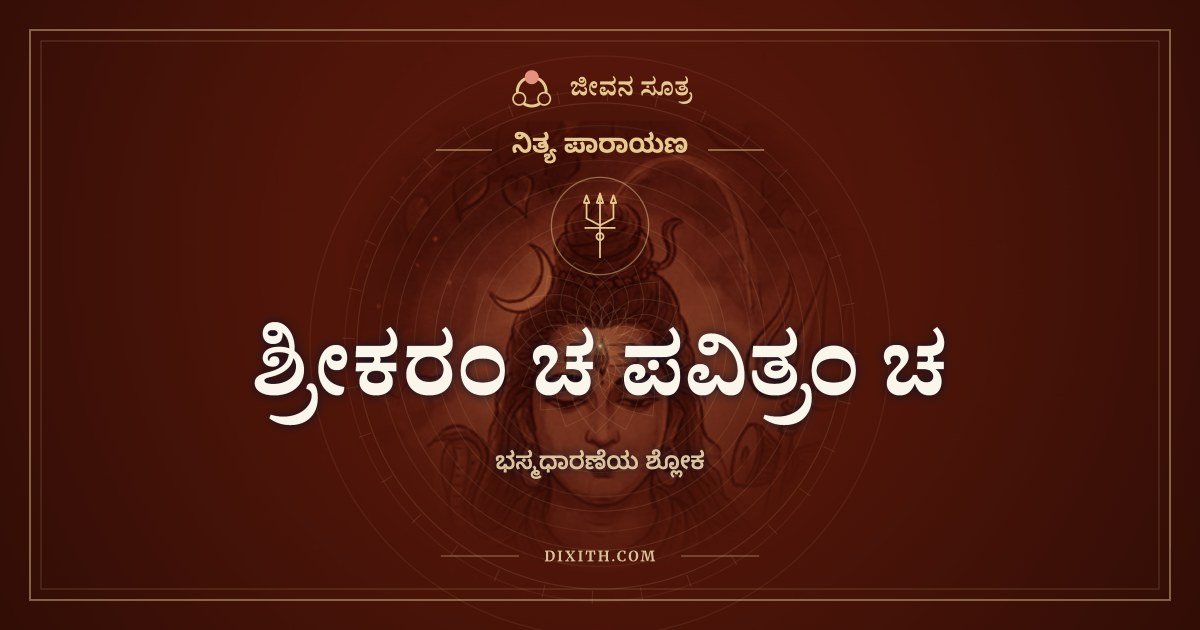
ಶ್ರೀಕರಂ ಚ ಪವಿತ್ರಂ ಚ ಶೋಕರೋಗನಿವಾರಣಮ್ ।
ಲೋಕೇ ವಶೀಕರಂ ಪುಂಸಾಂ ಭಸ್ಮಂ ತ್ರೈಲೋಕ್ಯಪಾವನಮ್ ॥
ಶ್ಲೋಕ (ದೇವನಾಗರಿ)
श्रीकरं च पवित्रं च शोकरोगनिवारणम् ।
लोके वशीकरं पुंसां भस्मं त्रैलोक्यपावनम् ॥
ಶ್ಲೋಕ (IAST)
śrīkaraṃ ca pavitraṃ ca śokaroganivāraṇam |
loke vaśīkaraṃ puṃsāṃ bhasmaṃ trailokyapāvanam ||
ಪದಶಃ ಅರ್ಥ
- ಶ್ರೀಕರಮ್ (श्रीकरम्, śrīkaram) = ಶ್ರೀಯನ್ನು, ಮಂಗಳವನ್ನು ತರುವಂಥದ್ದು (that which brings auspiciousness)
- ಚ (च, ca) = ಮತ್ತು (and)
- ಪವಿತ್ರಮ್ (पवित्रम्, pavitram) = ಪವಿತ್ರವಾದದ್ದು (pure, purifying)
- ಶೋಕರೋಗನಿವಾರಣಮ್ (शोकरोगनिवारणम्, śokaroganivāraṇam) = ದುಃಖ ಮತ್ತು ರೋಗವನ್ನು ದೂರಮಾಡುವಂಥದ್ದು (that which removes sorrow and illness)
- ಲೋಕೇ (लोके, loke) = ಲೋಕದಲ್ಲಿ (in the world)
- ವಶೀಕರಮ್ (वशीकरम्, vaśīkaram) = ವಶಪಡಿಸುವಂಥದ್ದು, ಆಕರ್ಷಿಸುವಂಥದ್ದು (that which wins over, attracts)
- ಪುಂಸಾಮ್ (पुंसाम्, puṃsām) = ಮನುಷ್ಯರಿಗೆ (for people)
- ಭಸ್ಮಮ್ (भस्मम्, bhasmam) = ಭಸ್ಮ, ವಿಭೂತಿ (sacred ash)
- ತ್ರೈಲೋಕ್ಯಪಾವನಮ್ (त्रैलोक्यपावनम्, trailokyapāvanam) = ಮೂರು ಲೋಕಗಳನ್ನೂ ಪವಿತ್ರಗೊಳಿಸುವಂಥದ್ದು (that which purifies the three worlds)
ಸಂಪೂರ್ಣ ಅರ್ಥ (ಕನ್ನಡ)
ಭಸ್ಮ ಮಂಗಳವನ್ನು ತರುತ್ತದೆ, ಪವಿತ್ರವಾಗಿದೆ, ದುಃಖ ಮತ್ತು ರೋಗವನ್ನು ದೂರಮಾಡುತ್ತದೆ. ಲೋಕದಲ್ಲಿ ಮನುಷ್ಯರಿಗೆ ಅದು ಇತರರ ಮನಸ್ಸನ್ನು ಗೆಲ್ಲುವ ಶಕ್ತಿ ಕೊಡುತ್ತದೆ; ಮೂರು ಲೋಕಗಳನ್ನೂ ಅದು ಪವಿತ್ರಗೊಳಿಸುತ್ತದೆ.
ಸಂಪೂರ್ಣ ಅರ್ಥ (ಇಂಗ್ಲಿಷ್)
Sacred ash brings auspiciousness, is pure, and removes sorrow and illness. In the world it gives people the power to win others over, and it purifies the three worlds.
ಈ ಶ್ಲೋಕದ ಬಗ್ಗೆAbout this verse
ಕೆಲವು ಸಂಗ್ರಹಗಳಲ್ಲಿ ಎರಡನೆಯ ಪಾದ ಶೋಕನಿವಾರಣಮ್ ಎಂದು ಮಾತ್ರ ಇದೆ. ಅದು ಅನುಷ್ಟುಪ್ ಛಂದಸ್ಸಿನ ಎಂಟು ಅಕ್ಷರಕ್ಕೆ ಎರಡು ಕಡಿಮೆ. ಶೋಕರೋಗನಿವಾರಣಮ್ ಎಂಬ ಓದು ಛಂದಸ್ಸನ್ನು ತುಂಬುತ್ತದೆ, ಆದ್ದರಿಂದ ಅದನ್ನು ಇಲ್ಲಿ ಕೊಟ್ಟಿದ್ದೇವೆ.
Some collections have only shokanivaranam in the second quarter, which is two syllables short of the eight the anushtubh metre needs. The reading shokaroganivaranam fills the metre, so it is given here.
ಶೈವ ಪರಂಪರೆಯಲ್ಲಿ ಹಣೆ, ತೋಳು, ಎದೆಗಳ ಮೇಲೆ ಮೂರು ಅಡ್ಡಗೆರೆಯ ತ್ರಿಪುಂಡ್ರವಾಗಿ ವಿಭೂತಿ ಧರಿಸುತ್ತಾರೆ. ಭಸ್ಮಜಾಬಾಲ ಉಪನಿಷತ್ತಿನಂಥ ಗ್ರಂಥಗಳು ಇದರ ವಿಧಿಯನ್ನು ವಿವರಿಸುತ್ತವೆ.
In the Shaiva tradition ash is worn as the tripundra, three horizontal lines, on the forehead, arms and chest. Texts such as the Bhasma Jabala Upanishad describe the practice.
ವಶೀಕರಂ ಪದವನ್ನು ಮಾಟಮಂತ್ರದ ಅರ್ಥದಲ್ಲಿ ಓದಬೇಕಾಗಿಲ್ಲ. ವಿನಯದ ಸಂಕೇತವನ್ನು ಧರಿಸಿದವರನ್ನು ಜನ ಸಹಜವಾಗಿ ಗೌರವಿಸುತ್ತಾರೆ ಎಂಬುದು ಸರಳ ಓದು.
The word vashikaram need not be read in the sense of spells. The simple reading is that people naturally respect someone who wears a sign of humility.
ಆಧಾರ: ಹಲವು ಮೂಲಗಳು. ಆವೃತ್ತಿಗಳು ಭಿನ್ನವಾಗಿರುವಲ್ಲಿ ಅದನ್ನು ಇಲ್ಲಿ ಸೂಚಿಸಿದ್ದೇವೆ.
Sources: several. Where versions differ, we have noted it here.
ಇಂದಿನ ಬದುಕಿಗೆFor life today
ಭಸ್ಮ ಹಚ್ಚುವುದರಿಂದ ರೋಗ ಗುಣವಾಗುತ್ತದೆ ಎಂದು ಈ ಶ್ಲೋಕವನ್ನು ಅಕ್ಷರಶಃ ಓದಬಾರದು. ಪ್ರಾರ್ಥನೆ ಮನಸ್ಸಿಗೆ ಬಲ ಕೊಡುತ್ತದೆ; ರೋಗಕ್ಕೆ ಚಿಕಿತ್ಸೆ ಬೇಕೇ ಬೇಕು.
This verse should not be read literally, as if applying ash cures disease. Prayer strengthens the mind; illness still needs treatment.
ಹಣೆಯ ಮೇಲಿನ ಬೂದಿ ದಿನವಿಡೀ ಒಂದು ಸಣ್ಣ ಪ್ರಶ್ನೆ ಕೇಳುತ್ತದೆ: ಇಂದು ನಾನು ಯಾವುದಕ್ಕಾಗಿ ಉರಿಯುತ್ತಿದ್ದೇನೆ? ಆ ಪ್ರಶ್ನೆಯೇ ಈ ಆಚರಣೆಯ ಅತ್ಯಂತ ಉಪಯುಕ್ತ ಭಾಗ.
The ash on the forehead asks a small question all day: what am I burning myself up for today? That question is the most useful part of the practice.
ಪ್ರತಿಕ್ರಿಯೆ ಬರೆಯಿರಿ