
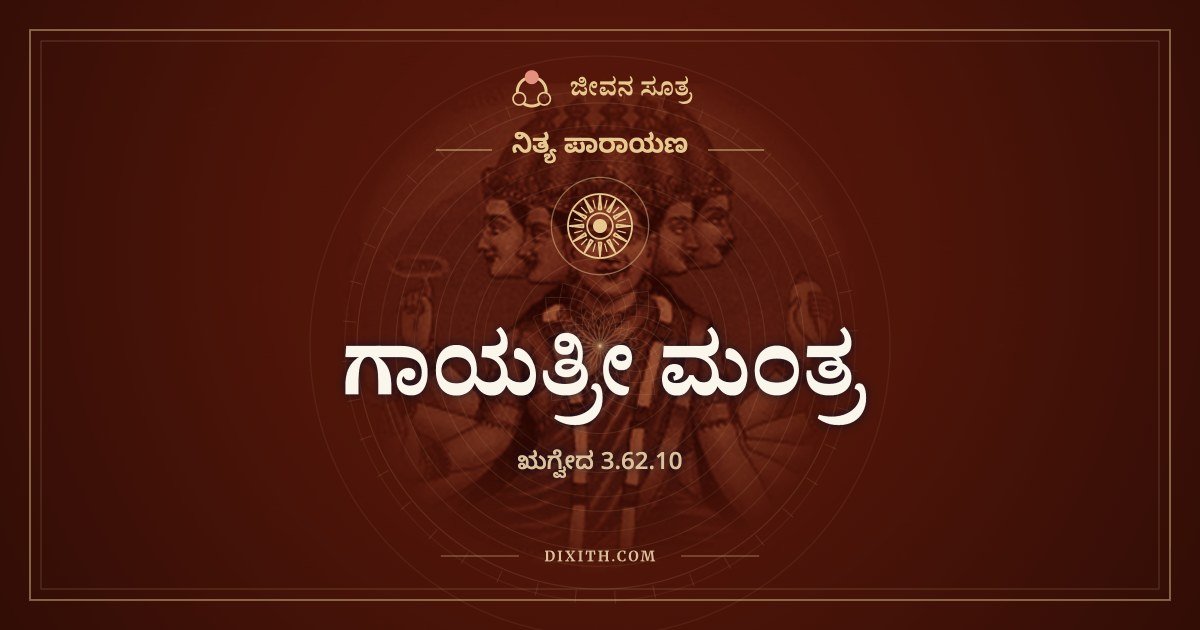
ವೇದಗಳ ಸಾವಿರಾರು ಮಂತ್ರಗಳಲ್ಲಿ ಅತಿ ಹೆಚ್ಚು ಜಪಿಸಲ್ಪಡುವುದು ಬಹುಶಃ ಇದೇ. ಅದರಲ್ಲಿ ಕೇಳುವುದು ಸಂಪತ್ತಲ್ಲ, ಆಯುಷ್ಯವಲ್ಲ, ಸ್ವರ್ಗವಲ್ಲ. ನಮ್ಮ ಬುದ್ಧಿಯನ್ನು ಪ್ರೇರಿಸಲಿ, ಅಷ್ಟೇ.
ಸವಿತೃ ಎಂದರೆ ಪ್ರೇರಿಸುವವನು, ಉದಯಿಸುವ ಸೂರ್ಯನ ಶಕ್ತಿ. ಅವನ ಶ್ರೇಷ್ಠವಾದ ತೇಜಸ್ಸನ್ನು ಧ್ಯಾನಿಸುತ್ತೇವೆ ಎಂದು ಮಂತ್ರ ಹೇಳುತ್ತದೆ. ಧಿಯೋ ಯೋ ನಃ ಎಂಬಲ್ಲಿ ನಃ ಬಹುವಚನ: ನನ್ನ ಬುದ್ಧಿಯಲ್ಲ, ನಮ್ಮೆಲ್ಲರ ಬುದ್ಧಿ.
ಶ್ಲೋಕ (ಕನ್ನಡ)
ಓಂ ಭೂರ್ಭುವಃ ಸುವಃ ।
ತತ್ಸವಿತುರ್ವರೇಣ್ಯಂ ಭರ್ಗೋ ದೇವಸ್ಯ ಧೀಮಹಿ ।
ಧಿಯೋ ಯೋ ನಃ ಪ್ರಚೋದಯಾತ್ ॥
ಸ್ವರಸಹಿತ ಪಾಠ
ಓಂ ಭೂರ್ಭುವ॒ಸ್ಸುವಃ॑ ।
ತಥ್ಸ॑ವಿ॒ತುರ್ವರೇ᳚ಣ್ಯಂ॒ ಭರ್ಗೋ॑ ದೇ॒ವಸ್ಯ॑ ಧೀಮಹಿ ।
ಧಿಯೋ॒ ಯೋ ನಃ॑ ಪ್ರಚೋದಯಾ᳚ತ್ ॥
ಸ್ವರಚಿಹ್ನೆಗಳು ತೈತ್ತಿರೀಯ (ಕೃಷ್ಣ ಯಜುರ್ವೇದ) ಸಂಧ್ಯಾವಂದನೆಯ ಪಾಠವನ್ನು ಅನುಸರಿಸುತ್ತವೆ. ಋಗ್ವೇದಿಗಳು ಮತ್ತು ಶುಕ್ಲ ಯಜುರ್ವೇದಿಗಳು ಸ್ವರವನ್ನು ಗುರುತಿಸುವ ಮತ್ತು ಉಚ್ಚರಿಸುವ ಕ್ರಮ ಸ್ವಲ್ಪ ಬೇರೆ; ಗುರುಮುಖದಿಂದ ಕಲಿಯುವುದೇ ಸರಿಯಾದ ದಾರಿ.
ಶ್ಲೋಕ (ದೇವನಾಗರಿ)
ॐ भूर्भुवः सुवः ।
तत्सवितुर्वरेण्यं भर्गो देवस्य धीमहि ।
धियो यो नः प्रचोदयात् ॥
ಶ್ಲೋಕ (IAST)
oṃ bhūrbhuvaḥ suvaḥ |
tatsaviturvareṇyaṃ bhargo devasya dhīmahi |
dhiyo yo naḥ pracodayāt ||
ಪದಶಃ ಅರ್ಥ
- ಓಂ (ॐ, oṃ) = ಪ್ರಣವ, ಪರಬ್ರಹ್ಮದ ಸಂಕೇತ (Om, the sacred syllable)
- ಭೂಃ (भूः, bhūḥ) = ಭೂಲೋಕ (the earth)
- ಭುವಃ (भुवः, bhuvaḥ) = ಅಂತರಿಕ್ಷ, ನಡುವಿನ ಲೋಕ (the middle region, the sky)
- ಸುವಃ (सुवः, suvaḥ) = ಸ್ವರ್ಲೋಕ, ದ್ಯುಲೋಕ (the heavens)
- ತತ್ (तत्, tat) = ಆ (that)
- ಸವಿತುಃ (सवितुः, savituḥ) = ಸವಿತೃವಿನ, ಪ್ರೇರಕನಾದ ಸೂರ್ಯದೇವನ (of Savitr, the impelling sun)
- ವರೇಣ್ಯಮ್ (वरेण्यम्, vareṇyam) = ವರಿಸಲು ಯೋಗ್ಯವಾದ, ಶ್ರೇಷ್ಠವಾದ (worthy to be chosen, excellent)
- ಭರ್ಗಃ (भर्गः, bhargaḥ) = ತೇಜಸ್ಸು, ಪಾಪವನ್ನು ಸುಡುವ ಬೆಳಕು (radiance, the light that burns away)
- ದೇವಸ್ಯ (देवस्य, devasya) = ದೇವನ (of the god)
- ಧೀಮಹಿ (धीमहि, dhīmahi) = ಧ್ಯಾನಿಸುತ್ತೇವೆ (we meditate on)
- ಧಿಯಃ (धियः, dhiyaḥ) = ಬುದ್ಧಿಗಳನ್ನು (thoughts, understanding)
- ಯಃ (यः, yaḥ) = ಯಾರು (who)
- ನಃ (नः, naḥ) = ನಮ್ಮ (our)
- ಪ್ರಚೋದಯಾತ್ (प्रचोदयात्, pracodayāt) = ಪ್ರೇರಿಸಲಿ, ಚುರುಕುಗೊಳಿಸಲಿ (may he impel, may he inspire)
ಸಂಪೂರ್ಣ ಅರ್ಥ (ಕನ್ನಡ)
ಓಂ. ಭೂಮಿ, ಅಂತರಿಕ್ಷ, ಸ್ವರ್ಗ. ನಮ್ಮ ಬುದ್ಧಿಗಳನ್ನು ಯಾರು ಪ್ರೇರಿಸುತ್ತಾನೋ, ಆ ಸವಿತೃ ದೇವನ ಶ್ರೇಷ್ಠವಾದ ತೇಜಸ್ಸನ್ನು ನಾವು ಧ್ಯಾನಿಸುತ್ತೇವೆ.
ಸಂಪೂರ್ಣ ಅರ್ಥ (ಇಂಗ್ಲಿಷ್)
Om. Earth, sky, heaven. We meditate on that excellent radiance of the god Savitr; may he inspire our understanding.
ಈ ಮಂತ್ರದ ಬಗ್ಗೆ, ಮತ್ತು ಯಾರು ಜಪಿಸಬಹುದುAbout this mantra, and who may chant it
ಮೂಲ ಋಗ್ವೇದ ಮಂತ್ರ ತತ್ಸವಿತುರ್ ಎಂದು ಶುರುವಾಗುತ್ತದೆ. ಓಂ ಮತ್ತು ಭೂರ್ಭುವಃ ಸುವಃ ಎಂಬ ಮೂರು ವ್ಯಾಹೃತಿಗಳನ್ನು ಜಪದ ಪರಂಪರೆ ಮುಂದೆ ಸೇರಿಸಿದೆ; ತೈತ್ತಿರೀಯ ಆರಣ್ಯಕ ಮತ್ತು ಮನುಸ್ಮೃತಿಯಂಥ ಗ್ರಂಥಗಳು ಈ ಕ್ರಮವನ್ನು ಹೇಳುತ್ತವೆ. ಛಂದಸ್ಸಿನ ಹೆಸರೇ ಗಾಯತ್ರೀ: ಎಂಟು ಅಕ್ಷರಗಳ ಮೂರು ಪಾದಗಳು. ಮೊದಲ ಪಾದದಲ್ಲಿ ವರೇಣ್ಯಂ ಪದವನ್ನು ವರೇಣಿಯಂ ಎಂದು ಓದಿದಾಗ ಎಂಟು ಅಕ್ಷರಗಳಾಗುತ್ತವೆ.
The Rig Veda mantra itself begins tat savitur. The syllable Om and the three vyahritis bhur bhuvah suvah were added in front by the tradition of japa, as texts such as the Taittiriya Aranyaka and the Manusmriti describe. The metre is itself called gayatri: three quarters of eight syllables. The first quarter reaches eight when varenyam is read as vareniyam.
ಪರಂಪರೆಯಲ್ಲಿ ಗಾಯತ್ರಿಯನ್ನು ಉಪನಯನದ ಹೊತ್ತಿನಲ್ಲಿ ಗುರು ಉಪದೇಶಿಸುತ್ತಾರೆ, ಅದನ್ನು ಸಂಧ್ಯಾವಂದನೆಯಲ್ಲಿ ಜಪಿಸುತ್ತಾರೆ. ಸಾಂಪ್ರದಾಯಿಕ ಧರ್ಮಶಾಸ್ತ್ರ ಈ ಜಪವನ್ನು ಉಪನೀತರಾದವರಿಗೆ ಸೀಮಿತಗೊಳಿಸುತ್ತದೆ, ಮತ್ತು ಆ ನಿಲುವನ್ನು ಇಂದೂ ಹಲವು ಮಠಗಳು ಹಾಗೂ ವೈದಿಕರು ಪಾಲಿಸುತ್ತಾರೆ.
In tradition the Gayatri is imparted by the teacher at the upanayana, the sacred thread ceremony, and chanted in sandhyavandana. Traditional dharma texts limit this japa to those who have received upanayana, and many mathas and Vedic scholars keep that position today.
ಇನ್ನೊಂದೆಡೆ ಆರ್ಯ ಸಮಾಜ, ಗಾಯತ್ರೀ ಪರಿವಾರದಂಥ ಸಂಸ್ಥೆಗಳು ಮತ್ತು ಹಲವು ಆಧುನಿಕ ಗುರುಗಳು ಸ್ತ್ರೀಯರೂ ಸೇರಿದಂತೆ ಎಲ್ಲರೂ ಇದನ್ನು ಜಪಿಸಬಹುದು ಎಂದು ಬೋಧಿಸುತ್ತಾರೆ. ಈ ಪುಟ ಎರಡೂ ನಿಲುವುಗಳನ್ನು ದಾಖಲಿಸುತ್ತದೆ, ತೀರ್ಪು ಕೊಡುವುದಿಲ್ಲ. ನೀವು ಅನುಸರಿಸುವ ಪರಂಪರೆಯ ಗುರುಗಳ ಮಾರ್ಗದರ್ಶನ ಪಡೆಯುವುದು ಒಳ್ಳೆಯದು.
On the other side, organisations such as the Arya Samaj and the Gayatri Pariwar, and many modern teachers, teach that everyone, women included, may chant it. This page records both positions and does not pass judgement. It is best to seek the guidance of teachers in the tradition you follow.
ಆಧಾರ: ಹಲವು ಮೂಲಗಳು. ಆವೃತ್ತಿಗಳು ಭಿನ್ನವಾಗಿರುವಲ್ಲಿ ಅದನ್ನು ಇಲ್ಲಿ ಸೂಚಿಸಿದ್ದೇವೆ.
Sources: several. Where versions differ, we have noted it here.
ಇಂದಿನ ಬದುಕಿಗೆFor life today
ಈ ಮಂತ್ರ ಕೇಳುವುದು ಉತ್ತರವನ್ನಲ್ಲ, ಬುದ್ಧಿಗೆ ಪ್ರೇರಣೆಯನ್ನು. ಆ ಪ್ರೇರಣೆ ಬಂದ ಮೇಲೆ ಯೋಚಿಸುವ, ಓದುವ, ಪ್ರಶ್ನಿಸುವ ಕೆಲಸ ನಮ್ಮದೇ.
This mantra does not ask for answers; it asks for the mind to be stirred. Once it is stirred, the work of thinking, reading and questioning is ours.
ಬೆಳಗಿನ ಬೆಳಕಿನ ಮುಂದೆ ಕೆಲವು ನಿಮಿಷ ನಿಧಾನವಾಗಿ ಉಸಿರಾಡುತ್ತ ಒಂದೇ ಮಂತ್ರವನ್ನು ಪುನರಾವರ್ತಿಸುವುದು ಧ್ಯಾನದ ಹಳೆಯ ರೂಪ. ಮನಸ್ಸನ್ನು ಒಂದು ಕಡೆ ನಿಲ್ಲಿಸುವ ಅಭ್ಯಾಸವಾಗಿ ಅದರ ಪ್ರಯೋಜನವನ್ನು ಇಂದಿನ ಅಧ್ಯಯನಗಳೂ ಗುರುತಿಸುತ್ತವೆ.
Repeating one mantra with slow breathing for a few minutes before the morning light is an old form of meditation. Present-day studies also recognise its value as a practice for steadying attention.
ಪ್ರತಿಕ್ರಿಯೆ ಬರೆಯಿರಿ