
ಮರುಭೂಮಿಯ ಒಂಟೆ ಮುಳ್ಳಿನ ಪೊದೆಯನ್ನು ಆರಾಮವಾಗಿ ಜಗಿಯುವುದನ್ನು ನೋಡಿದವರು ಅಚ್ಚರಿಪಡುತ್ತಾರೆ. ಅದರ ಬಾಯಿ ಅದಕ್ಕೆ ಒಗ್ಗಿದೆ.
ಆರ್ಯಾ ಛಂದಸ್ಸಿನ ಈ ಶ್ಲೋಕ ಅದೇ ಒಂಟೆಯನ್ನು ಚಾಡಿಕೋರನ ಹೋಲಿಕೆಯಾಗಿ ಬಳಸುತ್ತದೆ.
ಸುಭಾಷಿತ (ಕನ್ನಡ)
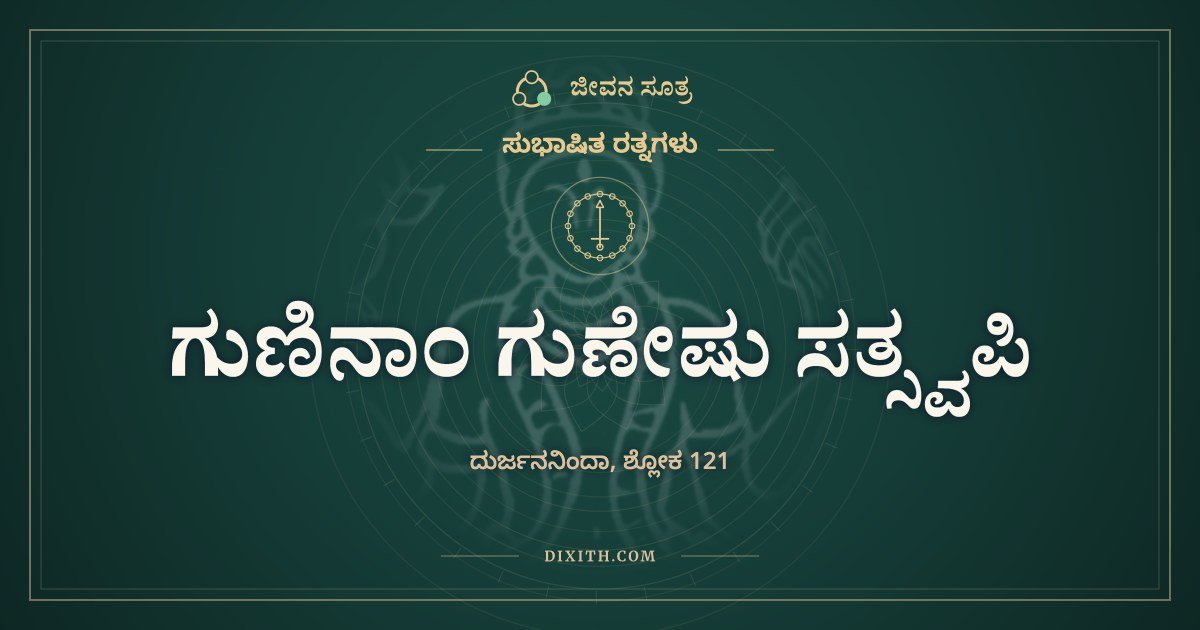
ಗುಣಿನಾಂ ಗುಣೇಷು ಸತ್ಸ್ವಪಿ ಪಿಶುನಜನೋ ದೋಷಮಾತ್ರಮಾದತ್ತೇ
ಪುಷ್ಪೇ ಫಲೇ ವಿರಾಗೀ ಕ್ರಮೇಲಕಃ ಕಂಟಕೌಘಮಿವ
ಸುಭಾಷಿತ (ದೇವನಾಗರಿ)
गुणिनां गुणेषु सत्स्वपि पिशुनजनो दोषमात्रमादत्ते
पुष्पे फले विरागी क्रमेलकः कण्टकौघमिव
ಸುಭಾಷಿತ (IAST)
guṇināṃ guṇeṣu satsvapi piśunajano doṣamātramādatte
puṣpe phale virāgī kramelakaḥ kaṇṭakaughamiva
ಪದಶಃ ಅರ್ಥ
- ಗುಣಿನಾಂ (गुणिनां, guṇināṃ) = ಗುಣವಂತರ (of the virtuous)
- ಗುಣೇಷು (गुणेषु, guṇeṣu) = ಗುಣಗಳು (among the virtues)
- ಸತ್ಸ್ವಪಿ (सत्स्वपि, satsvapi) = ಇದ್ದರೂ (though present)
- ಪಿಶುನಜನೋ (पिशुनजनो, piśunajano) = ಚಾಡಿಕೋರ (the slanderer)
- ದೋಷಮಾತ್ರಮಾದತ್ತೇ (दोषमात्रमादत्ते, doṣamātramādatte) = ದೋಷವನ್ನು ಮಾತ್ರ ತೆಗೆದುಕೊಳ್ಳುತ್ತಾನೆ (takes only the fault)
- ಪುಷ್ಪೇ (पुष्पे, puṣpe) = ಹೂವಿನಲ್ಲಿ (in the flower)
- ಫಲೇ (फले, phale) = ಹಣ್ಣಿನಲ್ಲಿ (in the fruit)
- ವಿರಾಗೀ (विरागी, virāgī) = ಆಸಕ್ತಿಯಿಲ್ಲದ (indifferent)
- ಕ್ರಮೇಲಕಃ (क्रमेलकः, kramelakaḥ) = ಒಂಟೆ (the camel)
- ಕಂಟಕೌಘಮಿವ (कण्टकौघमिव, kaṇṭakaughamiva) = ಮುಳ್ಳಿನ ರಾಶಿಯಂತೆ (like a heap of thorns)
ಸಂಪೂರ್ಣ ಅರ್ಥ (ಕನ್ನಡ)
ಗುಣವಂತರಲ್ಲಿ ಗುಣಗಳು ಇದ್ದರೂ ಚಾಡಿಕೋರ ದೋಷವನ್ನು ಮಾತ್ರ ತೆಗೆದುಕೊಳ್ಳುತ್ತಾನೆ. ಹೂವು ಹಣ್ಣುಗಳಲ್ಲಿ ಆಸಕ್ತಿ ಇಲ್ಲದ ಒಂಟೆ ಮುಳ್ಳಿನ ರಾಶಿಯನ್ನು ತೆಗೆದುಕೊಳ್ಳುವಂತೆ ಇದು.
ಸಂಪೂರ್ಣ ಅರ್ಥ (ಇಂಗ್ಲಿಷ್)
Though the virtuous have virtues, the slanderer takes up only the fault, like the camel that has no taste for flower or fruit and goes for the heap of thorns.
ಈ ಸುಭಾಷಿತದ ಬಗ್ಗೆAbout this subhashita
ಒಂಟೆ ಮುಳ್ಳು ತಿನ್ನುವುದು ಅದರ ಸ್ವಭಾವ, ಅದು ದೋಷವಲ್ಲ. ಇಲ್ಲಿ ಹೋಲಿಕೆ ಒಂಟೆಯ ಮೇಲಿನ ಆರೋಪ ಅಲ್ಲ, ಚಾಡಿಕೋರನ ರುಚಿ ಹೇಗೆ ಬೇರೆ ಎಂದು ತೋರಿಸುವ ಚಿತ್ರ.
A camel eating thorns is its nature and no fault. The comparison is no charge against the camel but a picture of how differently the slanderer’s taste runs.
ಪಿಶುನ ಎಂದರೆ ಚಾಡಿ ಹೇಳುವವನು. ದೋಷಮಾತ್ರ ಎಂಬ ಸಮಾಸದಲ್ಲಿರುವ ಮಾತ್ರ ಎಂಬ ಪದವೇ ಈ ಶ್ಲೋಕದ ಮುಖ್ಯ ಚುರುಕು.
Pishuna means a tale-bearer. The word matra, only, inside the compound doshamatra is the main sting of the verse.
ಆಧಾರ: ಸುಭಾಷಿತರತ್ನಭಾಂಡಾಗಾರ, ಸಾಮಾನ್ಯ ಪ್ರಕರಣ (ನಿರ್ಣಯಸಾಗರ ಮುದ್ರಣಾಲಯ, ಮುಂಬಯಿ), ಪುಟ 56. ಶ್ಲೋಕದ ಪಾಠವನ್ನು ಮುದ್ರಿತ ಪ್ರತಿಯ ಸ್ಕ್ಯಾನ್ನೊಂದಿಗೆ ಅಕ್ಷರಶಃ ಹೋಲಿಸಿದ್ದೇವೆ. ಅರ್ಥ ಮತ್ತು ವಿವರಣೆ ನಮ್ಮದು.
Source: Subhashitaratnabhandagara, Samanya Prakarana (Nirnaya Sagar Press, Bombay), page 56. The text of the verse was checked letter by letter against a scan of the printed book. The meaning and notes are ours.
ಇಂದಿನ ಬದುಕಿಗೆFor life today
ವೈದ್ಯಕೀಯ ಚರ್ಚೆಯಲ್ಲಿ ಕೇಸ್ ಪ್ರಸ್ತುತಿಯ ಒಂದೇ ತಪ್ಪನ್ನು ಹಿಡಿದು ಉಳಿದ ಒಳ್ಳೆಯ ಕೆಲಸವನ್ನು ಮರೆಯುವವರಿದ್ದಾರೆ. ಒಳ್ಳೆಯದನ್ನು ಮೊದಲು ಹೇಳಿ ನಂತರ ತಪ್ಪು ತೋರಿಸುವುದು ಒಳ್ಳೆಯ ಶಿಕ್ಷಕನ ರೀತಿ.
In a clinical discussion some pounce on one slip in a case presentation and forget all the good work. A good teacher names what went well first and then points out the slip.
ತಪ್ಪು ಹೇಳಲೇ ಬಾರದು ಎಂದು ಶ್ಲೋಕ ಹೇಳುತ್ತಿಲ್ಲ. ತಪ್ಪು ಮಾತ್ರ ಕಾಣುವ ಕಣ್ಣಿನ ಬಗ್ಗೆ ಅದರ ಎಚ್ಚರಿಕೆ.
The verse does not say faults must never be named. Its caution is about the eye that sees nothing but faults.
ಪಾಠದಲ್ಲಿ ತಪ್ಪೋ ಬೇರೆ ಪಾಠಾಂತರವೋ ಕಂಡಿತೇ? ನಮಗೆ ತಿಳಿಸಿ.
Noticed a mistake or a different reading? Tell us.


ಪ್ರತಿಕ್ರಿಯೆ ಬರೆಯಿರಿ