
ಚಂದ್ರನಲ್ಲಿ ಜಿಂಕೆಯ ಗುರುತು ಇದೆ ಎಂದು ನಾವು ಚಿಕ್ಕಂದಿನಿಂದ ಕೇಳಿದ್ದೇವೆ. ಆ ಗುರುತು ಅಲ್ಲಿಂದ ಎಲ್ಲಿಗೂ ಹೋಗುವುದಿಲ್ಲ.
ಆ ಗುರುತನ್ನೂ, ಸೂರ್ಯ ಹುಟ್ಟಿದ ಕೂಡಲೇ ಮಾಯವಾಗುವ ಚಂದ್ರನನ್ನೂ ಈ ಶ್ಲೋಕ ಒಟ್ಟಿಗೆ ಇಟ್ಟು ಒಂದು ಮಾತು ಹೇಳುತ್ತದೆ. ಜಡ ಎಂಬ ಪದದ ಎರಡು ಅರ್ಥಗಳು ಇಲ್ಲಿ ಜೊತೆಯಾಗಿ ಕೆಲಸ ಮಾಡುತ್ತವೆ.
ಸುಭಾಷಿತ (ಕನ್ನಡ)
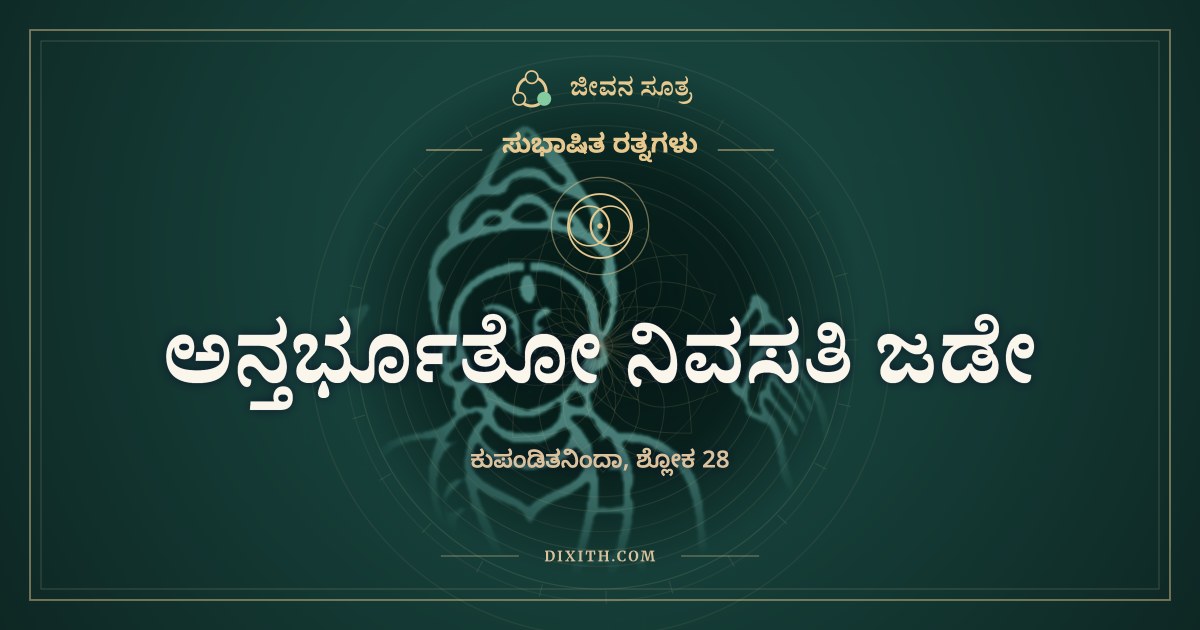
ಅನ್ತರ್ಭೂತೋ ನಿವಸತಿ ಜಡೇ ಜಡಃ ಶಿಶಿರಮಹಸಿ ಹರಿಣ ಇವ ।
ಅಜಡೇ ಶಶೀವ ತಪನೇ ಸ ತು ಪ್ರವಿಷ್ಟೋಽಪಿ ನಿಃಸರತಿ ॥
ಸುಭಾಷಿತ (ದೇವನಾಗರಿ)
अन्तर्भूतो निवसति जडे जडः शिशिरमहसि हरिण इव ।
अजडे शशीव तपने स तु प्रविष्टोऽपि निःसरति ॥
ಸುಭಾಷಿತ (IAST)
antarbhūto nivasati jaḍe jaḍaḥ śiśiramahasi hariṇa iva |
ajaḍe śaśīva tapane sa tu praviṣṭo’pi niḥsarati ||
ಪದಶಃ ಅರ್ಥ
- ಅನ್ತರ್ಭೂತಃ (अन्तर्भूतः, antarbhūtaḥ) = ಒಳಗೆ ಸೇರಿಕೊಂಡು (having got inside)
- ನಿವಸತಿ (निवसति, nivasati) = ನೆಲೆಸುತ್ತದೆ (it dwells)
- ಜಡೇ (जडे, jaḍe) = ಜಡನಲ್ಲಿ (in the dull man)
- ಜಡಃ (जडः, jaḍaḥ) = ಜಡತೆ (dullness)
- ಶಿಶಿರಮಹಸಿ (शिशिरमहसि, śiśiramahasi) = ತಣ್ಣನೆಯ ಬೆಳಕಿನವನಲ್ಲಿ, ಅಂದರೆ ಚಂದ್ರನಲ್ಲಿ (in the cool rayed one, that is, the moon)
- ಹರಿಣಃ ಇವ (हरिणः इव, hariṇaḥ iva) = ಜಿಂಕೆಯಂತೆ (like the deer)
- ಅಜಡೇ (अजडे, ajaḍe) = ಜಡನಲ್ಲದವನಲ್ಲಿ (in the man who is not dull)
- ಶಶೀ ಇವ (शशी इव, śaśī iva) = ಚಂದ್ರನಂತೆ (like the moon)
- ತಪನೇ (तपने, tapane) = ಸುಡುವ ಸೂರ್ಯನಲ್ಲಿ (in the burning sun)
- ಸಃ ತು (सः तु, saḥ tu) = ಆದರೆ ಅದು (but it)
- ಪ್ರವಿಷ್ಟಃ ಅಪಿ (प्रविष्टः अपि, praviṣṭaḥ api) = ಒಳಗೆ ಹೊಕ್ಕರೂ (even after it has entered)
- ನಿಃಸರತಿ (निःसरति, niḥsarati) = ಹೊರಗೆ ಹೋಗಿಬಿಡುತ್ತದೆ (goes out again)
ಸಂಪೂರ್ಣ ಅರ್ಥ (ಕನ್ನಡ)
ಜಡತೆ ಜಡನ ಒಳಗೆ ಸೇರಿಕೊಂಡು ಅಲ್ಲೇ ನೆಲೆಸುತ್ತದೆ, ತಣ್ಣನೆಯ ಬೆಳಕಿನ ಚಂದ್ರನಲ್ಲಿ ಜಿಂಕೆ ನೆಲೆಸಿರುವಂತೆ. ಜಡನಲ್ಲದವನಲ್ಲಿ ಅದು ಹೊಕ್ಕರೂ ಉಳಿಯುವುದಿಲ್ಲ, ಸುಡುವ ಸೂರ್ಯನಲ್ಲಿ ಚಂದ್ರ ಉಳಿಯದಂತೆ.
ಸಂಪೂರ್ಣ ಅರ್ಥ (ಇಂಗ್ಲಿಷ್)
Dullness gets inside the dull man and settles there, as the deer has settled in the cool rayed moon. In the man who is not dull it does not stay even if it enters, as the moon does not stay in the burning sun.
ಈ ಸುಭಾಷಿತದ ಬಗ್ಗೆAbout this subhashita
ಜಡ ಎಂಬ ಪದಕ್ಕೆ ಬುದ್ಧಿ ಇಲ್ಲದವನು ಎಂಬ ಅರ್ಥವೂ, ತಣ್ಣಗಿರುವುದು ಎಂಬ ಅರ್ಥವೂ ಇದೆ. ಚಂದ್ರ ತಣ್ಣನೆಯವನು, ಆದ್ದರಿಂದ ಜಡ. ಸೂರ್ಯ ಸುಡುವವನು, ಆದ್ದರಿಂದ ಅಜಡ. ಇಡೀ ಉಪಮೆ ಈ ಒಂದು ಪದದ ಮೇಲೆ ನಿಂತಿದೆ.
Jada means both dull witted and cold. The moon is cold and so jada. The sun burns and so is ajada. The whole comparison turns on that one word.
ಚಂದ್ರನಲ್ಲಿರುವ ಕಲೆಯನ್ನು ಜಿಂಕೆ ಎಂದು ಕಾಣುವ ಪದ್ಧತಿ ಸಂಸ್ಕೃತ ಕಾವ್ಯದಲ್ಲಿ ಹಳೆಯದು. ಮೃಗಾಂಕ ಎಂಬ ಚಂದ್ರನ ಹೆಸರೇ ಅದನ್ನು ಹೇಳುತ್ತದೆ. ಆ ಜಿಂಕೆ ಚಂದ್ರನಿಂದ ಎಂದೂ ಹೊರಬರುವುದಿಲ್ಲ ಎಂಬುದು ಇಲ್ಲಿನ ಮುಖ್ಯ ಅಂಶ.
Seeing the mark on the moon as a deer is old in Sanskrit poetry. The moon’s own name Mriganka says as much. What matters here is that the deer never comes out of the moon.
ಶಶ ಎಂದರೆ ಮೊಲ. ಶಶೀ ಎಂದರೆ ಮೊಲವನ್ನು ಇಟ್ಟುಕೊಂಡವನು, ಅಂದರೆ ಚಂದ್ರ. ಒಂದೇ ಶ್ಲೋಕದಲ್ಲಿ ಚಂದ್ರನನ್ನು ಶಿಶಿರಮಹಸ್ ಎಂದೂ ಶಶೀ ಎಂದೂ ಎರಡು ಬಗೆಯಲ್ಲಿ ಕರೆದಿರುವುದನ್ನು ಗಮನಿಸಬೇಕು.
Shasha is a hare. Shashi is the one that carries the hare, that is, the moon. Note that in one verse the moon is named twice over, once as shishira mahas and once as shashi.
ಆಧಾರ: ಸುಭಾಷಿತರತ್ನಭಾಂಡಾಗಾರ, ಸಾಮಾನ್ಯ ಪ್ರಕರಣ (ನಿರ್ಣಯಸಾಗರ ಮುದ್ರಣಾಲಯ, ಮುಂಬಯಿ), ಪುಟ 40. ಶ್ಲೋಕದ ಪಾಠವನ್ನು ಮುದ್ರಿತ ಪ್ರತಿಯ ಸ್ಕ್ಯಾನ್ನೊಂದಿಗೆ ಅಕ್ಷರಶಃ ಹೋಲಿಸಿದ್ದೇವೆ. ಅರ್ಥ ಮತ್ತು ವಿವರಣೆ ನಮ್ಮದು.
Source: Subhashitaratnabhandagara, Samanya Prakarana (Nirnaya Sagar Press, Bombay), page 40. The text of the verse was checked letter by letter against a scan of the printed book. The meaning and notes are ours.
ಇಂದಿನ ಬದುಕಿಗೆFor life today
ತಪ್ಪು ತಿಳಿವಳಿಕೆ ಒಮ್ಮೆ ಎಲ್ಲರಿಗೂ ಬರುತ್ತದೆ. ಕೆಲವರು ಅದನ್ನು ಬಿಟ್ಟುಬಿಡುತ್ತಾರೆ, ಕೆಲವರಲ್ಲಿ ಅದು ಮನೆ ಮಾಡಿಕೊಂಡು ಉಳಿಯುತ್ತದೆ. ವ್ಯತ್ಯಾಸ ಅದು ಬಂದದ್ದರಲ್ಲಿ ಅಲ್ಲ, ಅದು ಉಳಿದದ್ದರಲ್ಲಿ.
A wrong idea comes to everyone once. Some let it go, and in some it makes a home and stays. The difference is not in its arrival but in its staying.
ಕಲಿಸುವಾಗ ಇದು ಕಾಣುತ್ತದೆ. ತಿದ್ದಿದ ತಪ್ಪು ಮತ್ತೆ ಬರದಿದ್ದರೆ ಅದು ಕಲಿಕೆಯ ಗುರುತು. ಅದೇ ತಪ್ಪು ಮೂರನೆಯ ಸಲವೂ ಬಂದರೆ ಬೇರೆ ವಿಷಯವನ್ನು ನೋಡಬೇಕು.
This shows in teaching. A mistake corrected and not repeated is a sign of learning. The same mistake a third time is telling you something else.
ಪಾಠದಲ್ಲಿ ತಪ್ಪೋ ಬೇರೆ ಪಾಠಾಂತರವೋ ಕಂಡಿತೇ? ನಮಗೆ ತಿಳಿಸಿ.
Noticed a mistake or a different reading? Tell us.

ಪ್ರತಿಕ್ರಿಯೆ ಬರೆಯಿರಿ