
ಕೆಸರಿನಲ್ಲಿ ಸಿಕ್ಕಿಕೊಂಡ ಲಾರಿಯನ್ನು ಎಳೆಯಲು ಹತ್ತು ಜನ ಸೇರಿದರೂ ಸಾಲುವುದಿಲ್ಲ. ಅಷ್ಟೇ ತೂಕದ ಇನ್ನೊಂದು ವಾಹನ ಬೇಕಾಗುತ್ತದೆ. ಇದು ದಾರಿಯಲ್ಲಿ ಎಲ್ಲರೂ ನೋಡಿದ ದೃಶ್ಯ.
ಈ ಶ್ಲೋಕ ಆ ದೃಶ್ಯವನ್ನೇ ಆನೆಗಳ ಜೊತೆ ಹೇಳುತ್ತದೆ. ಮೊದಲ ಸಾಲಿನಲ್ಲಿ ಸಜ್ಜನರ ಬಗ್ಗೆ ಹೇಳಿ, ಎರಡನೆಯ ಸಾಲಿನಲ್ಲಿ ಕೆಸರಿನಲ್ಲಿ ಹೂತ ಆನೆಯನ್ನು ತಂದು ನಿಲ್ಲಿಸುತ್ತದೆ.
ಸುಭಾಷಿತ (ಕನ್ನಡ)
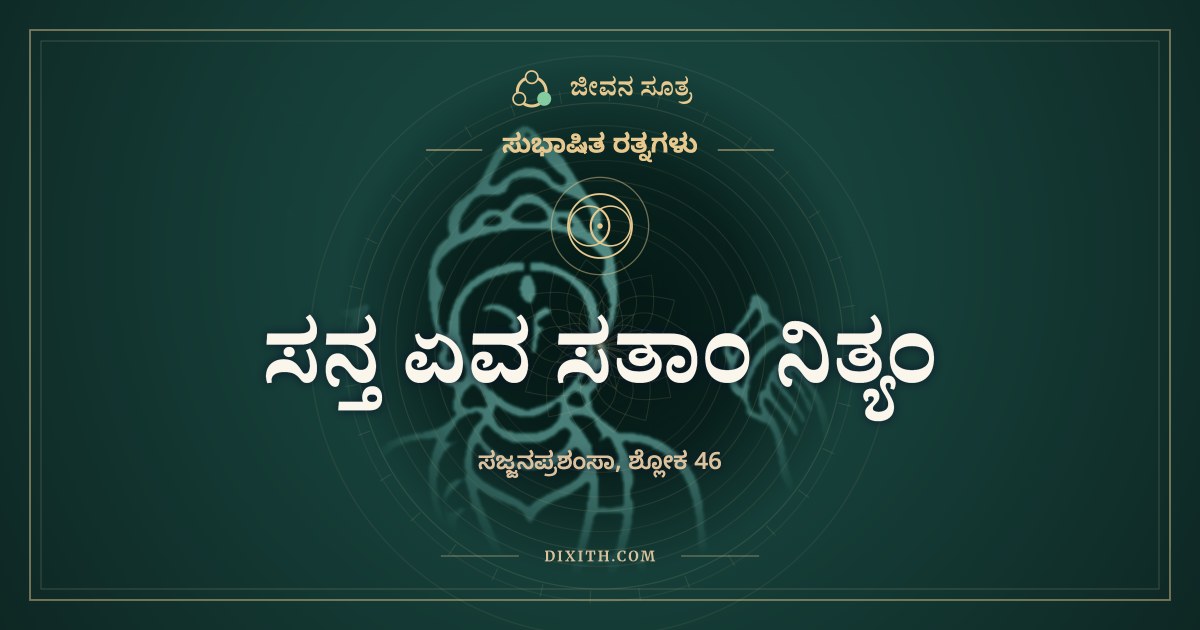
ಸನ್ತ ಏವ ಸತಾಂ ನಿತ್ಯಮಾಪದುದ್ಧರಣಕ್ಷಮಾಃ ।
ಗಜಾನಾಂ ಪಙ್ಕಮಗ್ನಾನಾಂ ಗಜಾ ಏವ ಧುರಂಧರಾಃ ॥
ಸುಭಾಷಿತ (ದೇವನಾಗರಿ)
सन्त एव सतां नित्यमापदुद्धरणक्षमाः ।
गजानां पङ्कमग्नानां गजा एव धुरंधराः ॥
ಸುಭಾಷಿತ (IAST)
santa eva satāṃ nityamāpaduddharaṇakṣamāḥ |
gajānāṃ paṅkamagnānāṃ gajā eva dhuraṃdharāḥ ||
ಪದಶಃ ಅರ್ಥ
- ಸನ್ತಃ (सन्तः, santaḥ) = ಸಜ್ಜನರು (the good)
- ಏವ (एव, eva) = ಮಾತ್ರ (alone)
- ಸತಾಮ್ (सताम्, satām) = ಸಜ್ಜನರನ್ನು (the good)
- ನಿತ್ಯಮ್ (नित्यम्, nityam) = ಯಾವಾಗಲೂ (always)
- ಆಪದ್ (आपद्, āpad) = ಆಪತ್ತಿನಿಂದ (out of calamity)
- ಉದ್ಧರಣ (उद्धरण, uddharaṇa) = ಮೇಲೆತ್ತುವುದರಲ್ಲಿ (in the lifting)
- ಕ್ಷಮಾಃ (क्षमाः, kṣamāḥ) = ಶಕ್ತರು (are able)
- ಗಜಾನಾಮ್ (गजानाम्, gajānām) = ಆನೆಗಳನ್ನು (for elephants)
- ಪಙ್ಕ (पङ्क, paṅka) = ಕೆಸರಿನಲ್ಲಿ (in the mud)
- ಮಗ್ನಾನಾಮ್ (मग्नानाम्, magnānām) = ಹೂತುಹೋದ (that have sunk)
- ಗಜಾಃ (गजाः, gajāḥ) = ಆನೆಗಳೇ (elephants)
- ಏವ (एव, eva) = ಮಾತ್ರ (alone)
- ಧುರಂಧರಾಃ (धुरंधराः, dhuraṃdharāḥ) = ಭಾರ ಹೊರುವವರು (are the bearers of the load)
ಸಂಪೂರ್ಣ ಅರ್ಥ (ಕನ್ನಡ)
ಸಜ್ಜನರನ್ನು ಆಪತ್ತಿನಿಂದ ಮೇಲೆತ್ತಲು ಯಾವಾಗಲೂ ಶಕ್ತರಾದವರು ಸಜ್ಜನರೇ. ಕೆಸರಿನಲ್ಲಿ ಹೂತುಹೋದ ಆನೆಗಳ ಭಾರವನ್ನು ಹೊರಲು ಆನೆಗಳೇ ಬೇಕು.
ಸಂಪೂರ್ಣ ಅರ್ಥ (ಇಂಗ್ಲಿಷ್)
Only good men are ever able to lift good men out of calamity. For elephants sunk in the mud, only elephants can take the load.
ಈ ಸುಭಾಷಿತದ ಬಗ್ಗೆAbout this subhashita
ಧುರಂಧರ ಎಂಬ ಪದ ಧುರ ಎಂದರೆ ಗಾಡಿಯ ನೊಗದ ಕೋಲು, ಅದನ್ನು ಹೊರುವವನು ಎಂದು. ಇಂದು ಈ ಪದ ಸಮರ್ಥ ನಾಯಕ ಎಂಬ ಅರ್ಥದಲ್ಲಿ ಬಳಕೆಯಾಗುತ್ತದೆ. ಇಲ್ಲಿ ಅದರ ಮೂಲ ಅರ್ಥವೇ ಬೇಕು, ಏಕೆಂದರೆ ವಿಷಯ ನಿಜವಾದ ಭಾರ.
The word dhurandhara comes from dhur, the yoke pole of a cart, and means one who takes that pole on himself. Today it is used for a capable leader. Here the older sense is what is wanted, because the subject is real weight.
ಚಿತ್ರ ನಿಖರವಾಗಿದೆ. ಕೆಸರು ಹಿಡಿದುಕೊಳ್ಳುತ್ತದೆ, ಆದ್ದರಿಂದ ಎಳೆಯುವವನಿಗೆ ಹೂತವನಷ್ಟೇ ತೂಕ ಬೇಕು. ಕರುಣೆ ಇದ್ದರೆ ಸಾಲದು, ಸಾಮರ್ಥ್ಯವೂ ಸಮನಾಗಿರಬೇಕು ಎಂಬುದನ್ನು ಶ್ಲೋಕ ಹೀಗೆ ಹೇಳುತ್ತದೆ. ಏವ ಎಂಬ ಪದ ಎರಡೂ ಸಾಲಿನಲ್ಲಿ ಬಂದು ಬೇರೆ ದಾರಿಯನ್ನೇ ಮುಚ್ಚಿಬಿಡುತ್ತದೆ.
The image is exact. Mud grips, so the one pulling must weigh as much as the one sunk. Pity is not enough, the strength must match. The word eva comes in both lines and closes off every other option.
ಆಧಾರ: ಸುಭಾಷಿತರತ್ನಭಾಂಡಾಗಾರ, ಸಾಮಾನ್ಯ ಪ್ರಕರಣ (ನಿರ್ಣಯಸಾಗರ ಮುದ್ರಣಾಲಯ, ಮುಂಬಯಿ), ಪುಟ 46. ಶ್ಲೋಕದ ಪಾಠವನ್ನು ಮುದ್ರಿತ ಪ್ರತಿಯ ಸ್ಕ್ಯಾನ್ನೊಂದಿಗೆ ಅಕ್ಷರಶಃ ಹೋಲಿಸಿದ್ದೇವೆ. ಅರ್ಥ ಮತ್ತು ವಿವರಣೆ ನಮ್ಮದು.
Source: Subhashitaratnabhandagara, Samanya Prakarana (Nirnaya Sagar Press, Bombay), page 46. The text of the verse was checked letter by letter against a scan of the printed book. The meaning and notes are ours.
ಇಂದಿನ ಬದುಕಿಗೆFor life today
ತೊಂದರೆಯಲ್ಲಿ ಸಿಕ್ಕ ಸಹೋದ್ಯೋಗಿಗೆ ಸಹಾನುಭೂತಿಯ ಸಂದೇಶ ಬಹಳ ಬರುತ್ತವೆ. ಸಹಾಯ ಮಾಡುವವನು ಅವನ ಸ್ಥಾನ, ಅವನ ಕೆಲಸ ಗೊತ್ತಿರುವವನೇ ಆಗಿರಬೇಕು. ಉಳಿದವರ ಮಾತು ಒಳ್ಳೆಯದೇ, ಆದರೆ ಅದು ಎಳೆಯುವುದಿಲ್ಲ.
A colleague in trouble gets plenty of sympathetic messages. The one who can actually help has to be someone who knows the post and the work. The rest mean well, but they cannot pull.
ಕಷ್ಟದಲ್ಲಿರುವ ಸ್ನಾತಕೋತ್ತರ ವಿದ್ಯಾರ್ಥಿಗೆ ಸುತ್ತೋಲೆ ಅಥವಾ ಎಚ್ಚರಿಕೆಯ ಪತ್ರ ಸಹಾಯ ಮಾಡುವುದಿಲ್ಲ. ಅವನ ಜೊತೆ ವಾರ್ಡಿನಲ್ಲಿ ನಿಂತು ಕೆಲಸ ಮಾಡುವ ಇನ್ನೊಬ್ಬ ವೈದ್ಯನೇ ಬೇಕು.
A resident who is struggling is not helped by a circular or a warning letter. What is needed is another clinician standing beside him on the ward.
ಪಾಠದಲ್ಲಿ ತಪ್ಪೋ ಬೇರೆ ಪಾಠಾಂತರವೋ ಕಂಡಿತೇ? ನಮಗೆ ತಿಳಿಸಿ.
Noticed a mistake or a different reading? Tell us.
ಪ್ರತಿಕ್ರಿಯೆ ಬರೆಯಿರಿ