
ಒಂದು ಊರಿನಲ್ಲಿ ಎಲ್ಲರಿಗೂ ಗೊತ್ತಿರುವ ಒಬ್ಬ ಮನುಷ್ಯ ಇರುತ್ತಾನೆ. ಓದಿಲ್ಲ, ಕಲಿತಿಲ್ಲ, ಯಾರಿಗೂ ಒಂದು ಕಾಸು ಕೊಟ್ಟಿಲ್ಲ, ನಡತೆಯೂ ಸರಿಯಿಲ್ಲ. ಆದರೂ ಬದುಕಿ ಮುಗಿಸುತ್ತಾನೆ.
ಅಂಥವರನ್ನು ಈ ಶ್ಲೋಕ ಬಿಡುವುದಿಲ್ಲ. ಉಪಜಾತಿ ಛಂದಸ್ಸಿನ ಮೊದಲ ಎರಡು ಸಾಲನ್ನು ಕೊರತೆಗಳ ಪಟ್ಟಿಗೇ ಮೀಸಲಿಟ್ಟು, ಉಳಿದೆರಡರಲ್ಲಿ ತೀರ್ಮಾನ ಕೊಡುತ್ತದೆ.
ಸುಭಾಷಿತ (ಕನ್ನಡ)
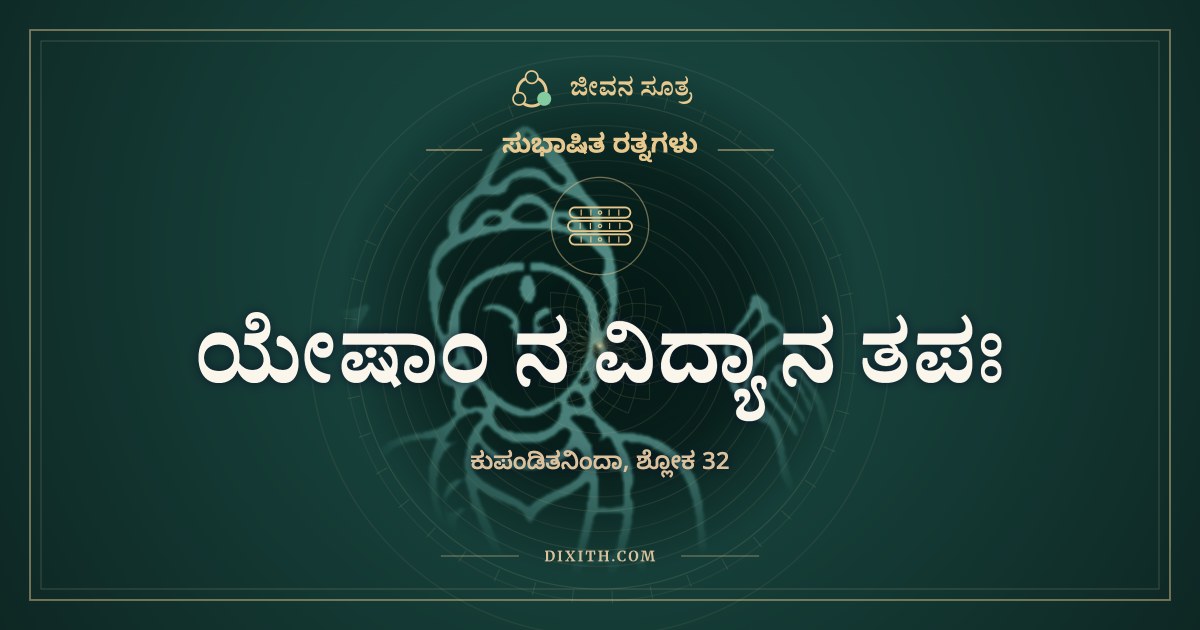
ಯೇಷಾಂ ನ ವಿದ್ಯಾ ನ ತಪೋ ನ ದಾನಂ
ಜ್ಞಾನಂ ನ ಶೀಲಂ ನ ಗುಣೋ ನ ಧರ್ಮಃ ।
ತೇ ಮೃತ್ಯುಲೋಕೇ ಭುವಿ ಭಾರಭೂತಾ
ಮನುಷ್ಯರೂಪೇಣ ಮೃಗಾಶ್ಚರನ್ತಿ ॥
ಸುಭಾಷಿತ (ದೇವನಾಗರಿ)
येषां न विद्या न तपो न दानं
ज्ञानं न शीलं न गुणो न धर्मः ।
ते मृत्युलोके भुवि भारभूता
मनुष्यरूपेण मृगाश्चरन्ति ॥
ಸುಭಾಷಿತ (IAST)
yeṣāṃ na vidyā na tapo na dānaṃ
jñānaṃ na śīlaṃ na guṇo na dharmaḥ |
te mṛtyuloke bhuvi bhārabhūtā
manuṣyarūpeṇa mṛgāścaranti ||
ಪದಶಃ ಅರ್ಥ
- ಯೇಷಾಮ್ (येषाम्, yeṣām) = ಯಾರಿಗೆ (for whom there is)
- ನ ವಿದ್ಯಾ (न विद्या, na vidyā) = ವಿದ್ಯೆ ಇಲ್ಲ (no learning)
- ನ ತಪಃ (न तपः, na tapaḥ) = ತಪಸ್ಸು ಇಲ್ಲ (no austerity)
- ನ ದಾನಮ್ (न दानम्, na dānam) = ದಾನ ಇಲ್ಲ (no giving)
- ಜ್ಞಾನಮ್ (ज्ञानम्, jñānam) = ಅರಿವು, ಅದೂ ಇಲ್ಲ (knowledge, nor that either)
- ನ ಶೀಲಮ್ (न शीलम्, na śīlam) = ನಡತೆ ಇಲ್ಲ (no good conduct)
- ನ ಗುಣಃ (न गुणः, na guṇaḥ) = ಗುಣ ಇಲ್ಲ (no merit)
- ನ ಧರ್ಮಃ (न धर्मः, na dharmaḥ) = ಧರ್ಮ ಇಲ್ಲ (no dharma)
- ತೇ (ते, te) = ಅವರು (they)
- ಮೃತ್ಯುಲೋಕೇ (मृत्युलोके, mṛtyuloke) = ಸಾವಿನ ಈ ಲೋಕದಲ್ಲಿ (in this world of death)
- ಭುವಿ (भुवि, bhuvi) = ಭೂಮಿಯ ಮೇಲೆ (upon the earth)
- ಭಾರಭೂತಾಃ (भारभूताः, bhārabhūtāḥ) = ಹೊರೆಯಾಗಿ ಆದವರು (having become a burden)
- ಮನುಷ್ಯರೂಪೇಣ (मनुष्यरूपेण, manuṣyarūpeṇa) = ಮನುಷ್ಯರ ರೂಪದಲ್ಲಿ (in the shape of men)
- ಮೃಗಾಃ (मृगाः, mṛgāḥ) = ಮೃಗಗಳಾಗಿ (as beasts)
- ಚರನ್ತಿ (चरन्ति, caranti) = ತಿರುಗಾಡುತ್ತಾರೆ (wander about)
ಸಂಪೂರ್ಣ ಅರ್ಥ (ಕನ್ನಡ)
ಯಾರಿಗೆ ವಿದ್ಯೆ ಇಲ್ಲ, ತಪಸ್ಸು ಇಲ್ಲ, ದಾನ ಇಲ್ಲ, ಅರಿವೂ ಇಲ್ಲ, ನಡತೆ ಇಲ್ಲ, ಗುಣ ಇಲ್ಲ, ಧರ್ಮವೂ ಇಲ್ಲ, ಅವರು ಈ ಸಾವಿನ ಲೋಕದಲ್ಲಿ ಭೂಮಿಗೆ ಹೊರೆಯಾಗಿ, ಮನುಷ್ಯರ ರೂಪದಲ್ಲಿ ಮೃಗಗಳಾಗಿ ತಿರುಗಾಡುತ್ತಾರೆ.
ಸಂಪೂರ್ಣ ಅರ್ಥ (ಇಂಗ್ಲಿಷ್)
Those who have no learning, no austerity, no giving, no knowledge, no conduct, no merit and no dharma wander this world of death as a burden upon the earth, beasts in the shape of men.
ಈ ಸುಭಾಷಿತದ ಬಗ್ಗೆAbout this subhashita
ಭಾರಭೂತ ಎಂದರೆ ಹೊರೆಯಾಗಿ ಆದವನು. ಜನ ಭೂಮಿಗೆ ಹೊರೆಯಲ್ಲ, ಇಂಥವರು ಮಾತ್ರ ಹೊರೆ ಎಂಬ ಅರ್ಥ ಈ ಪದದಲ್ಲಿ ಅಡಗಿದೆ.
Bharabhuta means one who has turned into a load. The word implies that people are not a weight on the earth, but these ones are.
ಜ್ಞಾನಂ ಎಂಬ ಪದದ ಮೊದಲು ನ ಎಂಬ ನಿಷೇಧ ಇಲ್ಲ. ಹಿಂದಿನ ನ ಅದಕ್ಕೂ ಅನ್ವಯಿಸುತ್ತದೆ. ಎರಡು ಸಾಲಿನಲ್ಲಿ ಆರು ಸಲ ಬರುವ ಆ ಒಂದೇ ಅಕ್ಷರವೇ ಶ್ಲೋಕದ ಹೊಡೆತ.
The word jnanam has no na of its own before it; the previous negation carries over. That single syllable, six times in two lines, is where the blow comes from.
ಇದೇ ಶ್ಲೋಕ ಭರ್ತೃಹರಿಯ ನೀತಿಶತಕದಲ್ಲೂ ಸಿಗುತ್ತದೆ. ಅಲ್ಲಿ ಮೃತ್ಯುಲೋಕೇ ಎಂಬ ಬದಲು ಮರ್ತ್ಯಲೋಕೇ ಎಂಬ ಆವೃತ್ತಿ ಕೆಲವು ಕಡೆ ಕಾಣುತ್ತದೆ.
The same verse is found in Bhartrihari’s Nitishataka, where some editions read martyaloke, the world of mortals, in place of mrityuloke.
ಆಧಾರ: ಸುಭಾಷಿತರತ್ನಭಾಂಡಾಗಾರ, ಸಾಮಾನ್ಯ ಪ್ರಕರಣ (ನಿರ್ಣಯಸಾಗರ ಮುದ್ರಣಾಲಯ, ಮುಂಬಯಿ), ಪುಟ 40. ಶ್ಲೋಕದ ಪಾಠವನ್ನು ಮುದ್ರಿತ ಪ್ರತಿಯ ಸ್ಕ್ಯಾನ್ನೊಂದಿಗೆ ಅಕ್ಷರಶಃ ಹೋಲಿಸಿದ್ದೇವೆ. ಅರ್ಥ ಮತ್ತು ವಿವರಣೆ ನಮ್ಮದು.
Source: Subhashitaratnabhandagara, Samanya Prakarana (Nirnaya Sagar Press, Bombay), page 40. The text of the verse was checked letter by letter against a scan of the printed book. The meaning and notes are ours.
ಇಂದಿನ ಬದುಕಿಗೆFor life today
ಈ ಪಟ್ಟಿಯನ್ನು ಬೇರೆಯವರಿಗೆ ಅನ್ವಯಿಸುವುದು ಸುಲಭ. ತನ್ನ ಮೇಲೆ ಇಟ್ಟು ನೋಡಿದರೆ ಮಾತ್ರ ಶ್ಲೋಕದ ಕೆಲಸ ಆಗುತ್ತದೆ. ಏಳರಲ್ಲಿ ಒಂದಾದರೂ ಈ ವರ್ಷ ಬೆಳೆದಿದೆಯೇ ಎಂಬ ಪ್ರಶ್ನೆ ಸಾಕು.
It is easy to hold this list up against other people. It does its work only when held up against oneself. One question is enough: of the seven, has even one grown this year?
ಶ್ಲೋಕ ಏಳನ್ನೂ ಕೇಳುತ್ತಿಲ್ಲ. ವಿದ್ಯೆ ಕಡಿಮೆ ಇದ್ದವನೂ ದಾನದಲ್ಲಿ, ನಡತೆಯಲ್ಲಿ ಮುಂದಿರಬಹುದು. ಯಾವುದೂ ಇಲ್ಲದವರ ಬಗ್ಗೆ ಮಾತ್ರ ಇದು ಹೇಳುತ್ತಿದೆ.
The verse does not demand all seven. A man with little learning may still be ahead in giving and in conduct. It speaks only of those in whom there is none of it.
ಪಾಠದಲ್ಲಿ ತಪ್ಪೋ ಬೇರೆ ಪಾಠಾಂತರವೋ ಕಂಡಿತೇ? ನಮಗೆ ತಿಳಿಸಿ.
Noticed a mistake or a different reading? Tell us.
ಪ್ರತಿಕ್ರಿಯೆ ಬರೆಯಿರಿ