
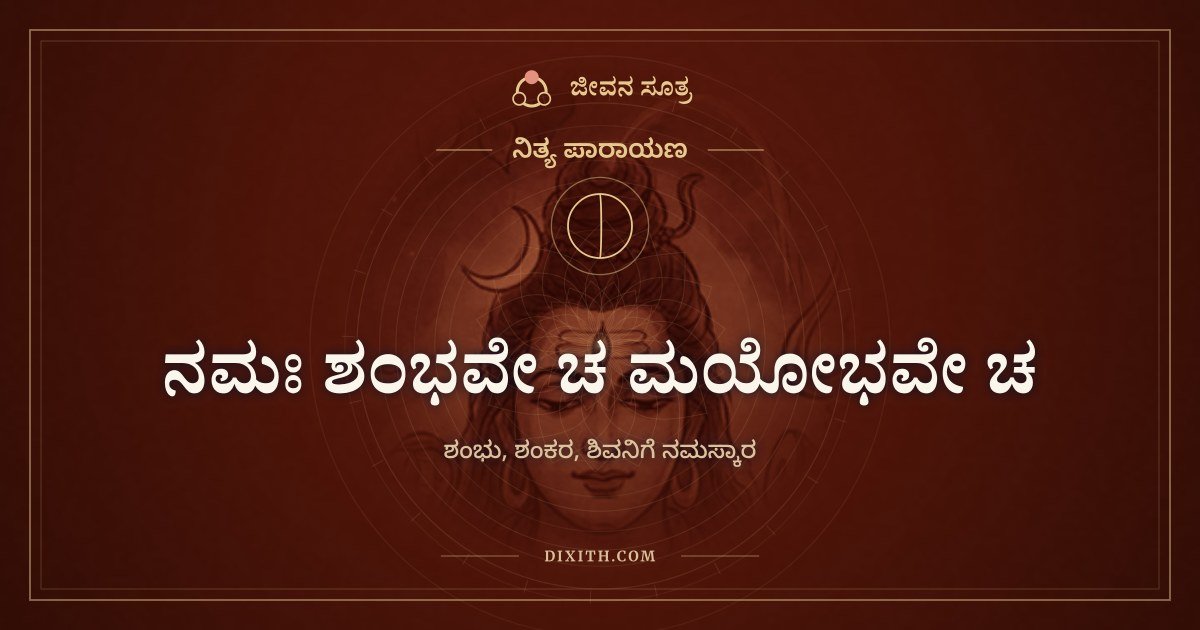
ಇದು ರುದ್ರ ನಮಕದ ಎಂಟನೆಯ ಅನುವಾಕದ ಕೊನೆಯಲ್ಲಿ ಬರುವ ಮೂರು ಸಾಲಿನ ನಮಸ್ಕಾರ ಮಂತ್ರ.
ಇಲ್ಲಿ ಶಂಭು, ಶಂಕರ ಮತ್ತು ಶಿವ ಎಂಬ ಮೂರು ಹೆಸರುಗಳಿಂದ ರುದ್ರನನ್ನು ವಂದಿಸುತ್ತೇವೆ. ಪ್ರತಿಯೊಂದು ಹೆಸರೂ ಸುಖ ಮತ್ತು ಮಂಗಳವನ್ನು ಕೊಡುವವನು ಎಂಬ ಅರ್ಥ ಹೊಂದಿದೆ.
ಶ್ಲೋಕ (ಕನ್ನಡ)
ನಮಃ ಶಂಭವೇ ಚ ಮಯೋಭವೇ ಚ
ನಮಃ ಶಂಕರಾಯ ಚ ಮಯಸ್ಕರಾಯ ಚ
ನಮಃ ಶಿವಾಯ ಚ ಶಿವತರಾಯ ಚ ॥
ಶ್ಲೋಕ (ದೇವನಾಗರಿ)
नमः शंभवे च मयोभवे च
नमः शंकराय च मयस्कराय च
नमः शिवाय च शिवतराय च ॥
ಶ್ಲೋಕ (IAST)
namaḥ śaṃbhave ca mayobhave ca
namaḥ śaṃkarāya ca mayaskarāya ca
namaḥ śivāya ca śivatarāya ca ||
ಪದಶಃ ಅರ್ಥ
- ನಮಃ (नमः, namaḥ) = ನಮಸ್ಕಾರ (salutation)
- ಶಂಭವೇ (शंभवे, śaṃbhave) = ಶಂಭುವಿಗೆ, ಇಹದಲ್ಲಿ ಸುಖ ಹುಟ್ಟಿಸುವವನಿಗೆ (to Shambhu, the source of happiness in this world)
- ಚ (च, ca) = ಮತ್ತು (and)
- ಮಯೋಭವೇ (मयोभवे, mayobhave) = ಮಯೋಭವನಿಗೆ, ಪರದಲ್ಲಿ ಸುಖ ಹುಟ್ಟಿಸುವವನಿಗೆ (to Mayobhava, the source of comfort in the higher world)
- ಚ (च, ca) = ಮತ್ತು (and)
- ನಮಃ (नमः, namaḥ) = ನಮಸ್ಕಾರ (salutation)
- ಶಂಕರಾಯ (शंकराय, śaṃkarāya) = ಶಂಕರನಿಗೆ, ಸುಖ ಮಾಡುವವನಿಗೆ (to Shankara, the maker of happiness)
- ಚ (च, ca) = ಮತ್ತು (and)
- ಮಯಸ್ಕರಾಯ (मयस्कराय, mayaskarāya) = ಮಯಸ್ಕರನಿಗೆ, ಹಿತ ಮಾಡುವವನಿಗೆ (to Mayaskara, the doer of good)
- ಚ (च, ca) = ಮತ್ತು (and)
- ನಮಃ (नमः, namaḥ) = ನಮಸ್ಕಾರ (salutation)
- ಶಿವಾಯ (शिवाय, śivāya) = ಶಿವನಿಗೆ, ಮಂಗಳಸ್ವರೂಪನಿಗೆ (to Shiva, the auspicious one)
- ಚ (च, ca) = ಮತ್ತು (and)
- ಶಿವತರಾಯ (शिवतराय, śivatarāya) = ಇನ್ನೂ ಹೆಚ್ಚು ಮಂಗಳಕರನಿಗೆ (to the one still more auspicious)
- ಚ (च, ca) = ಮತ್ತು (and)
ಸಂಪೂರ್ಣ ಅರ್ಥ (ಕನ್ನಡ)
ಶಂಭುವಿಗೆ ನಮಸ್ಕಾರ. ಮಯೋಭವನಿಗೂ ನಮಸ್ಕಾರ. ಶಂಕರನಿಗೆ ನಮಸ್ಕಾರ. ಮಯಸ್ಕರನಿಗೂ ನಮಸ್ಕಾರ. ಶಿವನಿಗೆ ನಮಸ್ಕಾರ. ಮಂಗಳಕ್ಕಿಂತ ಮಂಗಳನಾದ ಶಿವತರನಿಗೂ ನಮಸ್ಕಾರ.
ಸಂಪೂರ್ಣ ಅರ್ಥ (ಇಂಗ್ಲಿಷ್)
Salutation to Shambhu and to Mayobhava. Salutation to Shankara and to Mayaskara. Salutation to Shiva and to Shivatara, the one even more auspicious.
ಈ ಮಂತ್ರದ ಬಗ್ಗೆAbout this mantra
ಇದು ತೈತ್ತಿರೀಯ ಸಂಹಿತೆಯ ರುದ್ರ ನಮಕದಿಂದ ತೆಗೆದ ಮಂತ್ರ. ನಾವು ನೋಡಿದ ಒಂದು ಆಧಾರದಲ್ಲಿ ಇದು ಎಂಟನೆಯ ಅನುವಾಕದಲ್ಲಿದೆ. ಇನ್ನೊಂದು ಆಧಾರದಲ್ಲಿ ಎಂಟನೆಯ ಭಾಗದ ಕೊನೆಯಲ್ಲಿದೆ.
This mantra is taken from the Rudram Namakam of the Taittiriya Samhita. In one source we checked it sits in the eighth anuvaka. In the other it is at the end of the eighth section.
ಶಂಭು ಮತ್ತು ಮಯೋಭವ ಎಂಬ ಪದಗಳಿಗೆ ವ್ಯಾಖ್ಯಾನದಲ್ಲಿ ಇಹ ಮತ್ತು ಪರದ ಸುಖ ಎಂಬ ಅರ್ಥ ಹೇಳಿದೆ. ಶಿವತರ ಎಂದರೆ ಮಂಗಳಕ್ಕಿಂತಲೂ ಮಂಗಳ.
The commentary reads Shambhu and Mayobhava as happiness in this world and in the higher world. Shivatara means more auspicious than the auspicious.
ಕೆಲವು ಆಧಾರಗಳಲ್ಲಿ ಮೊದಲ ಪದ ನಮಃ ಎಂದು ಬದಲು ನಮಶ್ಶಂಭವೇ ಎಂದು ಸಂಧಿಯೊಂದಿಗೆ ಮುದ್ರಿತವಾಗಿದೆ. ಅರ್ಥ ಬದಲಾಗುವುದಿಲ್ಲ. ಇಲ್ಲಿ ಬಿಡಿಸಿದ ರೂಪವನ್ನು ಇಟ್ಟುಕೊಂಡಿದ್ದೇವೆ.
Some sources print the first word joined, as namashshambhave. The meaning does not change. Here we keep the split form.
ಆಧಾರ: ಹಲವು ಮೂಲಗಳು. ಆವೃತ್ತಿಗಳು ಭಿನ್ನವಾಗಿರುವಲ್ಲಿ ಅದನ್ನು ಇಲ್ಲಿ ಸೂಚಿಸಿದ್ದೇವೆ.
Sources: several. Where versions differ, we have noted it here.
ಇಂದಿನ ಬದುಕಿಗೆFor life today
ಮೂರು ಸಾಲುಗಳಲ್ಲೂ ಒಂದೇ ಭಾವವಿದೆ, ಅಂದರೆ ಮಂಗಳ ಮತ್ತು ಹಿತವನ್ನು ಹೆಚ್ಚು ಮಾಡುವ ಶಕ್ತಿಗೆ ನಮನ. ದಿನವನ್ನು ಇತರರಿಗೆ ಹಿತವಾಗಿ ಕಳೆಯುವ ಸಂಕಲ್ಪಕ್ಕೆ ಇದು ನೆನಪು ಕೊಡುತ್ತದೆ.
All three lines carry one feeling: a bow to the power that increases what is good and kind. It reminds us to resolve to spend the day in a way that is good for others.
ಪುನರುಕ್ತಿಯ ರೀತಿಯಲ್ಲಿ ಬರುವ ಜೋಡಿ ಹೆಸರುಗಳನ್ನು ಮೆಲ್ಲನೆ ಹೇಳುವಾಗ ಮನಸ್ಸು ನಿಧಾನವಾಗುತ್ತದೆ. ಅಷ್ಟು ಹೊತ್ತು ಗಡಿಬಿಡಿ ಬಿಟ್ಟು ಇರಲು ಇದು ಒಂದು ಅವಕಾಶ.
Saying these paired names slowly slows the mind. It is a chance to put hurry aside for a short while.
ಪಾಠದಲ್ಲಿ ತಪ್ಪೋ ಬೇರೆ ಪಾಠಾಂತರವೋ ಕಂಡಿತೇ? ನಮಗೆ ತಿಳಿಸಿ.
Noticed a mistake or a different reading? Tell us.



ಪ್ರತಿಕ್ರಿಯೆ ಬರೆಯಿರಿ