
ಕಚೇರಿಯಲ್ಲಿ ಯಾರಿಗಾದರೂ ಬಡ್ತಿ ಸಿಕ್ಕಾಗ, ಮೊದಲ ತಿಂಗಳು ಯಾರಿಗೆ ಬಿಸಿ ತಟ್ಟುತ್ತದೆ ಎಂದು ಗಮನಿಸಿ ನೋಡಬಹುದು. ಅದು ಅವರ ಸ್ವಭಾವವನ್ನು ಬಹಳ ಹೇಳುತ್ತದೆ.
ಈ ಆರ್ಯಾ ಶ್ಲೋಕ ಆ ಬಿಸಿಯನ್ನು ಕಾಡಿನ ಬೆಂಕಿಗೆ ಹೋಲಿಸುತ್ತದೆ.
ಸುಭಾಷಿತ (ಕನ್ನಡ)
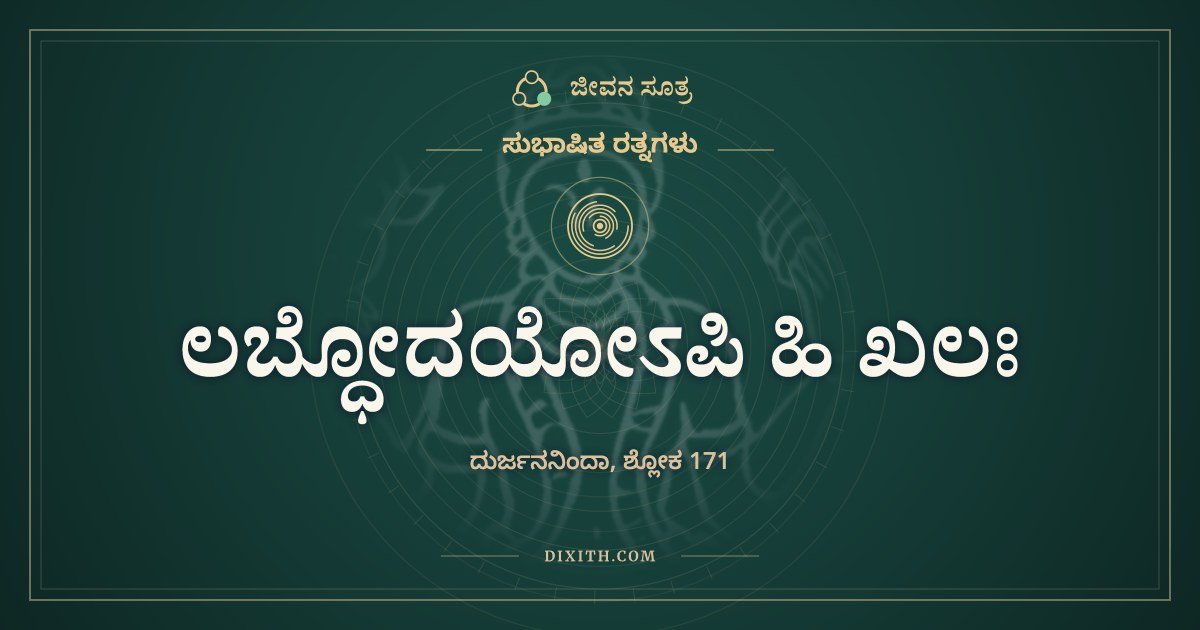
ಲಬ್ಧೋದಯೋಽಪಿ ಹಿ ಖಲಃ ಪ್ರಥಮಂ ಸ್ವಜನಂ ತನೋತಿ ಸುಪರಿತಾಪಮ್
ಉದ್ಗಚ್ಛಂದವದಹನೋ ಜನ್ಮಭುವಂ ದಾರು ನಿರ್ದಹತಿ
ಸುಭಾಷಿತ (ದೇವನಾಗರಿ)
लब्धोदयोऽपि हि खलः प्रथमं स्वजनं तनोति सुपरितापम्
उद्गच्छन्दवदहनो जन्मभुवं दारु निर्दहति
ಸುಭಾಷಿತ (IAST)
labdhodayo’pi hi khalaḥ prathamaṃ svajanaṃ tanoti suparitāpam
udgacchandavadahano janmabhuvaṃ dāru nirdahati
ಪದಶಃ ಅರ್ಥ
- ಲಬ್ಧೋದಯೋಽಪಿ (लब्धोदयोऽपि, labdhodayo’pi) = ಉದಯ ಪಡೆದರೂ ಸಹ, ಅಂದರೆ ಮೇಲೇರಿದರೂ (even after gaining a rise)
- ಹಿ (हि, hi) = ತಾನೆ (indeed)
- ಖಲಃ (खलः, khalaḥ) = ಖಲ (the wicked man)
- ಪ್ರಥಮಂ (प्रथमं, prathamaṃ) = ಮೊದಲು (first)
- ಸ್ವಜನಂ (स्वजनं, svajanaṃ) = ತನ್ನವರನ್ನು (his own people)
- ತನೋತಿ (तनोति, tanoti) = ಹರಡಿಸುತ್ತಾನೆ, ಕೊಡುತ್ತಾನೆ (spreads, inflicts)
- ಸುಪರಿತಾಪಮ್ (सुपरितापम्, suparitāpam) = ಮಹಾ ಸಂತಾಪವನ್ನು (great torment)
- ಉದ್ಗಚ್ಛಂದವದಹನೋ (उद्गच्छन्दवदहनो, udgacchandavadahano) = ಮೇಲೇರುವ ಕಾಡ್ಗಿಚ್ಚು (a forest fire as it rises)
- ಜನ್ಮಭುವಂ (जन्मभुवं, janmabhuvaṃ) = ಹುಟ್ಟಿದ ನೆಲೆಯಾದ (which is its birthplace)
- ದಾರು (दारु, dāru) = ಕಟ್ಟಿಗೆಯನ್ನು (the wood)
- ನಿರ್ದಹತಿ (निर्दहति, nirdahati) = ಸಂಪೂರ್ಣವಾಗಿ ಸುಡುತ್ತದೆ (burns up entirely)
ಸಂಪೂರ್ಣ ಅರ್ಥ (ಕನ್ನಡ)
ಖಲನು ಮೇಲೇರಿದರೂ ಮೊದಲು ತನ್ನವರಿಗೇ ಮಹಾ ಸಂತಾಪವನ್ನು ಉಂಟುಮಾಡುತ್ತಾನೆ. ಕಾಡ್ಗಿಚ್ಚು ಮೇಲೇರುವಾಗ ತನ್ನ ಜನ್ಮಸ್ಥಾನವಾದ ಕಟ್ಟಿಗೆಯನ್ನೇ ಮೊದಲು ಸುಟ್ಟುಬಿಡುವಂತೆ.
ಸಂಪೂರ್ಣ ಅರ್ಥ (ಇಂಗ್ಲಿಷ್)
Even after he has risen, the wicked man first inflicts great torment on his own people, just as a forest fire, as it rises, first burns up the wood that was its birthplace.
ಈ ಸುಭಾಷಿತದ ಬಗ್ಗೆAbout this subhashita
ದವದಹನ ಎಂದರೆ ಕಾಡ್ಗಿಚ್ಚು. ಇಲ್ಲಿನ ಚಮತ್ಕಾರ ಏನೆಂದರೆ, ಬೆಂಕಿ ಹುಟ್ಟುವುದೇ ಮರದ ಕಟ್ಟಿಗೆಯ ಒರೆತದಿಂದ ಎಂಬ ಹಳೆಯ ಚಿತ್ರ, ಮತ್ತು ಅದು ಹುಟ್ಟಿದ ತಕ್ಷಣ ಆ ಕಟ್ಟಿಗೆಯನ್ನೇ ಸುಡುತ್ತದೆ. ದಾರು ಎಂದರೆ ಕಟ್ಟಿಗೆ, ಜನ್ಮಭೂ ಎಂದರೆ ಹುಟ್ಟಿದ ನೆಲೆ.
Davadahana means a forest fire. The turn here is the old picture of fire being born from the rubbing of wood, and then burning that very wood as soon as it is born. Daru is timber, janmabhu is the place of birth.
ಸುಪರಿತಾಪ ಎಂಬಲ್ಲಿ ತಾಪ ಎಂಬ ಪದ ಉರಿ ಮತ್ತು ದುಃಖ ಎರಡಕ್ಕೂ ಬರುತ್ತದೆ. ಅದೇ ಪದ ಬೆಂಕಿಯ ಉಪಮೆಗೂ ಖಲನ ಕೆಲಸಕ್ಕೂ ಸೇತುವೆಯಾಗುತ್ತದೆ.
In suparitapa, the word tapa means both heat and distress. The same word bridges the fire simile and the wicked man’s doing.
ಆಧಾರ: ಸುಭಾಷಿತರತ್ನಭಾಂಡಾಗಾರ, ಸಾಮಾನ್ಯ ಪ್ರಕರಣ (ನಿರ್ಣಯಸಾಗರ ಮುದ್ರಣಾಲಯ, ಮುಂಬಯಿ), ಪುಟ 58. ಶ್ಲೋಕದ ಪಾಠವನ್ನು ಮುದ್ರಿತ ಪ್ರತಿಯ ಸ್ಕ್ಯಾನ್ನೊಂದಿಗೆ ಅಕ್ಷರಶಃ ಹೋಲಿಸಿದ್ದೇವೆ. ಅರ್ಥ ಮತ್ತು ವಿವರಣೆ ನಮ್ಮದು.
Source: Subhashitaratnabhandagara, Samanya Prakarana (Nirnaya Sagar Press, Bombay), page 58. The text of the verse was checked letter by letter against a scan of the printed book. The meaning and notes are ours.
ಇಂದಿನ ಬದುಕಿಗೆFor life today
ಎತ್ತರಕ್ಕೆ ಏರಿದವನ ನಡವಳಿಕೆ ಮೊದಲು ಯಾರ ಮೇಲೆ ಬೀಳುತ್ತದೆ ಎಂದು ನೋಡುವುದು ಒಳ್ಳೆಯದು. ಅಧಿಕಾರ ಸ್ವಭಾವವನ್ನು ಹೊಸದಾಗಿ ಸೃಷ್ಟಿಸುವುದಿಲ್ಲ, ಇದ್ದದ್ದನ್ನು ದೊಡ್ಡದು ಮಾಡುತ್ತದೆ.
It is worth watching on whom the risen person’s conduct falls first. Authority does not create character anew, it enlarges what was already there.
ಬಡ್ತಿ ಪಡೆದವರೆಲ್ಲ ಹೀಗೆ ಎಂದು ಶ್ಲೋಕ ಹೇಳುತ್ತಿಲ್ಲ, ಅದು ಖಲನ ಬಗ್ಗೆ ಮಾತ್ರ ಹೇಳುತ್ತಿದೆ. ಬಿಸಿ ತಟ್ಟಿದ ಮಾತ್ರಕ್ಕೆ ಯಾರನ್ನೂ ಖಲ ಎಂದು ಕರೆಯಬಾರದು.
The verse does not say everyone who is promoted is like this, only the wicked. We should not call anyone wicked merely because we felt some heat.
ಪಾಠದಲ್ಲಿ ತಪ್ಪೋ ಬೇರೆ ಪಾಠಾಂತರವೋ ಕಂಡಿತೇ? ನಮಗೆ ತಿಳಿಸಿ.
Noticed a mistake or a different reading? Tell us.


ಪ್ರತಿಕ್ರಿಯೆ ಬರೆಯಿರಿ