
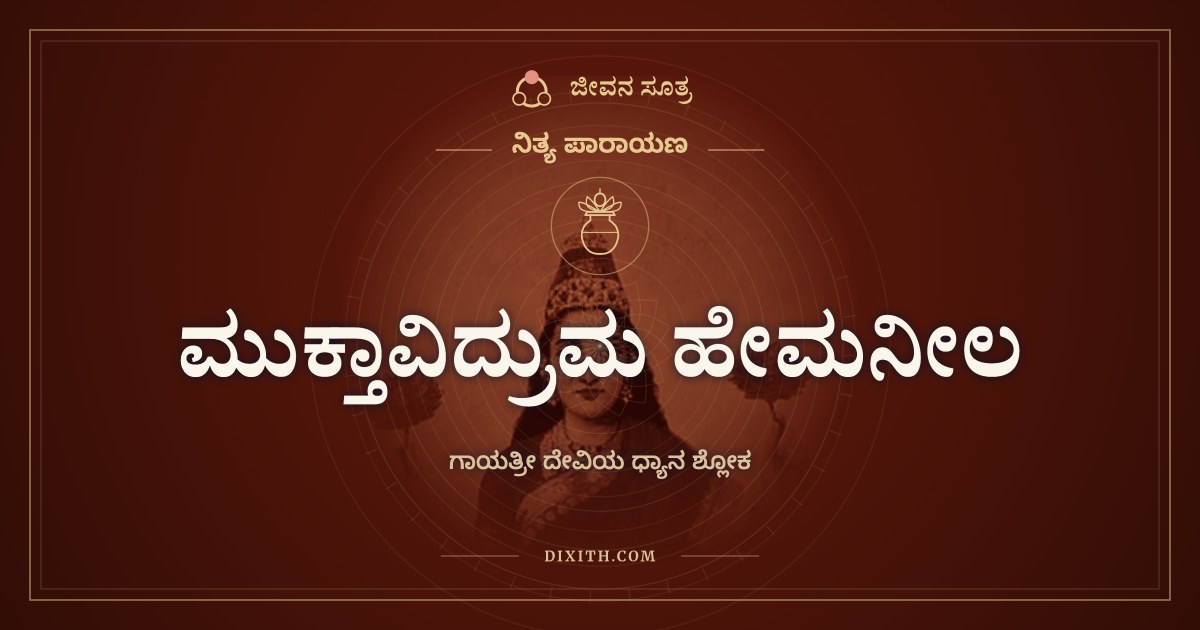
ಸಂಧ್ಯಾವಂದನೆಯಲ್ಲಿ ಗಾಯತ್ರೀ ಮಂತ್ರ ಜಪಿಸುವ ಮುನ್ನ, ದೇವಿಯ ರೂಪವನ್ನು ಕಣ್ಣಿಗೆ ಕಟ್ಟುವಂತೆ ವಿವರಿಸುವ ಧ್ಯಾನ ಶ್ಲೋಕ ಇದು.
ಮುತ್ತು, ಹವಳ, ಚಿನ್ನ, ನೀಲ, ಬಿಳಿ ಎಂಬ ಐದು ಬಣ್ಣಗಳ ಐದು ಮುಖಗಳು, ಹತ್ತು ಕೈಗಳಲ್ಲಿ ಬೇರೆ ಬೇರೆ ಆಯುಧಗಳನ್ನು ಹಿಡಿದ ಗಾಯತ್ರಿಯ ರೂಪ ಇಲ್ಲಿ ಮೂಡುತ್ತದೆ.
ಶ್ಲೋಕ (ಕನ್ನಡ)
ಮುಕ್ತಾವಿದ್ರುಮಹೇಮನೀಲಧವಲಚ್ಛಾಯೈರ್ಮುಖೈಸ್ತ್ರೀಕ್ಷಣೈಃ ಯುಕ್ತಾಮಿಂದುನಿಬದ್ಧರತ್ನಮುಕುಟಾಂ ತತ್ತ್ವಾರ್ಥವರ್ಣಾತ್ಮಿಕಾಮ್ ।
ಗಾಯತ್ರೀಂ ವರದಾಭಯಾಂಕುಶಕಶಾಃ ಶುಭ್ರಂ ಕಪಾಲಂ ಗದಾಂ ಶಂಖಂ ಚಕ್ರಮಥಾರವಿಂದಯುಗಲಂ ಹಸ್ತೈರ್ವಹಂತೀಂ ಭಜೇ ॥
ಶ್ಲೋಕ (ದೇವನಾಗರಿ)
मुक्ताविद्रुमहेमनीलधवलच्छायैर्मुखैस्त्रीक्षणैः युक्तामिन्दुनिबद्धरत्नमुकुटां तत्त्वार्थवर्णात्मिकाम् ।
गायत्रीं वरदाभयाङ्कुशकशाः शुभ्रं कपालं गदां शङ्खं चक्रमथारविन्दयुगलं हस्तैर्वहन्तीं भजे ॥
ಶ್ಲೋಕ (IAST)
muktāvidrumahemanīladhavalacchāyairmukhaistrīkṣaṇaiḥ yuktāmindunibaddharatnamukuṭāṃ tattvārthavarṇātmikām |
gāyatrīṃ varadābhayāṅkuśakaśāḥ śubhraṃ kapālaṃ gadāṃ śaṅkhaṃ cakramathāravindayugalaṃ hastairvahantīṃ bhaje ||
ಪದಶಃ ಅರ್ಥ
- ಮುಕ್ತಾವಿದ್ರುಮಹೇಮನೀಲಧವಲಚ್ಛಾಯೈಃ ಮುಖೈಃ (मुक्ताविद्रुमहेमनीलधवलच्छायैः मुखैः, muktāvidrumahemanīladhavalacchāyaiḥ mukhaiḥ) = ಮುತ್ತು, ಹವಳ, ಚಿನ್ನ, ನೀಲ, ಬಿಳಿ ಬಣ್ಣಗಳ ಮುಖಗಳಿಂದ (with faces the colour of pearl, coral, gold, sapphire and white)
- ತ್ರೀಕ್ಷಣೈಃ ಯುಕ್ತಾಮ್ (त्रीक्षणैः युक्ताम्, trīkṣaṇaiḥ yuktām) = ಮೂರು ಕಣ್ಣುಗಳಿಂದ ಕೂಡಿದವಳನ್ನು (each having three eyes)
- ಇಂದುನಿಬದ್ಧರತ್ನಮುಕುಟಾಮ್ (इन्दुनिबद्धरत्नमुकुटाम्, indunibaddharatnamukuṭām) = ಚಂದ್ರಕಲೆಯಿಂದ ಕಟ್ಟಲ್ಪಟ್ಟ ರತ್ನಕಿರೀಟವುಳ್ಳವಳನ್ನು (wearing a jewelled crown set with a crescent moon)
- ತತ್ತ್ವಾರ್ಥವರ್ಣಾತ್ಮಿಕಾಮ್ (तत्त्वार्थवर्णात्मिकाम्, tattvārthavarṇātmikām) = ತತ್ತ್ವಗಳ ಅರ್ಥವನ್ನೇ ಅಕ್ಷರರೂಪವಾಗಿ ತಾಳಿದವಳನ್ನು (who is the very syllable form of the meaning of the truths)
- ಗಾಯತ್ರೀಮ್ (गायत्रीम्, gāyatrīm) = ಗಾಯತ್ರಿಯನ್ನು (Gayatri)
- ವರದಾಭಯಾಂಕುಶಕಶಾಃ ಶುಭ್ರಂ ಕಪಾಲಂ ಗದಾಂ ಶಂಖಂ ಚಕ್ರಮ್ ಅಥ ಅರವಿಂದಯುಗಲಮ್ (वरदाभयाङ्कुशकशाः शुभ्रं कपालं गदां शङ्खं चक्रम् अथ अरविन्दयुगलम्, varadābhayāṅkuśakaśāḥ śubhraṃ kapālaṃ gadāṃ śaṅkhaṃ cakram atha aravindayugalam) = ವರದ, ಅಭಯ, ಅಂಕುಶ, ಚಾವಟಿ, ಶುಭ್ರ ಕಪಾಲ, ಗದೆ, ಶಂಖ, ಚಕ್ರ, ಎರಡು ತಾವರೆಗಳನ್ನು (the gestures of boon and protection, a goad, a whip, a pale skull cup, a mace, a conch, a discus and a pair of lotuses)
- ಹಸ್ತೈಃ ವಹಂತೀಂ ಭಜೇ (हस्तैः वहन्तीं भजे, hastaiḥ vahantīṃ bhaje) = ಕೈಗಳಲ್ಲಿ ಹಿಡಿದವಳನ್ನು ಭಜಿಸುತ್ತೇನೆ (I worship her who holds these in her hands)
ಸಂಪೂರ್ಣ ಅರ್ಥ (ಕನ್ನಡ)
ಮುತ್ತು, ಹವಳ, ಚಿನ್ನ, ನೀಲ, ಬಿಳಿ ಬಣ್ಣಗಳ ಐದು ಮುಖಗಳುಳ್ಳ, ಪ್ರತಿ ಮುಖದಲ್ಲೂ ಮೂರು ಕಣ್ಣುಗಳುಳ್ಳ, ಚಂದ್ರಕಲೆಯ ರತ್ನಕಿರೀಟವುಳ್ಳ, ತತ್ತ್ವಗಳ ಅರ್ಥವನ್ನೇ ತಾಳಿದ, ಹತ್ತು ಕೈಗಳಲ್ಲಿ ವರದ, ಅಭಯ, ಅಂಕುಶ, ಚಾವಟಿ, ಕಪಾಲ, ಗದೆ, ಶಂಖ, ಚಕ್ರ, ಎರಡು ತಾವರೆಗಳನ್ನು ಹಿಡಿದ ಗಾಯತ್ರಿಯನ್ನು ಭಜಿಸುತ್ತೇನೆ.
ಸಂಪೂರ್ಣ ಅರ್ಥ (ಇಂಗ್ಲಿಷ್)
I worship Gayatri, of five faces the colour of pearl, coral, gold, sapphire and white, each with three eyes, wearing a jewelled crown set with the crescent moon, the very syllable form of the meaning of the truths, holding in her ten hands the gestures of boon and protection, a goad, a whip, a pale skull cup, a mace, a conch, a discus and a pair of lotuses.
ಈ ಶ್ಲೋಕದ ಬಗ್ಗೆAbout this verse
ಈ ಧ್ಯಾನ ಶ್ಲೋಕ ಸಂಧ್ಯಾವಂದನಾ ಪ್ರಯೋಗ ಗ್ರಂಥಗಳಲ್ಲಿ ಗಾಯತ್ರೀ ಜಪಕ್ಕೆ ಮುನ್ನ ಹೇಳುವ ಧ್ಯಾನವಾಗಿ ಸಿಗುತ್ತದೆ, ದೇವಿಯ ಐದು ಮುಖ ಹತ್ತು ಕೈಗಳ ರೂಪವನ್ನು ವಿವರಿಸುತ್ತದೆ.
This dhyana verse appears in sandhyavandana manuals as the meditation recited before Gayatri japa, describing the goddess in her five faced, ten armed form.
ಐದು ಮುಖಗಳ ಐದು ಬಣ್ಣಗಳು ಪಂಚಭೂತಗಳನ್ನೂ, ಹತ್ತು ಕೈಗಳ ಆಯುಧಗಳು ಬೇರೆ ಬೇರೆ ದೇವತೆಗಳ ಶಕ್ತಿಗಳನ್ನೂ ಸೂಚಿಸುತ್ತವೆ ಎಂದು ವಿವರಿಸಲಾಗುತ್ತದೆ.
The five colours of the five faces are explained as representing the five elements, and the weapons in the ten hands as representing the powers of different deities.
ಆಧಾರ: ಹಲವು ಮೂಲಗಳು. ಆವೃತ್ತಿಗಳು ಭಿನ್ನವಾಗಿರುವಲ್ಲಿ ಅದನ್ನು ಇಲ್ಲಿ ಸೂಚಿಸಿದ್ದೇವೆ.
Sources: several. Where versions differ, we have noted it here.
ಇಂದಿನ ಬದುಕಿಗೆFor life today
ಒಂದೇ ದೇವತೆಯಲ್ಲಿ ಇಷ್ಟೊಂದು ವೈವಿಧ್ಯ ಇರುವ ಚಿತ್ರಣ, ಒಬ್ಬ ವ್ಯಕ್ತಿಯೊಳಗೂ ಹಲವು ಮುಖಗಳಿರುತ್ತವೆ ಎಂಬುದನ್ನು ನೆನಪಿಸುತ್ತದೆ.
This picture of so much variety within a single deity is a reminder that many faces can live within a single person too.
ಪಾಠದಲ್ಲಿ ತಪ್ಪೋ ಬೇರೆ ಪಾಠಾಂತರವೋ ಕಂಡಿತೇ? ನಮಗೆ ತಿಳಿಸಿ.
Noticed a mistake or a different reading? Tell us.
ಪ್ರತಿಕ್ರಿಯೆ ಬರೆಯಿರಿ